
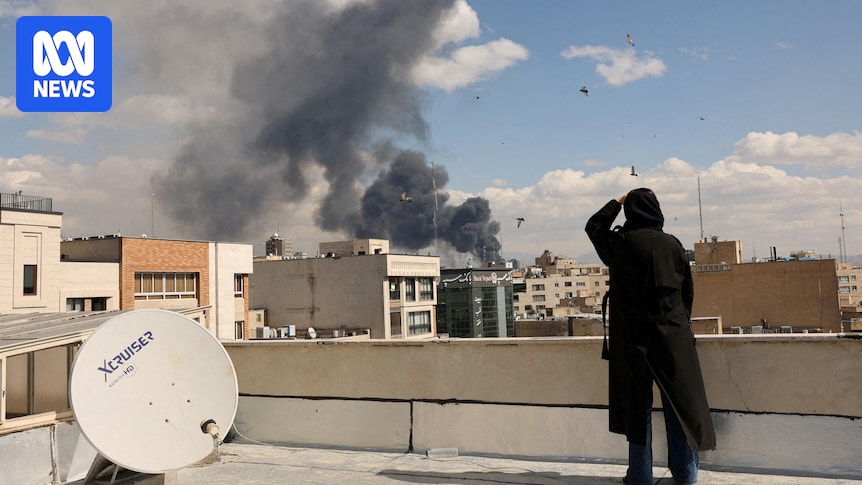
Iranian student Arash chose to study in Australia so his family could freely visit from his home country and celebrate his milestones.
It was clearly better than studying in the United States, where sweeping travel bans would stop his family from visiting, he said.
Iran war live updates: For all the latest news on the war in the Middle East, read our blog.
But he is questioning his decision now that the Australian parliament has passed laws letting the federal government block the arrival of temporary visa holders from war-torn countries, including potentially Iran.
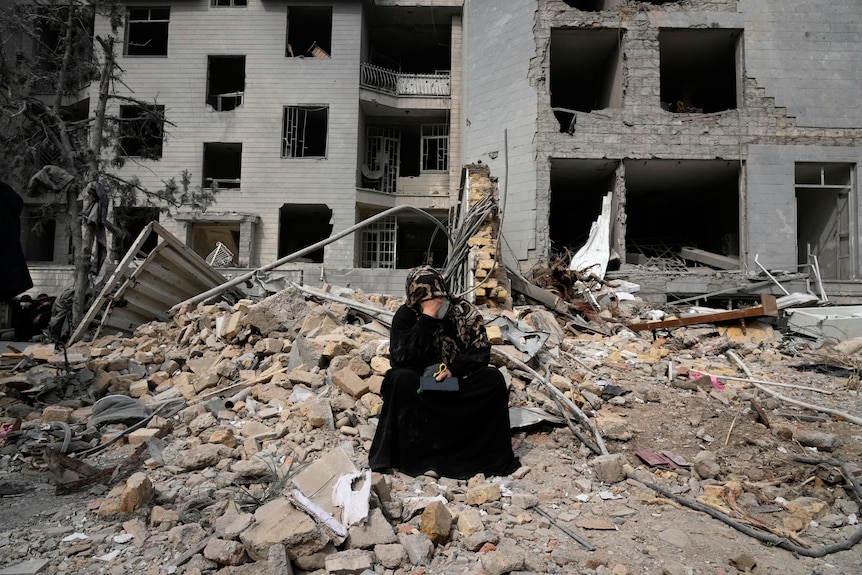
It is estimated that more than 1,300 Iranians have died since the war started. (AP: Vahid Salemi)
“Maybe I have miscalculated Australian values and whether people can, based only on their nationality, be treated differently for visa entry, even though they have already showed that they are genuine temporary entrants,” said Arash, who is using a pseudonym out of fear of government retaliation.
“I understand that governments need to make decisions about border security but, from my own experience and understanding, I find this policy to be deeply unjust.”
The federal government says the laws, hastily drafted in the days following the eruption of war in the Middle East, will protect the “integrity and sustainability” of Australia’s immigration system.
Both the government and Coalition, which helped the laws pass parliament last week, are concerned the conflict may lead to more people seeking asylum once they travel to Australia.
But Arash said the government had been hypocritical in making the new laws at about the same time it was promoting its decision to grant visas to Iranian women’s football players.
“For the Iranian community, this feels like a slap in the face,” he said.
Home Affairs Department officials told parliament they drafted the laws with the aim of preventing “a whole class of people moving at the same time” and considered that “an additional power would be needed to do that if that became needed as events unfolded”.
Loading
Home Affairs Minister Tony Burke will be able to use that power to stop temporary visa holders in designated countries coming to Australia for up to six months, meaning anyone seeking safety will have to apply for a humanitarian visa offshore — potentially facing long waits with no guarantee of success.
Experts say the new migration laws differ from the US travel bans because they are time-limited and target a relatively small and strictly defined group of existing visa holders.
But they have drawn criticism from human rights advocates, who say the laws will keep families apart and make the immigration system less predictable and fair.
“It means that you will have to wait in place and take a chance with your life in an attempt to make it to safety,” Sanmati Verma, legal director at the Human Rights Law Centre, said.
Diaspora braces for travel blocks
Kambiz Razmara, vice-president of the Australian Iranian Society of Victoria, said the impacts of the new laws on the Iranian diaspora could be broad.
“We have people like parents, who are visiting with temporary visa arrangements who come and go, who will be impacted,” he said.
“We have people who come for study tours, for presentations.”
New laws to temporarily ban some people coming to Australia
Mr Razmara said the federal government and its MPs had generally been talking and listening to the Iranian community but they had not consulted it before making this decision.
“I wish they’d done it before they planned to do this,” he said.
“We are Australian Iranian, so we are very mindful of the need to protect borders. We are very mindful of the government’s obligations to do that.
“We do appreciate the advocacy [from the government], but we also would challenge respectfully the manner in which reactions come about every time there’s trouble in Iran.”
In a letter to Mr Burke, Australian Iranian Community Alliance vice-president Suren Edgar said many Iranian Australians were uncertain whether their close relatives would now be able to travel to Australia to give essential support.
“The presence of immediate family members is not simply a cultural preference but a practical necessity,” he said.
Mr Edgar said close relatives provided critical childcare support “that enables workforce participation, [they] assist during periods of illness or bereavement, and contribute to maintaining family stability”.
Farhad Bandesh left Iran to escape persecution for practising his Kurdish culture, before spending six years on Manus Island following an attempt to reach Australia by boat.
“No-one likes war … I was born in war between Iran and Iraq,” said Mr Bandesh, who now lives in Australia on bridging visas.
He said the new laws sent a message to asylum seekers and refugees in Australia.

Kurdish Iranian refugee Farhad Bandesh (left), pictured with his partner Jenell Quinsee, grew up surrounded by conflict. (Supplied: Farhad Bandesh)
“The policy tells us our rights and our lives don’t matter, our families don’t matter,” he said.
“We’re not just refugees. We’re fathers, brothers, mothers, sisters, daughters and brothers.”
There are 61,000 people with temporary visas for Australia in the Middle East, including more than 7,000 in Iran and 1,100 in Lebanon.
Home Affairs Department head of immigration Clare Sharp told the Senate hearing last week that Iranian nationals holding temporary visas “would be the group who, based on the current circumstances, are most likely” to be affected by the new powers.
While the law does not let the government cancel those visas, it stops visa holders from arriving if the home affairs minister decides “an event or circumstance” is occurring that means they might overstay.
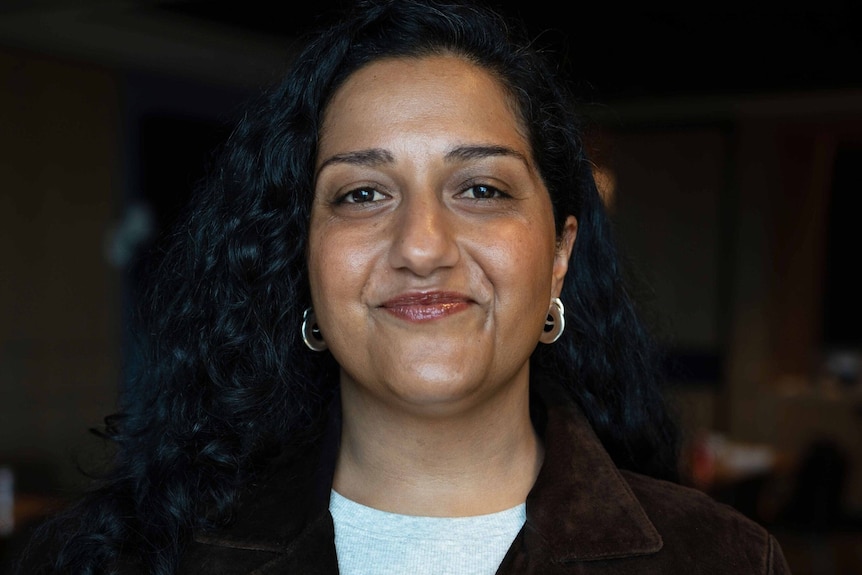
Sanmati Verma is the legal director of the Human Rights Law Centre. (Supplied: Human Rights Law Centre)
Ms Verma said this broad language made it unclear how the government would use the power.
“An ‘event’ might mean a change of political circumstance in a country, it might mean a change in the economics of a particular country or region within that country, it could really mean anything,” she said.
“The power is broad enough to allow the minister to turn the tap on and off on temporary migration at any given point in time without really any regard for the rights of temporary migrants themselves or their families or communities here in Australia.”
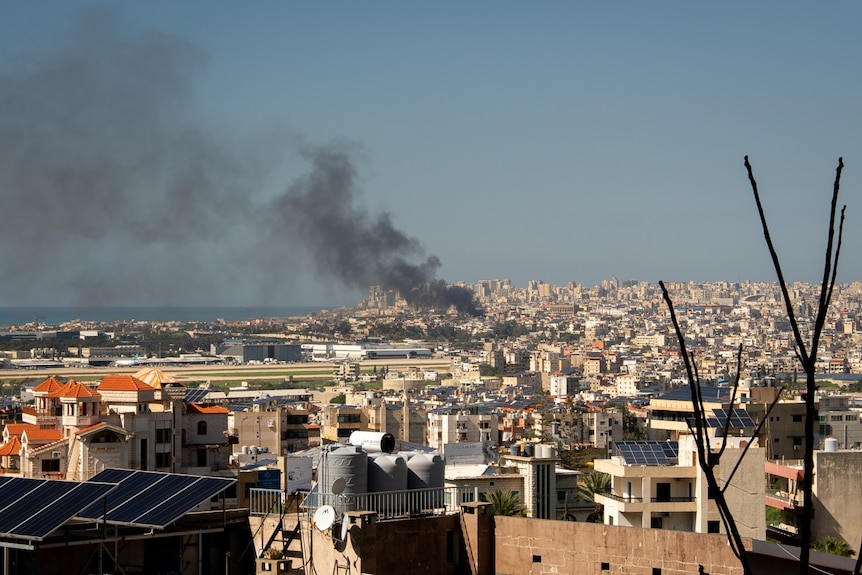
Smoke rises from Lebanon’s capital, Beirut, after an attack on the city. (ABC News: Hamish Harty)
Under the new laws, the home affairs minister would have to outline which particular temporary visas the ban applied to and which countries, and would need the support of the prime minister and foreign affairs minister.
The law exempts non-citizens who are the parent of a child in Australia, and also does not apply to spouses, de facto partners and dependent children of citizens, permanent residents or humanitarian and protection visa holders.
People holding a temporary protection, refugee or humanitarian visa would also still be allowed to travel to Australia, and the law would not affect anyone already in Australia before the determination was made.
Minister’s decision ‘could happen mid-flight’
The Home Affairs Department says the changes would let the government “proactively manage” the border during rapidly evolving international developments, such as international conflict or in response to other emergencies.
They would also let the minister issue travel certificates permitting some temporary visa holders to arrive in Australia “on a case-by-case basis, once all of the circumstances of that individual have been considered”, a spokesperson said.
But Ms Verma said the integrity of Australia’s migration system depended on “predictability, decency and fairness”.
She said temporary visa holders could be on a flight or in transit when they find out the Australian government has decided to block their arrival.
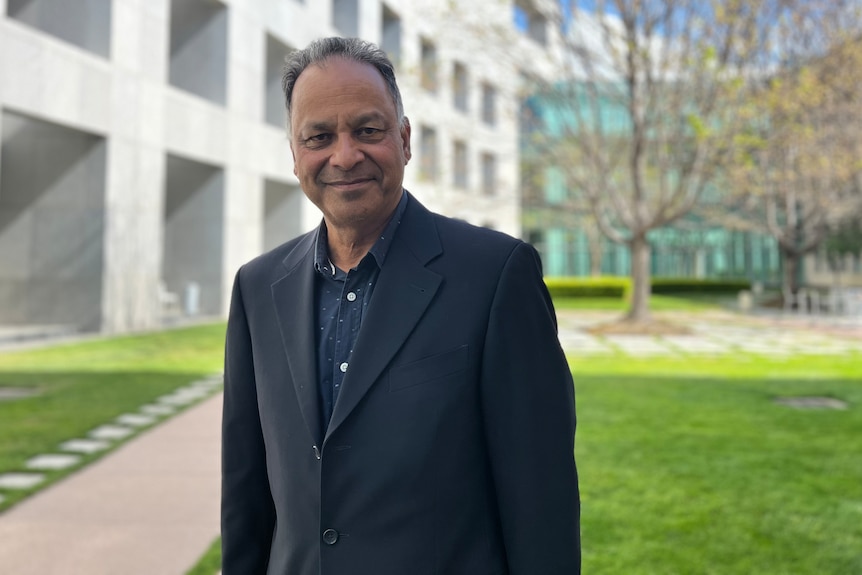
Abul Rizvi expects a surge in immigration requests in the coming months. (ABC News: Krishani Dhanji)
Abul Rizvi, an immigration policy expert and former Immigration Department senior official, said the new migration law was “unprecedented” compared with government actions during previous overseas conflicts.
“At present, there are around 20,000 temporary entrants in Australia from Iran, Lebanon, Israel, Palestine. The biggest cohort is from Iran, at around 12,000,” he said.
“I suspect the government is expecting a surge in asylum applications from this cohort in March, April, May.
“The new legislation is an attempt to limit adding to that surge from the 7,000 or so temporary entrants who are offshore and likely to be blocked.
“In the current political environment, the government may be concerned about criticism that it has allowed a blowout in onshore asylum applications.”
Expert analysis on the Middle East:
Home Affairs officials told senators last week the department had not yet needed to prevent temporary visa holders from fleeing Iran for Australia.
“What we anticipate is that, as flights start to move, that’s when the power is more likely to be needed,” Ms Sharp said.
But Arash said many Iranians were choosing to stay, and he did not believe they would leave their country in large numbers.
“Iranians are a very proud nation,” he said. “So they don’t want to be treated as war refugees.”
Loading…