
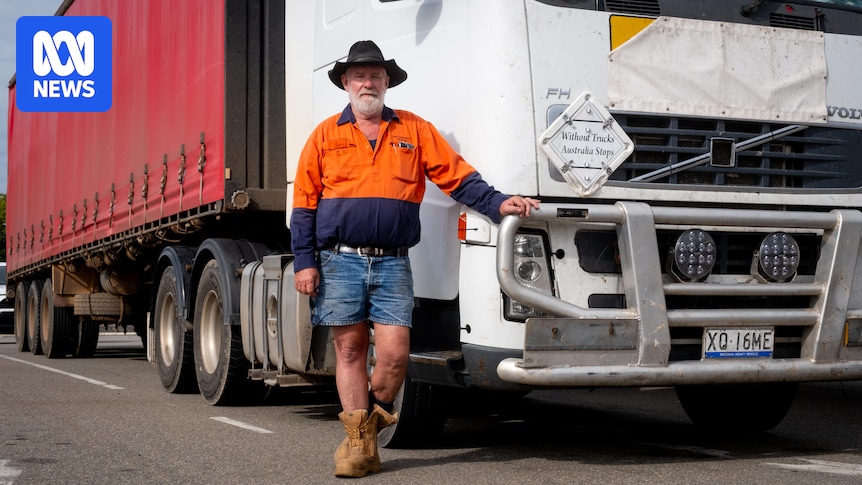
Kent “Dunga” Dungavell drives thousands of kilometres on dusty outback roads to deliver goods to remote communities and stations.
Usually, the further he gets from the city, the more relaxed he feels.
But he expects a bit more pressure on his bottom line as he does the freight run from Townsville to towns in the remote Gulf of Carpentaria for the first time in weeks.
“This will be the first fuel I’ve put in since the hike,” he said.
“This is probably the highest I’ve ever seen it jump.”
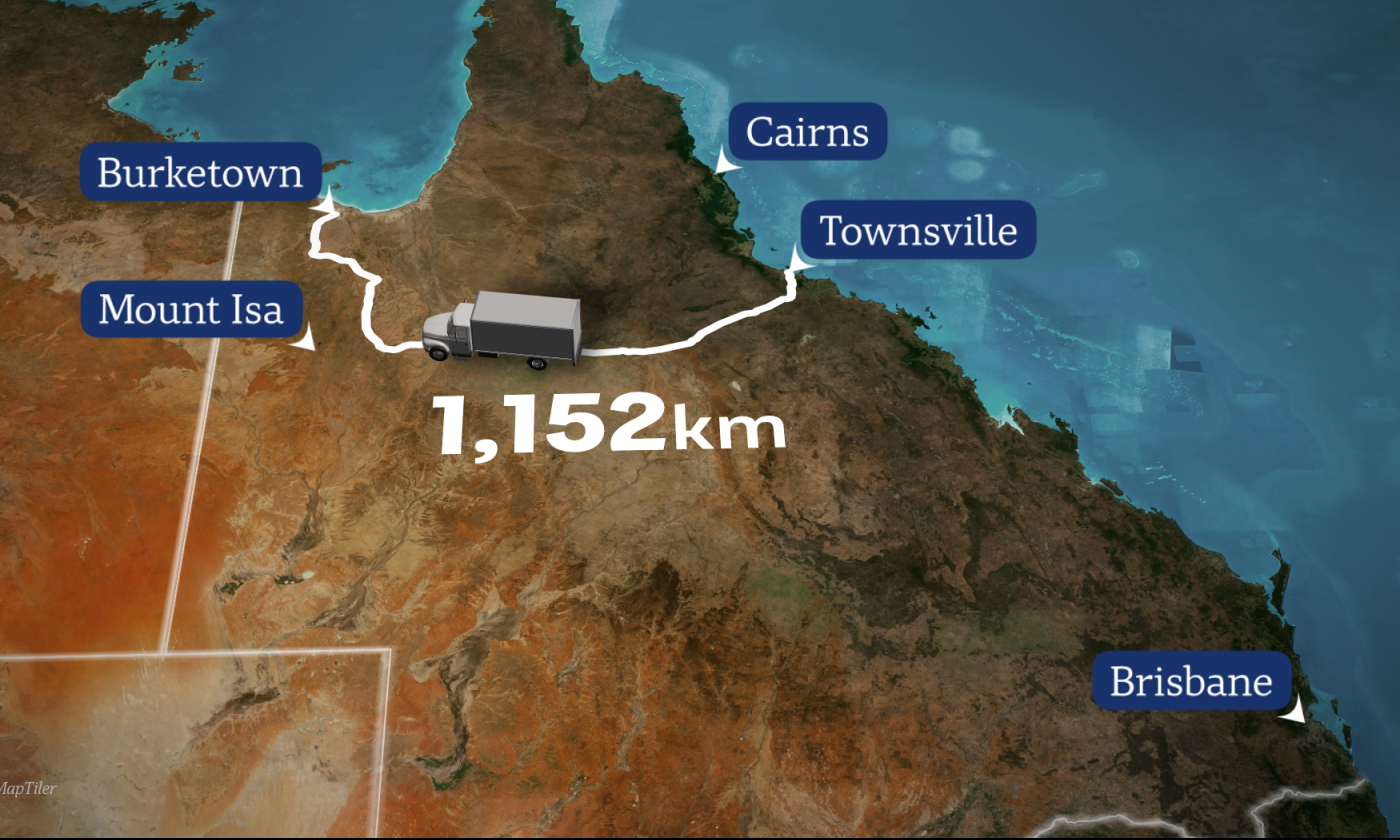
Kent Dungavell expected to spend thousands extra on fuel costs on his 2,300-kilometre round trip. (ABC Graphics: Peter Mullins)
Long journey west on record costs
Queensland broke its record high for diesel and unleaded prices this week, according to the RACQ.
“According to real-time fuel price reporting data, the most expensive stations currently for diesel and unleaded are on K’gari (Fraser Island), charging $3.60 per litre for both types of fuel,” said the RACQ’s spokesperson.
At Townsville, Mr Dungavell said he filled up at nearly $2.80 a litre, while bowser prices at the city’s freight hub this week hit $3 a litre.
The experienced driver said he would normally burn up to 3,000 litres of diesel fuel on the roughly 2,000-kilometre journey, so fuelling up would add thousands to each trip.
On his multi-day return trip to Burketown in the Gulf of Carpentaria, he will be delivering building materials and general goods for the first time since flooding cut off roads earlier this year.
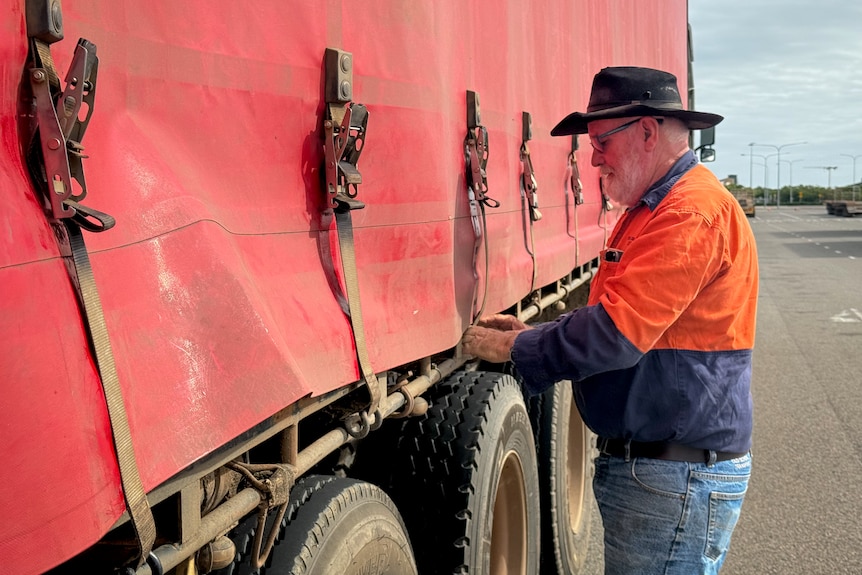
The Queensland Trucking Association says the cost increase is squeezing the industry’s already thin margins. (ABC North Qld: Meghan Dansie)
Mr Dungavell said transport business owners and freight companies like his would have no choice but to pass on an elevated fuel levy to their customers.
“We don’t have any big customers, our customers are all mum-and-dad operations — builders and cattle stations and families,” he said.
“They understand they have to pay the premium price for it because we have to charge the premium price for it, and understandably, they’re going to have to pass that on to their customers as well.
“They’ve got to have the stuff, no matter what.”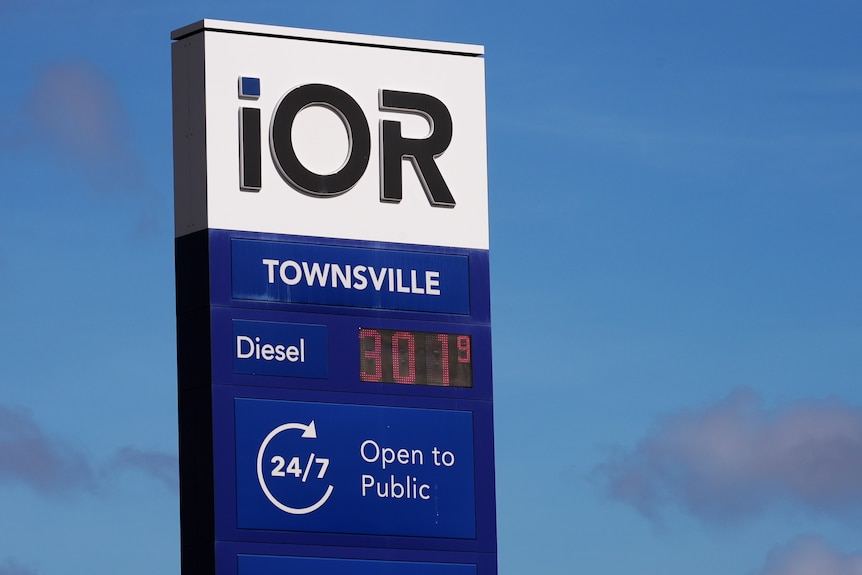
Regional and remote Australians have been hit with high prices and supply chain issues. (ABC News: Baz Ruddick)
ACCC launches investigation
Fuel prices have risen since Iran’s blockade of the Strait of Hormuz, a shipping route for about a fifth of the world’s oil.
Australia’s competition watchdog has announced it is investigating anti-competitive conduct by major fuel suppliers in regional and rural areas.
It will probe the conduct of major fuel companies like Ampol, BP, Mobil and Viva Energy.
The federal government has also established a national fuel supply taskforce to shape the country’s response, led by Anthea Harris, the former head of Australia’s energy regulator.
The outback roadhouse
Far from Canberra in outback north-west Queensland, Jill Wilson runs the Tirranna Springs Roadhouse and a carpentry business with her husband, Tim.
She said remote communities were already feeling the impacts of higher costs, and action needed to be taken soon.
“We’re 600km away from Mount Isa, 1,200km away from Townsville or Cairns. The only access into our community is by aeroplanes or by truck,” she said.

Jill Wilson says she feels a responsibility to the local community to keep bowser prices within an affordable range. (Supplied: Jill Wilson)
“Every nail, every screw, everything we use, every single day, has to be freighted in purposely for me via truck.”
Ms Wilson said she had increased fuel prices at the bowser, but there were limits.
“You have to walk that fine line of how far we can raise our prices to recover our costs before we start to make a loss, before no-one can afford you anymore,” she said.
“This is business stuff we’re talking about, but as a family, [we] live here too.
“It is very, very concerning — how long can you hold out with these kinds of price rises and what will happen in the future?”
Industry calling for instant relief
Large transport companies typically lock in a price each week for their diesel supply with petrol companies.
The diesel terminal gate price in Brisbane, which is the wholesale price for large volumes, rose by more than a $1 a litre from the end of February to the end of this week.
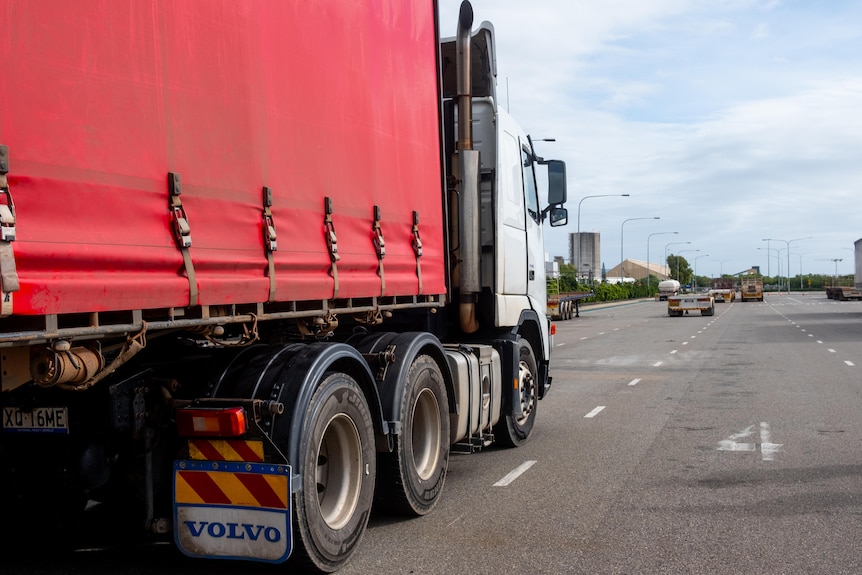
Trucks travel long distances to deliver goods to outback communities. (ABC North Qld: Meghan Dansie)
The head of Queensland’s trucking association, Gary Mahon, said the federal government should provide a short-term subsidy for the price increase, instead of changing the fuel excise.
“We’d like to see some financial relief applied, particularly to road freight and the agricultural sector,” he said.
“These exorbitant price increases are beyond reasonable expectations.”
Shadow Minister for Energy Dan Tehan said subsidies should be considered by the federal government.
“If that sort of support is needed to make sure that we can get the fuel to where the shortages are, that’s absolutely something that should be looked at,” he said.
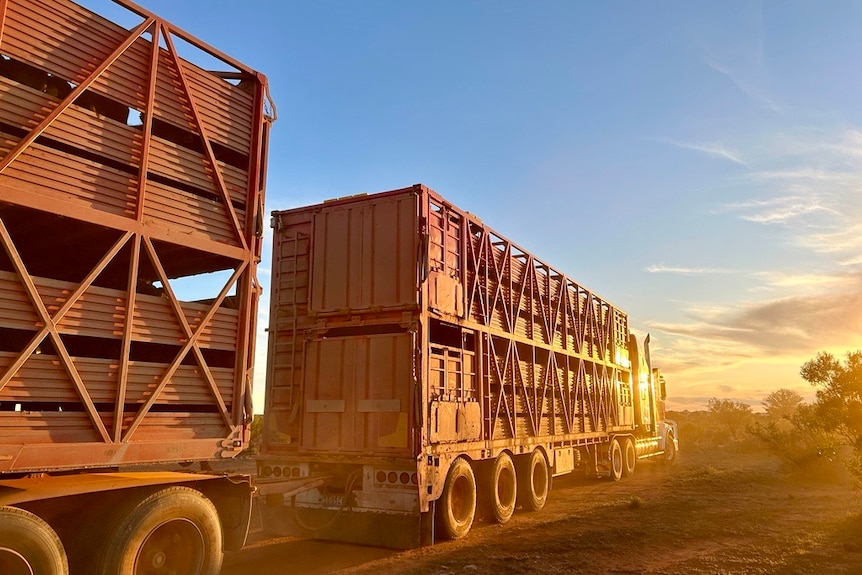
Cattle producers use large amounts of diesel and rely on freight services. (ABC Broken Hill: Lily McCure)
The grazier
Grazier Sarah Nelson is based in Charters Towers but runs four cattle properties in the Gulf of Carpentaria.

Sarah Acton says primary producers will be hit with higher bulk fuel costs and freight levies. (Supplied: Sarah Nelson)
As market “price takers”, she said cattle producers did not have the option to pass on costs.
“You’re not talking about going and putting 100 litres in your vehicle, you’re talking about tens of thousands of litres of diesel,” she said.
“We’re not going to get another 10 cents a kilo for our beef because the price of fuel escalated unreasonably in a very short amount of time.”
Loading…