
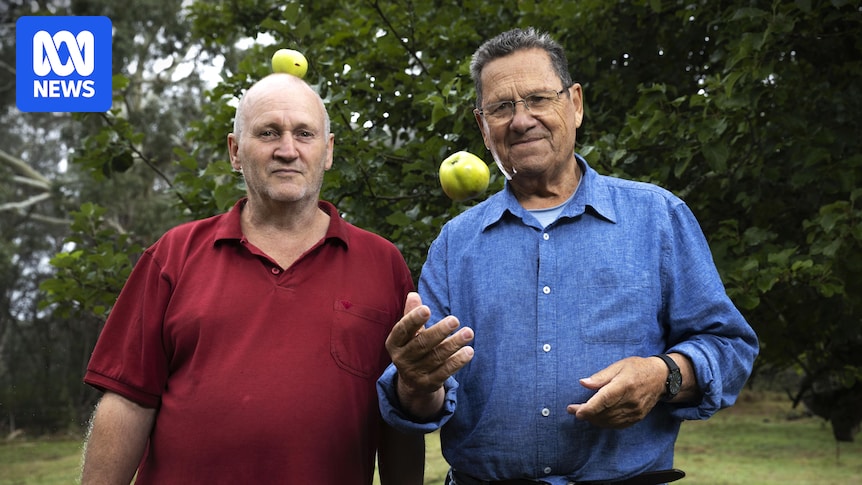
Rudi Stachow spent his early years in his family’s orchard on the NSW Southern Tablelands eating a variety of apple experts once thought was extinct.
“I’ve only known them as Rymers,” Mr Stachow, 76, said.
The sweet but slightly acidic fruit grew from three brightly coloured trees that his father had propagated in the back paddock.
As it turns out, only three other countries in the world are home to the Rymer.
The trees are the last of their kind on the property, now under different ownership, at Majors Creek, about 300 kilometres south-west of Sydney.
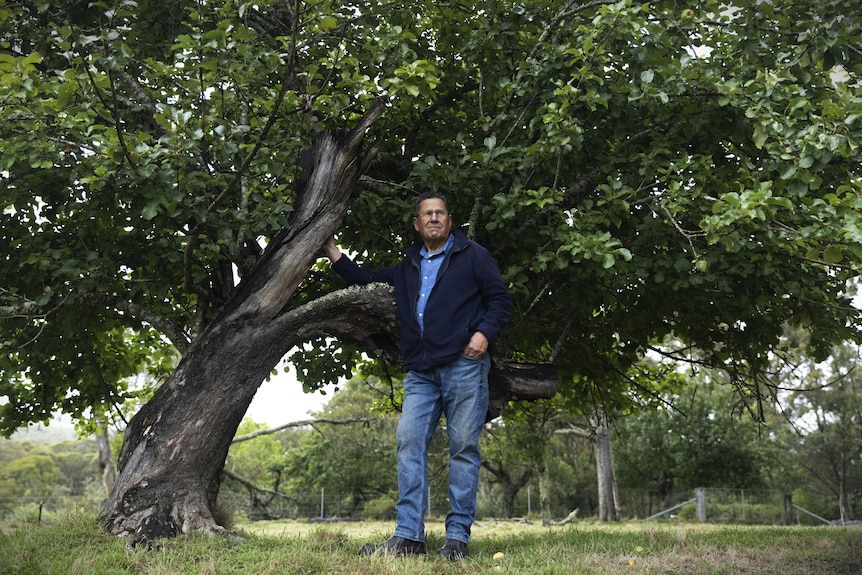
Rudi Stachow, a Vietnam veteran, says he formed a lifelong love of Rymer apples on his family farm. (ABC South East NSW: Floss Adams)
The Rymer is an English cooking apple characterised by its large size, smooth skin and yellowish flesh.
Braidwood cider maker Gary Sully, who often refers to himself as an “apple nerd”, thought he recognised the fruit when he first visited Mr Stachow’s family farm in 2008.
“I just thought it was nice to have these trees, so I planted some for myself,” Mr Sully said.
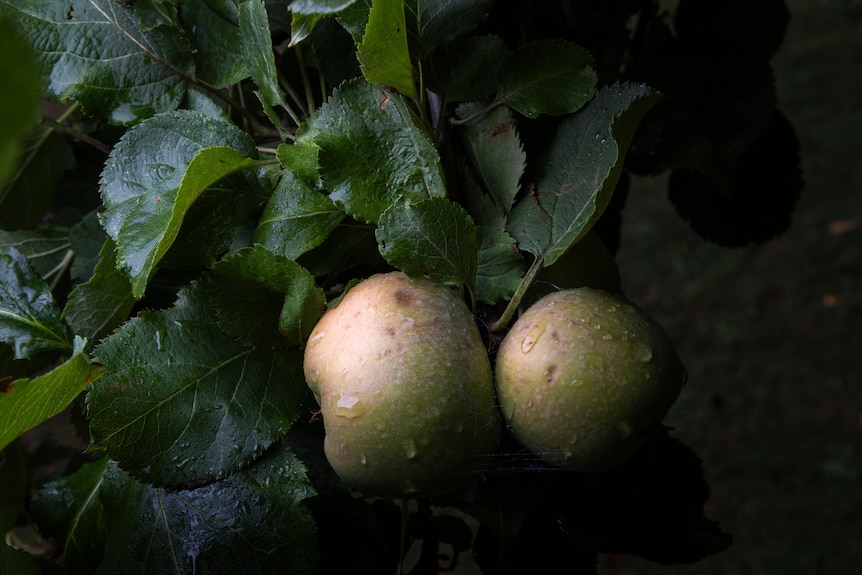
The Marcher Apple Network discovered eight Rymer trees between 1995 and 2005: six in Wales, one in India and one in the US. (ABC South East NSW: Floss Adams)
In 2023, Mr Sully began corresponding with a UK-based charity, the Marcher Apple Network, near his Welsh hometown.
“I was just keeping an eye on what they were doing because they’ve had huge successes in finding lost varieties over the last 20 years,” Mr Sully said.
Last year, he asked group member Ainsleigh Rice to help verify the identity of the apples on the Stachow property.
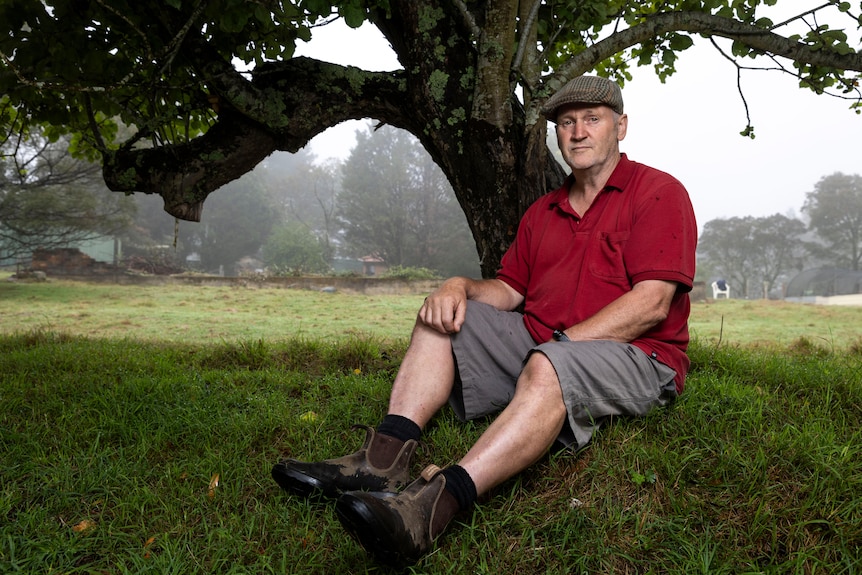
Gary Sully has been working to incorporate different types of apples into own blends, including Rymers. (ABC South East NSW: Floss Adams)
Dr Rice said the Rymer apple variety was thought to have died out before 1995, when his group began finding the odd tree: six in Wales, one in India and another in the US.
“The last time we found one was in 2005,” Dr Rice said.
“It’s very hard to estimate, but there could be another half dozen in old, forgotten orchards.”
DNA was needed to prove whether Australia could be the fourth country in the world with live Rymer trees.
“[Dr Rice] wanted to test our Rymers against his Rymers,” Mr Sully said.
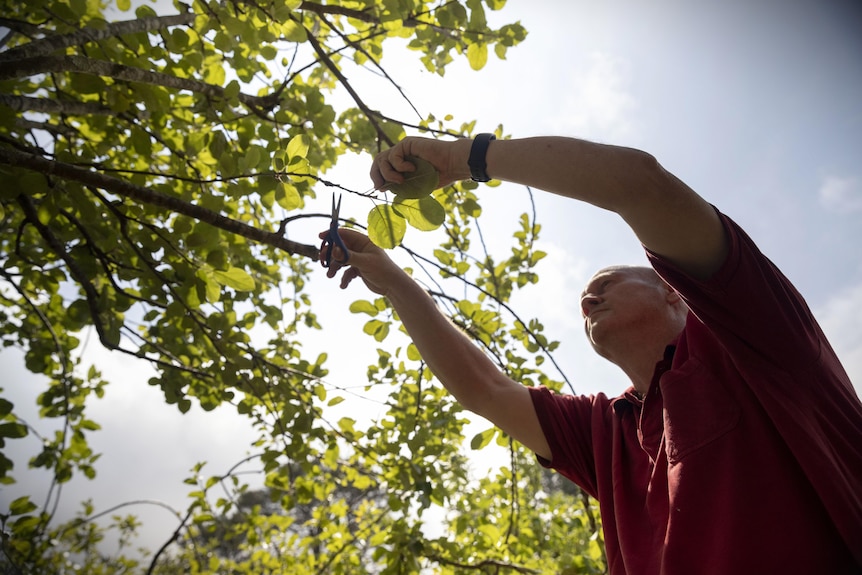
Gary Sully supplied DNA samples of the Rymer trees to the Marcher Apple Network for verification. (ABC South East NSW: Floss Adams)
Collecting samples for shipment overseas involved cutting leaves from the Rymer trees at Majors Creek, storing them in tea leaf bags, and topping them with silica gel.
In the meantime, Mr Stachow had to gather historical evidence of how the Rymer trees came to Majors Creek.
He was able to trace them back to 19th-century settlers in the area.
“The Rymers can be attributed to Fredrick Routley and his father Richard Routley, who planted them, I think, around 1895,” he said.
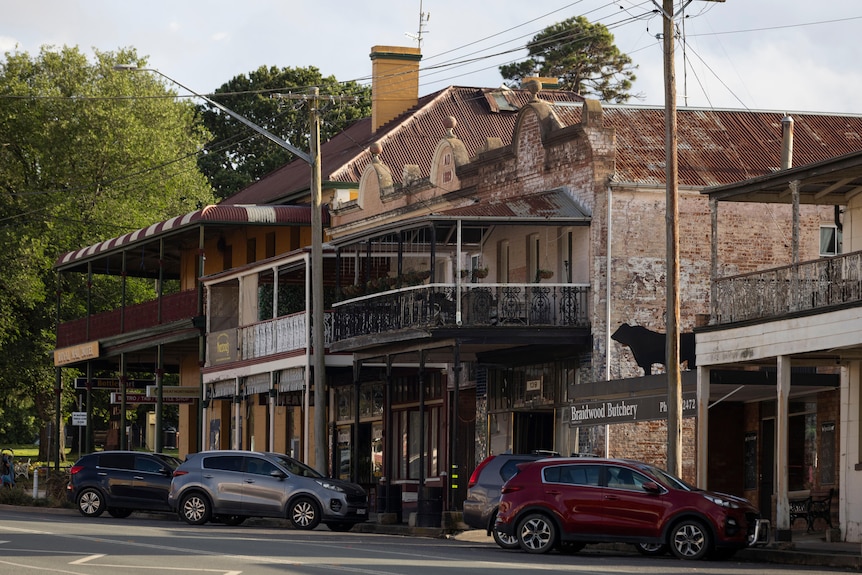
Rudi Stachow’s childhood home, where the Rymer trees are located, is in Majors Creek, outside the town of Braidwood. (ABC South East NSW: Floss Adams)
Late last year, a positive result came back, proving the Major Creek property was, and is, home to rare Rymer trees.
“I think of all the varieties we have accredited, it was the one that was far and away the most clear cut,” Dr Rice said.
“And it involved the largest number of people and occurred over the longest period of time.”
It was a huge relief for all involved and sparked some emotion for Mr Stachow.
“The fact these trees are here 70 years later too makes them better than anything else,” he said.
“Seeing it all come together is really good. I’m very proud,” Mr Sully added.
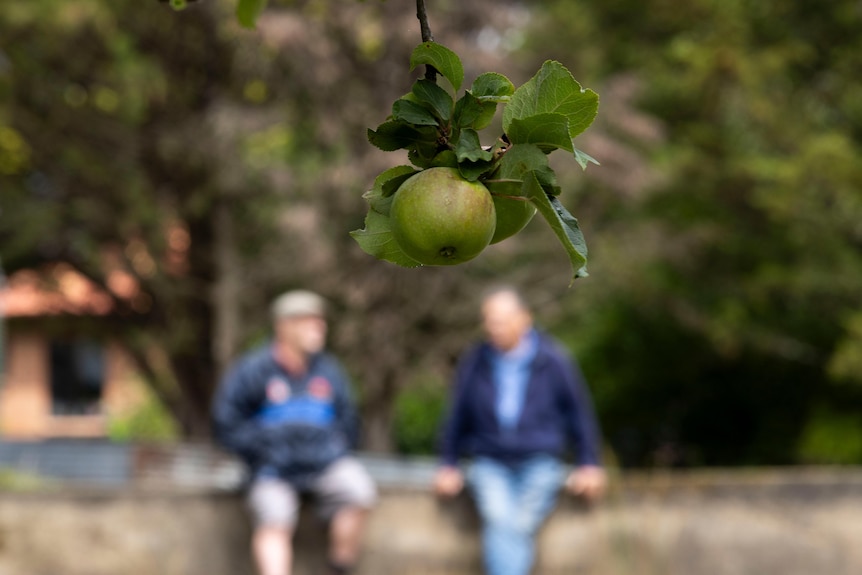
If mother nature if kind, Gary Sully and Rudi Stachow believe the Rymer trees could live for another 40 years. (ABC South East NSW: Floss Adams)
As the last living memory keeper, Mr Stachow accepted an invitation to the UK to celebrate the accreditation of the Rymer trees in Australia.
“I did get a bit emotional, which I don’t normally do, because memories did start to flood back,” he said.
“And I did say to the scientists, ‘You can form a love affair with these apples because they are so beautiful.'”
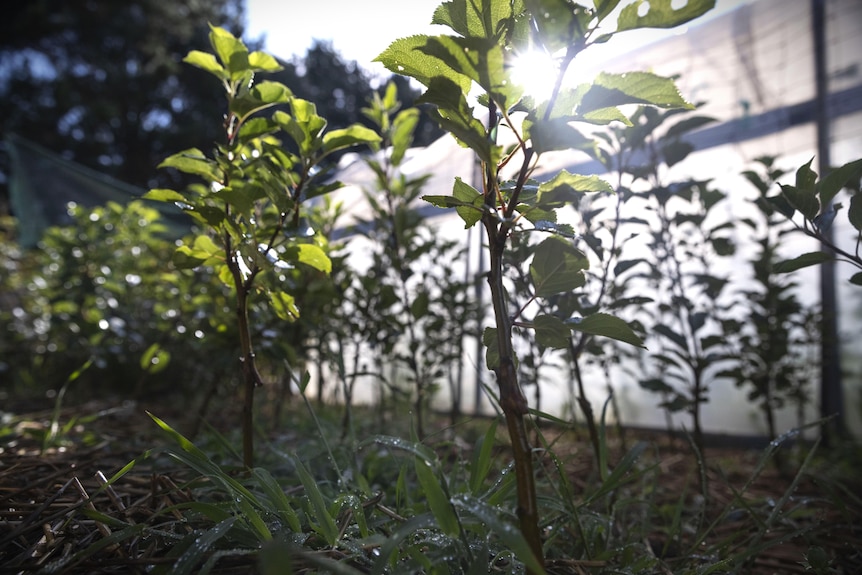
A section of Gary Sully’s Braidwood home is covered in Rymer saplings thanks to his propagation work. (ABC South East NSW: Floss Adams)
Of the Rymer trees planted by Mr Stachow’s father on the Majors Creek property, only three remain, and unfortunately, they are not faring well, as the trunks are rotting.
So Mr Sully has been using propagation to grow dozens of Rymer’s in his own backyard.
“By getting these old varieties back, you are giving plant breeders an extra arrow in their quiver,” he said.
“Because they can now use all these different apples to breed varieties that are resistant to climate change and disease.”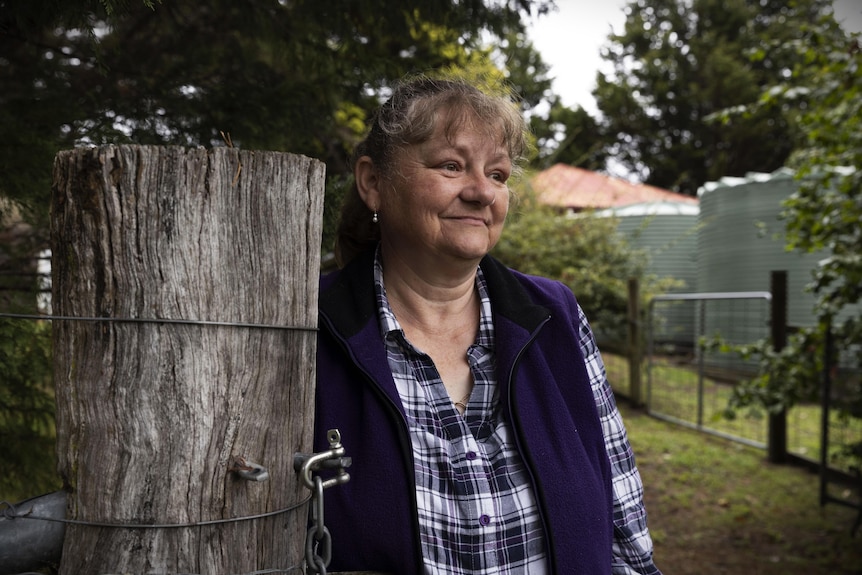
Sandra Rayner says the apple trees are one of the reasons she bought the Stachow family farm. (ABC South East NSW: Floss Adams)
The former Stachow orchard was bought by Sandra Rayner in 2015, who said she was happy to provide fresh supplies whenever Mr Sully needed them.
For years, Ms Rayner and her late husband, Craig, had eaten the Rymer apples without knowing just how special they were.
“It’s mind-blowing to be honest,” she said.