
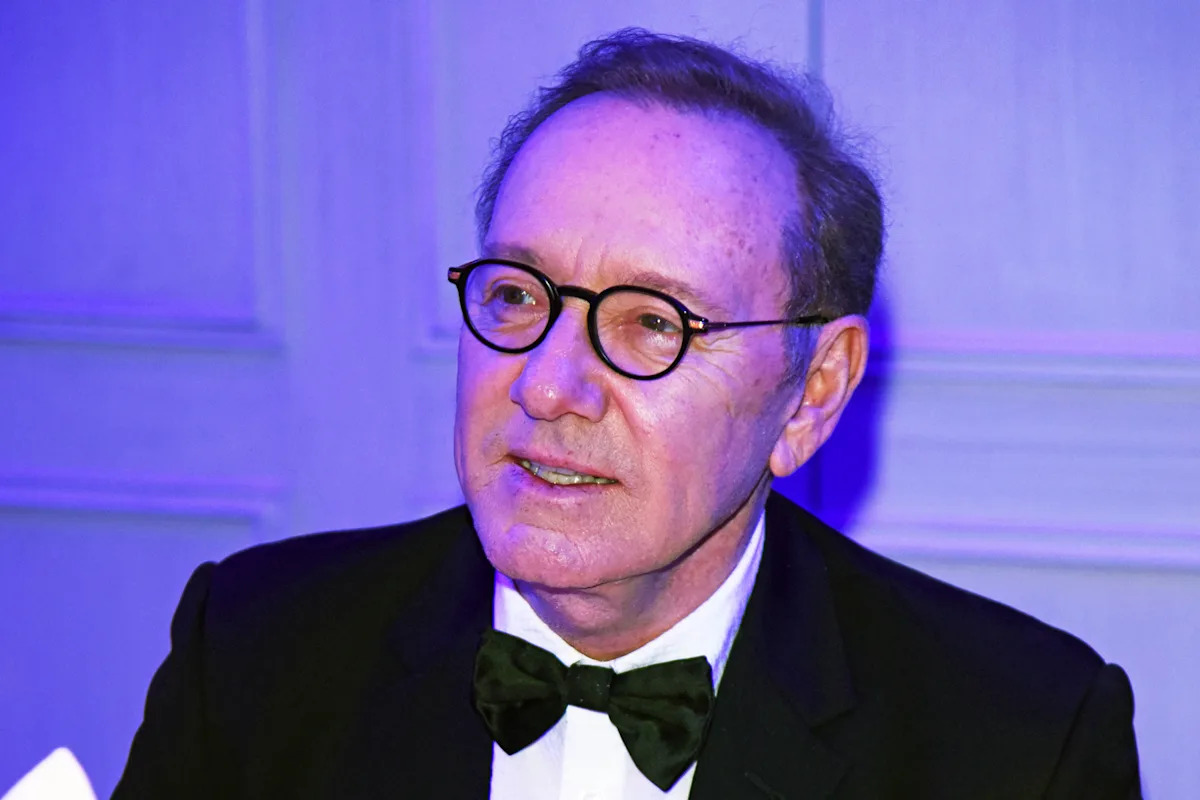
Was Kevin Spacey sidelined by a dangerous “mental illness” when he was suspended from “House of Cards” in 2017 and eventually written off the Netflix hit? Or was he fired because execs felt “terror” over possible reputational fallout as the #MeToo movement gained momentum?
That was the question handed to jurors Thursday after closing arguments capped a three-week civil trial in Santa Monica, Calif. The case that jurors will begin deliberating on Monday pits the show’s production company, Media Rights Capital (MRC), against Fireman’s Fund, the insurer that denied MRC’s multimillion-dollar claim involving a policy that only covered losses if a “sickness” left Spacey unable to perform his Emmy-nominated role as the politician Frank Underwood.
More from Rolling Stone
The dispute centers largely on Spacey’s courtroom testimony last week and his related medical records showing he was formally diagnosed with “sexual compulsive behavior” by the time he was discharged from an inpatient treatment program at the Meadows rehab in Arizona on Dec. 16, 2017. Lawyers for MRC argued that the diagnosis, along with Spacey’s refusal to share his medical records for years, proved he was unfit to return. Two doctors who evaluated Spacey in 2025 agreed with the diagnosis, the lawyers said.
“Mr. Spacey was sick, and his sickness necessarily prevented him from completing his duties,” Adam Ziffer, a lawyer for the studio, told jurors Thursday. The lawyer, who repeatedly referred to Spacey’s diagnosis as a “mental illness,” urged jurors to award MRC $29.5 million in damages tied to production shutdowns and script revisions.
When it was his turn, a lawyer for Fireman’s Fund claimed Spacey was effectively fired before his formal diagnosis was even known, so the real reason for his dismissal was fear of “reputational harm,” something not covered by the policy. But Ziffer pushed back in his final rebuttal argument. He said an adjuster for Fireman’s Fund was involved in an email chain on Nov. 2, 2017, where “articles about sex addiction” were shared as “research” about MRC’s expected claim.
“Yes, PR was absolutely a concern, but there were other concerns, like the safety of people on the set,” Ziffer argued, describing MRC’s thinking. “Mr. Spacey couldn’t be brought back because he posed an ongoing risk to the House of Cards cast and crew. … MRC would have been exposing itself to massive liability if it brought Mr. Spacey back to set.”
But Leon Gladstone, the lawyer for Fireman’s Fund, said the company’s insurance policy only applied if Spacey was truly incapacitated and unable to work, a threshold he argued was not met. “The real cause of the loss was conduct that went public, conduct that was covered up, conduct that caused Netflix to pull the plug, conduct that MRC rushed to judgment over,” Gladstone said.
After starting his argument with a House of Cards promotional image of the U.S. Capitol projected on screens around the courtroom, Gladstone highlighted an alleged incident during the show’s first season in 2012. As jurors heard during the trial, a production assistant had accused Spacey of making a lewd comment and touching his belt that year. Producers hired a lawyer and commissioned a review of the complaint but kept it private and continued with the show, Gladstone said. He argued that executives took a different approach and terminated Spacey in 2017 because “the terror that they faced” was a “firestorm of really bad publicity.” He highlighted an internal company email from Netflix co-CEO Ted Sarandos sent Aug. 2, 2017, that read, “There is no scenario in which Kevin Spacey will appear in any version of a final season of the show.”
“The hammer falls on Spacey on that day,” Gladstone argued Thursday. He said the goal was “damage control.” The “trigger on the policy,” meanwhile, was that Spacey had to be “incapacitated” and “unable to work,” he argued.
Spacey’s downward spiral started just weeks after The New York Times published a bombshell investigation on Oct. 5, 2017, detailing a pattern of sexual misconduct by Harvey Weinstein, an article widely credited with propelling the #MeToo movement. As similar allegations against other high-profile people followed, actor Anthony Rapp came forward in a BuzzFeed article on Oct. 29, 2017, alleging that Spacey made a sexual advance toward him in 1986, when Rapp was only 14 years old. Days later, CNN reported allegations from eight anonymous House of Cards crew members who accused Spacey of “predatory” behavior, including instances in which he allegedly would initiate a handshake and pull a person’s hand toward his crotch.
At a 2022 civil trial in Manhattan federal court, a jury found insufficient evidence to hold Spacey liable for Rapp’s claims. In 2023, Spacey was acquitted of sexual assault charges in London related to four men. An arbitrator later found Spacey liable for a $31 million payment to MRC. A three-member appellate panel later upheld the award, leading Spacey to reach a settlement with MRC. The $31 million payment was reduced to $1 million under a deal where Spacey agreed to hand over his medical records and testify in the insurance lawsuit. The medical records were handed over in 2024.
“How can the medical records even figure in here, seven years after [Spacey] got suspended,” Gladstone argued Thursday. “They could not have been the most important, or predominant cause [for the firing]. That ship sailed years before.”
Gladstone argued Spacey wasn’t a danger to anyone and could have returned for the completion of Season Six. He said Spacey voluntarily entered treatment at the Meadows amid turmoil surrounding his public coming-out and criticized the diagnostic process at the rehab center. “To them, every patient is an addict,” he said. “And if you disagree with the diagnosis, you’re in denial.”
He said Spacey went to the Meadows because “he was struggling with his miserably planned coming out,” a reference to Spacey’s response to the BuzzFeed article. In the October 2017 statement, Spacey apologized to Rapp, saying he couldn’t remember the alleged incident, and came out as gay.
“He comes out in the most ham-fisted way, and the community just turns on him,” Gladstone argued. The lawyer suggested the doctors at the Meadows fumbled Spacey’s treatment because their program was geared toward addiction.
When he testified March 10, Spacey said his goal when he enrolled at the Meadows was to “address sexual behavior and boundaries” at a time when his “life felt like it was collapsing.” He didn’t know if he had “a medical illness or a medical condition, but there were a lot of questions,” he told jurors. “I was trying to figure out where I had gotten it wrong, and could I make sure that I never put myself in a situation where someone questioned my motives again,” he testified.
Ziffer then asked Spacey to read a doctor’s notation in his medical records. “Patient will hold himself accountable for the adverse impact of his problematic sexual behaviors on self and others,” the document stated. Spacey appeared noticeably frustrated.
“I continue to work on taking accountability for when I didn’t get it right, but this is typical of the records where it’s a lot of gobbledygook,” Spacey told the jury. “I don’t speak this way. I don’t recognize it as something I would have said.”
Other medical notes listed goals such as improving Spacey’s “ability to moderate multiple addictive or problematic behaviors” and addressing “sexual behavior and boundaries.” Spacey said he agrees that “boundaries are an important thing to recognize,” and that he “didn’t always read the room right,” but he denied telling doctors one of his “problem behaviors” was “touching in public without permission.”
“I can tell you that throughout the medical records, there are comments attributed to me I never said,” he testified, his voice rising. He said the doctors’ narrative notes contained obvious inaccuracies. “They have an idea that I had a British accent, that I have a wife,” the unmarried, openly gay actor said. “They’re dealing with 29 other men. I have no idea how they take notes. I’m simply saying that’s not something I said because that’s not something I did.”
In his closing argument, Ziffer said Spacey’s denials on the witness stand showed he remained a danger to others. He reminded jurors that a psychiatrist who testified at trial said “denial is a core feature of sexual compulsive disorder” and “the hallmark of the disease.”
Ziffer also pointed to the fact that Spacey was still facing a legal challenge in the United Kingdom when he testified. On Thursday, the BBC reported that Spacey had reached out-of-court settlements with three men who accused him of sexual misconduct, with several allegations tied to his tenure as artistic director of the Old Vic theater in London from 2004 to 2013. The settlements came as Spacey was heading toward a civil trial in London’s High Court over the allegations.
In his final words to the jury, Ziffer sought to cast Spacey as a predator with a pattern. He said the arbitrator who initially found Spacey liable for the $31 million award to MRC found several of Spacey’s accusers to be credible. “Spacey could not be brought back to set 45 days after he left, or a year after he left, and perform in a professional manner,” he said. “Spacey confirmed in the first days he was at the Meadows that he periodically used the power position to exploit or be sexual with another person, employer to employee, that he periodically seduced people who worked for him.”
Ziffer accused Fireman’s Fund of being “aligned with Spacey. The lawyer added, “They’re denying the claim, and we ask that you hold Fireman’s Fund accountable for the insurance that they sold to MRC.”
Best of Rolling Stone
Sign up for RollingStone’s Newsletter. For the latest news, follow us on Facebook, Twitter, and Instagram.