
In early 2024, Canada was experiencing its worst-ever rental crisis, driven by record immigration-driven population growth.
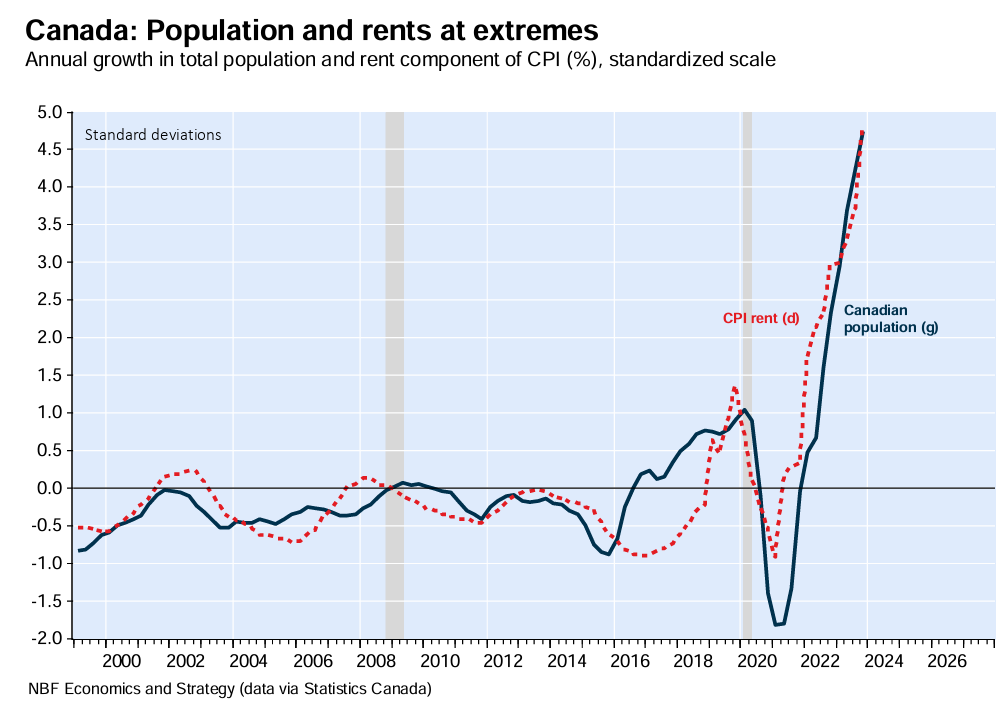
In early 2024, Canada’s rental and population growth were extreme
The electorate was angry, and the incumbent centre-left Liberal government implemented sweeping immigration cuts to stabilise the population and ease pressures on housing and infrastructure, alongside rebalancing the economy towards sustainable growth.
The immigration reforms included reducing annual permanent-resident targets, restricting international-student and temporary-worker admissions, and tightening asylum and border rules.
Advertisement
Canada’s permanent residence targets have been cut from 500,000 to 365,000 by 2027.
Canada has also set specific targets for non-permanent residents (NPRs), including international students (the most substantial reductions) and temporary foreign workers.
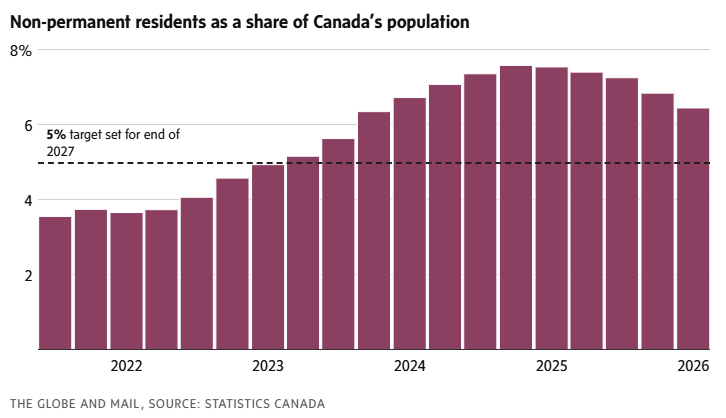
By the end of 2027, NPRs are projected to comprise 5% of Canada’s population, down from 7.6% at its peak.
Advertisement
Canada’s immigration reforms have proven extremely effective.
According to the latest data from StatsCan, published in the Globe & Mail, Canada recorded its first annual decline in population in records dating back to the 1940s:
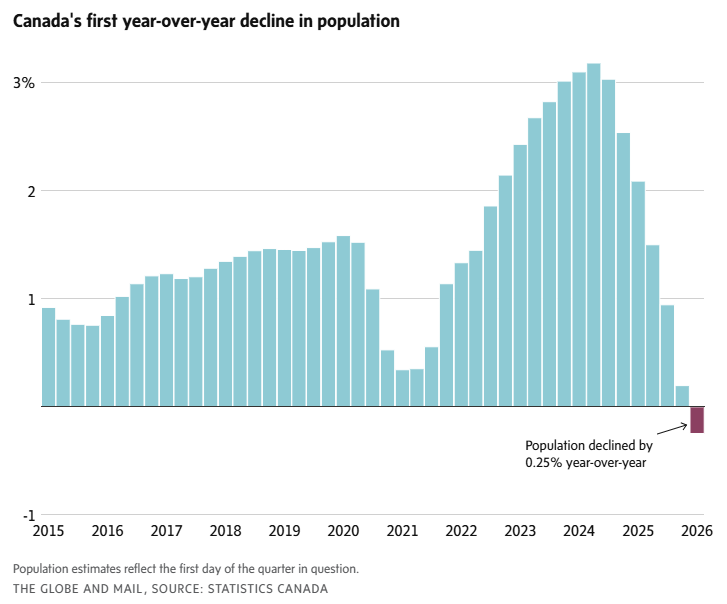
Canada’s population declined by 102,000 people in 2025, or 0.25%, to 41,472,081.
Advertisement
The population decline was driven by an exodus of NPRs, which fell by 171,300 last year.
This brought the total population of NPRs to 2.67 million, or 6.4% of the total population, down from a peak of 7.6% of the population in 2024:
Advertisement
StatsCan also reported a sharp year-over-year decline of nearly 20% in the number of permanent resident admissions to Canada, in line with the targets established by the federal government.
“We’re now fully in an era of normalization, with population growth of around zero expected through 2027, before settling back to a baseline of just under one per cent”, said Robert Kavcic, senior economist at Bank of Montreal.
Canadian rental affordability rapidly improves:
Advertisement
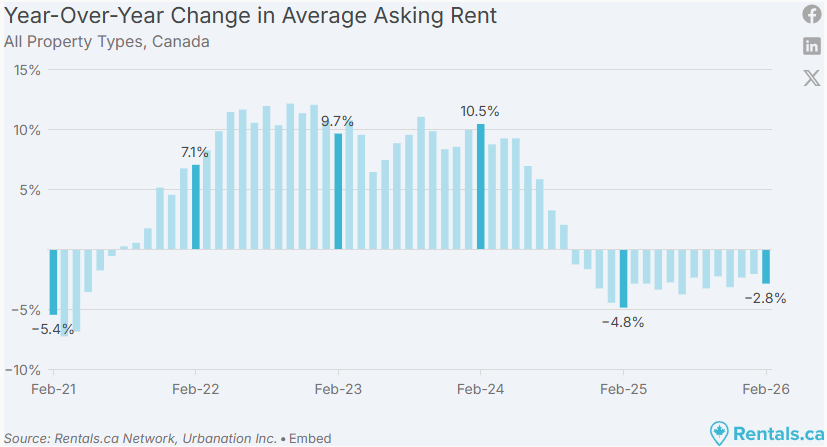
The impact of the immigration cuts on Canada’s rental market has been stunning.
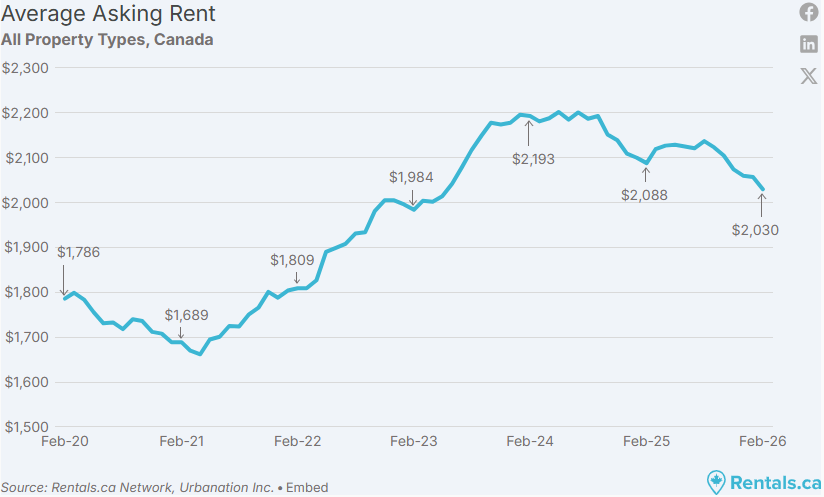
Rentals.ca this month reported that the average asking rent in Canada has fallen for 17 consecutive months to a 33-month low, down 7.8% from its May 2024 peak:
Advertisement
The average Canadian tenant household is now paying $172 less each month on rent, saving them $2,064 per year:
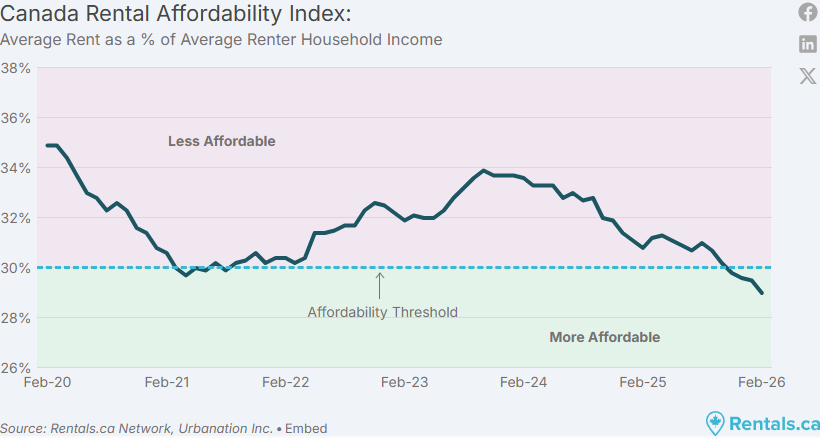
Unlike in Australia, rental affordability in Canada is rapidly improving. The average rent in February accounted for 29% of average renter household income, down from 31% a year ago and 34% two years ago, and below the standard 30% affordability benchmark, according to Rentals.ca:
Advertisement
Canada’s Finance Minister Francois-Philippe Champagne put it bluntly during his visit to Australia this month, stating the following to The AFR Business Summit about the nation’s immigration cuts:
“There’s a fundamental principle that if you accept people in the country, they need to be able to find a place to live, they need to be able to send their kids to school, and they need to be able to go to hospital if they need medical services”.
Advertisement
“We had reached a point of imbalances. We needed to bring that back to a sustainable level”.
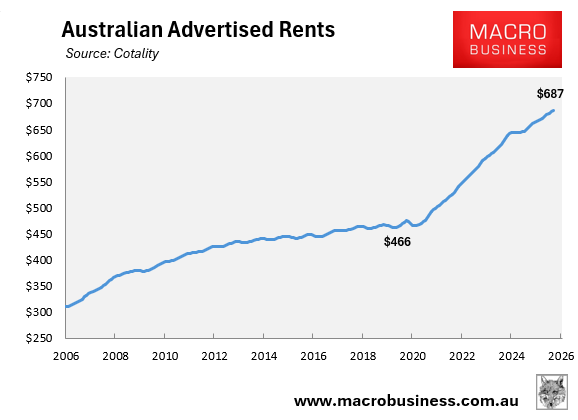
There are clear lessons for Australia, which continues to suffer from its worst rental crisis in modern history amid historically high net overseas migration.
Advertisement
Lower immigration is the solution, as Canada shows unequivocally.