
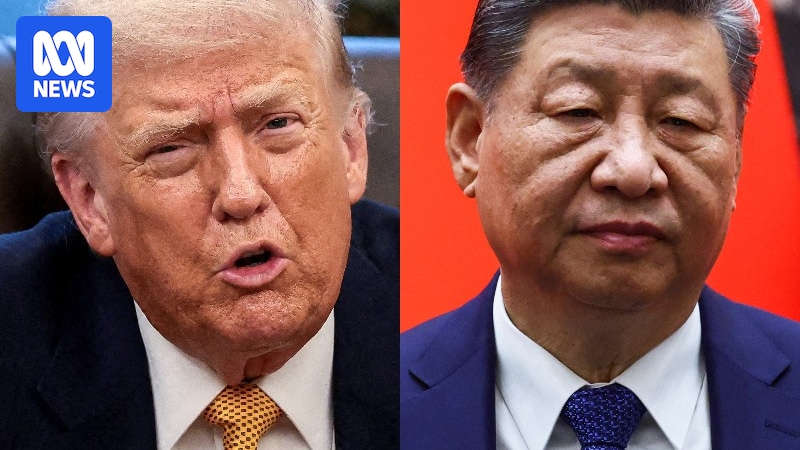
For months behind the scenes in Beijing, Chinese and American officials have been locked in negotiations over one of the most consequential political meetings of this year.
China’s President Xi Jinping was set to host United States President Donald Trump at a highly choreographed reception in Beijing at the end of March.
Iran war live updates: For all the latest news on the war in the Middle East, read our blog.
At the top of the agenda was extending a fragile trade truce between the two superpowers, along with discussions around Taiwan, semiconductors, rare earths, and agriculture.
But just days out from touchdown in Beijing, Mr Trump has postponed the meeting, citing a need to remain in America and keep his focus on the ongoing war in Iran.
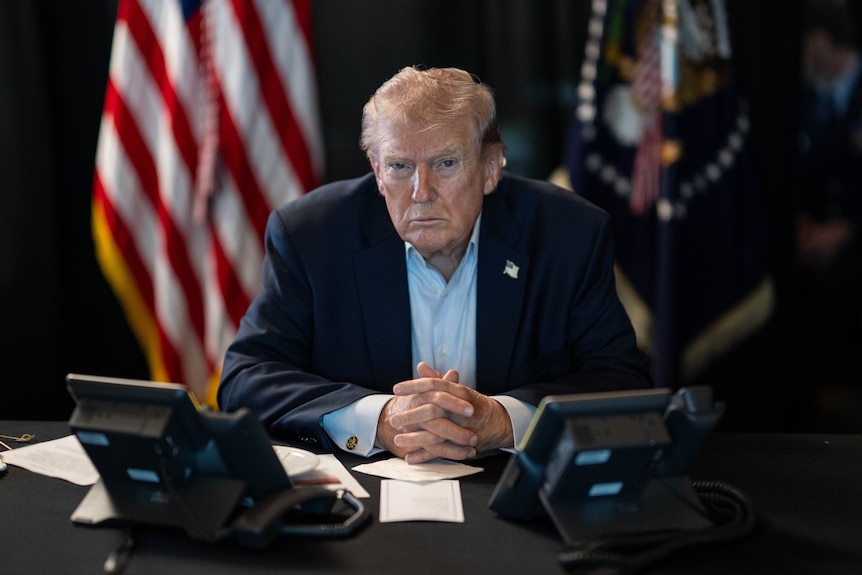
Donald Trump says the summit with Xi will be delayed for “five or six weeks” while he focuses on the war in Iran.
While on the surface the delay may appear to be a snub to China and its leadership — known for its meticulous planning and control — the reality presents multiple opportunities and advantages that Beijing is likely to seize upon.
It’s unlikely officials in Beijing are shedding tears that the Iran conflict has up-ended Trump’s foreign policy agenda and taken his focus from the Indo-Pacific region.
Why Iran’s most powerful ally is not coming to its aid
The US leader’s energy and resources are becoming even further entrenched in the Middle East with each passing day, leaving the path clear for Beijing to continue its global economic and geopolitical ambitions virtually unchallenged.
Those ambitions include unseating America’s geopolitical, economic and tech supremacy, and China is now moving in at speed.
In the past three months alone, at least seven world leaders have come to Beijing to reset and rebuild relations with China, in the wake of instability created by US actions.
They include some of the most important middle powers of the world, including the United Kingdom’s Keir Starmer, Germany’s Friedrich Merz and Canada’s Mark Carney, who boldly declared during his visit that there was a “new world order” that diverged away from US hegemony.
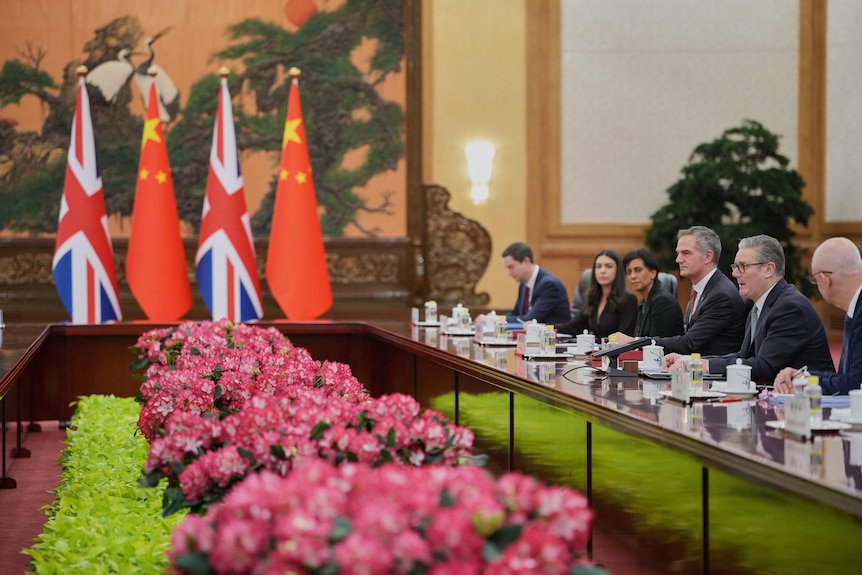
China has met with seven world leaders in the past three months, including UK Prime Minister Keir Starmer. (Reuters: Vincent Thian/Pool)
Spanish Prime Minister Pedro Sánchez is expected to travel to China in mid-April.
And later this year, a swathe of regional leaders will converge on China and likely hold bilateral talks with Xi Jinping, when China hosts the APEC Summit.
China’s 2026 diplomacy targets have already excelled, while the US has seen its relationships with political allies falter.
Donald Trump, Xi Jinping and the meeting looming over Middle East war
Those traditional US partnerships have been placed under even more pressure during the Iran war, with allies including Australia resisting demands from the commander-in-chief that they come to Washington’s aid.
And while Trump is lashing out at America’s allies for not heeding his call, China is presenting itself as an alternate diplomatic partner.
But the silent toiling from China extends well beyond diplomacy to areas that could unseat America’s role of global economic supremacy.
Loading
While the US is busy bombing, Beijing is wasting no time forging new international partnerships.
Just last week, China announced it would implement a zero-tariff agreement on imports from 53 African countries later this year, deepening Beijing’s imprint in the region.
It also announced its five-year plan to win the technology and AI race over the United States, and wipe out any dependence on America’s supply chain.
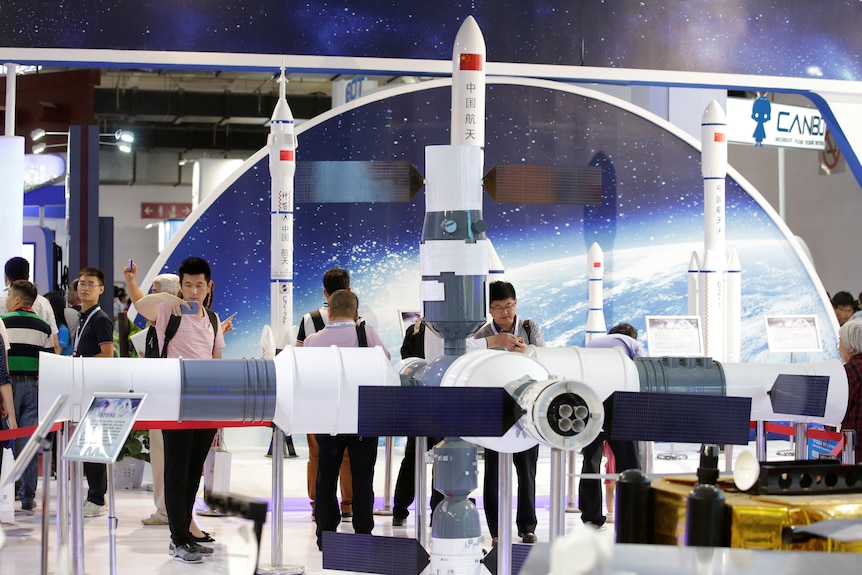
China is quietly presenting itself globally as a stable partner focused on developing its AI and tech industries. (Reuters: Jason Lee)
In short, China is planning to dominate the AI and tech industry in the same way it has dominated the market for electric vehicles and solar panels.
But the declaration for global tech supremacy has drawn little reaction from the US administration, which suits Beijing just fine.
Britain seeks fresh start with China
Right now, China, through state media, is presenting itself as a stable and reliable alternative to the chaos and instability of the US administration.
And the abrupt postponement of the planned Xi-Trump summit has given Sino-commentators even more evidence of Washington’s unpredictability.
That image of rationality and stability is crucial for Beijing to maintain, as it looks towards an eventual meeting between Xi and Trump.
Which is why China has taken a rather indifferent public approach to the change.
The US president has declared the summit with Xi has been postponed for “five or six weeks” and said of China’s reaction: “They were fine with it.”
It’s likely, though, that the last-minute change would be seen as disrespectful to a government where protocol and meticulous, choreographed plans underpin high-level engagements.
Loading
But Beijing is deliberately avoiding a public escalation with America and has offered a lukewarm commitment that communications with Washington are ongoing.
The extra time now on offer before the Xi-Trump summit will give Beijing more opportunity to refine its negotiating stance, especially as world dynamics keep shifting at a rapid rate.
Any inconveniences in having to change plans, will likely be offset by the advantages now presented to Beijing, as America becomes further entangled in the Middle East.