
March 19, 2026
By Karan Singh
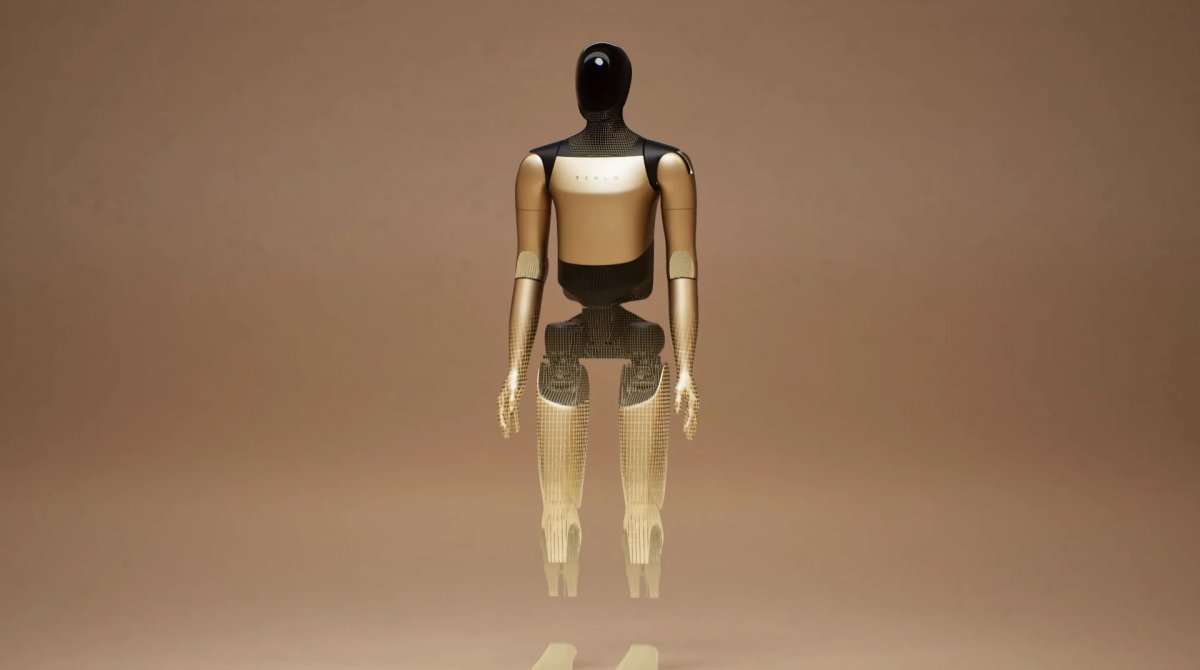
Just 24 hours after Tesla and xAI/SpaceX officially announced their joint Digital Optimus project, Elon Musk dropped another massive bombshell detailing how the new system will work.
It turns out, Digital Optimus isn’t just a software platform or a centralized supercomputer. Instead, it’s a massive, distributed compute network powered by your vehicle and your local Supercharger.
Taking to X, Elon expanded on his announcement, revealing that Tesla intends to utilize the idle compute power of its AI4-equipped vehicle fleet alongside millions of new, dedicated server units at Supercharger stations to process AI workloads.
Elon has previously spoken on distributed computing that would enable consumers to tap into their vehicles for either a computing profit while parked, or for their own use. It seems that Digital Optimus will be the first step towards reaching that goal.
Oh and it works in all AI4-equipped cars, so your car can do office work for you when not driving.
We’re also deploying millions of dedicated Digital Optimus units in the field at Superchargers where we have ~7 gigawatts of available power.
— Elon Musk (@elonmusk) March 12, 2026 Your Car Does Office Work
The most immediate impact for consumers is the revelation that the computers in their cars could be put to work while the vehicle is parked, thanks to their massive computing power.
For years, there has been speculation that Tesla could eventually utilize its fleet as a massive, distributed supercomputer. At nearly every single earnings call from 2022 to today, Tesla’s executives have mentioned the fleet acting like an on-tap data center.
Because Tesla’s AI4 (Hardware 4) computers are incredibly powerful but sit entirely dormant while a vehicle is parked at home or work, that untapped compute can now be leased out to xAI and the Digital Optimus network to process complex AI inference tasks.
While Elon didn’t explicitly detail the financial structure yet, doing office work for you implies that owners could potentially earn passive income or free Supercharging credits in exchange for letting xAI utilize their car’s compute hardware while it sits idle.
Digital Optimus vs OpenClaw
If you’ve been following the great AI race, you’ll likely have heard of OpenClaw. Originally launched late last year as a grassroots open-source project, OpenClaw has become a massive viral sensation in early 2026. It is an autonomous personal AI agent that runs locally on a user’s computer, plugging into apps like WhatsApp or Telegram to independently read emails, book flights, and execute tasks directly on your machine.
However, OpenClaw is the ultimate wild west of AI. Because it requires deep, unrestricted access to a user’s local files and applications to function, it has recently sparked a massive cybersecurity panic.
Security firms like Cisco have labeled OpenClaw a security nightmare due to severe vulnerabilities like silent data exfiltration and prompt injection, leading governments, including China, the US, UK, and Canada, to actively ban the software from federal enterprise devices.
This is exactly where Digital Optimus stands in contrast. While OpenClaw relies on users handing over the keys to their personal hard drives to an experimental LLM, Digital Optimus is a secure, vertically integrated, enterprise-grade network.
Instead of a chaotic, consumer-level desktop tool, Tesla and xAI are building a controlled walled garden AI. By running workloads entirely within Tesla’s proprietary hardware ecosystem, Digital Optimus can process massive AI tasks at scale without exposing the network to the catastrophic security flaws currently plaguing open-source agents.
This is all possible by utilizing secure AI4 computers and dedicated Supercharger nodes, which can process data either locally for users or over secure enterprise connections for Tesla and xAI.
Why Use Superchargers?
While the vehicle fleet provides a massive, distributed web of compute, the heavy lifting will be done at Tesla’s Supercharger stations.
“We’re also deploying millions of dedicated Digital Optimus units in the field at Superchargers where we have ~7 gigawatts of available power.”
One of the biggest bottlenecks in the current AI arms race isn’t just securing NVIDIA chips; it is finding the massive amounts of electricity required to run them. Building traditional gigawatt-scale data centers takes years of regulatory approvals and grid upgrades. Tesla, however, already has the ultimate cheat code: the global Supercharger network.
Because Tesla has already secured the grid connections and deployed stationary battery storage systems (like Megapack) at many of these charging sites, they have a staggering 7 gigawatts of available power ready to use.
By deploying millions of dedicated Digital Optimus server units directly in the field at these stations, Tesla can bypass the traditional data center bottleneck entirely.
Building Synergy
This announcement connects all of Elon’s major ventures. Tesla Energy provides the battery storage, the Supercharger network provides the grid infrastructure, the vehicle fleet provides the distributed edge-compute, and xAI/SpaceX provides the software to tie it all together.
As xAI races to build the world’s most capable artificial general intelligence, tapping into Tesla’s 7 gigawatts of distributed power proves exactly why the merger of SpaceX, xAI, and Tesla’s broader ecosystem is an unstoppable force in the tech sector.
Subscribe to our newsletter to stay up to date on the latest Tesla news, upcoming features and software updates.
March 19, 2026
By Karan Singh
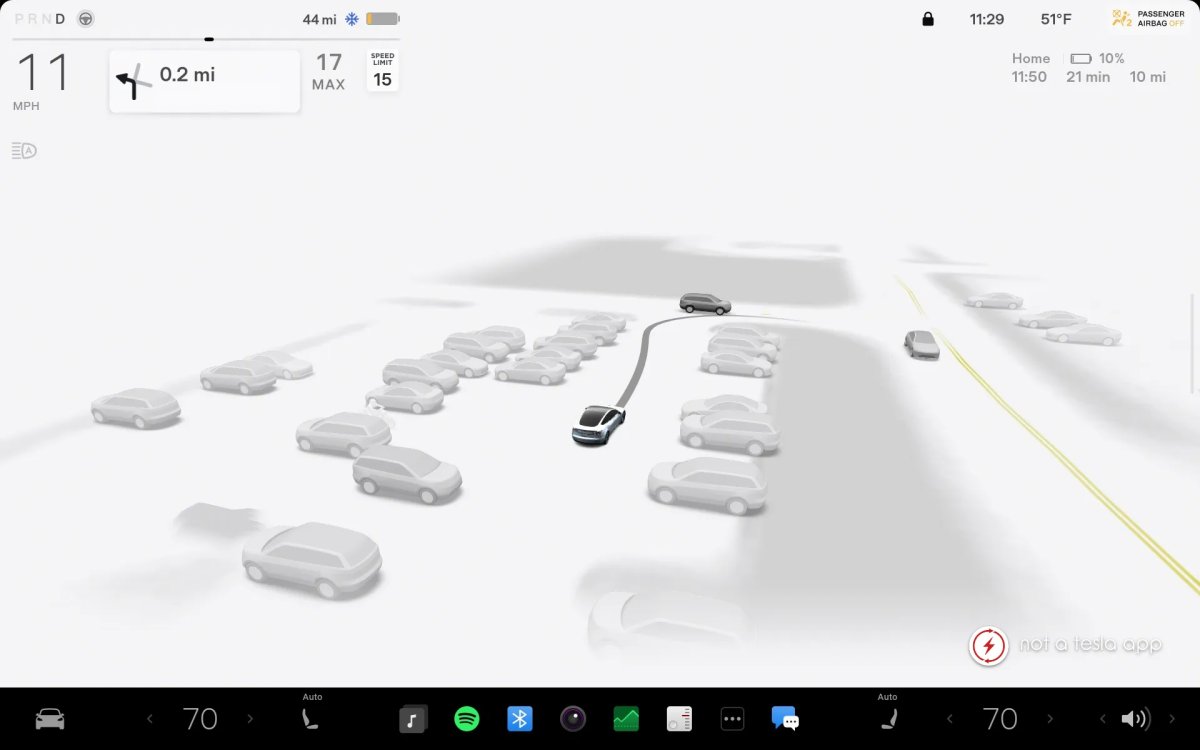
Tesla owners have been eagerly awaiting the next major FSD release, and it looks like that wait may be almost over. Last night, Elon Musk officially confirmed that FSD v14.3 is being tested internally.
He went on to say that he expects it to go into wide release in a “few weeks.”
The Long Road from December
If the FSD v14.3 nomenclature sounds familiar, it’s because this specific build has been on the radar for quite some time. Originally, Elon had mapped out a software roadmap that slated v14.3 for a December 2025 launch.
However, as is often the case with the complexities of solving real-world AI, Tesla pivoted. Instead of dropping a large change with v14.3 at the end of last year, the Tesla fleet received a long series of v14.2.x bug fix builds.
These iterative updates brought minor refinements to the vehicle’s driving behavior, prioritizing stability over sweeping architectural changes. Now, it seems the Tesla AI team is finally ready to push the true v14.3 overhaul to the public.
What Will FSD 14.3 Bring?
Musk hasn’t yet mentioned what would be included in the release. At the top of the wishlist is Banish. This is the next evolution of Autopark, which would allow your vehicle to drop you off at the door of your destination and autonomously navigate a crowded parking lot to find a spot and park itself.
The second item on the wishlist is improvements to Actually Smart Summon and Basic Summon, which are both built on the older FSD v12 stack and Autopilot stacks, respectively. Since these features operate on much older logic, they’re not as effective, smooth, or intelligent as FSD is in general.
Transitioning them to the latest end-to-end neural network architecture would be a massive upgrade for two of the most defining autonomy features and dramatically improve their reliability, speed, and safety.
Back in December, Musk famously said that FSD 14.3 would be the release that would make your car feel “sentient.” Back when Tesla released FSD 14.1, Musk stated that many more improvements were still to come in FSD v14, possibly hinting at new functionality. V14.3 could very well be the version that adds capabilities like Banish, rather than just refining existing features.
At this point in FSD’s cycle, most of the features needed to drive a car autonomously have been implemented. Tesla slowly pieced it together with highway driving, city streets, shifting between drive and reverse, and more recently, auto parking at the destination.
Tesla now needs to improve them to the point where the vehicle can operate safely with no one in it, which would then open the door to including banish.
Improved Reasoning Capabilities
Beyond parking lot tricks, v14.3 is expected to introduce a major change in how the vehicle actually thinks while navigating city streets.
Tesla’s Vice President of AI Software, Ashok Elluswamy, recently confirmed that reasoning was already implemented for FSD v14.2. However, v14.3 is supposed to bring another leap in the neural net’s ability to handle complex, unseen edge cases by actively reasoning through the scenario rather than just reacting to immediate obstacles.
As Tesla aggressively pushes toward its stated 10-billion-mile goal for unsupervised FSD, v14.3 will likely feature these improved reasoning capabilities more prominently. By allowing the car to make more human-like, contextual decisions, this update could be a bridge between the current supervised system and the autonomous Robotaxi future.
March 19, 2026
By Nehal Malik
Tesla is wasting no time moving from promise to production. Just days after Elon Musk teased the official launch of the “Terafab” project, the company has already started the hunt for the specialized talent needed to build a semiconductor factory from the ground up.
The move was first spotted by X user @TeslaRyanRogue, who highlighted a new job listing for a Technical Program Manager in Infrastructure Semiconductors based in Austin, Texas. This signals that Tesla is moving past the conceptual stage and into the brutal reality of high-tech construction.
Why Tesla Wants to Make Its Own Chips
For a decade, Tesla has been a trailblazer in vertical integration, but computer chips remained one of the few critical components it had to outsource. As the company pivots from a pure carmaker to an AI and robotics giant, that dependency has become a massive liability. Musk has identified chip supply as the next major bottleneck for the company, especially as it prepares to mass-produce the Cybercab robotaxi and the Optimus humanoid robot.
The official job listing makes the scale of this project clear. Tesla is looking for someone to “own end-to-end program scoping — including factory design/construction from concept through execution, ramp-up, and production readiness.” Building a chip fab is arguably the hardest manufacturing challenge on Earth. Geographic location is vital because these facilities depend on incredibly precise lithography; even tiny vibrations from a nearby highway can ruin a production run. By moving this in-house in Austin, Tesla is attempting to do for silicon what it did for battery cells.
The Roadmap of Tesla Silicon
Tesla’s AI chips are the computational backbone for its entire ecosystem. Currently, the company relies on Samsung to manufacture its AI4 chips, which power the Full Self-Driving (FSD) system in mainstream vehicles today. The upcoming AI5 chip is already designed and will be built jointly by TSMC and Samsung, promising a generational leap in performance when it hits mass production in mid-2027.
Looking further ahead, Tesla has already signed a huge deal with Samsung to produce AI6 in U.S.-based fabs. However, the Terafab is the “endgame.” It would allow Tesla to iterate on future chip designs at its own pace. Musk has even suggested that the AI7 chip and beyond could eventually be deployed in orbital data centers in space, working alongside SpaceX and xAI.
Ramping Up the “Machine that Builds the Machine”
Building a fab isn’t just about putting up walls; it’s about gathering the equipment and expertise needed for complex chip fabrication processes like lithography, etching, and deposition in one place. Tesla is looking for leaders who have managed over $100 million in capital expenditures to oversee everything from utility planning to “tool installation” and “production qualification.”
This could very well be Tesla’s most audacious plan yet. While the company will continue to rely on TSMC and Samsung for the next few years, the Terafab represents a future where Tesla controls every single electron in its AI stack. If they can pull off a successful chip production ramp in Austin, the “bottleneck” of global chip supply will finally be a thing of the past for Musk’s empire.