

This Kind of Trouble is the debut novel by Tochi Eze, a writer and lawyer from Nigeria who recently obtained a Master of Fine Arts degree in creative writing from Florida Atlantic University, and is studying for her Ph.D. in English at the University of Virginia.
The book contains echoes of Chinua Achebe’s 1958 classic Things Fall Apart, which documented life in a pre-colonial Igbo village and the devastation caused by the arrival of the British, first as missionaries and then with the colonial legal system. This Kind of Trouble takes the reader through the postcolonial landscape, with three timelines: one in 1905 soon after the missionaries have set up shop, one in the 1960s in the early days of independence and one in 2005.
In 1905, the residents of the village of Umomilo are shocked to learn that three young women, believed to be virgins, are pregnant, and look to their tribal leaders for answers. Two of the virgins follow traditional Igbo spirituality while one of them, Phyllis, is a Christian and takes refuge in the church.

Capps Juliano photo
Tochi Eze’s debut novel contains echoes of Chinua Achebe’s 1958 classic Things Fall Apart, albeit tackling similar themes in a quieter fashion.
In 1962 and 2005, we are introduced to two descendants from Umomilo, Margaret and Benjamin, who engage in a star-crossed love affair. Margaret’s ancestor, who struggled with mental illness, played a gruesome role in the affair of the three virgins, while Benjamin is the descendant of Phyllis. Benjamin’s other three grandparents are white and British, and when he arrives in Nigeria on a work assignment, seeking his roots, he appears white to the Nigerians he meets.
In the 2005 timeline, Benjamin and Margaret have become estranged, and we meet their daughter and grandson, who Margaret believes to be cursed by events in Umimilo a century ago. Margaret becomes very focused on ending the curse that traditional spiritualists had warned would befall her if she married Benjamin, and this leads to the couple reconnecting.
The novel isn’t about Benjamin’s questions of identity, nor is it about his quest to learn the secrets of the past. In fact both he and Margaret abandon their searches into their histories fairly quickly, and the reader only learns of the truth through the omniscient narrator. Mental illness is a constant theme in every generation of the novel, and is depicted as a terrifying condition that causes extreme violence in its sufferers, who have little insight into the damage they are doing.
The conflict between traditional beliefs and Christianity is also explored, though not with the incisiveness of Achebe’s novel or his broad perspective. This Kind of Trouble is a quieter book that focuses intently on one family, rarely zooming out to the wider society. When Eze does do so, the writing is strong and sure, like the traditions it honours.
Eze describes women around the office water cooler with keen observation: “They all laughed, their talk moving between Igbo and English and Yoruba and pidgin, their language so braided that it became its own separate thing.” She writes about traditional village life: “The people of Umomilo were taught to hold one another’s problems the same way the pots collected the first rainwater — each man seeking to help his neighbour… The matter was simple. If it rains, you do not leave your neighbour’s pots attended. When trouble comes, you do not throw your face the other way.”
Winnipeg Free Press | Newsletter

And, in a moment of introspection: “Margaret considered herself a Christian in every sense, but she was also, like her matriarch, Oriaku, born into a line of priestesses. She had seen what the psalms could do to her anxious heart. But she also knew the sturdy touch of her ancestral rituals.”
An omniscient narrator can sometimes create distance between the reader and the characters, which ends up being the case in This Kind of Trouble — we are not given much insight into their thinking. Benjamin especially makes some very troubling and life-changing decisions without much explanation as to why. This might be forgivable if characterization was being sacrificed for the bigger picture.
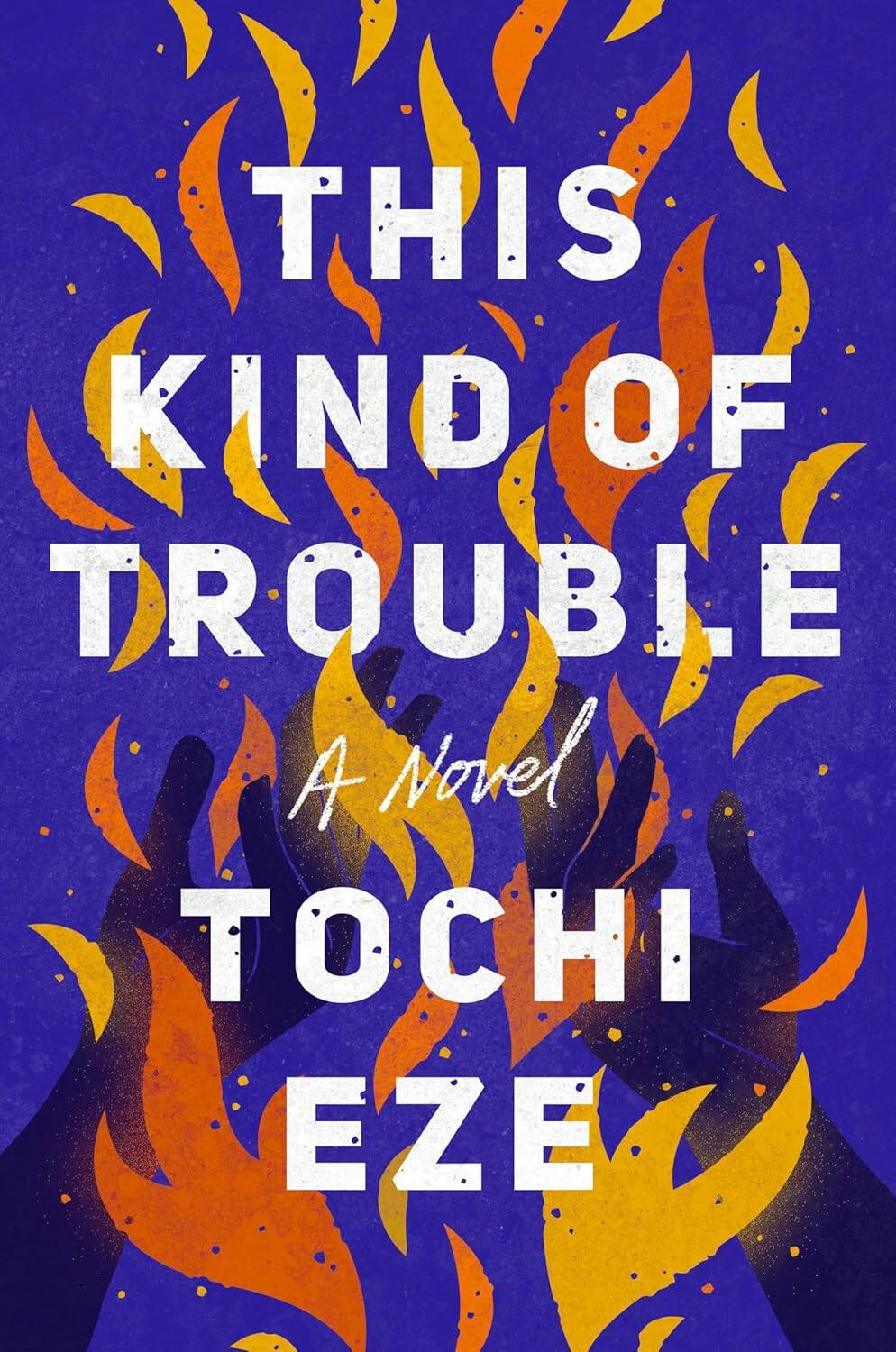
This Kind of Trouble
But while the themes in This Kind of Trouble are intriguing, it’s unclear what the writer is saying about contemporary Nigeria. How does the shadow of the past loom over present life? The ending leaves this question unanswered, and it’s difficult to tell what actually happens to each character and what is the status of the curse. Perhaps Eze wanted to leave things open-ended and allow readers to draw their own conclusions, but it may be a little too ambiguous for some.
Nevertheless, This Kind of Trouble is an interesting and engaging book that allows readers a view into a vibrant and complex society, and Tochi Eze is a very promising writer.
Zilla Jones is a Winnipeg-based writer of short and long fiction. Her debut novel The World So Wide was published in April.