
Australia’s latest interest rate rise should be a political alarm bell.
The Reserve Bank has lifted the cash rate to 4.10 per cent.
That may be necessary to keep inflation under control.
But it also exposes a deeper failure in Canberra and the states.
Politicians keep saying the answer to housing affordability is more supply.
Yet they continue to preside over a system that makes new homes harder, slower and more expensive to build.
This is the contradiction at the centre of the housing debate.
Governments say they want more homes. They set targets. They hold press conferences. They announce funds and taskforces.
But when interest rates rise, the cost of delivering housing rises too.
Developers pay more for finance. Builders face tighter margins. Community housing providers find projects harder to stack up.
Investors become more cautious. Some projects are delayed. Some are scaled back. Some quietly die before a sod is even turned.
That is not theory.
The National Housing Supply and Affordability Council has warned that housing supply is highly sensitive to interest rates, and that an unexpected 50 basis point rise would keep new supply around its current 10-year low for much of the Housing Accord period.
That matters because Australia is already badly behind.
The Council forecasts only 938,000 new dwellings over the five-year Housing Accord period, leaving the country 262,000 homes short of the 1.2 million target.
No state or territory is forecast to meet its implied share of the target under current settings.
In other words, we are already falling short before the latest rate rise has had time to fully work its way through the system.
That should terrify every politician who claims to care about affordability.
The latest approvals data points in the same direction.
In January 2026, total dwelling approvals fell 7.2 per cent to 14,564.
The most worrying figure was for private sector dwellings excluding houses, which fell 24.5 per cent in a single month.
That category includes the apartments and medium-density housing Australia needs if it is serious about easing pressure in major cities.
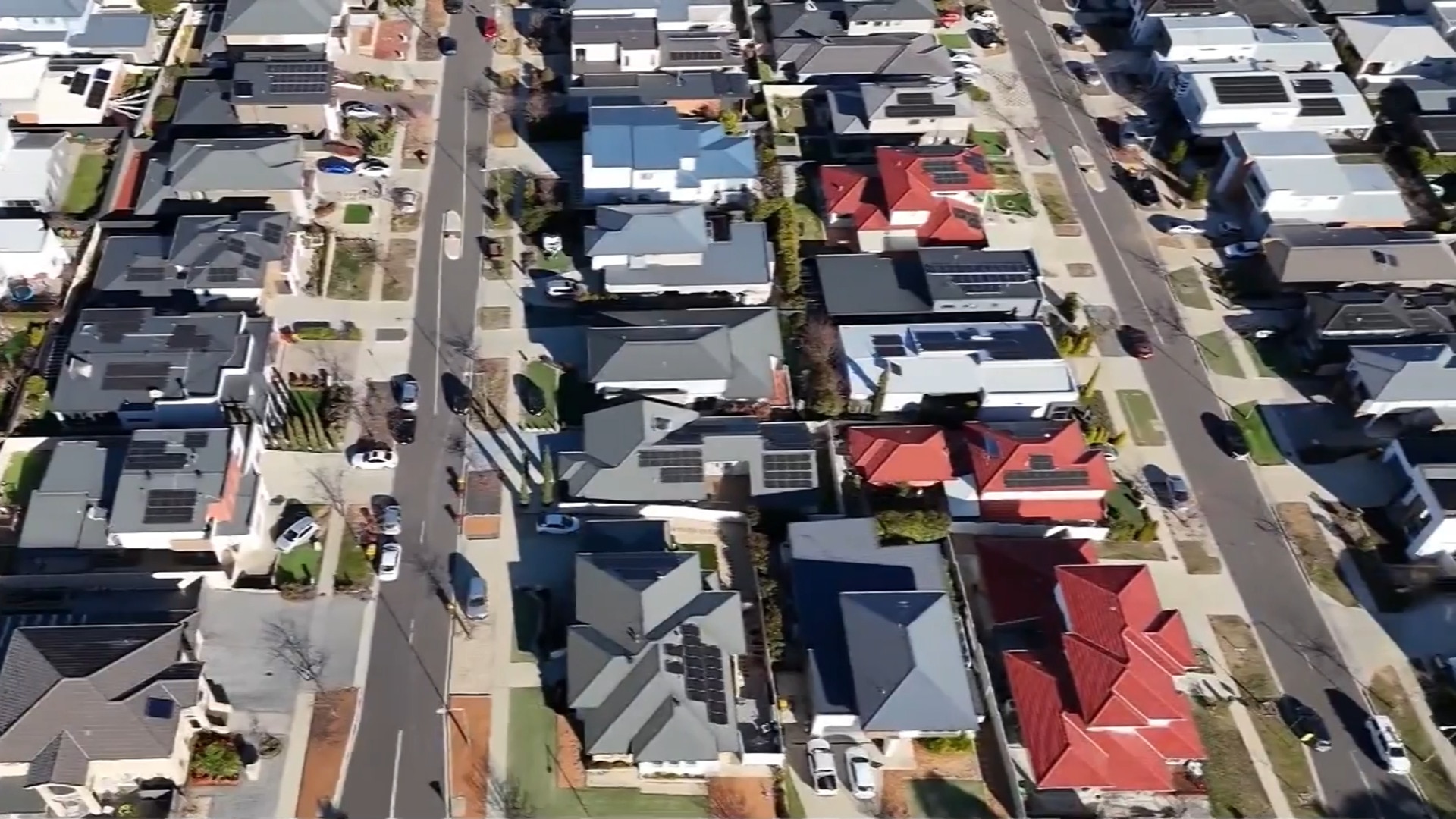
Detached houses alone will not solve a national housing shortage.
Australia needs more units, more infill, more well-located medium-rise housing and more projects that can be delivered at scale.
When approvals in that part of the pipeline slump, it is a flashing warning light.
And here is where the political class keeps dodging the real issue.
It is easy to blame migration. It is easy to blame investors. It is easy to blame negative gearing, first home buyers, foreign buyers or short-term rentals.
Those debates are politically useful because they generate outrage.
But none of them change the basic fact that Australia has made it too hard to build enough homes.

Planning systems are still slow. Infrastructure delivery is still lagging. Charges, levies and compliance costs keep piling up.
Construction productivity remains weak.
Skilled labour remains tight. And every extra cost gets passed through the system until the final bill lands on renters, buyers and taxpayers.
The government will point to its housing programs. Some of them are worthwhile.
Housing Australia says 279 projects have been committed under the first two funding rounds of the Housing Australia Future Fund and National Housing Accord Facility, delivering 18,650 homes nationwide.
That is welcome. But let’s be honest. It is not enough to close a national shortfall measured in the hundreds of thousands.
It is not enough to make housing affordable for ordinary Australians.
It is certainly not enough to pretend the crisis is under control.
These programs may help at the margins, but they do not change the fact that the mainstream housing delivery system is still broken.
This is why higher interest rates are such a serious housing problem.
They do not just hurt people with mortgages. They choke future supply.
They raise the cost of capital at the very moment the country needs more construction, not less.
Then, when fewer homes are built, pressure intensifies on the homes that already exist.
Rents stay high. Prices stay high. Vacancy stays tight. Families stay squeezed.
Essential workers get pushed further away from the communities they serve.
Younger Australians keep hearing speeches about affordability while watching the dream move even further out of reach.
The Housing Council has already said expected new supply will be insufficient to meaningfully improve affordability for all households.
That is bureaucratic language for a very simple truth: the system is failing.
What makes this worse is that governments still behave as though housing supply is something they can wish into existence.
They talk about targets as if targets build homes.
They talk about ambition as if ambition pours concrete.
But homes are built through real projects, on real sites, under real planning rules, with real financing costs and real commercial risks.
When those risks keep rising, fewer projects proceed. It is that simple.
You cannot claim to be serious about increasing supply while keeping taxes, charges, delays and approval uncertainty at levels that make supply less viable.
The solution is not to tell the Reserve Bank to ignore inflation.
The Bank has a job to do.
The solution is for politicians to finally do theirs. That means treating housing supply as an economic priority, not just a social slogan.

It means cutting the taxes and charges that make new homes dearer.
It means speeding up planning approvals for good projects. It means investing in enabling infrastructure so land can actually be developed.
And supporting modern construction methods and more productive ways of building.
It means creating a system where new supply is easier to deliver when the country needs it most, not harder.
For too long, Australian governments have tried to manage the housing debate with announcements rather than delivery.
That approach is now colliding with economic reality.
The latest rate rise should end the pretence. Higher interest rates may help cool inflation, but they also risk making the housing shortage worse by suppressing the very supply politicians claim to support.
And when supply gets squeezed, ordinary Australians pay the price through higher rents, higher prices and fewer options.
That is the real scandal here.
Not that interest rates have gone up, but that governments still have no credible plan to stop a housing shortage from getting even worse.
Dr Ehsan Noroozinejad is a senior researcher and Global Challenge Lead at Western Sydney University who writes about innovative housing policy, modern methods of construction, and urban resilience. He advises governments and industry on affordable-housing strategy and has appeared on ABC News, ABC Radio National, Sky News, The Guardian, The Policymaker, The Sydney Morning Herald and The Conversation