
What is stagflation?
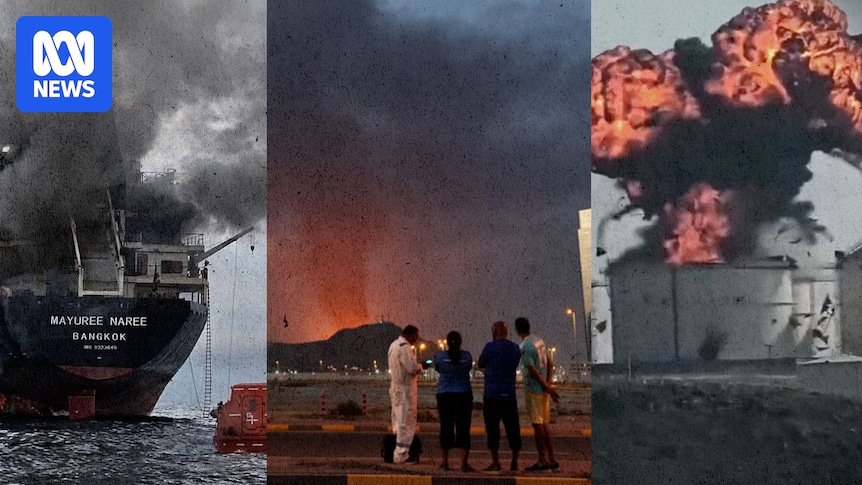
You may have heard the word in recent weeks, because experts are worried that the war in the Middle East will cause stagflation in multiple countries.
So what is it and why are they worried about it? What causes it and can it be prevented?
The battle over the Strait of Hormuz
The word “stagflation” is a portmanteau of two words: stagnation + inflation.
It refers to a situation where your economy is stagnating and you’re dealing with high inflation.
It is an extremely damaging phenomenon that can be accompanied by rising unemployment and recession and a whole host of other problems.
In the 1970s, many economies around the world experienced stagflation simultaneously, including Australia. It had many causes, but the oil price shock of 1973-74 was a major one.
It’s why economists are always concerned about global energy price shocks because they know what havoc they can wreak.
Why are global energy price shocks so damaging?
At the moment, we’re not at the point where many national economies are powered by their own locally-generated renewable sources of energy.
If Australia’s transport systems and vehicles, its heavy industry, its mines, and its households and businesses, were powered by different sources of renewable energy that were dispersed and decentralised across the country, we wouldn’t have to worry so much about oil fields in the Middle East.
Energy independence? It would reduce the impact of global energy shocks
But our global energy system is still heavily powered by fossil fuels like crude oil, gas, and coal.
And that means the fortunes of national economies are still held hostage by global oil and gas markets, as well as warmongering governments and corporations.
In this global fossil-fuel system, experience has taught us that major energy supply shocks can lead to stagflation.
It’s why experts have warned about the possibility of stagflation in recent years when the global energy system has taken a big hit from two different wars (e.g. the Russia-Ukraine war in 2022, and the US/Israel-Iran war in 2026).
Why do economists fear global energy shocks so much?
Have a look at the graph below.
It shows what happened to crude oil prices in the 1970s. Notice the oil crisis in 1973-74 and the second one in 1979? They both caused chaos.
It’s hard to believe these days, but global oil prices were incredibly low and stable for decades before the 1970s.
You can see that in the graph.
The predictability and stability of oil prices in the decades between 1945 and the early 1970s helped national economies to grow relatively quickly and support high levels of employment with rising wages and manageable inflation.
But the oil crisis in 1973-74 changed everything.
If we’re hit by stagflation, it will be different this time
It occurred when Arab members of the Organisation of Petroleum Exporting Countries (OPEC) imposed an oil embargo on the US and other countries in retaliation for supporting Israel during the 1973 Arab-Israeli War.
That oil embargo saw the price of crude oil double, then quadruple.
The increase in global oil prices was so dramatic that it rendered lots of existing capital stock commercially and economically irrelevant in lots of countries.
It limited the rate at which economies could grow (it was a classic “supply shock”) because much of the world’s manufacturing and transport technology in the early 1970s had been built in earlier decades on the assumption that oil prices would remain low.
And it sent severe waves of higher prices (i.e. inflation) through the global system which spurred major cost-of-living crises.
It was the original textbook episode of “stagflation.”
It led to deep recessions, rising unemployment, and high inflation in multiple countries simultaneously, including in Australia.
A central bank’s worst nightmare
Major energy supply shocks cause two negative things to happen at once that are very difficult to manage.
They damage an economy’s ability to function (because they disrupt its energy supply) and they send much higher prices through the system (i.e. inflation).
Can Australia dodge another gas price gouge?
That double-whammy is a nightmare scenario for policymakers, because how do they manage it?
Think of it from the Reserve Bank’s perspective.
When economic growth is stagnating the RBA normally wants to cut interest rates. If inflation is a major problem it normally wants to lift interest rates. But what should it do when it’s faced with both situations at the same time?
The RBA tries to keep inflation under control by keeping the overall level of demand in Australia’s economy roughly in balance with the prevailing supply of goods and services.
But if this energy supply shock seriously damages the global economy’s ability to produce goods and services, while sending waves of high inflation through the system, should the RBA lift interest rates to clamp down hard on demand in Australia’s economy to try to keep demand in balance with (a greatly diminished and damaged) supply?
Won’t that risk causing a recession in Australia?
“We don’t want to see a recession or a large rise in unemployment if we can avoid it,” RBA governor Michele Bullock said last week.
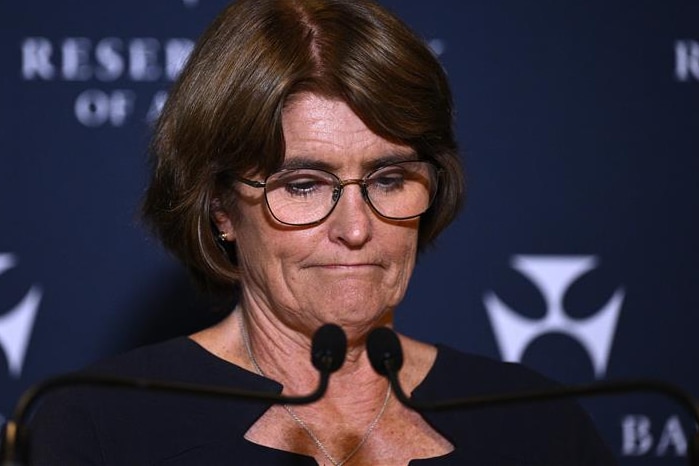
The RBA lifted interest rates on Tuesday, for the second time in two months. RBA governor Michele Bullock says she’s concerned about inflation and the war in the Middle East. (AAP Image: Dan Himbrechts)
What can we do about stagflation?
If the war in the Middle East is prolonged and it does lead to stagflation, we can’t just rely on the RBA to manage the fallout with interest rates.
After all, higher interest rates won’t stop the United States, Israel, and Iran from bombing each other’s assets and destroying important oil and gas facilities in the Persian Gulf and crippling the global energy system.
We will have to use a range of policies to tackle the crisis.
To try to dampen the impact of fuel shortages in the short-term, the International Energy Agency (IEA) published a report on Friday that discussed 10 ways that countries could reduce demand for fuel immediately.
It encouraged people to start driving less, working from home if they can, using public transport more, and flying less.
See its 10 ideas in the table below:
Alison Pennington, the chief economist at the McKell Institute, a progressive think-tank, published an interesting op-ed on Tuesday last week that discussed other policy options for Australia.
Pennington argued that in the event of another bout of damaging inflation, Australia will need significant cost-of-living relief for families, including reinstating emergency electricity rebates and making childcare free.
She said those measures could be funded through a windfall profits tax on Australia’s major oil and gas exporters that are set to clock windfall profits from rising oil and gas prices from the war.
Labor explores new gas tax to shield from Iran war shock
On Friday, the ABC’s Isobel Roe then revealed that the Albanese government had asked Treasury to explore options (coincidentally) for taxing windfall gas company profits to shield Australians from the impact of the war.
Ms Pennington also said Australia would benefit from new inflation-fighting legislation that would compel companies of high turnover to notify and justify price hikes to a dedicated Prices Tribunal.
“We did this in 1973 under the Prices Justification Act,” she wrote.
“The tribunal would investigate, report on and scrutinise prices for goods and services, with big fines imposed for excessive profiteering.”
She said we should also work hard to fast-track renewable energy projects to reduce energy bills in the long-run and hasten the shift away from the fossil fuel epoch.
And they’re not the only policy ideas floating around, because policymakers are preparing for the possibility that war in the Middle East could last for much longer than anticipated.
On Thursday, the federal government appointed a Fuel Supply Taskforce Coordinator to manage the fuel and other supply chain challenges in Australia that will arise from the war.
“Our fuel supply is currently secure – but I want us to be over-prepared,” Prime Minister Anthony Albanese said when announcing the appointment.
Clearly it would have been wise to have already undertaken some of these policy measures before Israel and the US started bombing Iran, and probably even before Russia invaded Ukraine.
But better late than never.