
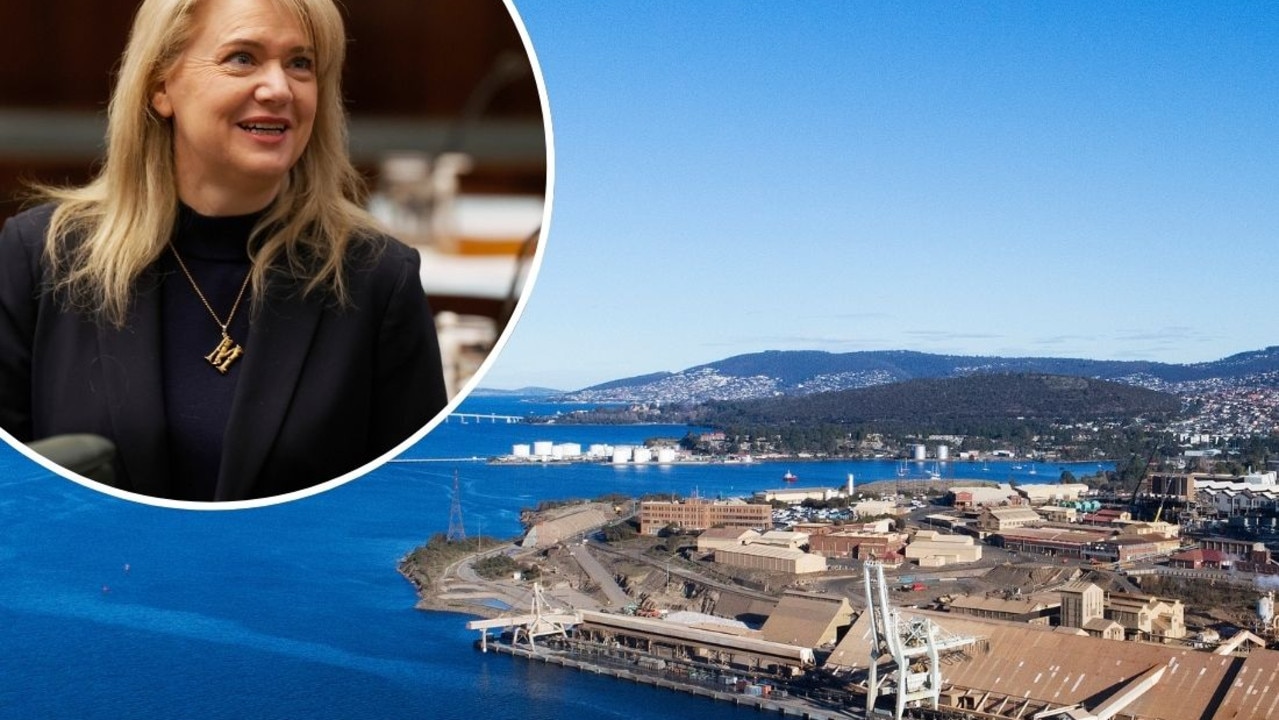
The four Greater Hobart mayors have urged the state government to continue supporting a charity that monitors the health of the River Derwent, warning the program’s future could be at risk if public funding dries up.
Established in 1999, the Derwent Estuary Program (DEP) is anchored by a partnership between the three tiers of government, major industrial players, and the research community.
In a budget estimates hearing in November 2025, Environment Minister Madeleine Ogilvie expressed personal support for the DEP but could not guarantee ongoing grant funding, citing a “hard budget environment”.
Department of Natural Resources and Environment Tasmania secretary Jason Jacobi told the same hearing that “no further decision” had been made about funding for the program.
The Greater Hobart Strategic Partnership, representing the four major urban councils, has demanded certainty for the DEP in letters addressed to Ms Ogilvie and Treasurer Eric Abetz ahead of the 2026-27 state budget, due to be handed down in May.
Hobart Lord Mayor Anna Reynolds said the government’s “modest” annual funding contribution of about $170,000 helped the charity provide “essential regional services that councils cannot provide on their own”.
“It’s a highly effective partnership that works across council boundaries and delivers long-term benefits for our city and our environment,” she said.
The DEP is tasked with managing and protecting the Derwent, which is one of the most metal-polluted estuaries in the world.
Since it was founded, the DEP has co-ordinated more than $200m worth of investment in environmental remediation projects, helping to reduce discharges of organic matter in the river by more than 90 per cent, heavy metal pollution by more than 60 per cent, and sewage-derived nutrients by 10-20 per cent.
The program publishes vital public health information about the water quality at beaches and bays along the estuary. It also coordinates restoration and conservation efforts for threatened species, including the little penguin and the spotted handfish.
Clarence Mayor Brendan Blomeley said the DEP wasn’t just an environmental program but also served as “critical infrastructure” for the city “just like transport or water systems”.
Speaking to reporters on Saturday, Ms Ogilvie said she was “very supportive” of the DEP’s work but again did not clarify whether the charity would continue to receive funding.
“What I will say is, when we know, [I’ll] be very happy to convey the information when I have it,” she said.
As of June 30, 2025, the DEP held net assets of $593,000 but recorded a $234,000 deficit and remained reliant on external funding, according to its most recent audited financial report.
The DEP was contacted for comment.