
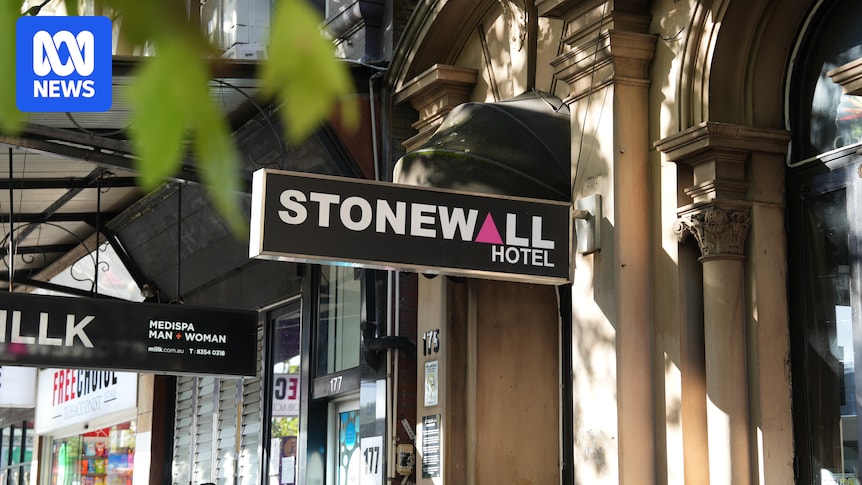
Just three weeks after Mardi Gras, Oxford Street’s biggest night of the year, a venue feted as “a cultural icon in the heart of Sydney’s queer community” is no more.
Stonewall Hotel entered voluntary administration on Monday, nine months after it was acquired by US company Pride Holdings Group, and hailed by its new owners as the “number one LGBTQ entertainment complex in Australia”.
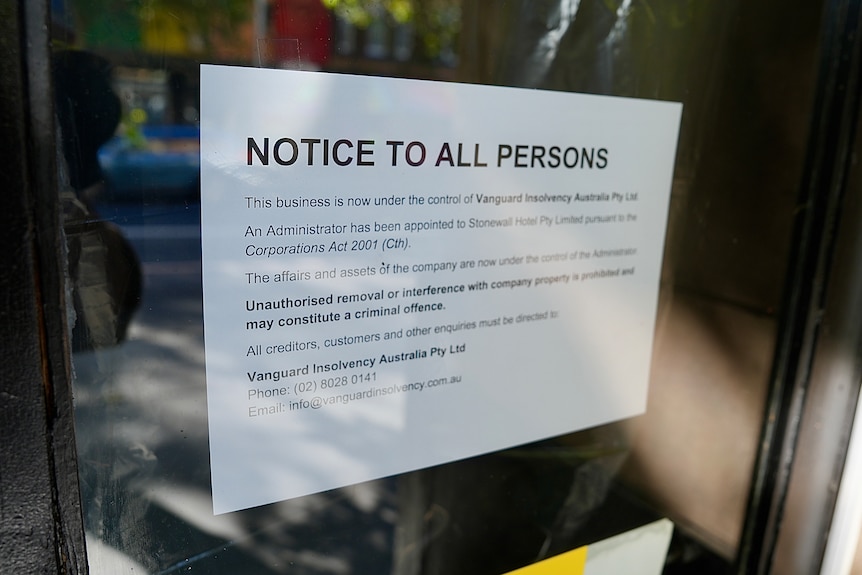
A notice at Stonewall Hotel on Oxford Street informing the business was in the hands of administrators. (ABC News: Adam Griffiths)
Owner Craig Bell said in a statement on social media the decision was “sad and difficult” after 28 years of operation, but “change is constant, and Stonewall’s story is far from over”.
Its “next chapter” would be at its brand-new sister venue in Newtown, which opened its doors to patrons in early March.
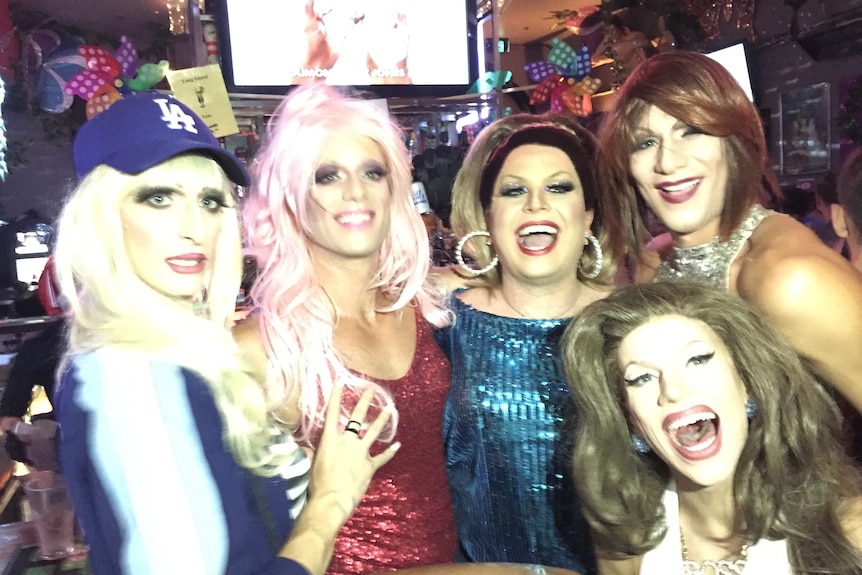
Tim Millgate, who occasionally performs under the drag name Tina Turnon, at the Stonewall Hotel (third from right). (Supplied)
Drag performer and Oxford Street local Tim Millgate, who occasionally performed at the venue as Tina Turnon, told the ABC he was shocked by the sudden closure after what appeared to be a thriving Mardi Gras season.
“It was one of the first queer spaces that we went to, you know, growing up … and as teenagers it was a safe space … a community hub,” he said.
“All walks of life were welcomed at Stonewall.”
Loading Instagram content
The changing face of Oxford Street
Stonewall Hotel is the latest queer establishment to shut on Oxford Street with the after-effects of the city’s 2014 lockout laws and an increase in development heavily impacting businesses.
Australia’s biggest gay nightclub, ARQ, met the same fate last year after 26 years on the strip, while retailers such as Darlinghurst Bookstore and Aussie Boys closed after decades serving the LGBTQIA+ community.
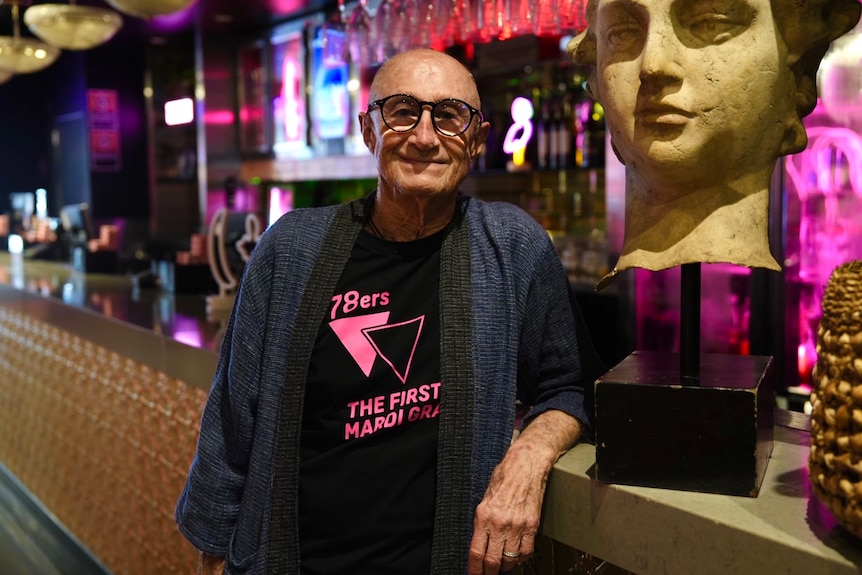
LGBTQ+ historian and Mardi Gras 78er Garry Wotherspoon. (ABC Sydney: Jak Rowland)
Garry Wotherspoon, historian and board member of Sydney’s queer history museum Qtopia, said it was sad a venue with a historically significant name, like Stonewall, was leaving the area.
The queer institution was named after the Stonewall Inn riots in 1969, which paved the way for gay rights in New York City, and later in Australia when the 78ers marched through Oxford Street.
The night ended in police brutality but shaped Australia’s modern LGBTQIA+ rights movement and cemented what is now known as Sydney’s Gay and Lesbian Mardi Gras.
A 78er himself, Mr Wotherspoon said Oxford Street at the time was an “easy, closer, cheaper place for our emerging communities to establish themselves”, but its success as a thriving cultural hub came at a compromise.
“If a business on Oxford Street does well … the rent goes up and up and up and at a certain point, you’re not making any money, you’re just simply paying your rent off,” he said.
“That’s part of the reason. I think many of the places on the south side of Oxford Street are basically empty.”
Mr Wotherspoon said the area still possessed a “divergent cultural diversity” and believed the strip could be brought back to life.
“But in a very different way to what it once was…We can’t recreate the past,” he said.
Sydney Lord Mayor Clover Moore said she was shocked and disappointed to hear of Stonewall’s closure, as the venue was “part of the fabric of Oxford Street”.
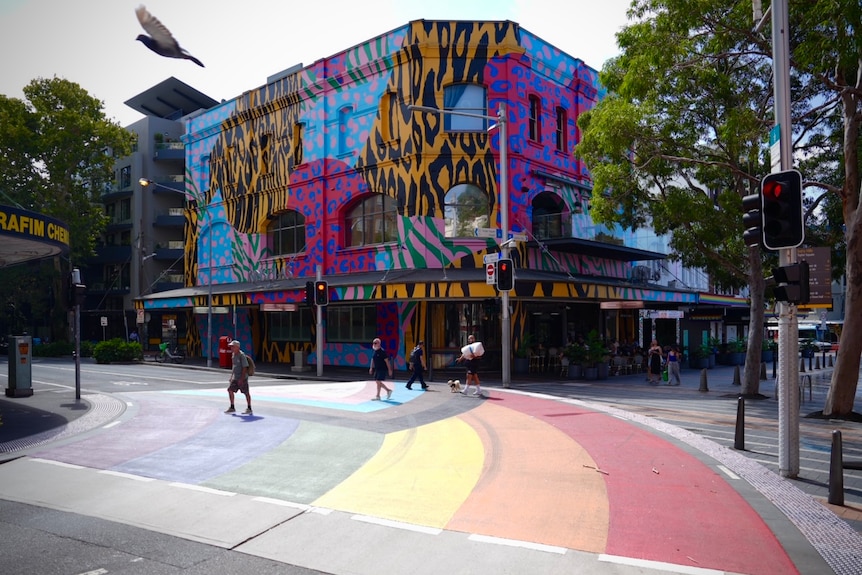
Some members of the LGBTQIA+ community feel Oxford Street has “lost its shine”. (ABC News: Jak Rowland)
Cr Moore said Oxford Street was in the process of being designated a special entertainment precinct by the NSW government, which would loosen sound restrictions and extend trading hours for businesses.
She said the council was also committed to supporting investment that will safeguard Oxford Street’s long-term success.
“The impact of lockouts and lockdowns, change in demographics and new cost-of-living pressures, continues to make running a hospitality venue incredibly challenging, but I am confident in Oxford Street’s future,” she said.
Thousands traverse the precinct each day, and gay clubs like Universal and Palms can have patrons queuing out the door on a Friday and Saturday night.
But a cultural shift in Oxford Street’s nightlife has left many of the LGBTIQ+ community finding somewhere else to go.
Scott Ridley, who met his partner at Stonewall 20 years ago, said Oxford Street had “lost its shine” and now embraced a more “sanitised” version of what it means to be LGBTQIA+.
The 45-year-old is president of the Harbour City Bears, a community group which he described as being for “hairy gay men” who did not fit the “standard beauty norm”.
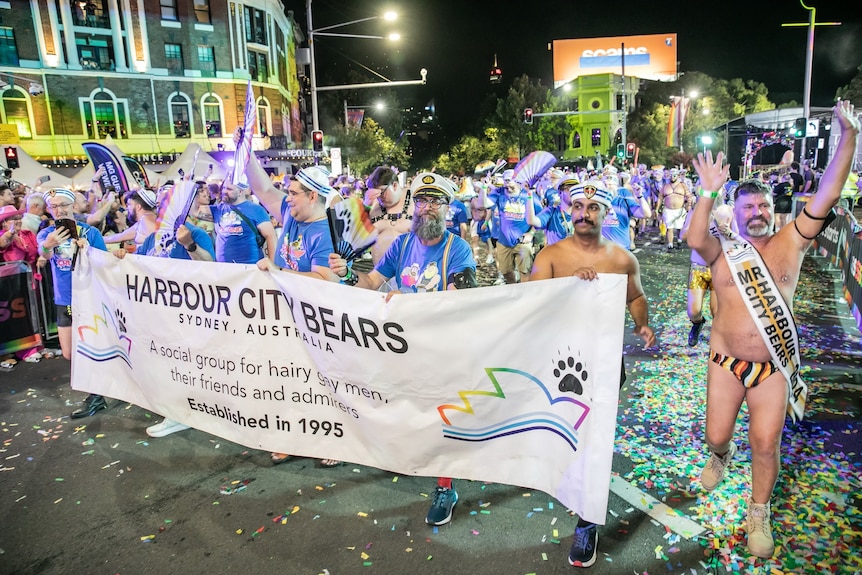
The Harbour City Bears march at Sydney’s Mardi Gras parade. (Supplied: Anne-Marie Calilhanna)
He said the social club was recently forced to move their weekly meetings to nearby Kings Cross after a negative experience at a venue on Oxford Street.
Mr Ridley said he believed the area had been gentrified and that larger venues in particular were now prioritising hens parties over community.
“Oxford Street has gone completely corporate … could you imagine if someone opened a leather bar there now?” he said.
Filling the gap in Sydney’s Queer nightlife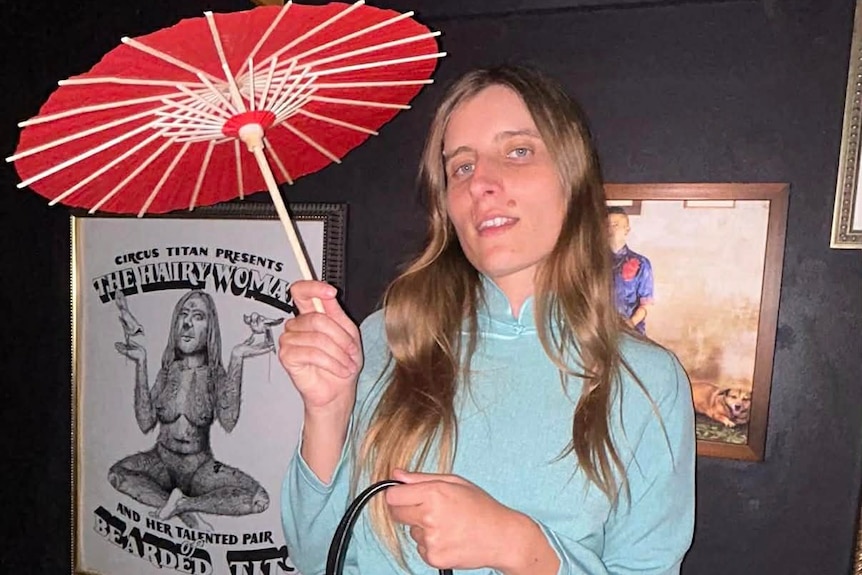
Tilly Lawless says Oxford Street’s gay clubs are important for young people coming out. (Supplied: Instagram/Tilly_lawless)
Sydney-based sex worker and author Tilly Lawless has frequented bars and clubs on Oxford Street for more than a decade, but said many of the best queer parties do not have a permanent venue.
“They are parties that have a pop-up every now and again,” the 32-year-old said.
Ms Lawless said as a queer woman she found many venues on Oxford Street had not always been welcoming of women and queer parties tended to draw more of a diverse crowd.
Despite this, she said she was feeling positive about Oxford Street’s future as venues along the strip were still valuable to the queer community, particularly to young people who are figuring out their sexual identity.
“It’s important that those venues still exist, because I think it’s important that when, for example, people from a country area or people who are young and have never been out before coming to Sydney, that they can find a gay club to go to,” she said.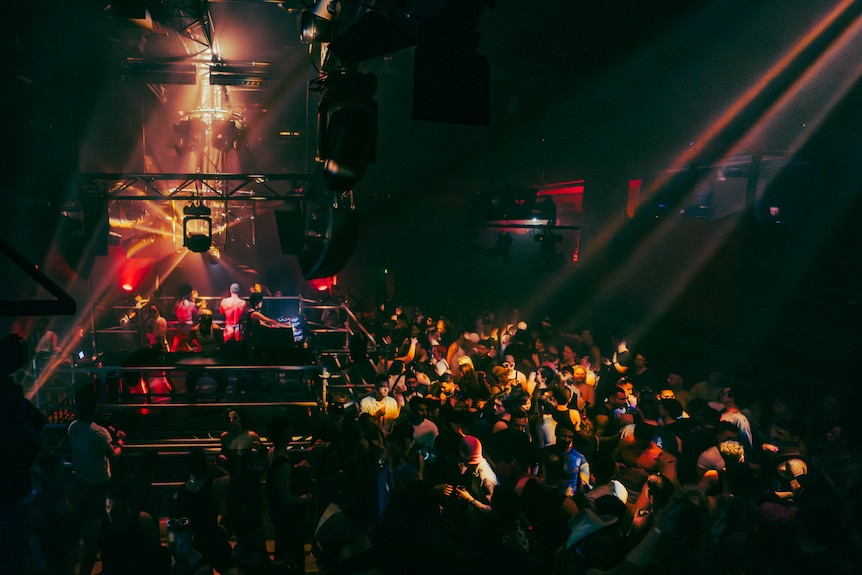
A House of Mince event during Sydney’s VIVID Festival. (Supplied: Ravyna Jassani)
Peter Shopovski founded House of Mince, a queer dance party collective, in response to what he described as a gap in Sydney’s nightlife.
“There wasn’t a space that fully reflected the kind of music, energy and community we wanted to be part of, so we created it ourselves,” he said.
Mr Shopovski has been throwing parties for almost 14 years but in recent years, the collective has exploded in popularity with pop-up shows at Sydney’s VIVID festival.
Sydney gay bars put forward for heritage listing
Mr Shopovski, who is now programming director at Oxford Street’s Colombian Hotel, said there was a shift where events and collectives had become just as important as venues, but the future was about how the two work together.
“For me, it’s about creating consistency and giving people a reason to come back regularly, while also supporting artists and building something that feels connected to the community,” he said.
“That kind of structure has worked well in other cities, and I think it’s something Sydney can benefit from as it rebuilds its nightlife.”