
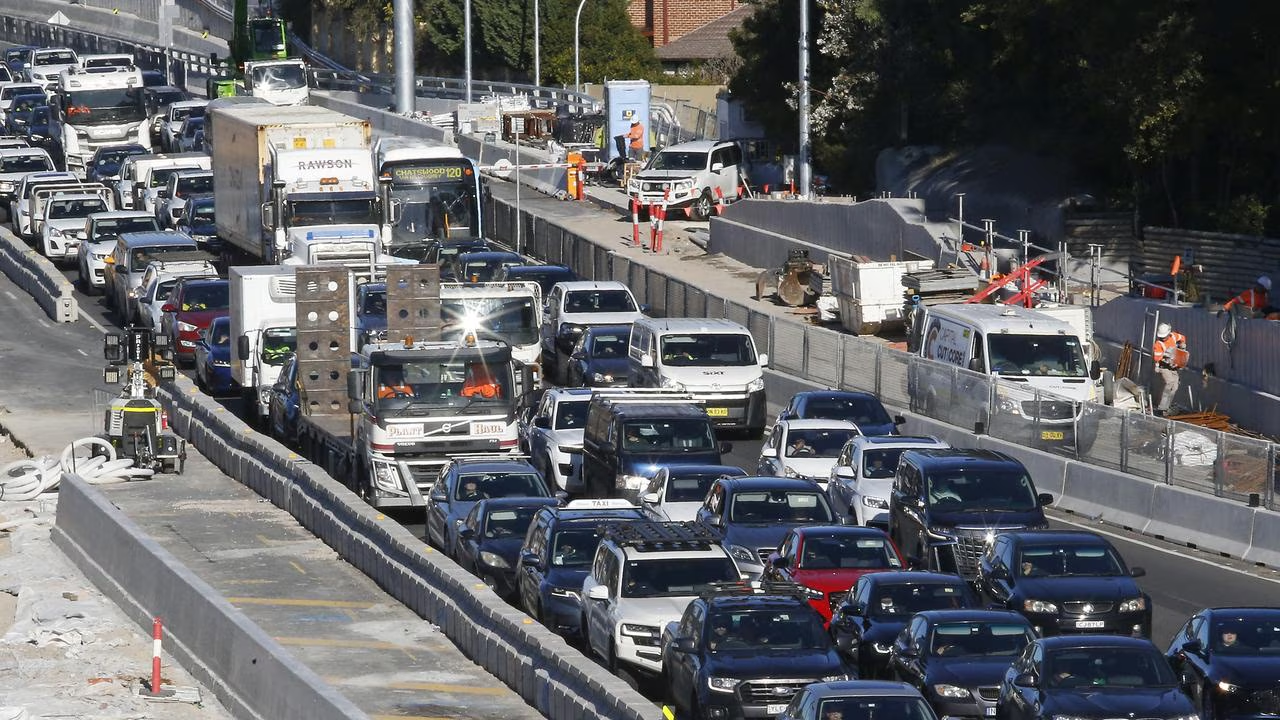
Australians are being urged to work from home where possible to ease demand for fuel as the government insists there’s not a crisis — yet.
Energy Minister Chris Bowen made the suggestion as he revealed that the nation’s petrol stockpiles had “gone up a little bit” to 38 days’ worth, while diesel and jet fuel supplies are both steady at 30 days.
MORE: How petrol price spike could hit home values
The world’s energy sector watchdog suggested this week that Australians consider working from home, avoiding travel and driving 10 km/h slower to offset a severe oil shortage following the Middle East conflict.
The Albanese Government has repeatedly stressed that Australia has a demand problem, not a supply problem, with panic buying fuelling shortages.
Work from home option
When asked if Australia should follow the work from home suggestions, Mr Bowen said working from home is a good idea if possible.
“Well, I think that’s a sensible thing to do in any environment, really, you know, work from home has become an important part of Australian working life,” Mr Bowen told ABC’s Insiders.
He added that not everyone can work remotely, but people should explore options to minimise fuel use.
MORE:Warning: Major bill for petrol ‘panic’ buyers
“I think people would already be looking at their options to minimise their fuel use. At the moment, for other people, it’s a lot harder. So I don’t think a one-size-fits-all approach is necessary,” Mr Bowen said.
Mr Bowen confirmed that overall fuel supply remains strong, with petrol stocks at 38 days and diesel and jet fuel at 30 days.
“That indicates that while we’ve released more from the strategic reserve, the ships continue to arrive in good numbers, and both our refineries are working at absolute fuel pelt, and they’re both entirely dedicated to Australian suppliers, not exports,” he said.
He acknowledged distribution challenges, especially in regional areas.
“The regional areas are where the supply chain is the hardest to manage. It takes longer to get from Geelong and Brisbane to the various regional areas,” Mr Bowen said.
Fuel rationing only considered under extreme circumstances, says Mr Bowen
Mr Bowen said fuel rationing is not expected in the short term.
“The National Fuel Emergency Act of 1984 has never been invoked — not through the first two Gulf Wars or Covid,” he said.
“It’s not designed to be invoked lightly. It primarily has powers related to defence and health, in the first instance, to ensure that those key areas are getting the diesel that they need, but also other forms of fuel.”
He explained that any decision to trigger the act would require strong advice.
“I wouldn’t exercise those quite remarkable powers unless I had pretty strong advice that it was necessary in the circumstances,” Mr Bowen said.
Mr Bowen said that invoking the act would also involve consultation with states and territories.
“Obviously, it’s something I would work through with the states. I’m not envisaging needing that.”
Petrol stockpiles
Mr Bowen confirmed that overall supply is sufficient, with petrol stocks at 38 days and diesel and jet fuel at 30 days.
“That indicates that while we’ve released more from the strategic reserve, the ships continue to arrive in good numbers, and both our refineries are working at absolute fuel pelt, and they’re both entirely dedicated to Australian suppliers, not exports,” he said.
He said the government is aware of a small number of cancelled shipments, primarily from Asian suppliers, but importers and refiners have already sourced replacements from Malaysia, the United States, and Mexico.