
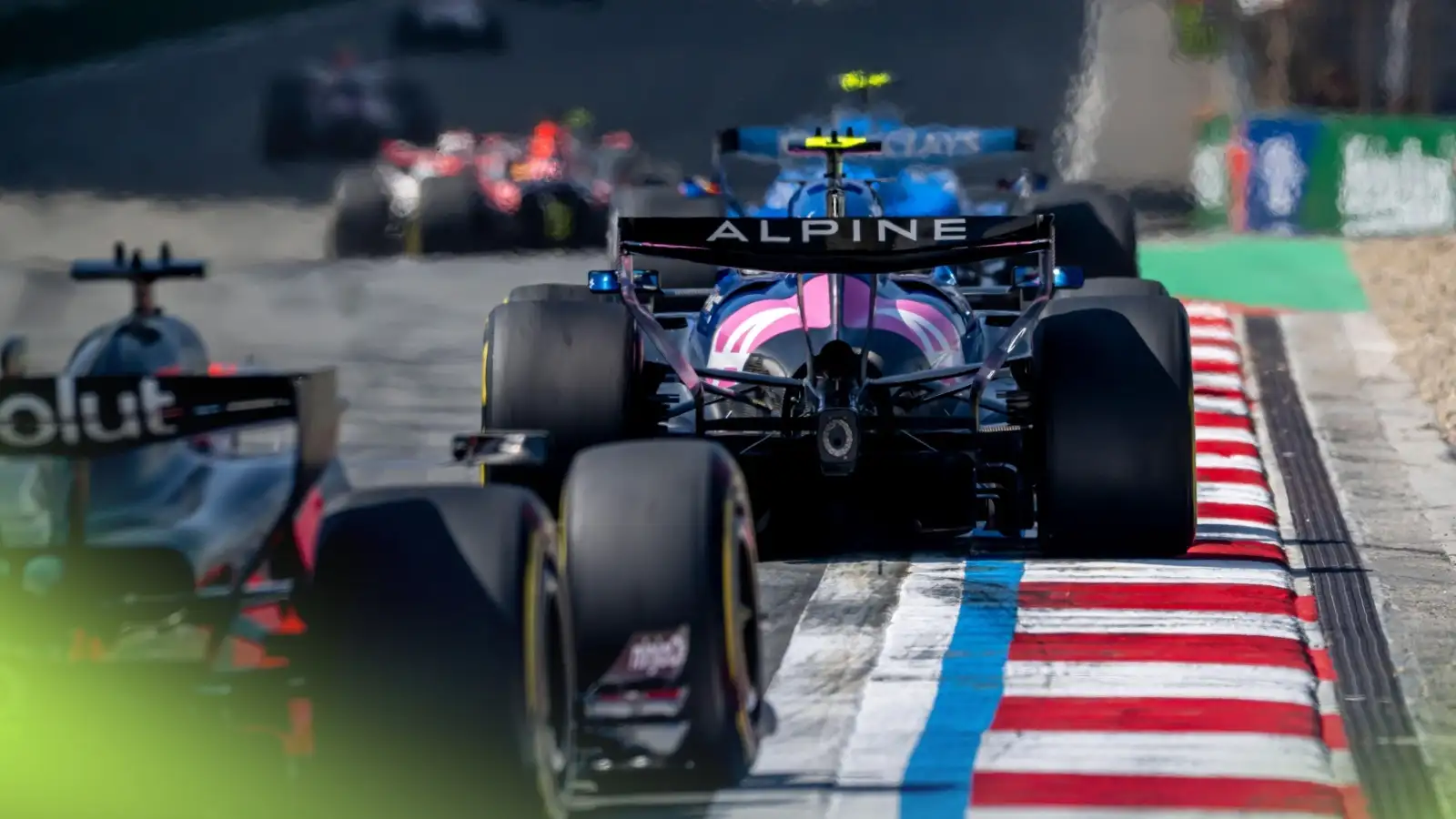
The prospect of Mercedes investing into the Alpine Formula 1 team brings back to the fore the concept of common ownership among teams, raising a number of key issues that have been a subtle thorn in the side of F1 for many years.
Where once teams took on investors from wherever they could to ensure survival, the financial landscape has changed and the conflicts of interest common ownership creates is far harder to justify than it once was.
How Mercedes’ involvement in Alpine raises questions about F1 team autonomy
Want more PlanetF1.com coverage? Add us as a preferred source on Google for news you can trust.
Alpine is on the hunt for new investors after Otro Capital failed to deliver what was hoped for from the relationship.
The investment group acquired a 24 per cent slice of the operation in 2023 amid promises of marketing and promotional assistance through Otro’s roster of high-profile investors.
That has not manifested, leading to a degree of frustration at Enstone amid strong speculation that Otro is looked to divest its interest.
PlanetF1.com revealed in January that, according to company documents, Otro is unable to freely dispose of its share prior to September this year.
However, sources have suggested that claw back clauses exist such that Renault Group, the underlying majority owner of the Alpine F1 team, can force a sale earlier. It is that which appears to be happening and why things have been protracted.
It is also believed that Renault has a right of rejection clause, such that it could buy the stake back before selling it again to a party of its choosing – assuming Otro selects a bidder the French manufacturer is less than enthused by.
There are multiple interested parties in relieving Otro of its burden, with one such expression involving Christian Horner – Alpine has acknowledged as much.
Another has come from Mercedes.
Initially reported as a direct approach from Toto Wolff, Alpine’s Flavio Briatore clarified that it was the German automaker making the bid – more specifically, Mercedes-Benz AG.
It’s a subtle but important distinction as the car company itself is just one of the stake holders (albeit the most prominent) in the F1 operation that bares its name.
Investing in Alpine makes strong sense. It has a supply of engines regarded as the best on the grid, from Mercedes HPP, and has strong growth potential.
From a financial standpoint, Alpine arguably offers the best potential return on investment of any team on the grid.
Critical to achieving that growth is its on-track performances improving.
That is why investors with racing pedigree, such as Mercedes and Horner, are appealing. That expertise can add value well beyond any financial investment they may be part of.
For Renault, a company looking to grow the Alpine brand and leverage its place in F1 more broadly, success is paramount. One of the world’s largest car companies can’t afford to simply circulate in the midfield.
Should an investor be able to come in and help drive the team forward, the equity value of the organisation will rise and, therefore, so will their slice of it.
There is little doubt Mercedes has that ability, and therefore makes for an attractive minority shareholder.
However, such an arrangement brings to the fore the same concerns that have long surrounded Red Bull and its involvement with Red Bull Racing and Racing Bulls.
A key difference in that instance is that Red Bull completely owns both F1 organisations, whereas Mercedes-Benz AG would be a one-third shareholder in both the Mercedes F1 team, and hold a 24 percent piece of Alpine.
Should Mercedes-Benz AG acquire a stake in Alpine, it would be only a voice in the decision making of the team rather than holding an operational control, but that in itself is influence its rivals don’t have.
For Red Bull, its complete ownership of two teams affords it greater power courtesy of increased voting rights at the F1 Commission.
While Ferrari, Audi, Mercedes (the F1 team), and Cadillac – some of the biggest automotive brands on the planet – have just a single voice each, Red Bull has two.
It may sound insignificant, but it could prove to be the balance of power.
That Red Bull situation is one that has been grandfathered in. The Austrian company acquired Minardi at the end of 2005 as the squad faced extinction, having done much the same with Jaguar a year earlier.
At that point, the focus was on survival, with the sporting and governance elements a secondary consideration.
Two decades ago, teams routinely collapsed, went bankrupt or opted to withdraw as the financial burden of competing in F1 proved unsustainable.
It’s only been since Liberty Media’s involvement, and more specifically since the global pandemic and the introduction of financial cost caps and a more equitable revenue sharing model, that teams have begun to rise in value.
That is precisely why Otro got involved, buying a 24 per cent slice in Alpine for €200million (about $216million) in December 2023.
Today, Alpine is valued at $2.31billion, with Otro’s stake therefore worth $554million, a 157 per cent return and explains why there is competition among potential buyers.
In the midst of such financial growth, common ownership is far more difficult to justify than it was in 2005.
Beyond the governance implications through the F1 Commission, there are potential regulatory considerations.
The European Union, for example, views sport like any other economic activity and an acquisition could be blocked if it reduces competition or manipulates the outcome.
Formula One Management, F1’s commercial arm, experienced that first hand when it announced plans to acquire the commercial rights to MotoGP. That transaction was delayed as authorities looked into the deal for potential antitrust issues.
There are similar laws in the United States, where major sports leagues typically prohibit common ownership.
Although F1 has no explicit limits on common ownership, it opens the door for regulatory scrutiny, governance risks, and potential efficiencies that other teams can’t replicate.
Common ownership creates an all-new battle ground where, should it become accepted practice, it all but compels rivals to do likewise.
While that would potentially see the value of teams skyrocket, mostly due to the scarcity of available supply coupled with strong demand, it draws into question the fundamental competitive element of the sport – the premise upon which it is built.
Alpine is well within its right to seek investors who can strengthen the team, and Otro to seek the highest bidder. It remains to be seen if those two intentions can be naturally reconciled.
Should that result in Mercedes-Benz AG holding a stake in the Alpine team, it effectively turns the operation into a subservient operation, much as Racing Bulls is to Red Bull Racing.
Renault is using F1 to build the Alpine name and solidify the boutique brand’s name in the market. Adding Mercedes into the mix dilutes that significantly.
Alpine should compete as its own team, not as a shadow of Mercedes. With investors circling, including some with significant racing pedigree of their own, it absolutely can.
Want to be the first to know exclusive information from the F1 paddock? Join our broadcast channel on WhatsApp to get the scoop on the latest developments from our team of accredited journalists.
You can also subscribe to the PlanetF1 YouTube channel for exclusive features, hear from our paddock journalists with stories from the heart of Formula 1 and much more!
Read next: F1 2026 uncovered: Ferrari’s FIA-alerting halo winglet and more on the new generation of cars