
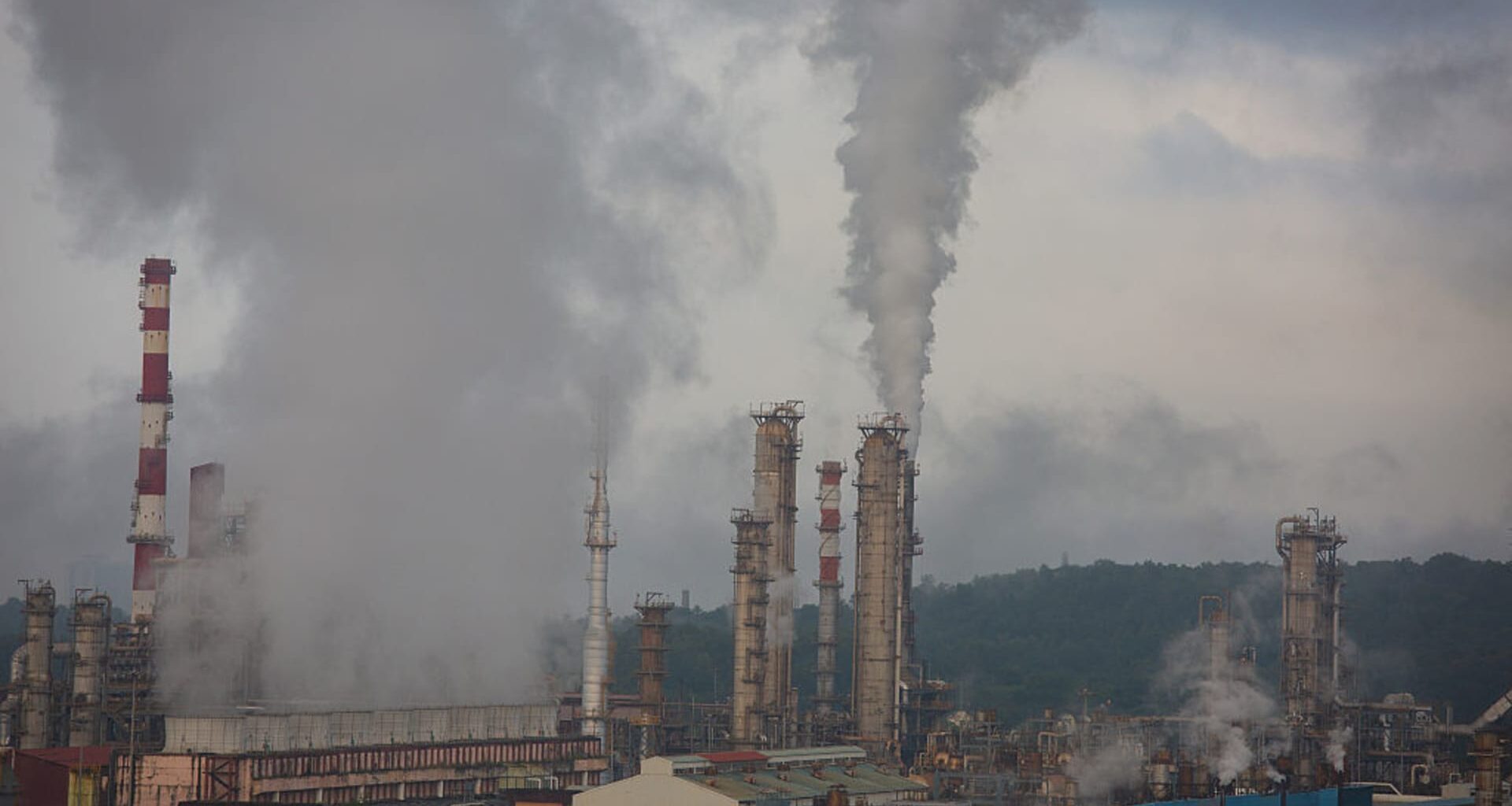
MANGALURU, INDIA – SEPTEMBER 05: A general view shows a section of the Mangalore Refinery and Petrochemicals Limited (MRPL) refinery on September 05, 2025 in Mangaluru, India. India’s vast oil refining complexes are among the largest in the world, processing millions of barrels of crude daily to meet rising domestic and export demand.
Abhishek Chinnappa | Getty Images News | Getty Images
India’s private sector activity in March slowed to its lowest level since October 2022 as weaker domestic demand for goods and services offset the highest rise in international orders, according to the HSBC flash Purchasing Managers’ Index compiled by S&P Global.
HSBC’s flash India Composite PMI, which measures the monthly change in the combined manufacturing and services output, slowed to 56.5 in March from 58.9 in February and was below the Reuters poll median of 59.0.
A PMI reading above 50.0 indicates growth, while a reading below that level points to a contraction.
Companies surveyed have indicated that the Middle East war, unstable market conditions, and inflationary pressures have “dampened growth,” while cost inflation is near a four-year high, according to S&P Global.
India’s factory activity slowed to 53.8 from 56.9 in February and was below the poll expectation of 56.8. The services sector in the world’s fastest‑growing economy was at 57.2, below the analyst forecast of 58.3.
Production fell most sharply among goods producers, who blamed the Middle East conflict for volatility, rising costs, and softer demand.
Factory output was the weakest since August 2021, while services posted their slowest expansion since January 2025, partly due to travel disruptions caused by military strikes in the Gulf region.
India’s private-sector business activity had been on an upswing since the start of 2026, but the U.S.-Israel war with Iran has adversely impacted the economy.
“Softer domestic demand weighed on new orders, which rose at the slowest pace in more than three years, despite a record surge in new export orders,” said Pranjul Bhandari, chief India economist at HSBC.
She added that companies are absorbing part of the increase in costs by lowering their margins.

Get a weekly roundup of news from India in your inbox every Thursday.
Subscribe now
Indian Prime Minister Narendra Modi, in his address to the parliament on Monday, described the conflict in the Middle East as “concerning.”
“The difficult global conditions caused by this war are likely to persist for a long time,” Modi said, urging Indians to “remain prepared and united,” as they had during the COVID-19 pandemic.
India is among the Asian countries particularly vulnerable to the fallout from a prolonged conflict in the Middle East, as it faces an energy crunch and disruptions to key aviation and trade routes.
Higher energy prices are also expected to widen India’s current account deficit, which has contributed to a weakening of the local currency, with the rupee touching record lows in recent days.
Business sentiment had earlier improved as India finalized trade deals with two major partners, the U.S. and the European Union, early this year. Last month, private companies in India recorded a rapid rise in total new orders and international sales, prompting them to hire additional staff and scale up output, according to the HSBC PMI release on Feb. 20.