
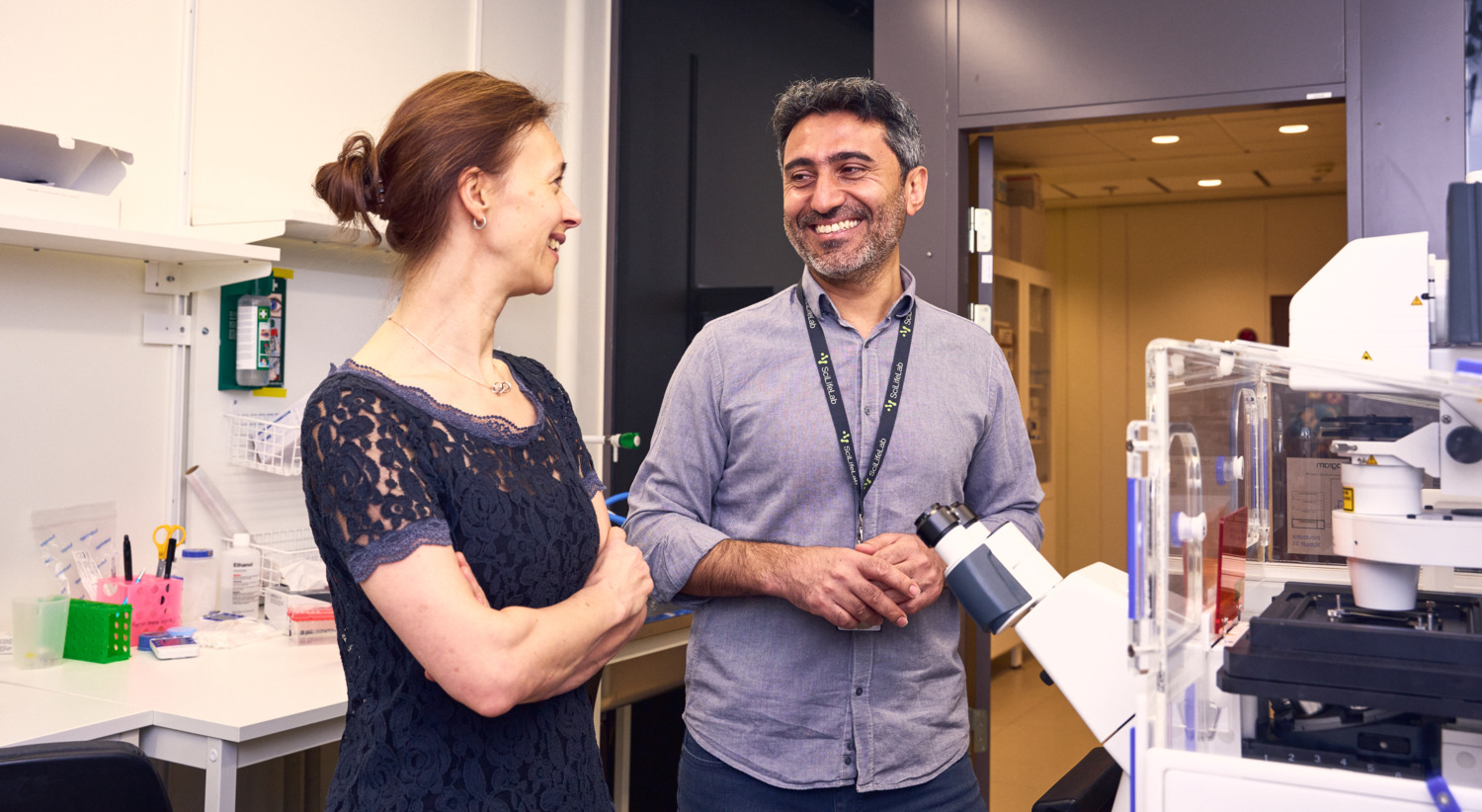
The shared leadership posed no problem, as their fields of expertise were so clearly delineated.
“I just have good memories, from the initial project draft and application to the recruitment of our joint postdoc, our research and all our social activities, such as a barbecue evening that everyone from both groups came to,” says Dr Kutter, who reserves some praise for the programme organisers.
“I wasn’t aware of any previous such initiative. It’s innovative and based, of course, on the engagement of the participants, but giving us this platform was an important initiative.”
Dr Sezgin welcomed the possibility of getting to know other KIRI fellows.
“Now I know what everyone does and who to contact if I need something. Everyone works with really exciting things – I’d like to work with them all, but one must of course acknowledge one’s limitations”.
The collaborative project was also a success for their postdoc, Pablo Carravilla.
“He’s now a professor in Spain and leads his own research group,” says Dr Kutter. “So our research network has been expanded from Sweden to Spain. We still keep in touch and plan to exchange students and continue to learn from each other.”
A challenging environment
Dr Sezgin says that it can be taxing for a postdoc to work in two laboratories under two professors – “I daresay it can be difficult enough with just one.”
“But if it works, it’s a goldmine. You get supervised by two experts in their respective fields,” he says.
Dr Kutter explains that Pablo’s original research background was closer to Dr Seagin’s field, but they deliberately placed him in her lab “out of Pablo’s comfort zone”, as she puts it.
“What you bring to the table yourself and the situation you find yourself in is always a combination of nature and nurture,” she says. “We offered him an environment that challenged him and he seized the opportunity and made something very nice of it.”
The social impression he made was almost as important.
“He would always go down to the café after lunch and chill on the sofa to recharge – and now my lab does the same,” says Dr Kutter.
“Mine too, and they meet your group,” says Dr Sezgin, who ends by making special mention of the important role played by KIRI postdocs in general:
“We KIRI fellows are group leaders who already have financing and established careers. The real outcome of such a programme is the next generation of researchers – which is why we need to highlight them and stress the importance of their role in KIRI.”
Text: Lotta Fredholm
Translation: Neil Betteridge