
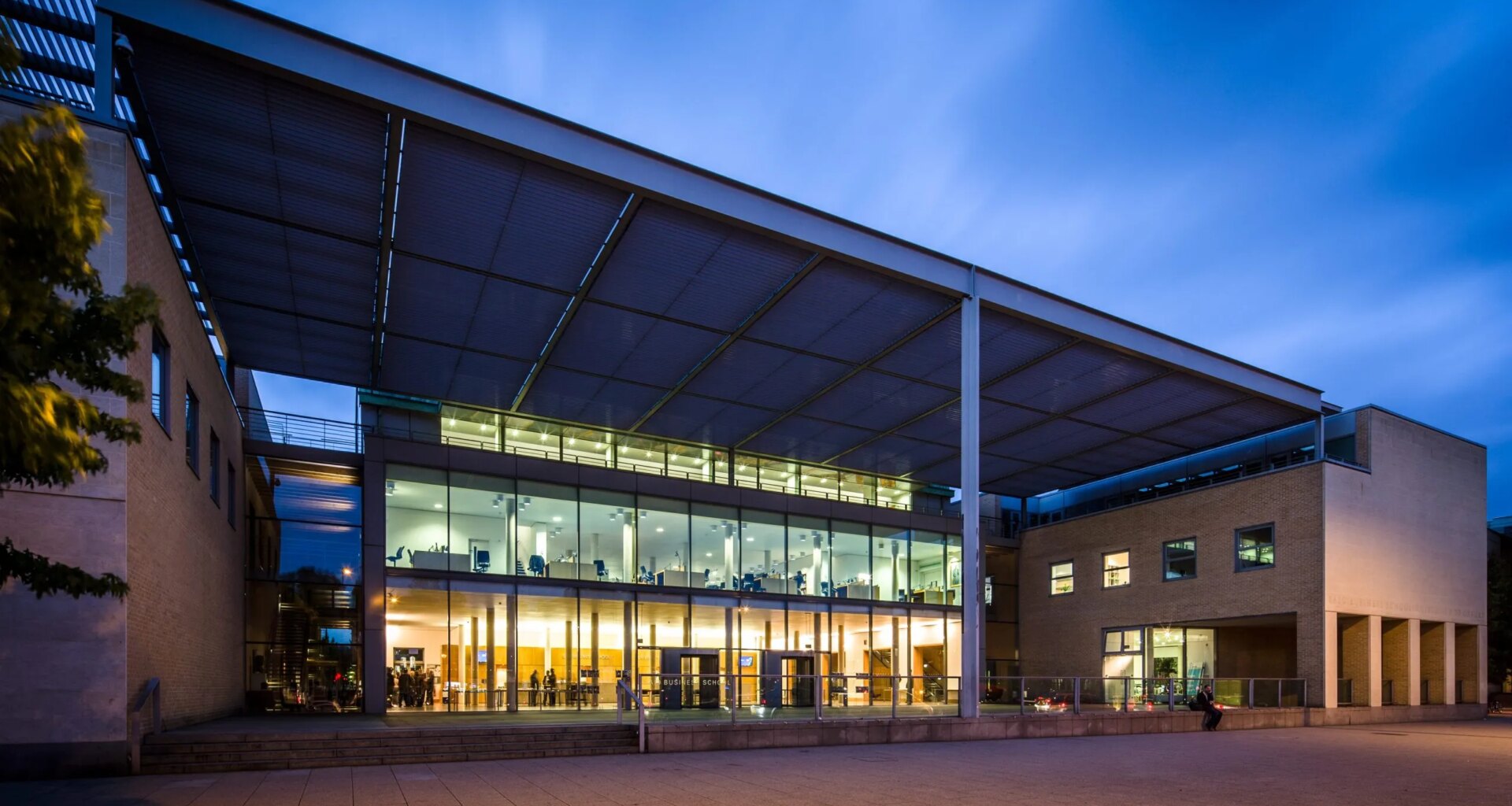
Walk through the Oxford Saïd Business School or the Weston Library café on a weekday afternoon, and you will hear a new kind of ambition. Tutorials still happen, but so do pitch decks, MVPs and seed-round anxieties. According to the University’s office for innovation, researchers have started over 140 spinout companies to date, showcasing dozens of lab-led ventures under the “Started in Oxford” banner. Start-up culture, once peripheral to Oxford’s traditional identity, now occupies a visible and increasingly institutionalised space within the University.
Regionally, independent data show that the county has produced 205 spinouts (new, independent companies that are formed from a pre-existing organisation) since 2011, with nearly half of those remaining in the Oxford area. Observers also note that Oxford’s annual spin-out formation has roughly doubled compared with a decade ago, indicating a step change in commercialisation activity. Venture capital flowing into Oxford-linked ventures has similarly surged, with capital deployed rising by over 600% compared to the mid-2010s.
Clearly, Oxford has not been slow to formalise innovation. According to Oxford University Innovation (OUI), the University’s commercialisation arm, more than 20 new companies are formed each year from Oxford research, and the University consistently ranks among Europe’s leading institutions for spinout formation. Collectively, Oxford-affiliated companies have raised billions in external investment, with headline successes such as Oxford Nanopore Technologies, listed on the London Stock Exchange in 2021 at a valuation of around £3.4bn, Barinthus Biotherapeutics (formerly Vaccitech, co-developer of the Oxford–AstraZeneca Covid-19 vaccine) and the recent +£1bn exit of Oxford Ionics.
These are not student ‘side-hustles’; they are deep-tech ventures built on research commercialisation. Oxford’s ecosystem is particularly strong in biotech, AI, materials science and quantum technologies; sectors requiring high capital intensity and long development cycles.
The visible culture among undergraduates is subtly different. Alongside formal spinouts sit student-led ventures, hackathons, accelerator programmes and pitch competitions. For previous generations of Oxford students, entrepreneurship was marginal. Today, it is mainstream. Societies dedicated to venture capital, crypto, AI and climate tech are well attended. LinkedIn profiles announce start-up involvement. This Oxford shift mirrors broader generational trends, where analyses of 2024–25 trends argue that GenZ and millennials are disproportionately driving start-up formation. But popularity is not the same as probability.Critics of the start-up trend warn that society does a disservice by urging youth into start-ups without acknowledging disparities in risk tolerance and social capital.
Indeed, the rising fascination should not be considered without its sobering statistical backdrop. Globally, around 90% of start-ups fail. In the UK, Companies House records show that a significant proportion of new firms dissolve within five years. Even among venture-backed start-ups, only a minority achieve substantial exits. Oxford’s deep-tech spinouts have a stronger survival profile than the average lifestyle start-up, partly because they are built on defensible intellectual property and often supported by patient capital. But they are also expensive and slow to mature. The path from lab to liquidity can take a decade or more.
In a worryingly competitive labour market, where graduate starting salaries average around £32,000-£35,000 nationally, and Oxford graduates report median earnings of roughly£35,700 fifteen months after graduation, these linear career paths can feel slow relative to the potential upside of equity ownership. This tension between the mythology of rapid success and the economic reality of long, uncertain gestation is a gamble which attracts more and more young people, and defines much of modern start-up culture.
However, Oxford’s start-up ecosystem is scaffolded by a growing array of institutional support, equipping students for life as founders as much as for academia or traditional professions. Enspire Oxford is a university-affiliated initiative that runs accelerator programmes, bootcamps, and pitch events specifically for student and early-career founders. It aims to demystify entrepreneurship for people coming out of academic environments who may otherwise lack practical business training. Enspire’s approach emphasises rapid prototyping and investor engagement as early as possible in the founding process. Meanwhile, the Oxford Saïd Entrepreneurship Centre, housed within the Saïd Business School, bridges academic research and business leadership development. The Centre runs courses, research initiatives and mentoring schemes, and publishes analysis on innovation ecosystems. Its programming is designed to equip students and alumni with frameworks for scaling ventures in sectors from tech to healthcare.
Oxford is not Silicon Valley; but it has certain structural advantages. Firstly, intellectual capital. Research-intensive universities produce patentable science at scale. Secondly, credibility. Oxford’s brand reduces information asymmetry when pitching to investors. Thirdly, clustering effects. The Oxford–Cambridge–London corridor has become an active venture capital region. Strong IP pipelines, incubators and increasingly sophisticated local capital markets mean some ventures can scale fast.
From a macroeconomic perspective, entrepreneurship is essential. Innovation drives productivity growth, and the UK has long struggled with stagnant productivity relative to other countries. Encouraging high-skill venture creation, particularly in science and technology, is economically rational. Yet the individual demands are not light, including long hours and tolerance for uncertainty. For students that successfully become founders, this may mean putting their degrees on pause. They also amplify inequality: those with financial safety nets can afford to fail. Students without family support may find the risk costly.
When success stories, such as Zuckerberg’s Facebook, or students reaching the prestigious Y Combinator, are amplified, and failures disappear quietly, expectations in the bubble become distorted. The challenge is not to dampen ambition, but to contextualise it. Oxford’s start-up culture reflects genuine institutional strength in research commercialisation, fuelled by a generation seeking agency in an unstable economy.
Post Views: 1,664
Liked this article? Why not share it?
Related