
LA ROMANA, D.R. – No one did it quite like Pete Dye.
No one managed to build better golf courses on less ideal land than the Ohioan who raised Florida swamps, California desert, Indiana ridgetops and flat Midwest farmland to ecstatic heights of golf intrigue.
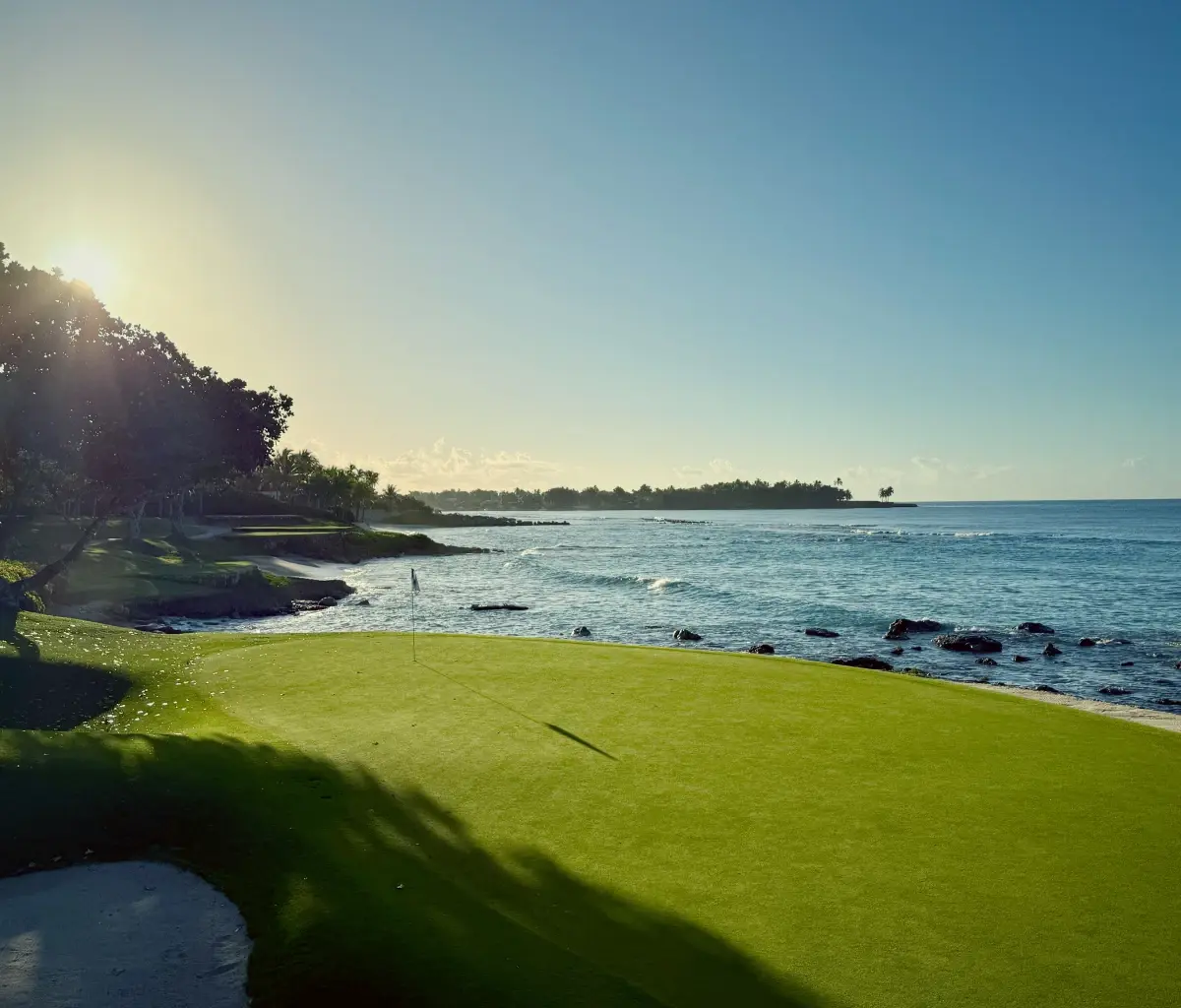
Is it any wonder that, when given his choice of thousands of acres of coastal land in the Dominican Republic, Dye would turn in an effort that rivals Pebble Beach for seaside splendor and sheer golfing pleasure?
Teeth of the Dog, Dye’s masterpiece at the sprawling Casa de Campo resort and residential complex, is the class of Caribbean golf, an absolute bucket-list experience. With seven holes on craggy cliffs above the Caribbean Sea knitted together with 11 fascinating, strategic inland tests, it has long been regarded as one of the world’s greatest golf courses that one can visit.
More than half a century after it first opened, it is now looking and playing better than ever thanks to a brilliant restoration project overseen by Dye’s longtime friend, major champion Jerry Pate.
Restoring Teeth of the Dog at Casa de Campo
Many golfers know Pate, the 1976 U.S. Open and 1982 Players Champion, best for throwing Dye into the pond beside the 18th green at TPC Sawgrass Players Stadium after his win there. But his admiration for the great architect goes back nearly a decade further, to 1974, when Pate led the American team to victory at the 1974 World Amateur Team Championship at Teeth of the Dog. He struck up a friendship with Dye that week while also building ties to the resort that would eventually prompt leadership to commission Pate as design caretaker of its golf courses: Teeth of the Dog, The Links, Dye Fore and the private La Romana Country Club.
Pate and lead design associate Steve Dana had been engaged for subtle, mostly infrastructure-related projects around Casa de Campo’s courses before getting the go-ahead to pitch a substantial plan to keep Teeth of the Dog relevant into and beyond its second half-century of life. The course closed in January of 2025, and over the following 10-plus months, Pate and Dana methodically reset Teeth of the Dog to its best self. Dye tweaked certain aspects of the design later in his life, so the task was not quite a straight-up circa-1971 restoration, but rather the preservation of Dye’s evolved design intent. In addition to recapturing putting green space that had been lost to shrinkage over years, Pate and Dana rebuilt all of the course’s bunkers, replacing sand floors that had curled and bowled from decades of use with the flat bottoms Dye originally intended. The low-profile bunker floors and eyebrow-like forward walls lend tremendous character, aesthetic strength and playing intrigue to the course.
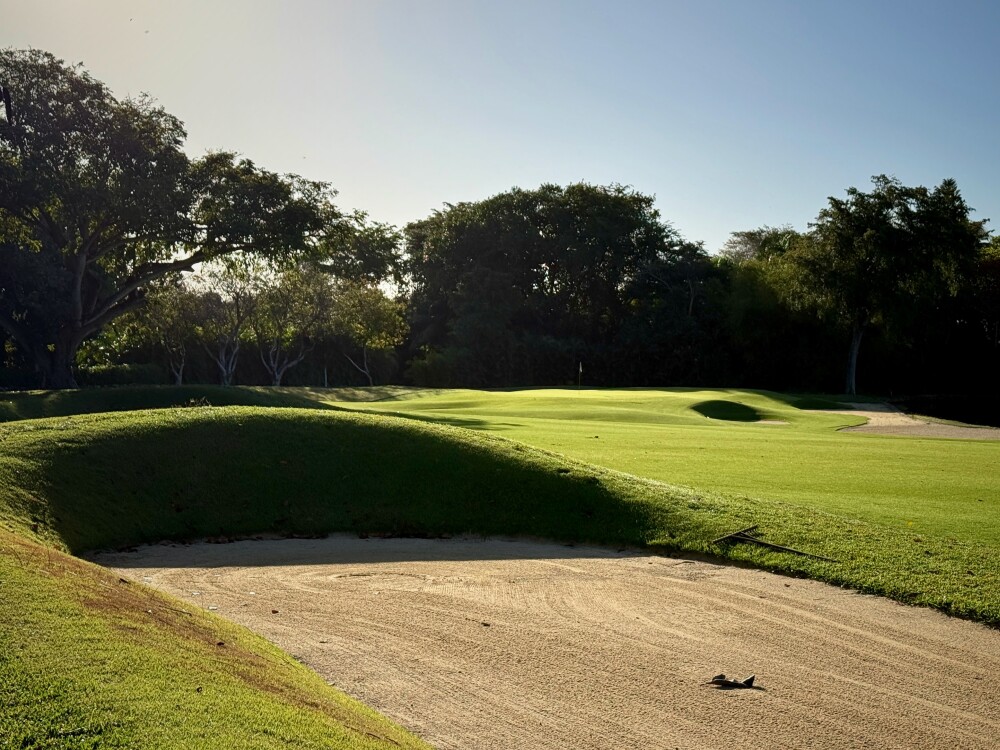
A key feature of the restoration of Teeth of the Dog was the rebuilding of the bunkers to bring back the flat sand floors Pete Dye originally intended them to have. Tim Gavrich/GolfPass
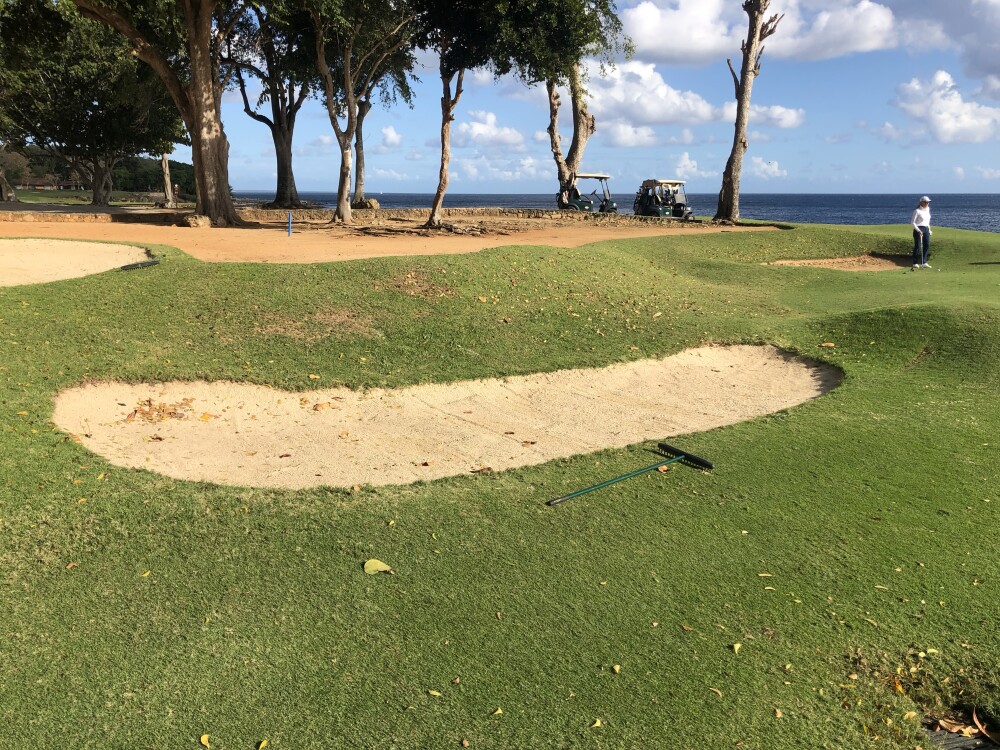
Over the years, Teeth of the Dog’s bunkers had evolved away from Dye’s intent, taking on a scooped-out look that lacked proper definition. Courtesy of Jerry Pate Design
Pate and Dana also solved several infrastructure issues that have improved the golf course on a functional and artisitic level. They rerouted cart paths to improve golfer and maintenance traffic flow, which will help the course present better and increase efficiency for new head agronomist Damon Di Giorgio’s team. Pate and Dana also preserved and enhanced much of the striking rock work the original crew of more than 300 local laborers encountered in the original course build: tee platform surrounds, walls that snake through the periphery of many hole corridors and wave breaks that will protect seaside greens from excess saltwater spray. Few golf courses boast as much texture as Teeth of the Dog, from bright green Paspalum playing turf to champagne-colored pajon grass introduced to off-play areas to the bright new bunker sand and water that shines an iridescent blue in sunlight.
The term “restoration” is somewhat contentious among golf architecture and history circles. Hard-liners insist that for a course to be considered truly restored, it needs to reflect the original architect’s features as close as possible to their original forms. Others take a more interpretive view, which can cause a confusing melding of “restoration” with “renovation.” Teeth of the Dog belongs more towards the “restoration” end of the spectrum for a couple of reasons. Most important among them is the fact that Pate and Dana’s work eschewed much of the heavy earth-moving equipment that often features in similarly ambitious projects. Their largest piece of equipment was a mini-excavator, which is a fraction of the size of the bulldozers and other massive earth-movers architects use on new builds and major renovations.
Where big machines tend to leave behind smoothed-out contours, Pate and Dana’s lighter touch has left Teeth of the Dog feeling exquisitely lived-in despite the considerable work done. While many of its features have been updated, the course nevertheless retains the patina and settled-in micro-contours that make playing older golf courses feel special. That is a tremendous achievement of which Pate and Dana should be proud, because it is undoubtedly something Dye himself would appreciate.
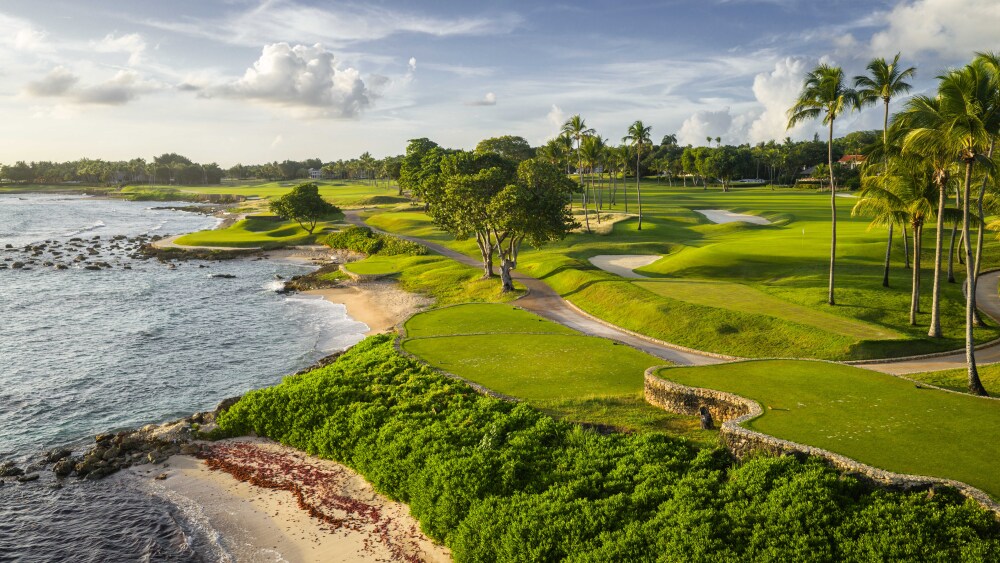
The coastal scenery on offer at Teeth of the Dog is hard to beat, especially with the golf course maturing in the wake of its recent restoration project. Patrick Koenig/courtesy of Casa de Campo