
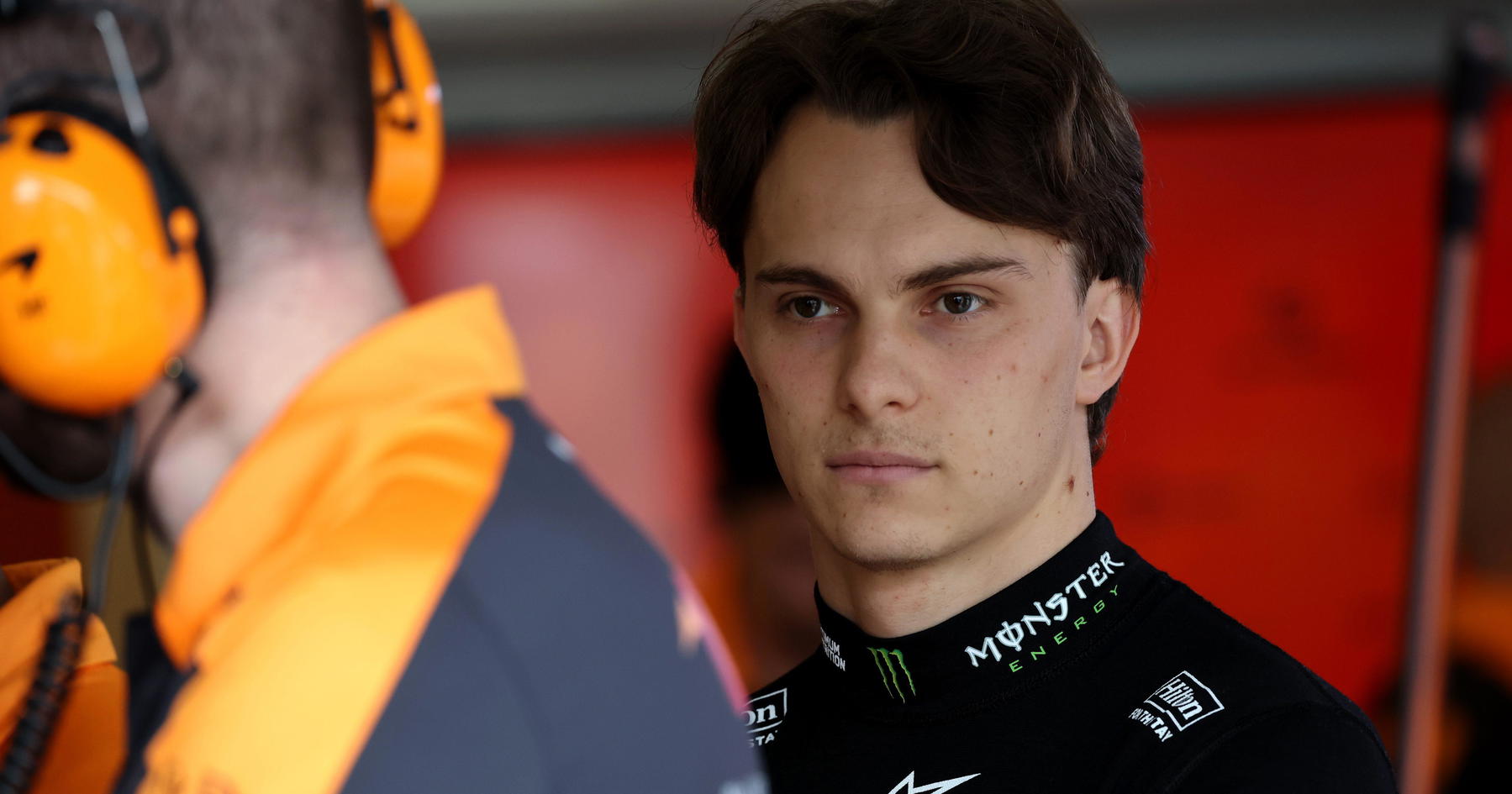
Oscar Piastri has explained that even a slight change in F1’s power unit modes could risk “unintended consequences” for drivers.
As drivers continue to grasp the increasingly complex new power units and energy management demands, the new rules have drawn fierce criticism from some drivers, including Max Verstappen and Carlos Sainz.
Piastri is yet to even take to the start of a grand prix following his crash on the way to the grid in Melbourne, and then an electrical glitch on the grid in China, forcing him out.
Owing to the multiple opportunities to recharge the batteries in Shanghai, there was less lift and coasting and super clipping than in Australia, but Piastri has explained that with the complex power units, even the slightest change could have big consequences.
“They’re just incredibly complex, and there are so many rules on the power units that you sometimes change one thing, and it has a very unintended consequence somewhere else,” Piastri told media, including RacingNews365.
“At a circuit like Shanghai, it is very harvest-rich, so you don’t have a problem with super clipping or needing to lift and coast, but you’ve got other problems because you can’t harvest as much as you want everywhere.
“There is nothing you can do about that as a driver, so we’re kind of learning, and the difficult part is, even sometimes, if we know there’s something that we want to do differently, we can’t do anything because it has to be programmed in or there has to be a code change, so it is complex.”