
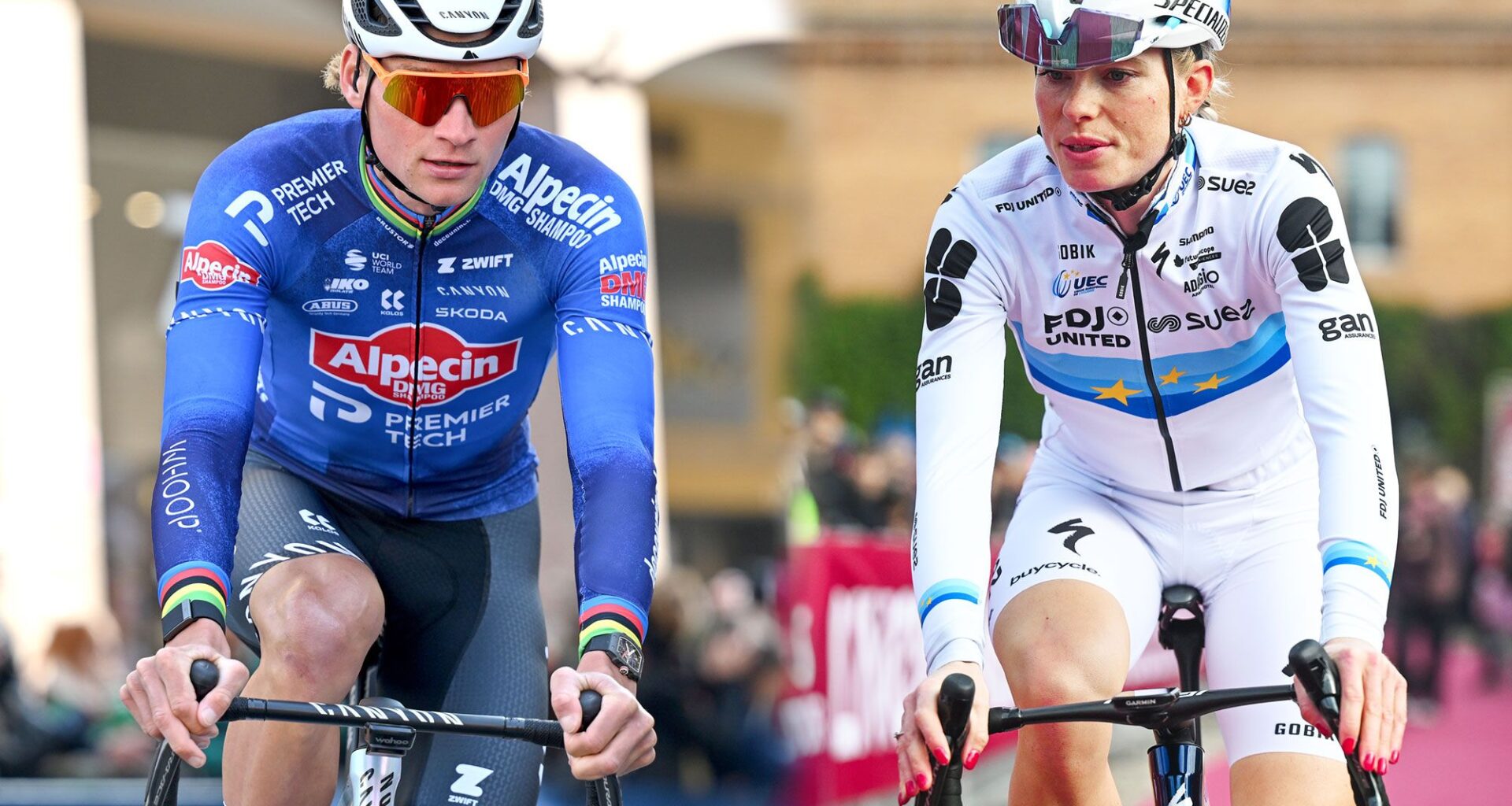
Heading into the heart of the cobbled Classics season, the anticipation is mounting at Cyclingnews HQ, as we ponder the array of tantalising possibilities of what might unfold in the days and weeks ahead.
There have been hints of what may be to come in the racing that has unfolded so far – from Demi Vollering’s superbly played hand at Omloop Het Nieuwsblad to the Milan-San Remo triumph by Tadej Pogačar – but it’s just the beginning as we see new circumstances and new riders breaking through, waiting to try and shift the spotlight.
Article continues below
You may like
Though instead of watching and waiting for it to unfold before we put pen to paper, we’ve decided to share some of the key storylines we will be looking out for across the racing – the good, the bad and the vexing – in our latest Cyclingnews roundtable.
Can Mathieu van der Poel write his name as the greatest cobbled rider? – Dani (Senior News Writer)
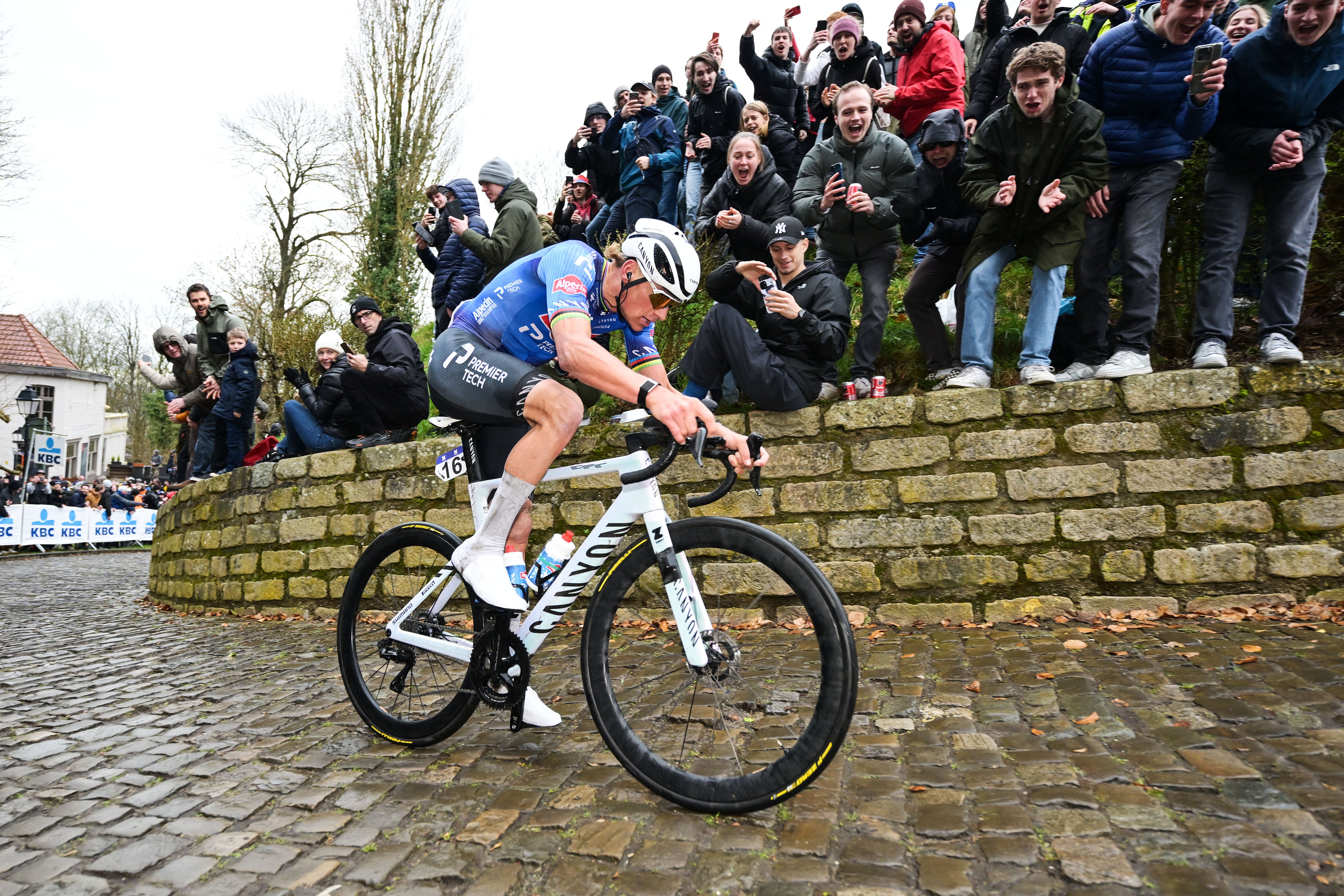
Mathieu van der Poel racing up the famous cobbles of the Muur van Geraardsbergen (Image credit: Getty Images)
The prevailing narrative at this year’s cobbled Classics will focus on the superstar-versus-superstar battle between Mathieu van der Poel and Tadej Pogačar. After the Slovenian came out on top at Milan-San Remo, the pair will face off once more at both Flanders and Roubaix.
To date, the pair have battled each other at three editions of De Ronde and one of Roubaix, sharing the spoils with two wins apiece. They may do the same this April, with Pogačar a slight favourite at the former and Van der Poel the same at the latter.
But Van der Poel is also chasing history. He has six wins across the two Monuments. He’s ahead of Eddy Merckx and Roger De Vlaeminck (both on five wins), level with Fabian Cancellara and Johan Museeuw, and lies just one Roubaix victory shy of Tom Boonen’s record cobbled Monuments tally of seven.
Van der Poel, then, has a chance of cementing himself as the greatest of all in the coming weeks. Doing the double for a second time in his career would take him clear of every cobbled star in cycling history, while a fourth Roubaix win in a row would see him level with Boonen as the greatest cobbled racers the sport has seen.
Vollering takes on the cobbled Classics without the chaos of 2024 – Matilda (Assistant Features Editor)
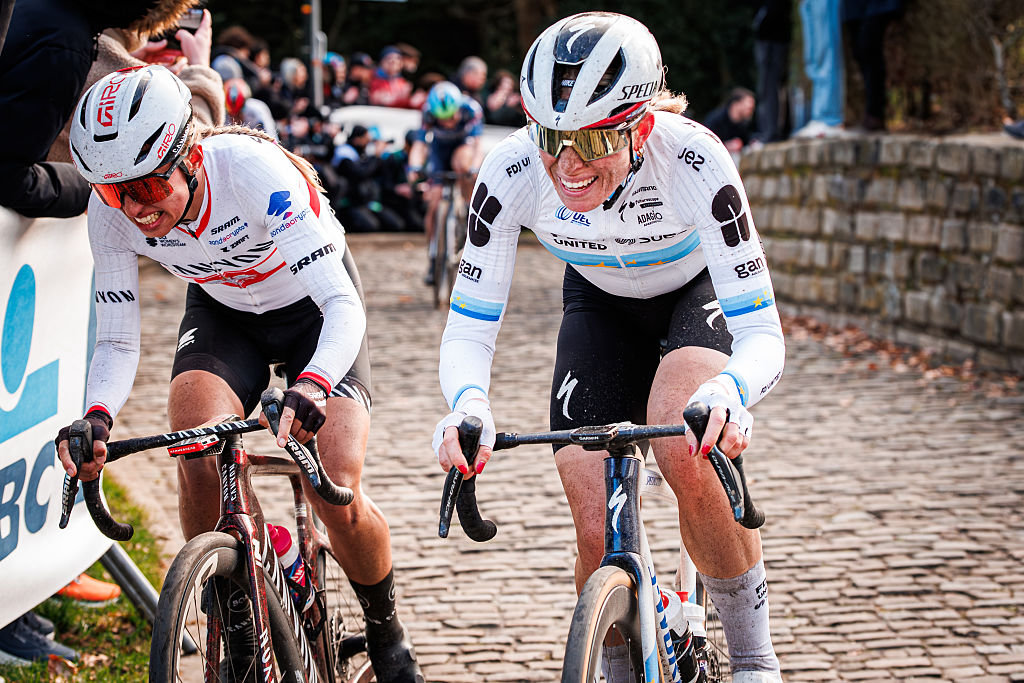
Demi Vollering battling Kasia Niewiadoma-Phinney at Omloop Het Nieuwsblad (Image credit: Getty Images)
Demi Vollering skipped the cobbled Belgian Classics last year, which means we haven’t seen her in action in these races since 2024, when some off-the-bike drama somewhat overshadowed and derailed her campaign. That was the year when, at the start of Dwars door Vlaanderen, Danny Stam let slip that Vollering wasn’t set to renew with SD Worx-Protime and would be a free agent for 2025. Cue this news – and a strange denial from the team – coming out mid-race and a rather fractured few days following, which definitely impacted her performances.
This year, a whole different Demi Vollering will be lining up at Dwars door Vlaanderen and the Tour of Flanders. In a stark contrast to the intra-team conflict that we often saw at SD Worx, the Dutchwoman seems utterly at home at FDJ United-Suez, a team that really stands out for their cohesion and teamwork both on and off the bike. And it clearly pays off, given Vollering’s win at Omloop Het Nieuwsblad and Chabbey’s at Strade. We may have forgotten, but Vollering is excellent in these kinds of races, and should absolutely be thinking about challenging Lotte Kopecky for the Flanders title.
What to read next
Wout van Aert from down at heel to on the up – Patrick (Deputy Editor)
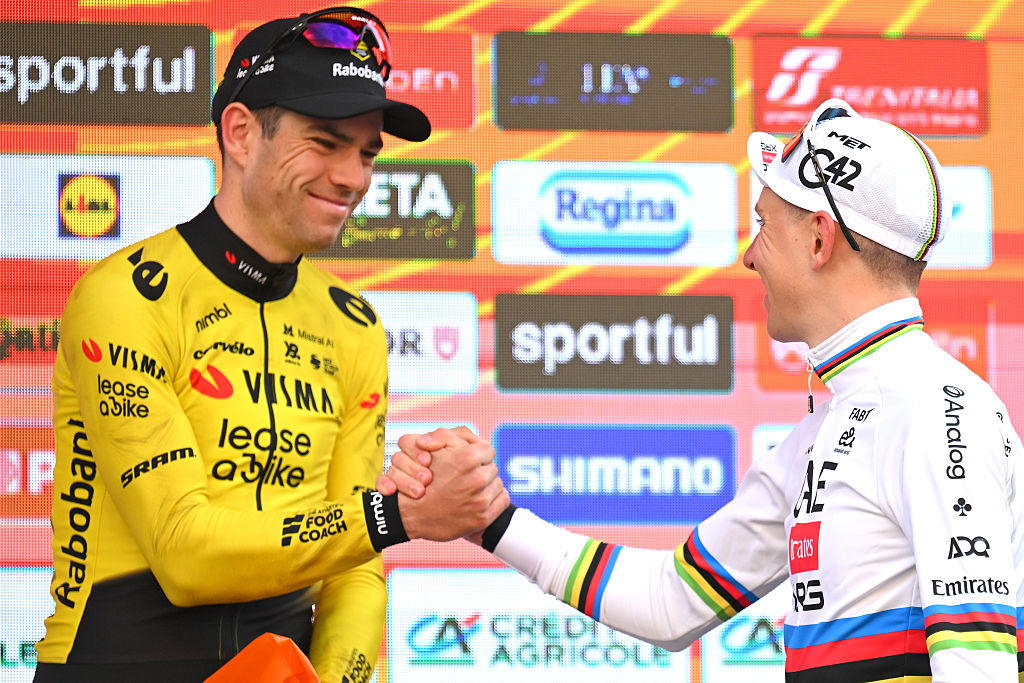
Wout van Aert on the podium at Milan-San Remo (Image credit: Getty Images)
When Wout van Aert came down in the dramatic crash ahead of the Cipressa at Milan-San Remo, and had to wait longer than anyone else to get going again, it looked like another chapter in a very sorry book of 2026 for the Belgian. Ankle broken at the turn of the year, snowed in at altitude camp, out ill for the Omloop, flat tyre at Le Samyn, tactical blunders at Tirreno… it had been a season so far of misfortune, miscalculations, and missed opportunities. Few gave him much of a chance before the race, far fewer as he stood waiting for a new bike with 30km to go, but Van Aert’s presence on the podium in San Remo spoke to a level of steel and form that changes the narrative of his season and his spring.
Van Aert’s head did not drop. Quite the opposite. He fought back to the main bunch on the Cipressa and in the closing kilometres he riffed on a “spur-of-the-moment” decision to sneak away from the bunch and nab third place. To fight his way back into the race and then carve out an opportunity on instinct showed exactly the sort of mental resilience and dexterity that some in Belgium have questioned in the past couple of years.
And while he may still not have caught back up to the physical prowess of Pogačar and Van der Poel, he is moving up through the gears after a tough winter, and still has two weeks until Flanders and three until Roubaix. Landing that elusive cobbled Monument remains a very tall order, but that Milan-San Remo confidence boost shifts the tone; this is not a rider down at the heel but one on the up.
A lot of women’s teams need to turn their trajectories around – Kirsten (Editor)
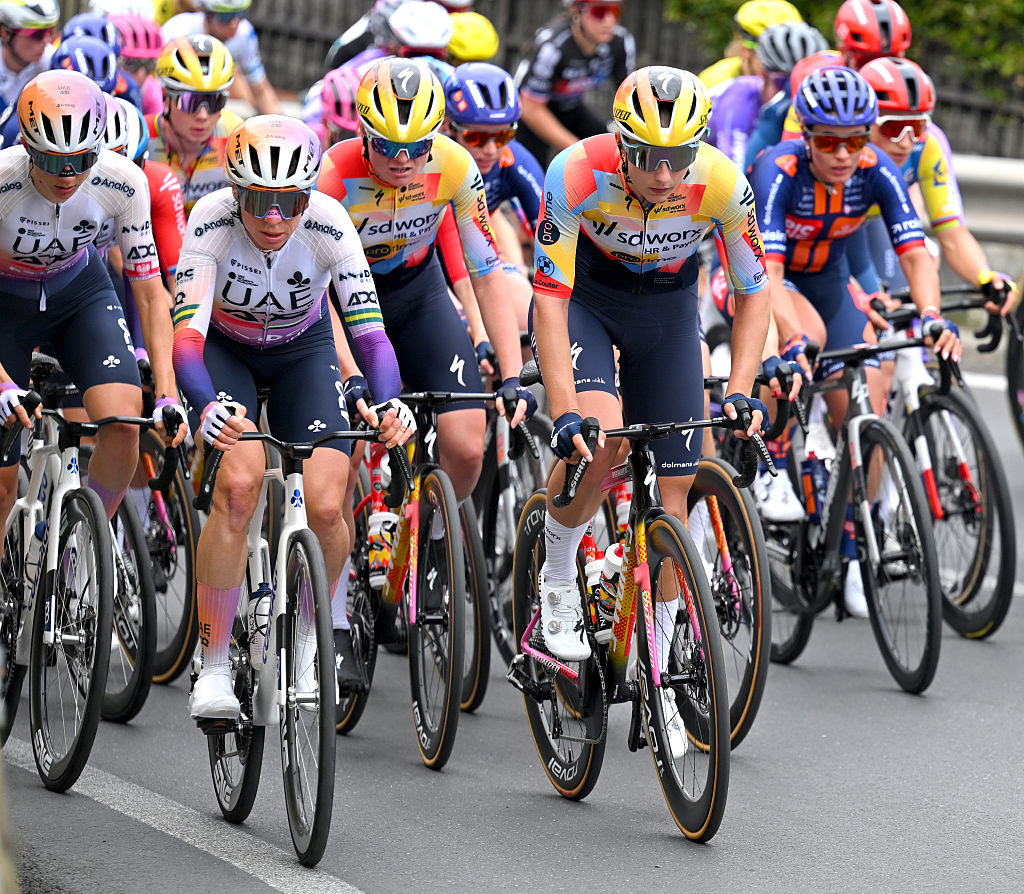
The women’s peloton at Milan-San Remo (Image credit: Getty Images)
Seven top-tier races into the season, and several teams have yet to crack the top step on the podium, but luckily for them, there are still plenty of races to come as the Spring Classics head back to Belgium.
So far, the seven overall victories have come from only four teams: EF Education-Oatly’s Noemi Rüegg winning the Tour Down Under, FDJ United-Suez’s Ally Wollaston winning Cadel Evans Road Race, Demi Vollering winning Omloop Het Nieuwsblad and Elise Chabbey winning Strade Bianche, while UAE Team ADQ’s Elisa Longo Borghini won the UAE Tour (as Lorena Wiebes from SD Worx-Protime won three of the four stages), Karlijn Swinkels won Trofeo Binda, and SD Worx-Protime’s Lotte Kopecky was triumphant in San Remo. That means there are still 10 teams on the hunt for a WorldTour victory across the upcoming cobbled Classics in March and April through to the end of the Ardennes.
The riders to look out for include Kasia Niewiadoma-Phinney (Canyon-SRAM), Cat Ferguson and Marlen Reusser (Movistar), Elisa Balsamo (Lidl-Trek), Puck Pieterse (Fenix-Premier Tech), Marianne Vos and Pauline-Ferrand-Prévot (Visma-Lease a Bike) are just a few of the riders to look out for this spring.
Some teams have already won on lower-tier races, too, and will be looking to use that form to make a jump to the WorldTour victories this spring. All eyes will be on Le Samyn winner Lara Gillespie, whose UAE Team ADQ squad has been performing well as a whole. Charlotte Kool won for Fenix-Premier Tech at Hageland, too, and will want to secure an even bigger race win this spring.
There are still plenty of opportunities across varied terrain and unpredictable racing for teams to come out on top over the next few weeks of the Classics.
The best and worst of Tadej Pogačar – Patrick (Deputy Editor)
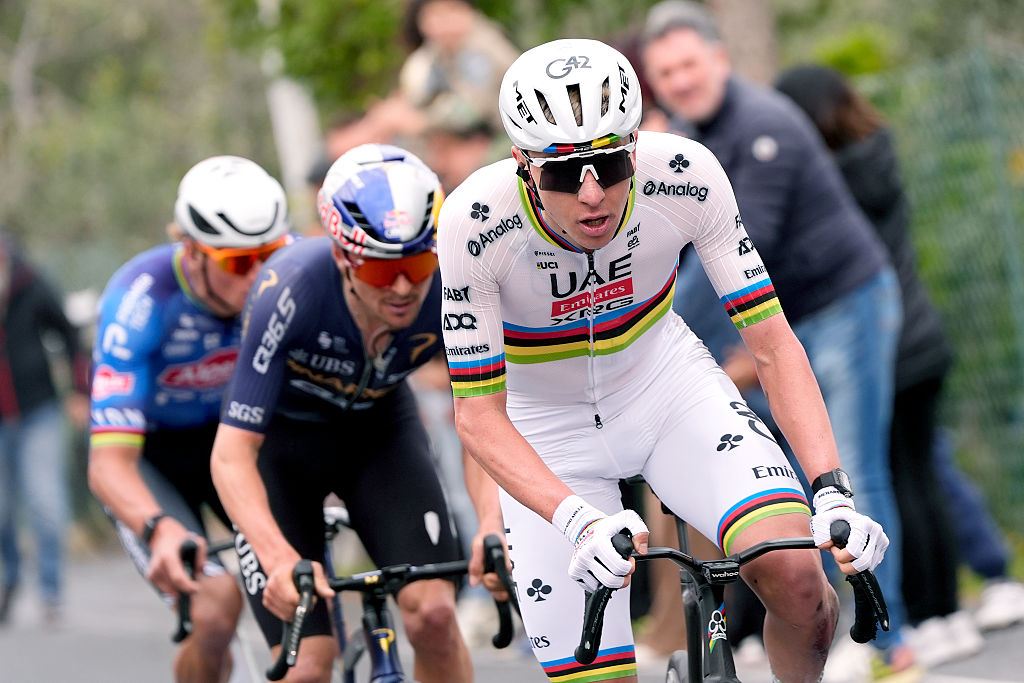
Tadej Pogačar en route to glory at Milan-San Remo (Image credit: Getty Images)
My colleague Matilda Price wrote an excellent column this week looking at the great ‘Is Pogačar boring debate?’ and arguing that it’s not his incessant winning that’s the problem but rather the manner of it. In that respect, brace yourselves for the best and worst of Pogačar this cobbles campaign.
Like Milan-San Remo did, Paris-Roubaix represents a forbidden fruit for the world champion, the sort of race a four-time Tour de France champion has no right to win. After his almost obsessive compulsion to win in San Remo was sated last weekend, expect that mental energy to be diverted the way of Roubaix, which is now the last remaining Monument for Pogačar to conquer. His second place on debut last year was extraordinary and his return to the Hell of the North should be equally spectacular. What we’ve seen from Pogačar so far in the non-hilly Classics is a trend of testing the water, honing his skills, and winning. He’s done it at Flanders, he’s now done it at San Remo, so the natural assumption after last year is he’ll crack Roubaix at some point, too. Watching him grappling to tame that particular beast will be riveting entertainment.
But Pogačar has already tamed the Tour of Flanders, twice now since that 2022 debut (which he almost won as well). The two victories have followed a similar format, with Pogačar forcing a selection on the second ascent of the Oude Kwaremont and going solo on the final one. The organisers have built the modern course around the Oude Kwaremont and for all the nostalgia for the Muur van Geraardsbergen, we have had some cracking editions, but Pogačar has made it somewhat formulaic. Watching him do this will never not be jaw-dropping but my fear is that he turns one of the most tactically complex races of the spring into a one-dimensional procession.
If this is ‘topsport’ I can’t watch – Laura (Managing Editor)
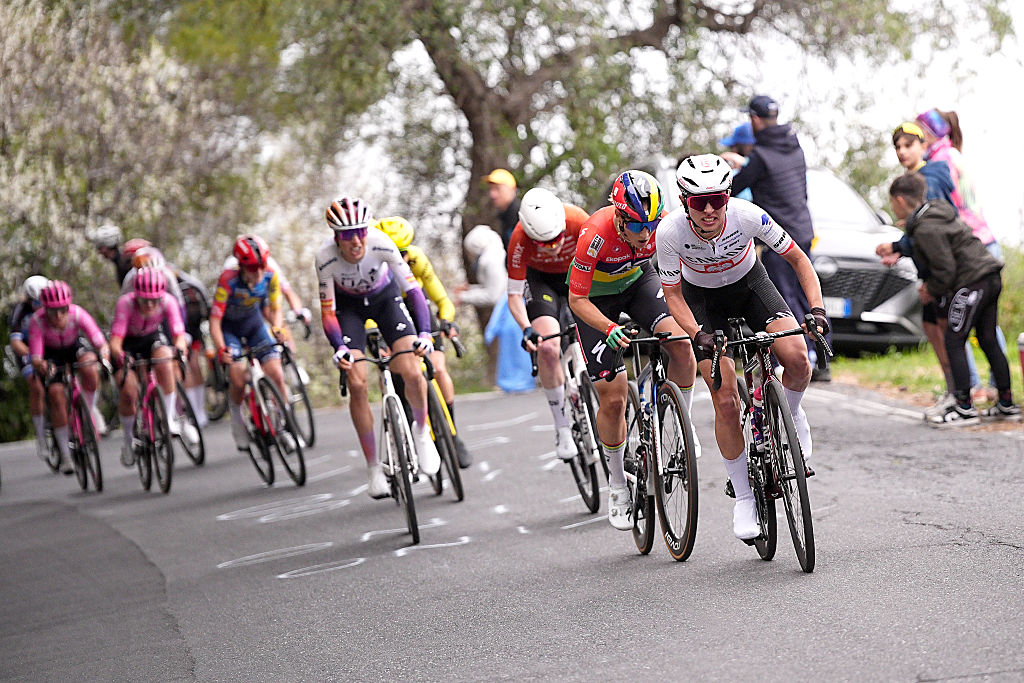
Kasia Niewiadoma-Phinney moments before her brutal crash on the Cipressa (Image credit: Getty Images)
In my opinion, professional cycling shouldn’t give the same physical reaction as a horror film, but that’s what Kasia Niewiadoma-Phinney’s Milan-San Remo crash did to me. I screamed and shoved my face into a pillow and couldn’t watch any further after seeing rider after rider plough into her. It wasn’t until I knew everyone was OK that I could watch the replay to understand what happened.
The same could be said for the mass crash involving Tadej Pogačar, Wout van Aert and others, or the Itzulia crash in 2024, or the many other terrifying wrecks we’ve seen. The Australian outlet SBS posted an interview after San Remo with Grace Brown, who said she was glad she had retired and “made it out alive”. It mentioned a 400% increase in rider injuries in the past 12 years in pro cycling, and although I have yet to independently verify that number, that’s not good considering the safety initiatives such as bans on puppy paws and yellow cards.
The commentators were saying that Niewiadoma-Phinney was pushing the limits of fear on the descent just before her fall – and she later said she was taking the advice of her coach, who told her, “If you don’t take risk, it’s not topsport.”
If this is topsport, I’m not sure how much more I can watch. Safety has been a major issue that the UCI is addressing with SafeR, but clearly, more needs to be done. There are innovations like airbags on the horizon, but I hope the riders will begin to rethink some risk-taking, too.
Pedersen a cobbled contender after all? – Dani (Senior News Writer)
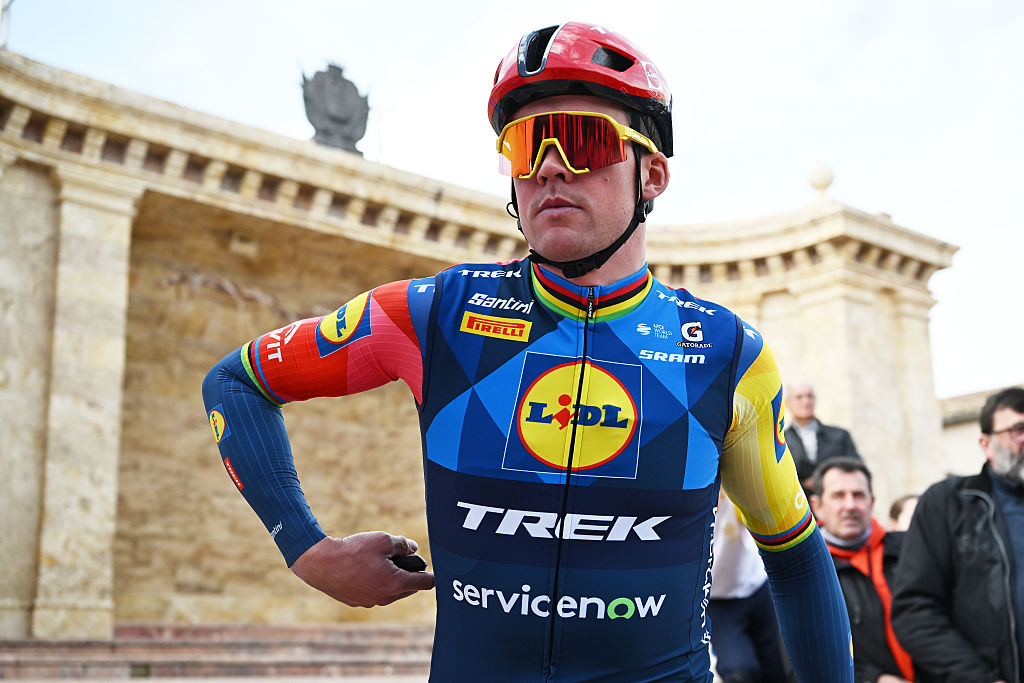
Mads Pedersen made a swift and successful return from multiple fractures at Milan-San Remo (Image credit: Getty Images)
At Milan-San Remo, Mads Pedersen enjoyed a highly successful return to racing following the collarbone and wrist fracture sustained at the start of February. The Dane crashed out of the Volta Comunitat Valenciana on the opening day, with his injuries immediately raising fears over his Classics campaign. Would he be back in the saddle this spring at all?
He shocked teammates and fans with the pace of his recovery, and hit the road in San Remo following an intense Mallorca training camp. A startling fourth place in La Classicissima suggests he’ll be back near his best for the cobbles.
While Pedersen wasn’t in contention for the win at the weekend, 298km of racing complete and his sprint to fourth suggests he’s ready for the coming weeks.
Of course, the strains of the cobbles are different to those of Milan-San Remo, especially for a rider with a recent wrist injury. However, there have been no suggestions that Pedersen struggled with his wrist in San Remo.
Upcoming races such as the E3 Saxo Classic and Gent-Wevelgem will serve as illuminating tests, then, ahead of his main goals, the Tour of Flanders and Paris-Roubaix.
Wider tyres and 1x gearing – Will (Senior Tech Writer)

Mathieu van der Poel on the offensive during Tirreno-Adriatico (Image credit: Getty Images)
It won’t be a great surprise to hear that the tech trends for the cobbles are ‘more aero bikes’ and ‘wider tyres’. Mathieu van der Poel may be bucking the narrow handlebar trend with his staunch refusal to run anything narrower than 45cm, but even he opts for larger rubber for Roubaix at least. Most riders will be opting for 32c still, but many more, we suspect, will be pushing this to 35c now that Continental has released a 35mm version of its GP5000 S TR race tyre.
This push for wider tyres will also necessitate more and more riders opting for 1x systems. For Shimano-sponsored teams, this is harder, and for hilly courses like Flanders, most will be on 2x. This isn’t a huge deal as the cobbles are less aggressive there, but for Roubaix we expect many more Shimano-sponsored teams to go off-script and run a single front chainring, as it’s the front derailleur that is often the rate-limiting step for tyre capacity. Israel-Premier Tech was a key example of this in 2024; the team ran gravel bikes, but could only use a 32mm tyre before the rear would foul on the mech.
It seems likely, if not a nailed on certainty, that Tadej Pogačar will run his cobbles campaign on his Y1Rs aero bike this year too, catching him up with his all his main rivals who have been racing the cobbles on aero bikes for the last few years while Pogacar has been on his V4Rs.
The return of Marlen Reusser – Matilda (Assistant Features Editor)
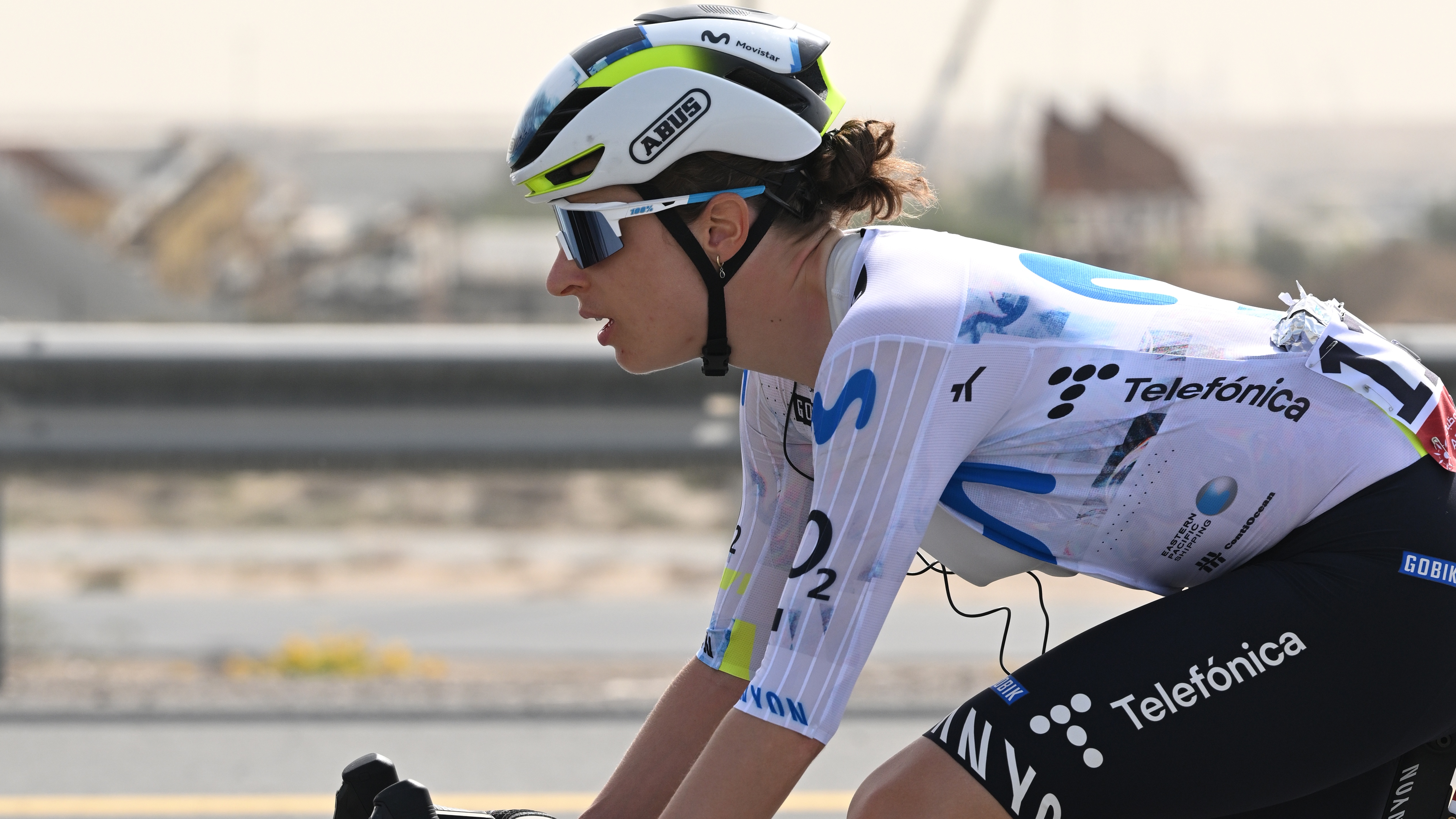
Marlen Reusser in action at the UAE Tour Women (Image credit: Getty Images)
We’ve seen most of the big names from the women’s peloton in action already this spring, but one of my favourite riders to watch, Marlen Reusser, has been out since a nasty crash at the UAE Tour. It’s still a little touch and go which race she’ll return at – it might not be as soon as Gent-Wevelgem, the race she won in 2023 – but she’s planning a return at the Belgian Classics.
Movistar are so strong these days that they have lots of options without her, like Cat Ferguson and Liane Lippert, but having Reusser back in the fold will be a big boost for them, and for the races in general. Reusser is a rider who races with panache and boldness, throwing what she has at the race rather than sitting back and following others, so I’m really excited to see her back in action so we can see what she can do.
She has the know-how and strategy to win big, it just depends whether she has the form and ability this spring or if this is just more about working towards the Grand Tours.
No Pidcock, so what can Pinarello-Q36.5 do? – Alasdair (Senior Staff Writer)
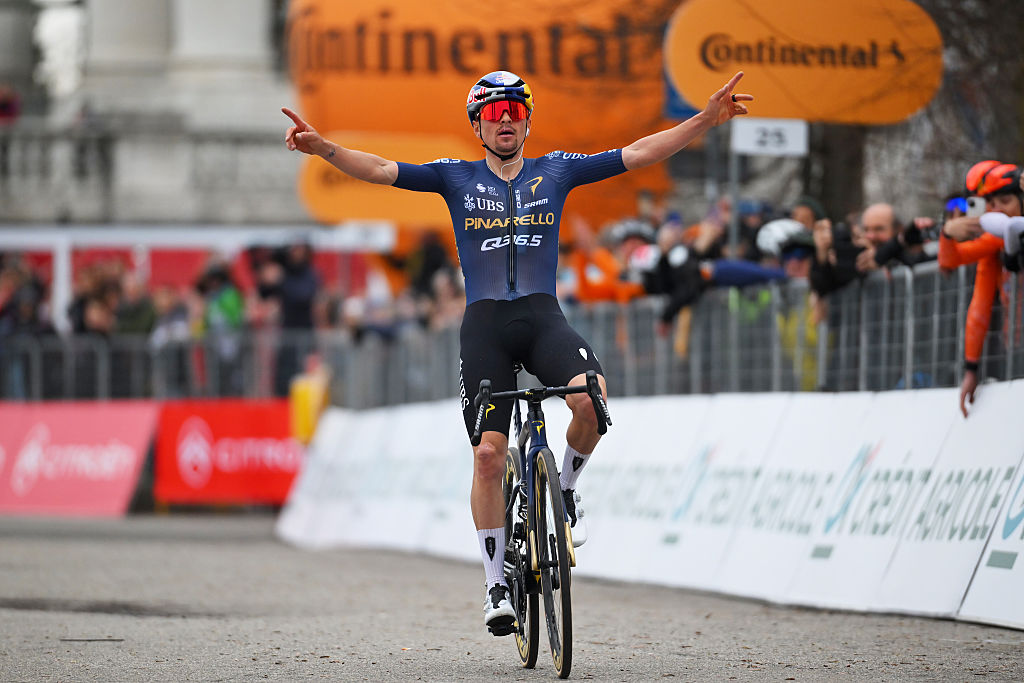
Tom Pidcock ascended to glory on the Superga at Milano-Torino (Image credit: Getty Images)
The biggest successes of this season for Pinarello-Q36.5 have definitely belonged to Tom Pidcock, with his win in Milan-Turin followed up by a dramatic near-miss against Tadej Pogačar in Milan-San Remo. And given the amount of attention paid to him by the media, it’s perhaps not surprising that his teammates’ own results often get overshadowed, the most recent case in point being at Omloop Het Nieuwsblad where Pidcock’s failure to impact due a miscalculation about the effects of the cold weather eliminated much of the interest in Aimé de Gendt’s fine fifth place on the day.
With Pidcock focussing on the Ardennes Classics this year, starting with a bid for a second success in Brabantse Pijl, there’ll be no such eclipsing of his teammates and instead a golden opportunity for the cobbled Classics racers in Pinarello’s line-up to race 100% for themselves. Fred Wright’s brace of top tens in Flanders a few years back and much more recent ninth place in Paris-Roubaix warrant attention, but so too do De Gendt’s seventh place in E3 last year and top five in Omloop, as well as his string of top tens and 20s in the Classics in a career stretching back to 2016.
Compatriot Frederik Frison also has been there or thereabouts in cobbled races for a long time now, whilst Brent van Moer only has one win to his name, but his fourth place in Omloop last year makes him a wheel worth following on the cobbles, too.
New names for old races – Patrick (Deputy Editor)
If there’s one thing I’m not looking forward to, it’s calling all the Classics by their official names, which has become a vexing task this year. No fewer than three races have changed their names, with Paris-Roubaix now officially Paris-Roubaix Hauts-de-France, the Classic Brugge-De Panne now the Ronde Van Brugge, and of course Gent-Wevelgem, somehow, now In Flanders Fields – from Middelkerke to Wevelgem.
No one is realistically going to use the Hauts-de-France moniker, so there’s no great practical change for Paris-Roubaix, but it does dilute the brand of one of cycling’s most historic and prestigious events. Local government support keeps these shows on the road and that’s vitally important, but you can’t help but feel Paris-Roubaix should be above all the local tourism promo.
As for Gent-Wevelgem, the ‘from Middelkerke to Wevelgem’ is obviously insane, though ‘In Flanders Fields’ does fit with the organisers’ attempts in recent years to align the race with war remembrance. Still, ‘Wevelgem’ is simply how most of the peloton will continue to refer to it. But ‘Gent’ is a loss, scrubbed off the name after more than 90 years. It hasn’t started in Gent since 2002, but then again, Paris-Roubaix starts nowhere near Paris and even the Ronde Van Brugge – arguably the only positive change on this list – was called the ‘Three Days of De Panne’ when it was a one-day race.
Is there not something charming about how little sense pro cycling makes sometimes? Maybe I’m just getting old.
Get unlimited access to our unrivalled 2026 Spring Classics coverage with a Cyclingnews subscription. We’ll bring you breaking news, reports, and analysis from some of the biggest races on the calendar, including Milan-San Remo, Paris-Roubaix and the Tour of Flanders. Find out more.