
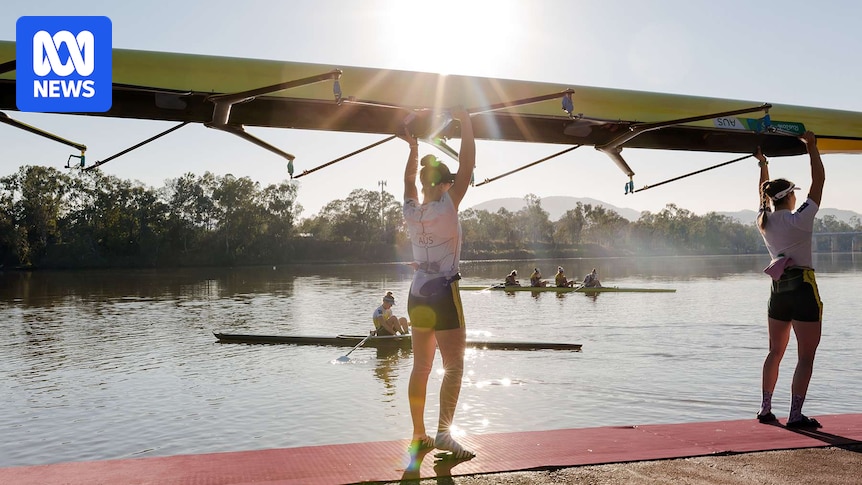
Key officials from World Rowing and the International Canoe Federation (ICF) have torpedoed the endless debate surrounding a regional Queensland venue ahead of the 2032 Brisbane Olympic and Paralympic Games.
Flatwater rowing and canoeing will be hosted on Rockhampton’s Fitzroy River for the Games, despite growing demands for the events be shifted to south-east Queensland or interstate to Sydney.
This afternoon, World Rowing president Jean-Christophe Rolland and International Canoe Federation president Thomas Konietzko publicly backed the central Queensland venue.
Following positive discussions among stakeholders, the Games Independent Infrastructure and Coordination Authority (GIICA) today announced it was assessing two preferred “field of play” options for the Fitzroy River ahead of independent technical analysis being finalised.
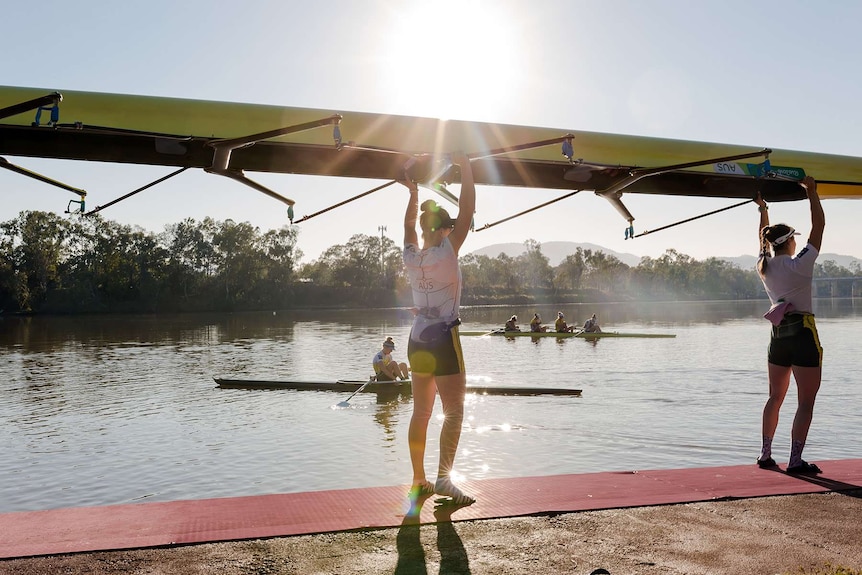
Australian rowers have previously used the Fitzroy River as a training venue before the Olympics. (ABC: Alice Roberts)
The Queensland government also revealed the preferred field of play currently being evaluated was a full 2-kilometre competition course, with a southern finish line downstream towards the Fitzroy Barrage.
The state government did not confirm if this option would include widening and dredging sections of the river to ensure consistent water flow and fairness for athletes, nor a total construction cost.
It comes amid debate surrounding the river’s natural bends, the course having a current, being prone to flooding and being home to crocodiles.
Deputy premier Jarrod Bleijie has reiterated that no other venues were being considered, and completion of this phase had enabled planning to move forward.
This included more detailed design for infrastructure upgrades, venue overlays, operational requirements, legacy opportunities and venue capacity.
Mr Bleijie said the latest progress ensured the Rockhampton community and competitors could have confidence in the Fitzroy.
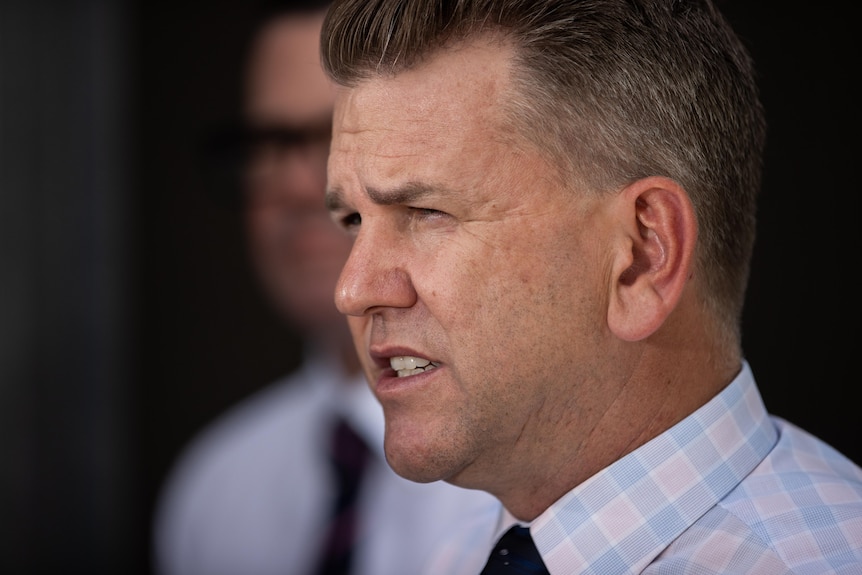
Jarrod Bleijie has stood firm on the selection of the Rockhampton venue. (ABC News: Luke Bowden)
“This is an important milestone and we’re working well with the rowing and canoeing international federations, as well as the IOC [International Olympic Committee] and our Games delivery partners to deliver an incredible venue and competition in 2032, and a long-lasting legacy for Rockhampton,” he said.
Ensuring fair and safe competition
Mr Rolland, who represented France in three Olympic Games in rowing, said his international body would continue to work collaboratively to ensure fair and safe competition for athletes.
“We are appreciative of the engagement and assessment carried out to date,” he said.
“Fairness and integrity of competition is our utmost priority, and we look forward to continuing to work with stakeholders to undertake further technical assessments of the Fitzroy River to reach a final position in a timely manner.”
Mr Konietzko also supported the collaborative progress to date and looked forward to finalisation of the assessment.
“We welcome the feasibility work completed so far and will continue to provide practical technical guidance as planning progresses, ensuring that athlete needs and competition requirements remain central to the process,” he said.
“We look forward to ongoing collaboration with all partners as the Rockhampton venue moves into its next phase.”
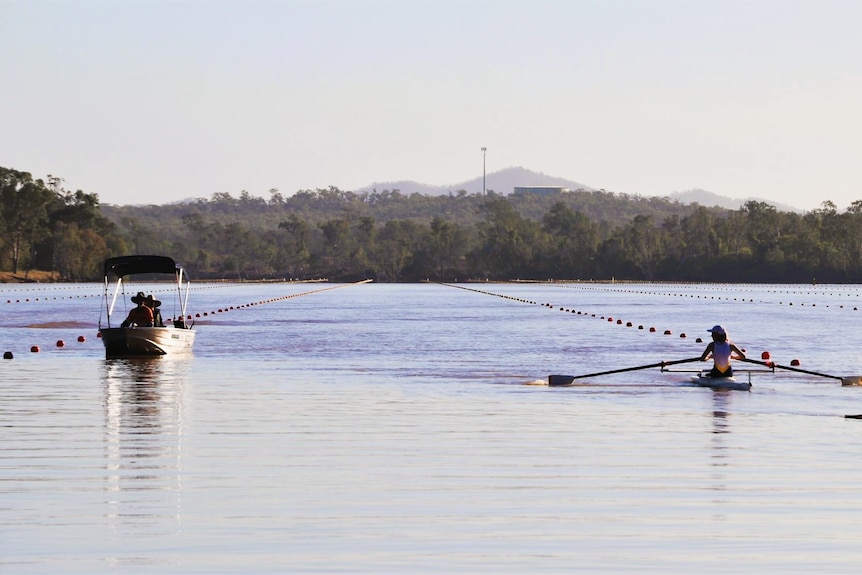
The Fitzroy River rowing course has been the subject of independent and international testing. (Supplied: Rockhampton Fitzroy Rowing Club)
Getting down to details
GIICA chief executive Simon Crooks said detailed planning work was now underway.
“This is an exciting phase. As we progress to venue design and technical approval, we can now get down into the detail and technical considerations that go into delivering a world class venue for competitors that Queenslanders can be proud of,” Mr Crooks said.
He said GIICA would continue to work closely with the rowing and canoeing international federations in completing and finalising a project validation report.
All venues will be funded within the $7.1 billion funding agreement that was renegotiated by the state and federal governments in July, to deliver venues and long-term legacy infrastructure for communities across Queensland beyond 2032.