
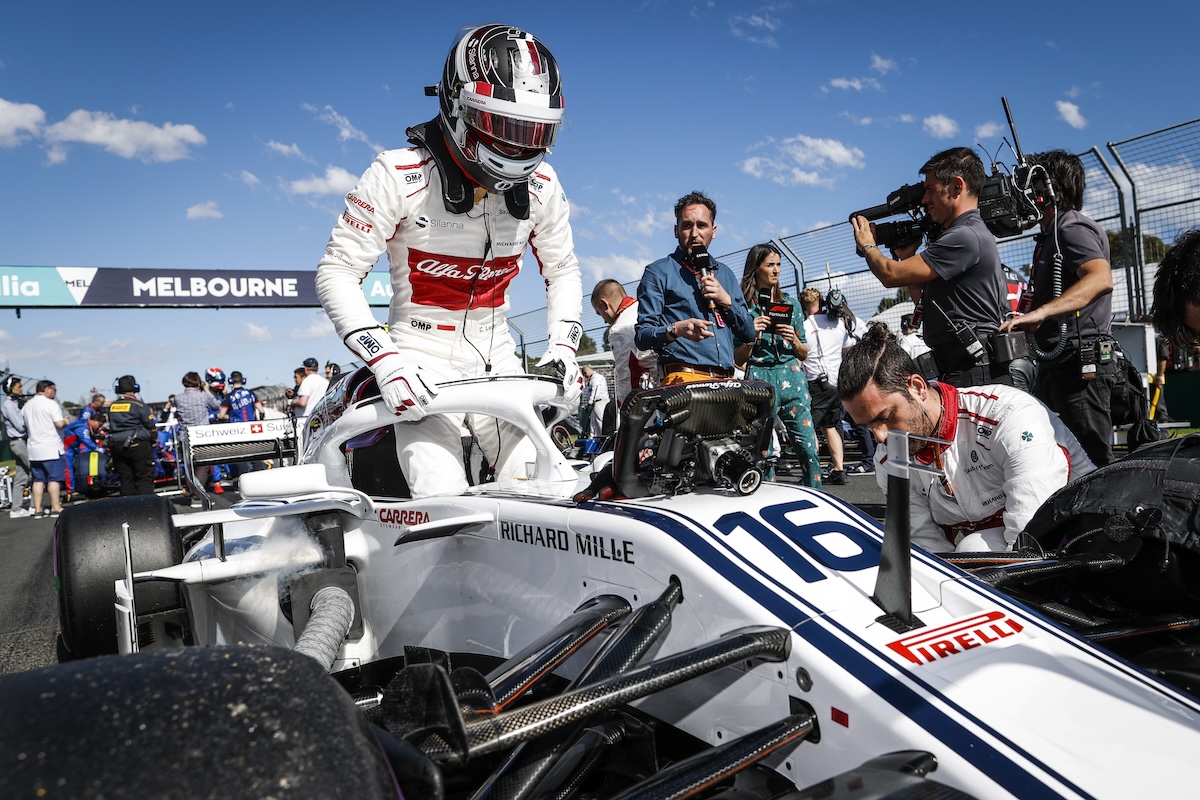
When Charles Leclerc When he arrived at the Albert Park circuit, he was still just another rookie among many before him. At 20 years old, he made his debut with Alfa Romeo Sauber, a team coming off an extremely difficult 2017 season, which ended with them finishing last in the Constructors’ Championship. car The Swiss driver is significantly behind the rest of the grid, and his ambitions are modest: to fight, to learn, and above all, to finish the races. Facing him, the hierarchy seems already established. Mercedes Benz still dominates, led by a Lewis Hamilton in search of his fifth title, while the Team Ferrari and Red Bull complete the top three. In this locked-down landscape, the rookies operate in the background, far from the fight for the podiums.

The first weekend of the 2018 season, in Melbourne, perfectly reflects this gap. In qualifying, Charles Leclerc started at the back of the grid in 18th position, 1,8 seconds off the fastest time in Q1. The race, marked by a decisive strategy and a safety car period that benefited Sebastian VettelThe Monegasque driver adopted a cautious approach. He avoided mistakes, adapted to the demanding semi-street circuit, and crossed the finish line in 13th place, benefiting from five retirements to climb the field, without managing to get any closer to the points. Nothing in this first Grand Prix yet suggested an exceptional trajectory.
The pre-F1 era: an ascent already marked by titles
If his beginnings in Formula 1 The transition is done discreetly, and the path leading there is anything but insignificant. Before joining the grid, Charles Leclerc built a reputation as a prodigy through the intermediate categories.
Having gone through, like all his predecessors, the kartingHe quickly distinguished himself through his speed and consistency. He won 12 titles between 2005 and 2013 and also finished as runner-up seven times. His rise continued logically in single-seaters, with solid results in Formula 1. Renault 2.0 Alps, where he finished second behind Nyck de Vries but first among juniors in 2014, then in GP3 Series, which he won in his first season in 2016. But it was in 2017 that his talent truly exploded in the eyes of the public.
Engaged in Formula 2 With Prema, he won the inaugural season with impressive authority. Despite difficult personal circumstances, he racked up victories (7 in total) and dominated the championship ahead of his closest rival, Arkem Markelov, despite two retirements and a disqualification, establishing himself as one of the most promising drivers of his generation. His ability to handle pressure, climb back through the field, and adapt quickly impressed observers.
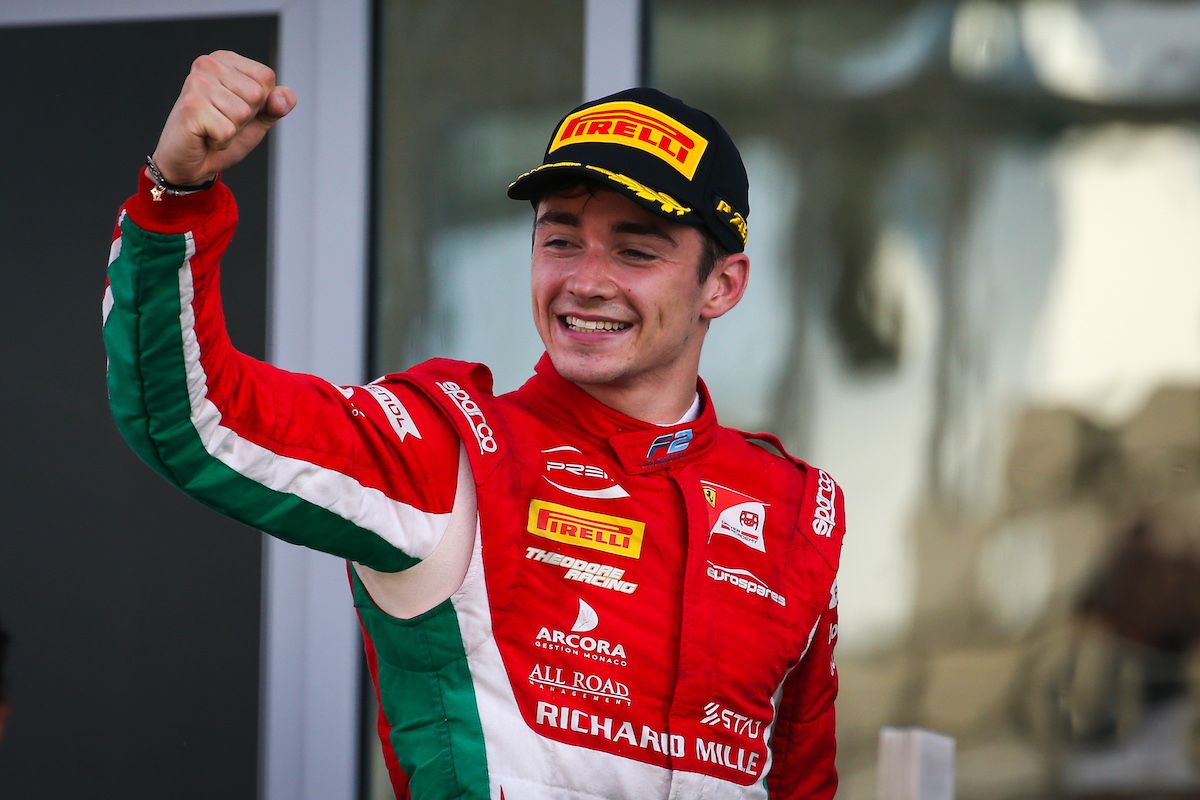
Charles Leclerc during his Formula 2 title win. © Sebastiaan Rozendaal / DPPI
This Formula 2 title acted as a career accelerator. Supported by the Ferrari Driver Academy since 2016, Charles Leclerc logically got his chance in Formula 1 the following year. With Ferrari already fielding Sebastian Vettel and Kimi Räikkönen, he had to prove himself in one of Ferrari’s customer teams, Alfa Romeo. This choice, often seen as a necessary step, allowed him to learn, away from the spotlight, how to structure his races and maximize the potential of limited equipment, among other things. He succeeded perfectly, finishing in the points 10 times out of the 21 weekends of the season. These results allowed him to finish 13th in the Drivers’ Championship with 39 points, ahead of Romain Grosjean (37 points).
Eight years later: a trajectory built step by step
After his first season of learning the ropes at Alfa Romeo Sauber, Charles Leclerc quickly took his career to another level. In 2019, he was promoted to Ferrari to replace Kimi Räikkönen, proof that his performances in a backmarker car had been convincing. In his first season in red, he immediately established himself as a top driver: seven pole positions, two victories, and the ability to directly challenge Sebastian Vettel, four-time World Champion, finishing 4th in the Drivers’ Championship with 264 points, just ahead of his German teammate (240 points).
This rapid adaptation changed his status in the paddock. He was no longer just a prospect, but a driver capable of competing at the highest level. The following seasons were more inconsistent, largely due to the Scuderia’s fluctuating performances, but Charles Leclerc remained a constant in the team, never finishing outside the top eight in the Drivers’ Championship. He secured two more pole positions and three podium finishes in the next two seasons, sometimes in challenging circumstances, and established himself as the natural leader of the project, ahead of a struggling Sebastian Vettel in 2020 who was replaced by Carlos Sainz in 2021.
In 2022, with a finally competitive single-seater, the Monegasque driver joined the title fight early on against Max VerstappenThe season confirmed his ability to compete for a championship over the long term, even if Ferrari failed to capitalize on its opportunities. He finished the season with three wins and seven other podium finishes, results insufficient to beat the Dutchman, who clinched the title at the Japanese Grand Prix, while Leclerc battled to retain his runner-up position against Sergio Pérez. The following years continued this momentum: he remained a consistent contender for victories, even when the technical hierarchy was not in his favor.
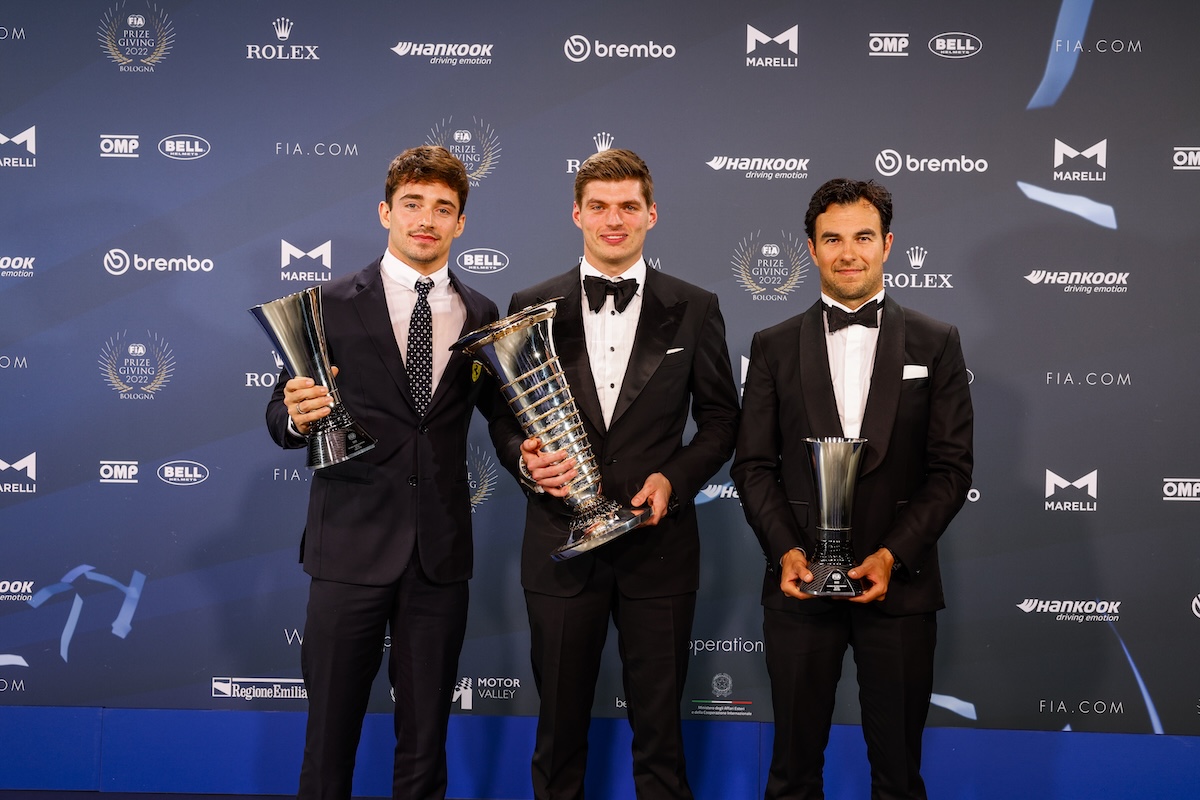
Charles Leclerc (left) finishes the season behind Max Verstappen (center), who wins his second title, and ahead of Sergio Pérez (right). © Frédéric Le Floc’h / DPPI
Undiminished ambitions, built on experience
From his earliest years in Formula 1, Charles Leclerc had a clear objective: to become Formula 1 World Champion with Scuderia Ferrari. This ambition wasn’t just talk; it was backed by concrete performances, particularly in qualifying where he established himself as one of the grid’s top drivers, despite cars that were sometimes more than a little temperamental. In 2018, at the time of his first Formula 1 Grand Prix, the question of a world title wasn’t yet a real possibility, even though it remains every driver’s dream. He first had to prove that he deserved his place in the sport, and then that he could establish himself in a top team. It was only after joining Ferrari and securing his first victories that his objective became credible in the eyes of the paddock.
In 2026, the situation is clear: Charles Leclerc has completed all the intermediate steps. He has won races, secured pole positions, and been in contention for the title. The final hurdle remains the World Championship, which depends as much on the competitiveness of his car as on his own consistency. While Mercedes largely dominates the 2026 grid with the new regulations, Ferrari currently appears to be the only team capable of directly challenging the Silver Arrows. However, it remains to be seen whether this will continue in the long run and whether the Scuderia will be able to gain the upper hand and allow its drivers to truly fight for the title.
ALSO READ > Charles Leclerc, smiling after the Chinese Grand Prix: “I loved it!”