
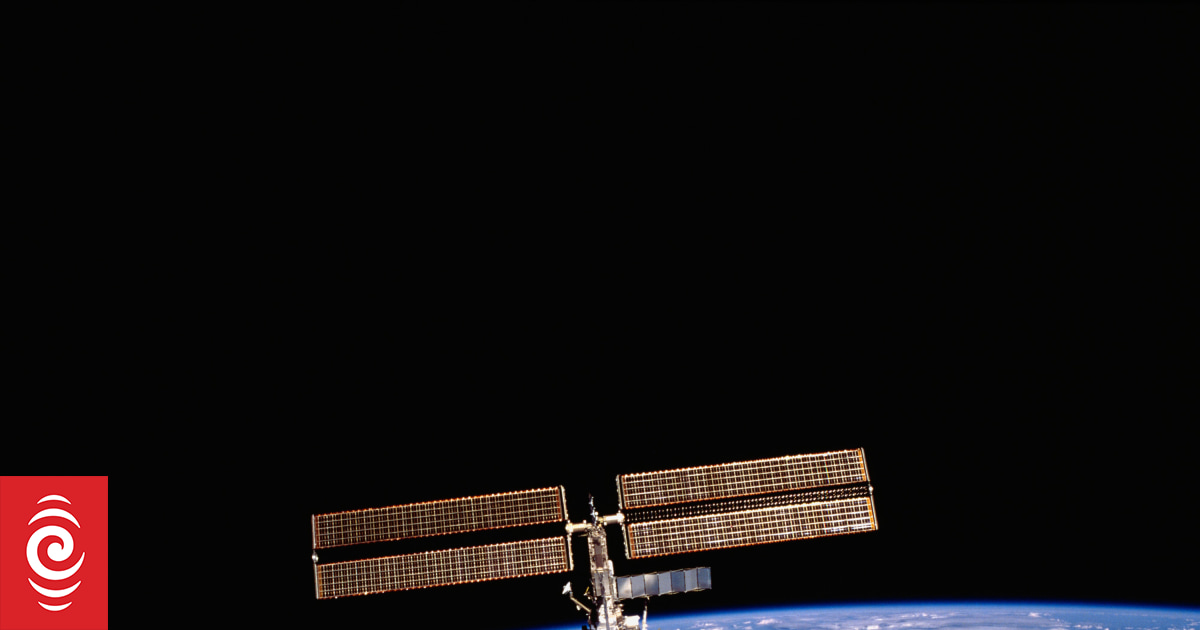
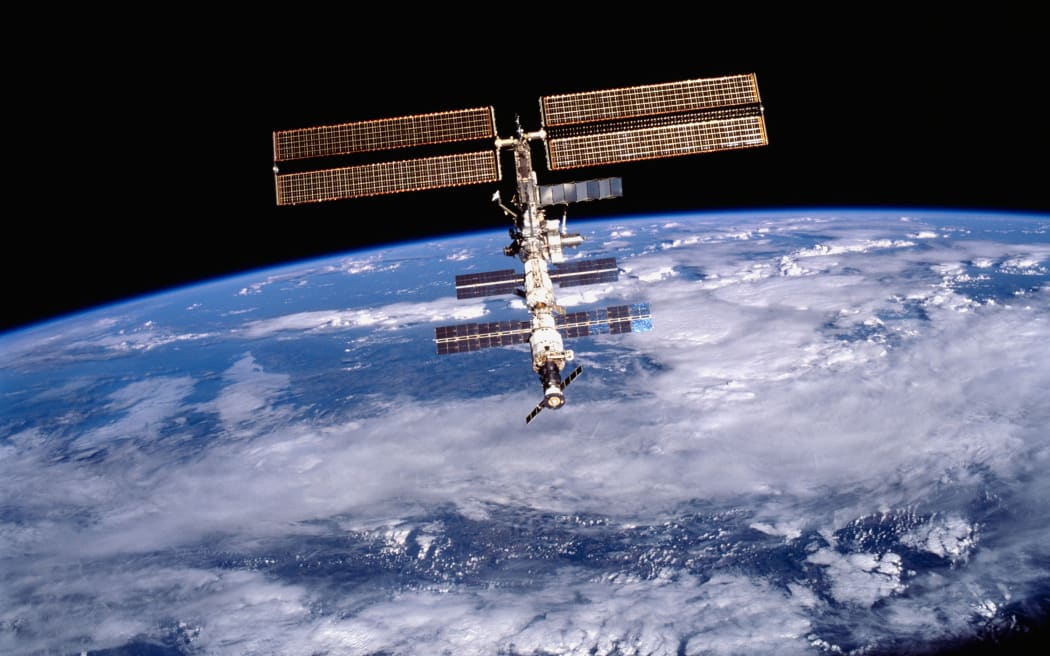
The International Space Station
Photo: NASA
A New Zealand experiment on the International Space Station has proved a superconducting system can survive a power failure.
Victoria University’s small Hēki magnet power system has been looking into new ways to propel spaceships for six months.
The Hēki team says they exceeded their research aims and perhaps most exciting was overcoming the power failure hurdle, a common weak point in superconductor systems.
“Hēki is inside the airlock where it will remain for several days,” said chief scientist Professor Randy Pollock in an email.
It would then be packed up by astronauts to return to Houston, then to New Zealand.
“It is a bittersweet moment for the team – proud that the mission has been so successful but sad that it has come to an end.”
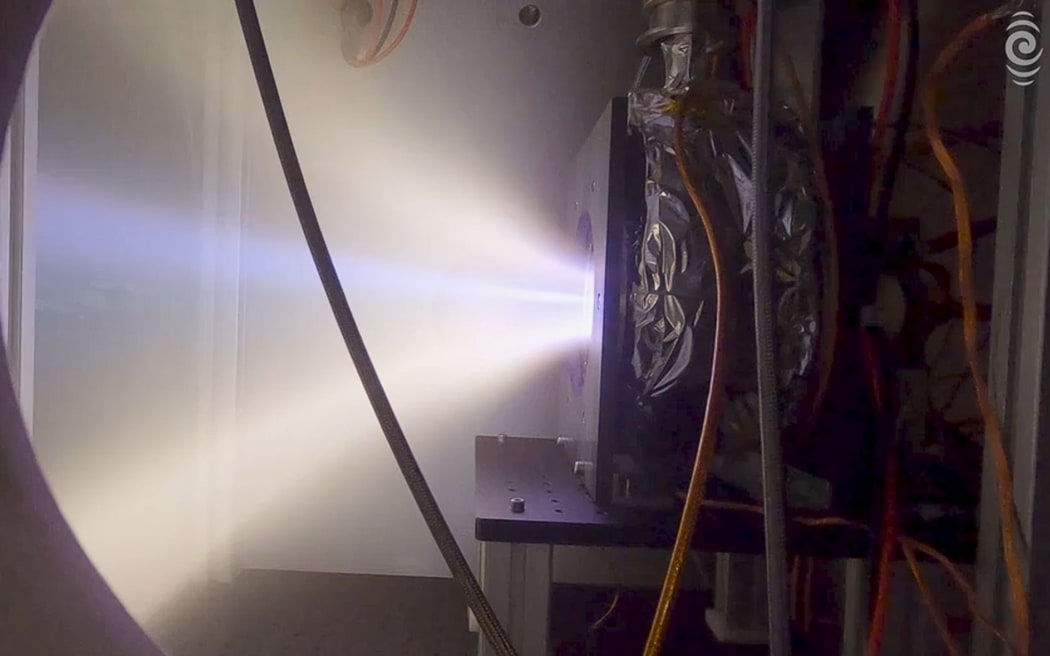
Hēki uses superconductor magnet propulsion technology.
Photo: Reece Baker / RNZ
The suitcase-sized unit did not appear to have degraded while in space, and if their checks in Wellington confirm that, it would be another step towards commercial use.
“This demonstration is key to widespread acceptance of this technology in space where reliability and robustness are paramount,” Pollock said..
Victoria’s Paihau-Robinson Research Institute is working on an electric propulsion system it has dubbed the Kōkako thruster that would integrate plasma with the superconducting tech.
The space station offers highly sought-after slots on its outside for scientists to run experiments.
Sign up for Ngā Pitopito Kōrero, a daily newsletter curated by our editors and delivered straight to your inbox every weekday.