
SUPERCARS has assured its upcoming New Zealand doubleheader will not be affected by the ongoing global fuel crisis.
The United States/Iran war, and the consequent impact on the Strait of Hormuz, has seen fuel supplies decrease and costs increase.
It’s arguably the hottest topic in everyday life in Australia right now, but motorsport is pressing on with the Shannons SpeedSeries opener this weekend at Phillip Island and the Hi-Tec Oils Bathurst 6 Hour next weekend.
Supercars will then return to action for back-to-back meetings across the Tasman at Taupō (April 10-12) and Christchurch (April 17-19).
“Supercars uses a specialised, purpose made racing fuel developed exclusively for the championship, which ensures events are not reliant on local fuel supply,” a category spokesperson told V8 Sleuth.
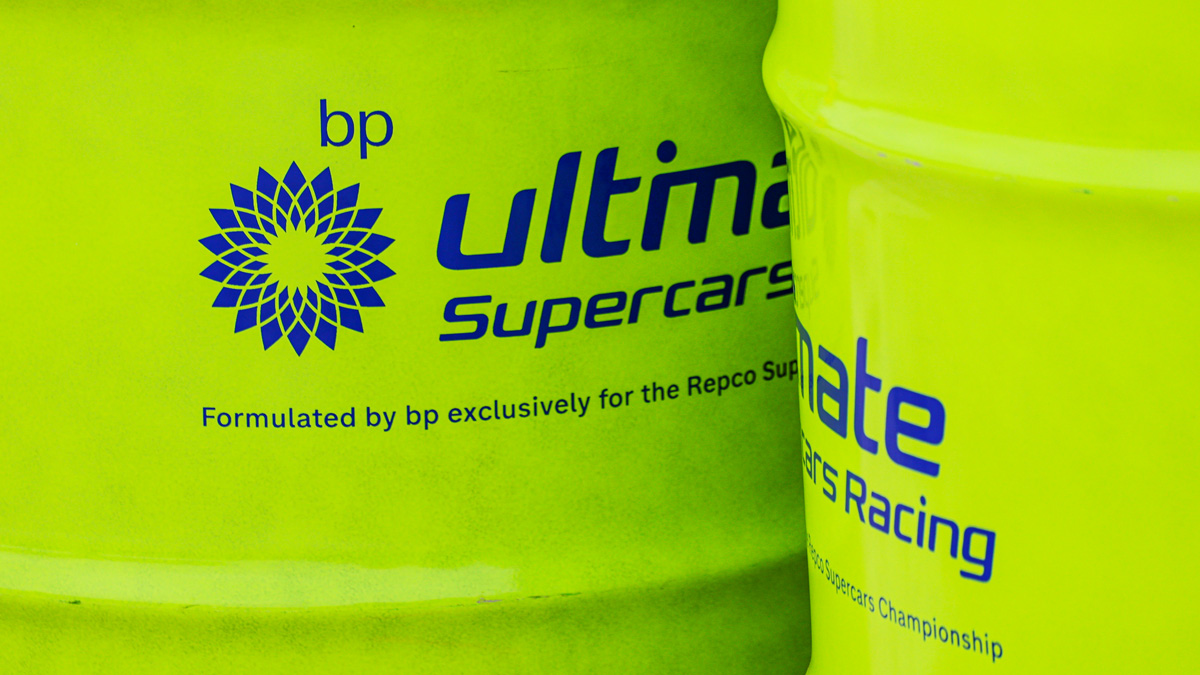
“For the 2026 Repco Supercars Championship, Supercars has introduced bp Ultimate Supercars Racing Fuel, a 100 percent renewable based fuel composed of 85 percent ethanol and 15 percent bio gasoline derived from waste materials.
“The fuel is not available for public retail and is used exclusively for competition purposes.

“For events held in New Zealand, Supercars transports and manages its own fuel into the country, with the fuel blended in Australia and shipped to New Zealand in sealed drums before being distributed to teams at the circuit.”
A slightly larger concern may come mid-year in relation to transporter diesel, with long hauls scheduled to and from Darwin, Townsville and Perth through June/July.
Six Supercars teams are based in Melbourne, four in southeast Queensland, and one in Albury.
With naturally no timeframe on when the war may end, Supercars says it is monitoring the situation.
Assuming supply is not a problem, one industry source made mention of the heightened expense to teams not covered by fuel sponsors (i.e. Tickford/bp, Triple Eight/Ampol, Dick Johnson Racing/Shell).
“The average truck burns one litre of diesel every two kilometres, so if diesel is $2 per litre, that means the price is a $1 per kilometre,” they explained to V8 Sleuth.
“If it goes up to $3 per litre, which it looks like it will, then that becomes $1.50 per kilometre, so it’s a 50 percent extra cost, which is significant on those longer trips.”
The trek from Brisbane to Perth, for example, exceeds 4200km one-way, while southeast Melbourne to Darwin is roughly 3800km.
“Control Freak”: Mark Skaife’s 2000 Holden Commodore TV commercial
Holden Racing Team ace Mark Skaife features in this 2000 Holden TV commercial made for the Australian market focused on the rear-wheel-drive Holden Commodore.