
March 26, 2026 — 8:00pm
Save
You have reached your maximum number of saved items.
Remove items from your saved list to add more.
Save this article for later
Add articles to your saved list and come back to them anytime.
Got it
AAA
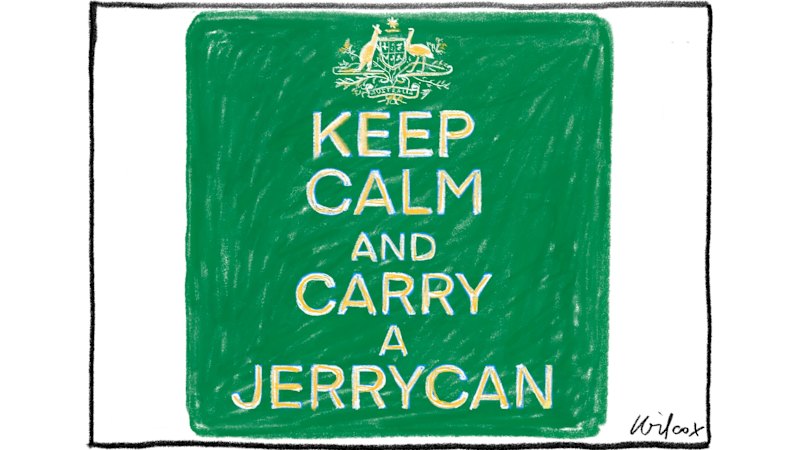
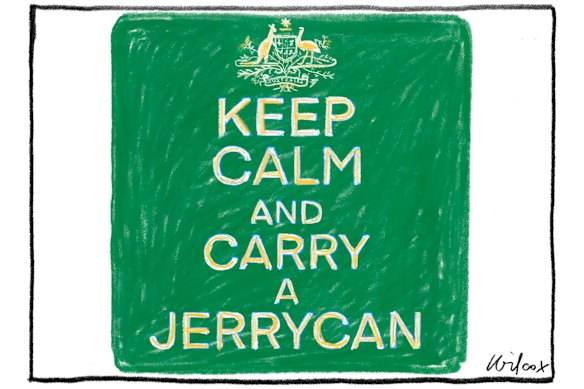 Cathy Wilcox
To submit a letter to The Age, email letters@theage.com.au. Please include your home address and telephone number below your letter. No attachments. See here for our rules and tips on getting your letter published.
ENERGY SUPPLY
The war in the Middle East has caused the many exponents of wind and sun power to extol their virtues as replacements for oil, gas and coal. If only we had more sun and wind we would not be in such a mess is their mantra. Unfortunately for them, what is actually being shown to those of us who look at reality, is, in fact, the exact opposite. Starting with food supply chains, we are seeing huge disruptions due to lack of diesel to plant crops and move food to consumers. Also fertiliser supply is dire as there is a shortage of gas to make ammonia and urea – two vital components to make fertiliser. There is no easy or cost-effective sun- or wind-powered substitution readily available.
Packaging of food is looming as a major problem as we have demonised gas so much. We have little or no plastic resins being made locally as the plastic plants have shut down as the cost of making resin here was too high. We are dependent on imports now, and the supply is diminished and cost has skyrocketed.
What happens when you can’t buy milk, bread or butter if there is nothing left to pack them in? Many medicines use petrochemicals as part of the manufacturing process and the healthcare industry uses many single-use plastic products that will potentially become scarce. These are only a few examples.
Wind and sun have a place in our energy mix but can never be the sole answer. Modern life is much more complex as we are finding out to our cost.
Tim Gillespie, Camberwell
Simple approach to make fuel last
The Albanese government should take a leaf out of South Korea’s book and back simple, proven ways to cut fuel use (“Albanese calls national cabinet on fuel amid supply shortage risk”, 26/3). Working from home, avoiding idling, smoother driving, riding a bike or jumping on public transport all reduce our reliance on imported fuel. Given that petrol and diesel also pollute our air and empty our pockets, using less of them seems like smart living.
Sarah Brennan, Hawthorn
Accelerate the transition to renewables
Since 1970, there have been at least six international crises affecting Australian fuel prices. These include the 1973 Yom Kippur war, the 1979 Iranian Revolution, the 1990 Gulf War, the 2008 Global Financial Crisis, 2020 COVID, and now the Iranian war.
Research shows that fuel prices at the bowser took one to three years after geographically contained conflicts to return to approximately pre-crisis levels, but up to six years for much larger crises like the 1970s fuel shocks.
These facts add weight to the argument that national fuel reserves are inadequate and that there is severe sovereign risk in not having more on-shore processing. But above all, the message is to accelerate transition to renewables in our transport sector and wider economy.
John Margetts, Grovedale
Our supply problems 30 years in making
Shane Wright’s analysis (“Higher interest rates, higher inflation and higher petrol prices: Jim Chalmers’ nightmare scenario is here”, 21/3) lays out the nightmare scenario with forensic clarity – higher rates, higher inflation, higher petrol prices, and a treasurer making hard decisions seven weeks from a budget. However, the nightmare did not begin with the war in the Middle East.
It began when Australia spent 20 out of 26 years voting back the Coalition (1996-2022) – the party that let our car industry die, put roadblocks in the way of renewable transition, handed our gas wealth to private shareholders, and left us importing 90 per cent of our petrol.
We could have been Norway. Instead, we are staring down $120-a-barrel oil with no dedicated resource fund, no domestic EV manufacturing, and a gas tax that raises less than beer excise.
The Australian people are ready for hard decisions – starting with making the gas industry pay its fair share of the suffering it helped create.
Sue Barrett, Caulfield South
THE FORUM
Siren call of grievance
In the UK, Italy, Germany, France and particularly the US, we see voters swinging to parties of massive grievance but of little substance. Surely, this is the direct result of at least a generation of governments which have done little to address the concerns of ordinary people and much manoeuvring to be in government again after the next election.
Pressure groups are pandered to, exacerbating the inequality inherent in an unregulated capitalist system.
The “loyal” opposition is not; it is just opposition for the sake of opposition and to create an opportunity to gain the reins of power.
This situation is attributable to both sides of politics and both should rightly be condemned for it. Politicians from major parties seldom have any life experience outside of politics, and in many cases it has become the family business. Little effort seems to be made to vet potential candidates for their values. Scandals have repeatedly shown that background checks are cursory at best.
Now, according to opinion polls and SA election results, it is Australia’s turn to heed the siren call of politicians preaching grievance, division and racism.
Students of history will know that in the long term the election of such people leads to oppression, chaos or both.
Bob Farrawell, Kew
Deputy no more
Sean Carney is right (“This madness has gone on for too long”, 26/3): “Australia must take greater responsibility for its own security because we can’t be certain that we can rely on Trump’s America”.
Our alliance with this powerful military partner – led by a president contemptuous of a swathe of hard-won international precepts and conventions that we believe in – risks not only our defence, it seemingly crimps and curtails the response we should be making to international violence.
We cannot be sure, but it’s plausible that Albanese and Wong are ‘soft’ on Israel, as it violently prosecutes it cause across the West Bank, Gaza, and now Lebanon (again) because we don’t want to offend Uncle Sam.
Recall that the Biden administration also strongly backed Israel’s response to Hamas’ 2023 attack. And even NATO members have recently felt the lash of Trump’s tongue.
It’s time a free Australia got out from under this burdensome alliance and stood tall with real allies.
Ken Blackman, Inverloch
Trillion-dollar question
Clive Palmer’s “new deal” housing policy offers to pump “a trillion dollars” into housing. How is a trillion dollars going to be raised and from what taxes? A trillion dollars over what time span: five, ten, 20? Is the money going to new build or existing housing? Adding more money into housing demand, whether for investors or purchasers, will turbocharge already rising home prices for both rent and purchase.
How is “fast-tracking development” and “slashing red tape” going to help? Governments have tried that already and it doesn’t work. By how much will stopping all immigration reduce the supply of labour for new housing construction?
These are the most basic questions of the housing market. They must be answered before any other ideas of new authorities for lending and insurance, or fast railways and regional development can make sense.
Nicholas Low, Cape Paterson
Politics as sport
One of the key questions leading into the Victorian election in November is the likely impact of a vote for One Nation similar to that seen in South Australia last Saturday. Will it hurt or help the Allan government?
As Chip Le Grand writes, One Nation could gift seats to Labor by reducing the Coalition vote in the regions and Melbourne’s east, or it could break Labor’s stranglehold in the west and north of the city. (″The best thing Allan has going for her is the ineptitude of her challengers″, 26/3).
As Le Grand notes, it could do both. It will be interesting to see how the major parties react to this uncertainty. Presumably, Labor will preference One Nation below the Coalition on its how to vote cards, although One Nation might help the Allan government survive.
And the Coalition might put One Nation above Labor on its cards in full knowledge of the impact One Nation had on the Liberals in South Australia.
If the consequences weren’t so serious, it would make great spectator sport.
Rod Wise, Surrey Hills
One Nation has policy
Parts of the media accuse One Nation of having no substantial policies. Interviews with South Australian people who voted for One Nation last weekend made it clear that many of them voted ‘against net-zero’.
This is a major policy articulated by Barnaby Joyce. An ‘against net-zero ‘policy will cause more people to die from extreme weather events, especially heatwaves. It will make the world uninhabitable. Enabling global heating to increase is a substantial policy.
Tom Maher, Aspendale
SRL centre stage
Prime Minister Albanese might have thought that if he could keep Premier Allan quiet about her SRL and her Big Build disasters until after last year’s federal election, he could get away with giving her the funds she needs to get the SRL tunnels started in this year’s budget.
But with his own stocks going down, as a result of other factors: the war in the Middle East, rising interest rates, reports of cuts to services to domestic violence victims, etc, it might be time for second thoughts.
There is no point the state Labor government dumping Premier Allan unless they also dump the SRL and have a good hard look at her planning and infrastructure follies via a royal commission.
But if it doesn’t dump the SRL and the worst of the Big Build projects along with Premier Allan, she is likely to bring down the Albanese government as well as her own.
Rosemary West, Edithvale
Allan’s local problems
Re: your opinion piece (26/3) on the issues facing Jacinta Allan. Yes, no rational person would blame the Allan government for rising inflation, a Middle East crisis and rising interest rates. It would, however, be reasonable to hold it accountable for their unnecessarily adversarial approach to the CFA, health workers, paramedics, and teachers claims for better equipment, working conditions and equitable pay. These people provide critical services every single day and yet, we continually make them fight for every basic need.
Meanwhile, the government, and Allan in particular, is doubling down on denying allegations that around $15 billion worth of funds that have ended up in the hands of criminals within the construction industry. Pointedly, it is not the criminality that the premier questions, merely the amount.
The CFMEU has been a subject of intense scrutiny for over a decade, including the period when she was minister for transport and Infrastructure and as Geoffrey Watson SC succinctly put it “If the press knew, then the public knew. If the public knew then the government must have known”.
The Allan government’s failure to support critical workers, its inability and seemingly unwillingness to address corruption in the construction industry suggest she is not the leader Victorians need.
Stephen Farrelly, Donvale
Teacher protest
I’m staggered by those people decrying the inconvenience to them over protests (Letters, Teachers’ pay demand just one issue to fix in “broken system”, 26/3). Some even suggesting that teachers should protest during the holidays.
We live in a democracy and a fact of life is that for politicians to be forced to act it sometimes requires public disruption of some sort to make them notice amidst all the background noise.
Any student of recent history would know that the most significant social change that we have experienced in our lifetimes has come about by the people getting out in the street and being counted.
Julian Guy, Mt Eliza
Schools crisis
Your correspondent (Letters, 26/3) saying there were other venues teachers could have used rather than ‘our streets’ misses the point this time. The sheer volume of distinct red shirts and the length of time it took them to pass to Parliament House would have shed a shudder through government ranks.
Not only parents inconvenienced but every other person (aunts, uncles, neighbours and the general public) taking note of the genuine display about the crisis in our public schools. Media commentary about how long since the last strike action. Easy also for the cameras to capture. Out of sight out of mind; no, no, no – too important a message.
Julie Broomhall, Timboon
Dyslexia support
Bravo Geoff Lee (“Dyslexics aren’t dumb Mr. President”, 26/3). Geoff is inspiring in his example, knowledge and optimism for those growing up and living with dyslexia. Unfortunately, our current state government (and those who preceded) don’t see this as a serious issue. Prior to starting school in Victoria, students have hearing and eyesight evaluated because we know that failing to pick up on difficulties at this early stage in their education has a profound effect on the ability and confidence to learn.
Dyslexia is another matter. If parents, or knowledgeable pre-school professionals suspect dyslexia, the cost of a diagnosis in Victoria is prohibitive for many families. I know of young people who have not been assessed until year 9 or 10, and I don’t have to spell out what this has meant for their learning, confidence and vulnerability to bullying. In Victoria, private schools have luxurious amenities, state schools are struggling to afford the basics, and dyslexic students are left behind. Where are our priorities?
Christine Craik, Darraweit Guim,
AND ANOTHER THING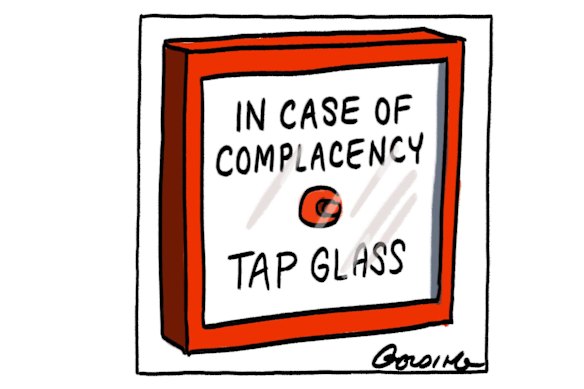 Matt Golding
Petrol supply
It’s not hard, Jim Chalmers. Tax the gas. Reduce the capital gains tax concessions. Then subsidise diesel for heavy transport and agriculture. Problem solved.
Pete Garfield, Echuca
Did we really learn nothing from the COVID-19 pandemic years? Cabinet must act, not just talk and consult and wait for the rest of the world to set an example. The current Middle East madness will not suddenly disappear; our survival demands sustainable, long-term, preventive action now.
Jenifer Nicholls, Windsor
For once, I agree with Barnaby Joyce and One Nation. Ration petrol and diesel now, and put a resources tax on gas.
John Hughes, Mentone
So Iran denies Donald Trump has offered to negotiate? Seems it takes two to TACO.
Stephen Davies, Carlton North
Israel is preparing to occupy southern Lebanon. How many people will it need to kill, and how many countries will it need to destroy before Israel considers itself and its citizens safe from killing and destruction?
Steven Sapountsis, Glen Iris
″First lady Melania Trump arrives with humanoid robot at tech summit.″ As usual?
John Crossley, Oakleigh
Furthermore
An entire page ad was devoted to Clive Palmer’s United Australia Party (24/3). The second item down addresses ″Zero Immigration″. Strange, Senator Ralph Babet, the UAP Victorian member, was born in Mauritius.
Greg Bardin, Altona North
Congratulations to the Greek diaspora who respected our prime minister in celebrating Greek independence day. May this inspire other communities to respect the office of PM irrespective of their politics, and never to take our democracy for granted.
Panagiota Frangopoulos, Malvern
Re the teacher strike: Just remember, if you can read this, it’s because a teacher taught you.
Myra Fisher, Brighton East
The opinion newsletter is a weekly wrap of views that will challenge, champion and inform your own. Sign up here.
Save
You have reached your maximum number of saved items.
Remove items from your saved list to add more.
From our partners