You can trust Cyclingnews
Our experts spend countless hours testing cycling tech and will always share honest, unbiased advice to help you choose. Find out more about how we test.
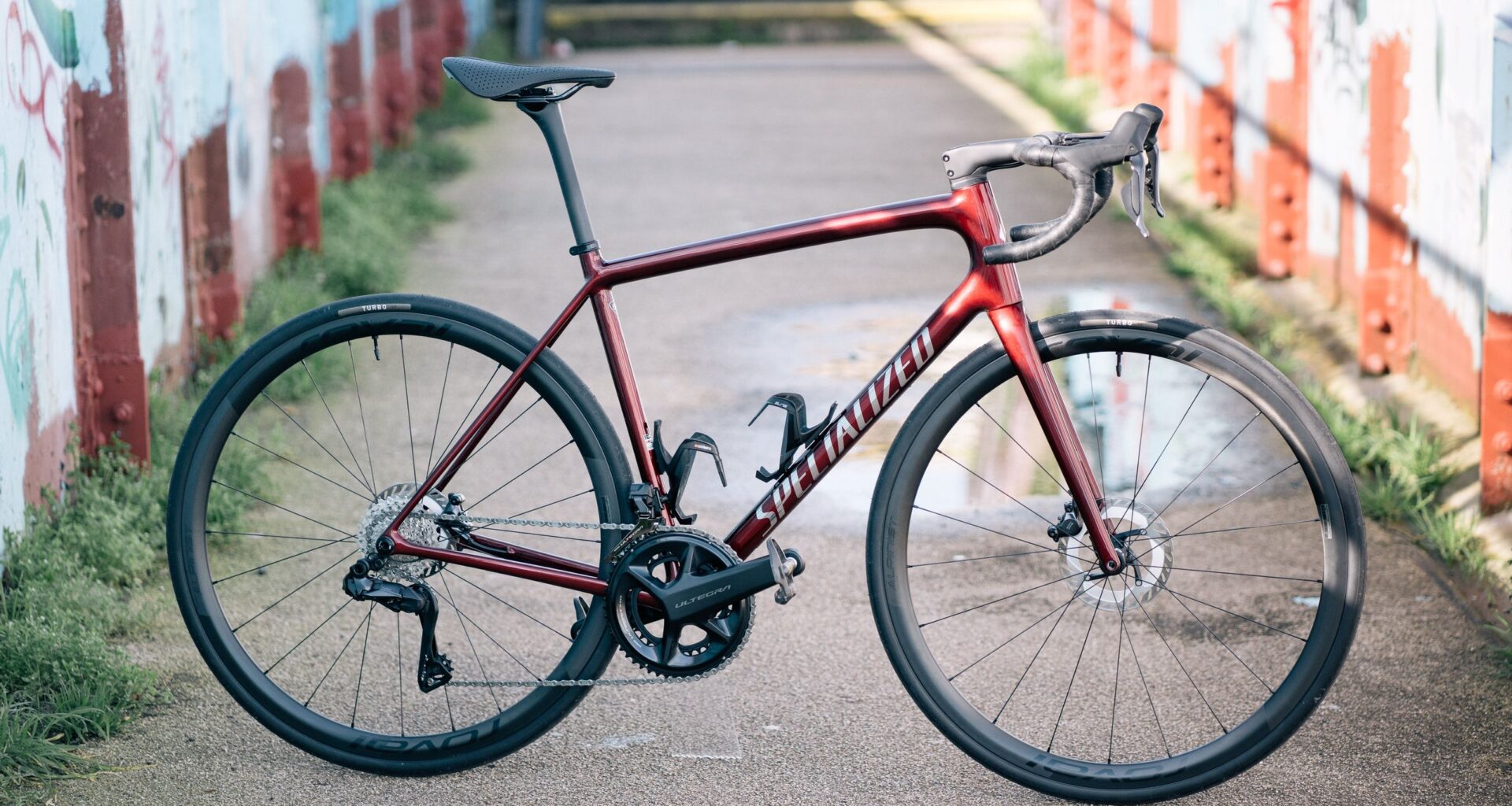
The Specialized Aethos needs very little introduction. The old one is a bike I’ve lusted after for years, with its sleek, narrow tubes, sensible-ish cable routing, and a big two fingers up to the UCI weight limit, along with an aero package that’s, at best, a casual Californian shrug. It was a staple of the hill climb scene, a rider’s bike, and while I never got the chance to ride one, it has such a reputation that it’s a hell of an act to follow.
I must admit I was a little disheartened when I learned of the changes that had been wrought on the Aethos 2. The term ‘endurance’ is so loaded with connotations of retired men doing laps of Richmond Park (insert your local retirement ride scene here) that I was worried that riding it would be akin to throwing a leg over a shire horse and asking it to navigate a chicane with the agility of a dragonfly.
I am pleased to report that after smashing about on it for several weeks, taking in fast group rides, flat miles, and hilly solo loops, it’s still every bit the proper lightweight road bike. I understand what Specialized has done in terms of the geometry tweaks, and while I think it’s made it a less cool bike, it’s also going to be a more viable bike for more customers. Is it good enough to match the old one and make it into our best road bikes guide? Read on and I’ll tell you.
Image 1 of 5
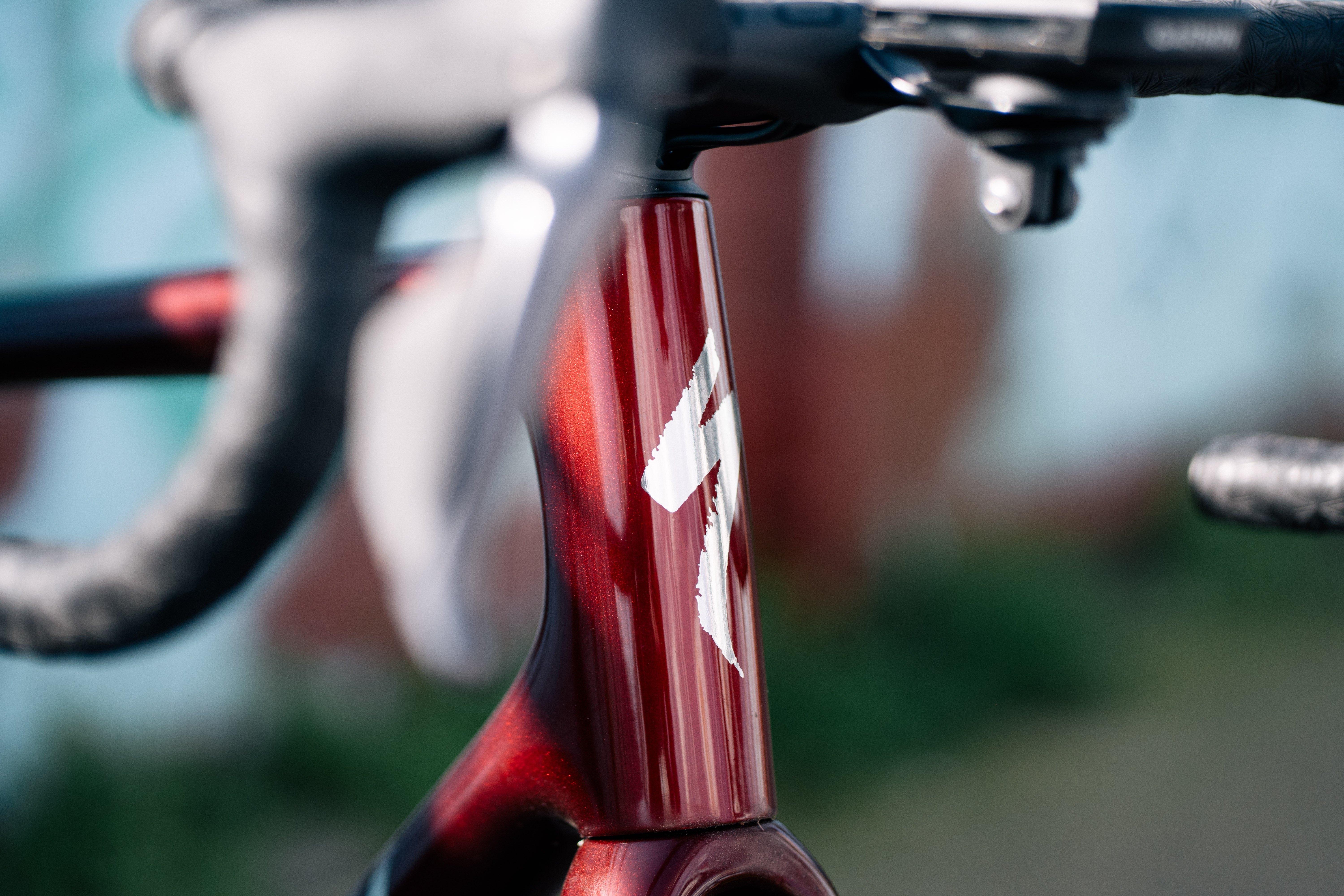 Many of the changes centre around the head tube. It’s taller, which reduces the reach as well as increasing the stack, and it’s a little slacker too. (Image credit: Future)
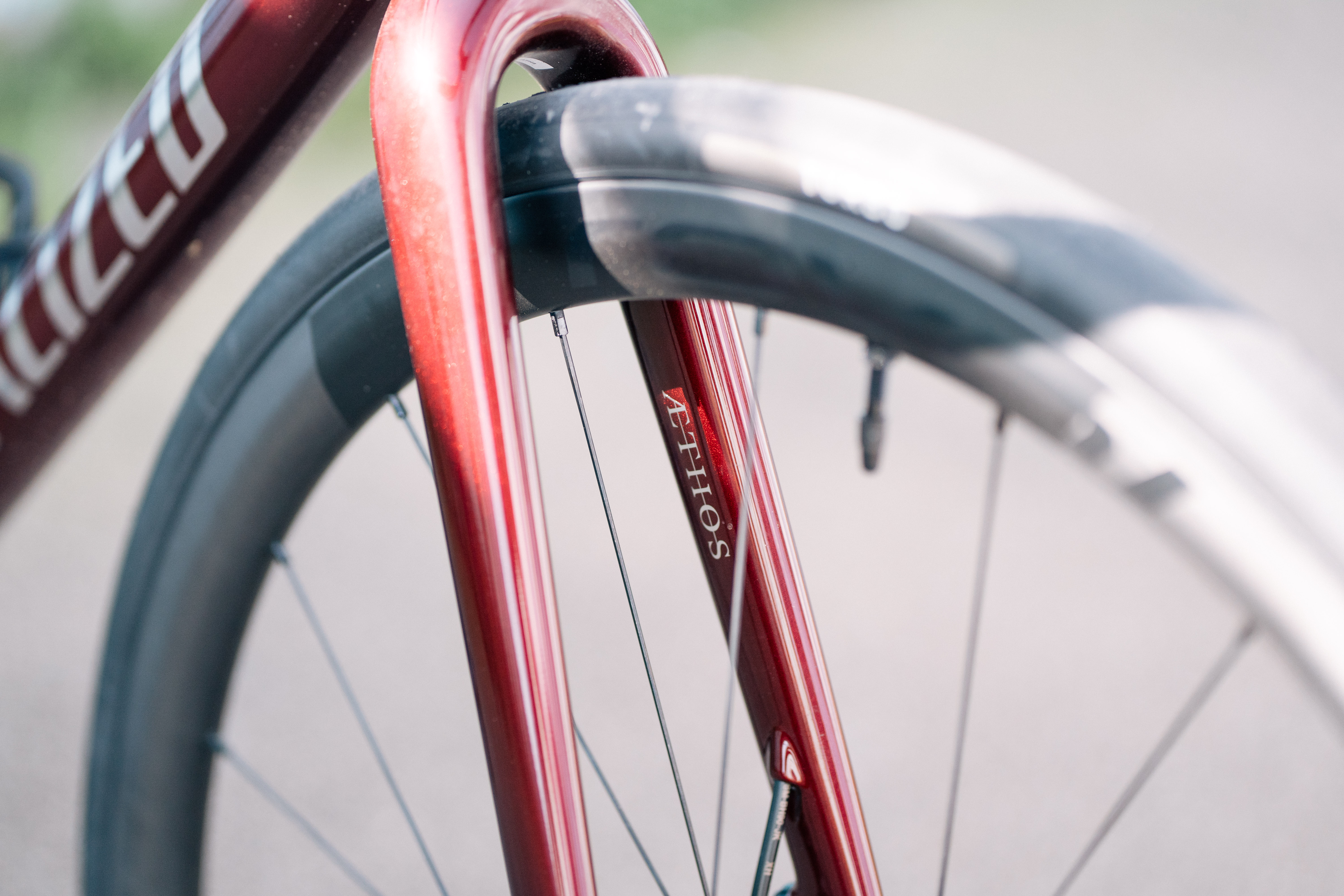 Tyre clearance has been increased to 35mm, with room to spare(Image credit: Future)
 It’s still a very, very good looking bike in my opinion. (Image credit: Future)
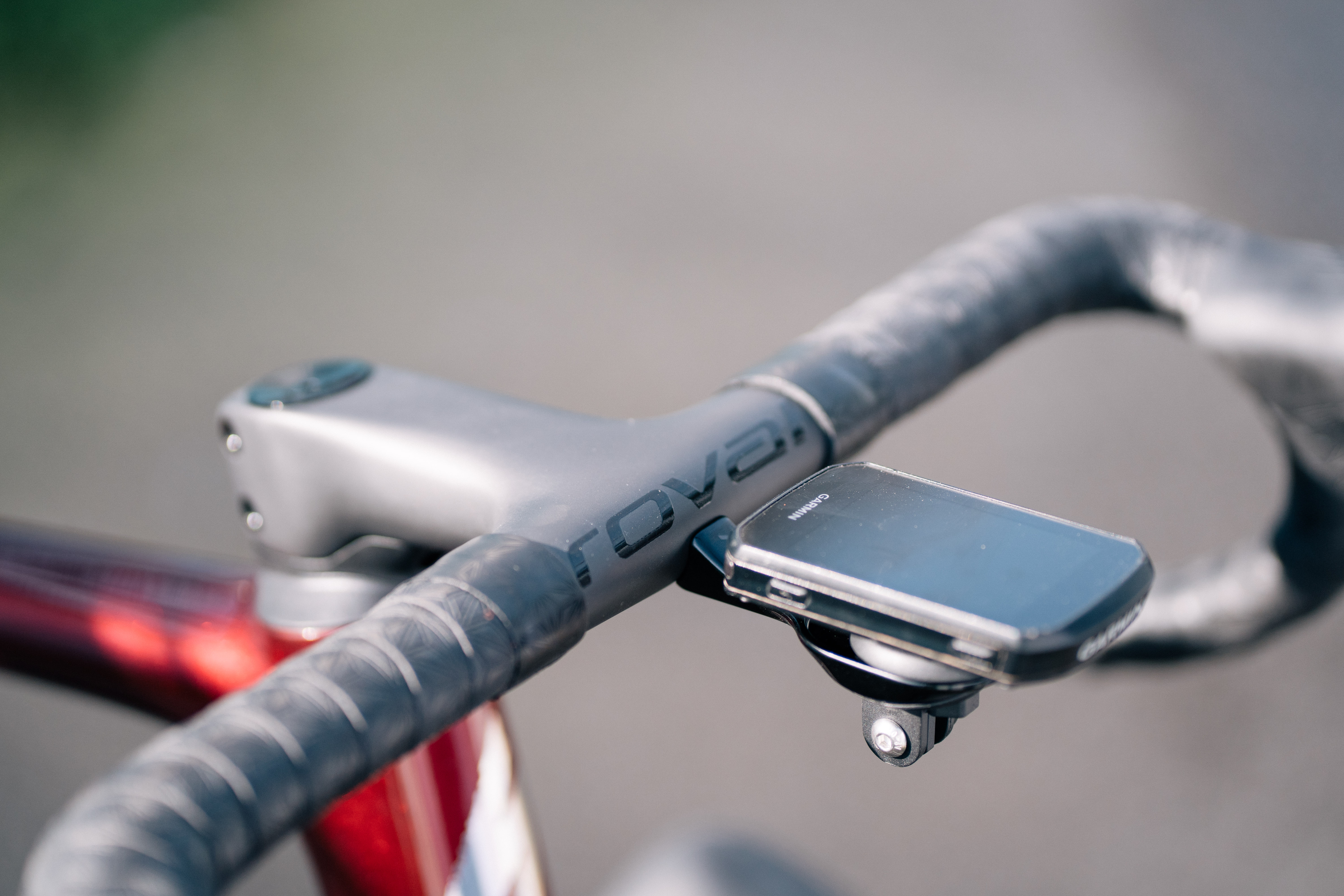 The computer mount is also excellent. (Image credit: Future)
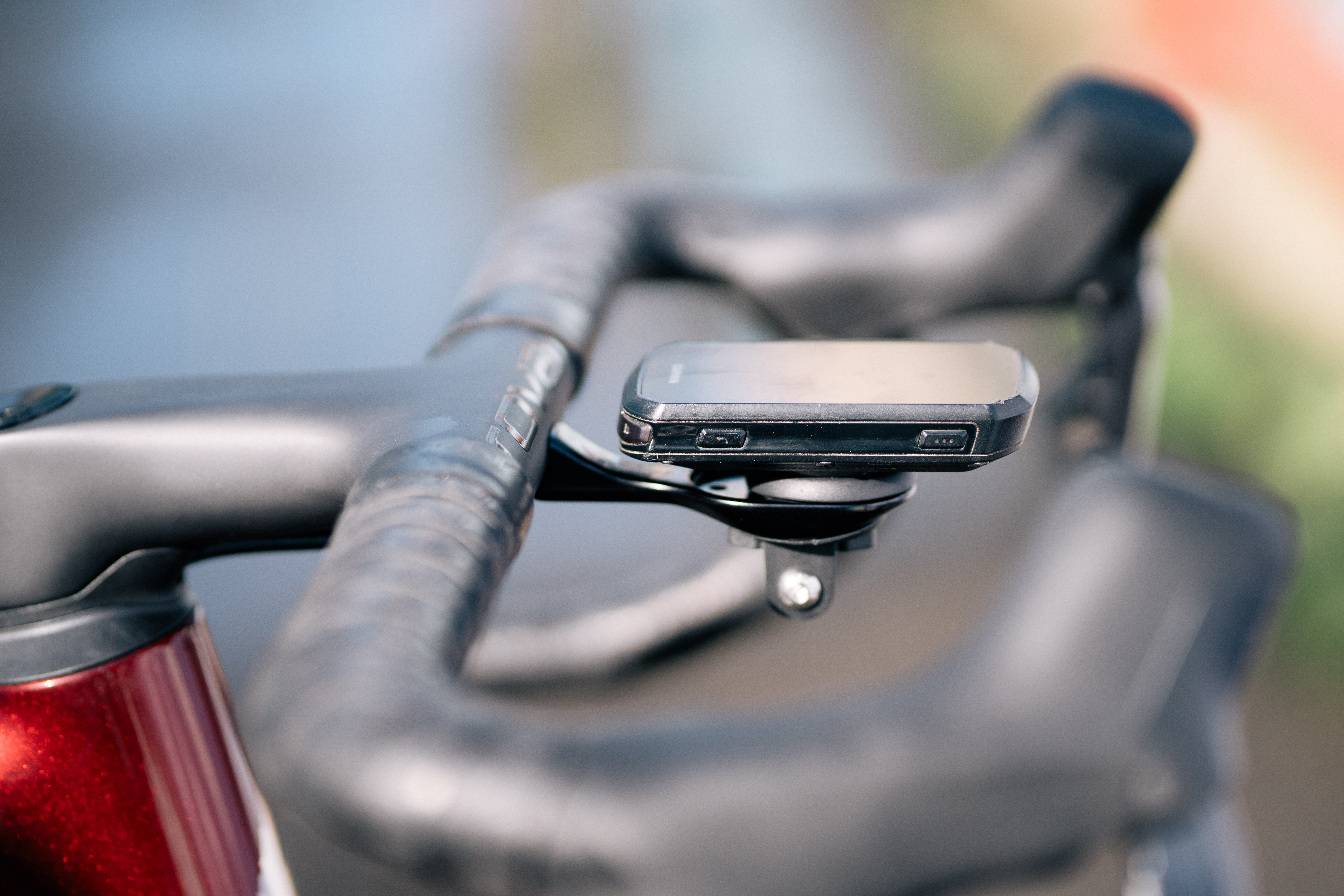 You get all the inserts for all the computers, it’s elegant, and has hardware for lighting. (Image credit: Future)Design and aesthetics
Context is important to understand the new Aethos. The first-generation bike was superlight, had the geometry of the Tarmac, but none of the racing foibles. External cables at the cockpit, round tubes, and a focus on handling. Roll on a few years, and the Tarmac SL8 replaced the SL7, and it was basically as light as the Aethos with the same geometry and a far superior aero package, leaving it floundering as a bike you’d buy essentially for the cool factor alone; a perfectly valid reason to buy a bike, I might add.
The new Aethos has been ‘endurance-ified’, though it’s still a far cry from the Roubaix. Compared to the Tarmac SL8, it’s 4mm shorter in terms of reach, but 15mm higher in the stack, meaning my test bike arriving totally slammed wasn’t actually an issue at all. It’s also half a degree slacker, and the tyre capacity has been increased to 35mm, with the prerequisite 4mm of clearance around, meaning you could push this northwards a little if you really want to.
This is a lightweight bike; that’s its MO, and the top-flight S-Works model is claimed to be the lightest disc frame in the world at 595g. The X-Lab RT9 frameset weighs 540g, but that’s for a slightly smaller frameset, while the similarly feathery Scott Addict RC Ultimate’s frame weighs 599g. In my spec, the non-S-Works Ultegra ‘Pro’ tier, the bike tipped the scales, fully dressed with pedals, computer mount, bottle cages, and sealant in the tyres at 7.4kg, so light, but not hyperlight, but for similarly specced machines it’s up there (or should that say ‘down there’) with the best.
This is heavier than the 6.7kg claimed for this model, so I did some digging. Pedals (250g), cages (80g per pair), an estimated 50g for the computer mount, and I suspect somewhere in the region of 140g of sealant (I use a bit more than recommended in the winter because there’s just loads of crap on the roads). Throw in a conservative 15g for the rear light mount and you’re closing the weight discrepancy to something that still doesn’t quite marry up with the claims, but is at least a lot closer. Naturally, with a lighter build and components, and the scant sealant all review bikes initially come with, this could be reduced significantly, but if you want the full weight weenie package, you’re going to need the S-Works frame, and will have to pay for it.
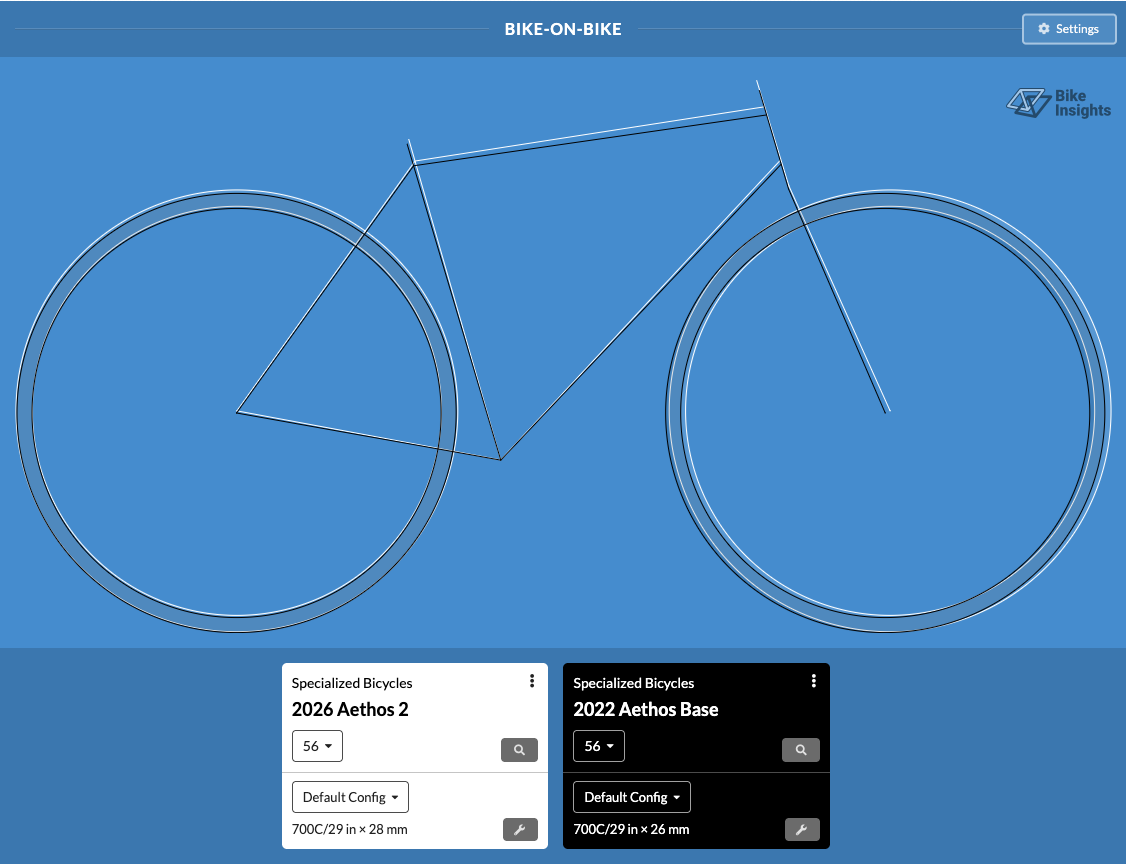
Here’s the geometry of the old and new versions. (Image credit: Bikeinsights)
Fans of messing around with cockpits will be saddened to hear this is another bike that has gone fully integrated, but at this point it’s the way of the world for all performance oriented bikes, aero or otherwise, and while it’s more of a pain (both mentally and financially) to deal with, there’s no denying it looks cleaner, and I really like the svelte Roval Alpinist cockpit.
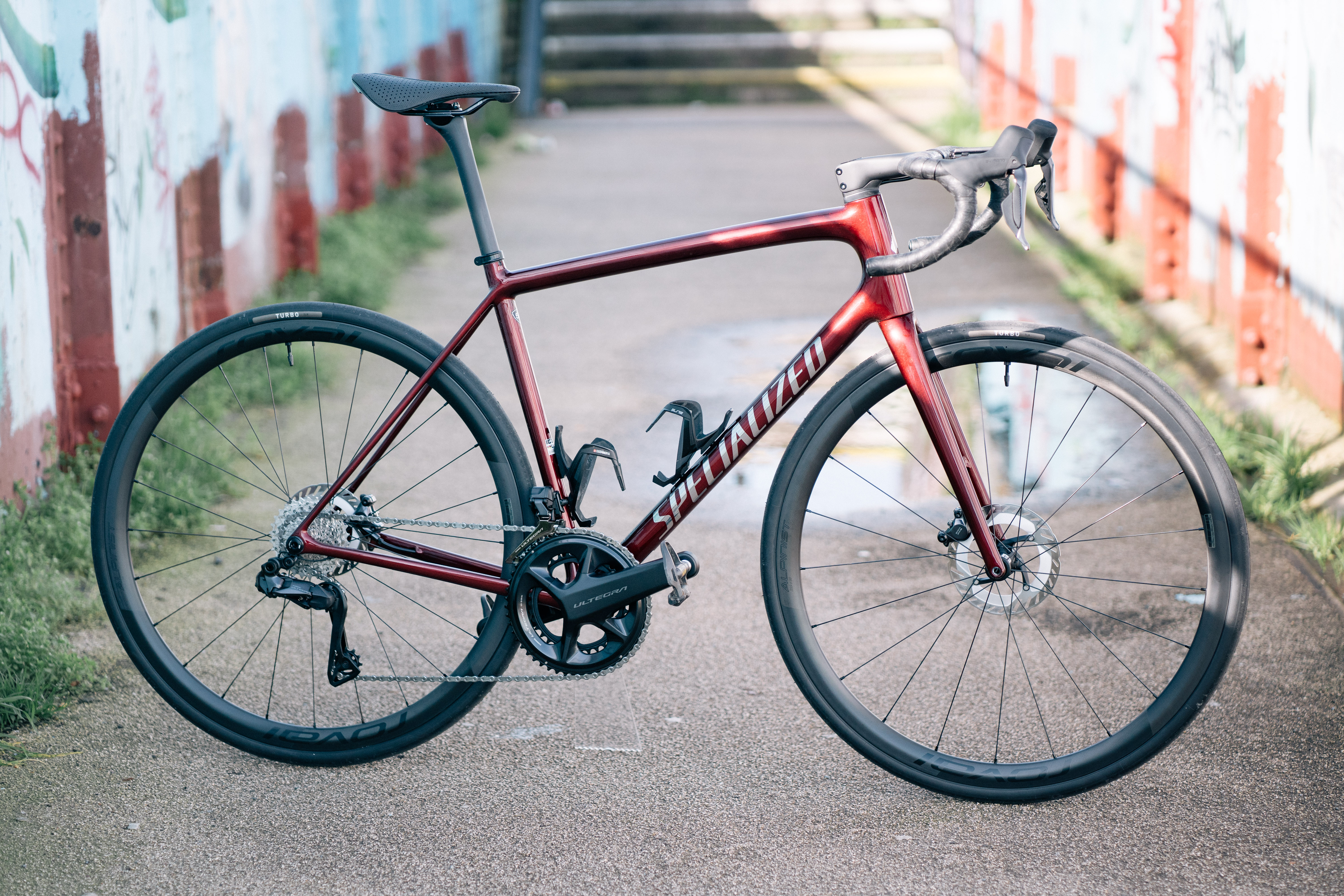
In fact, I like the whole aesthetic package; this is a stunning bike, and I’m confident that it’ll still look good in a decade or two when aero bikes have morphed into some mutant form hitherto confined only to a UCI commissaire’s nightmare. The glittery red paint is so gorgeous that I repainted my own alloy bike with a glittery red powder coat to create a poor man’s imitation.
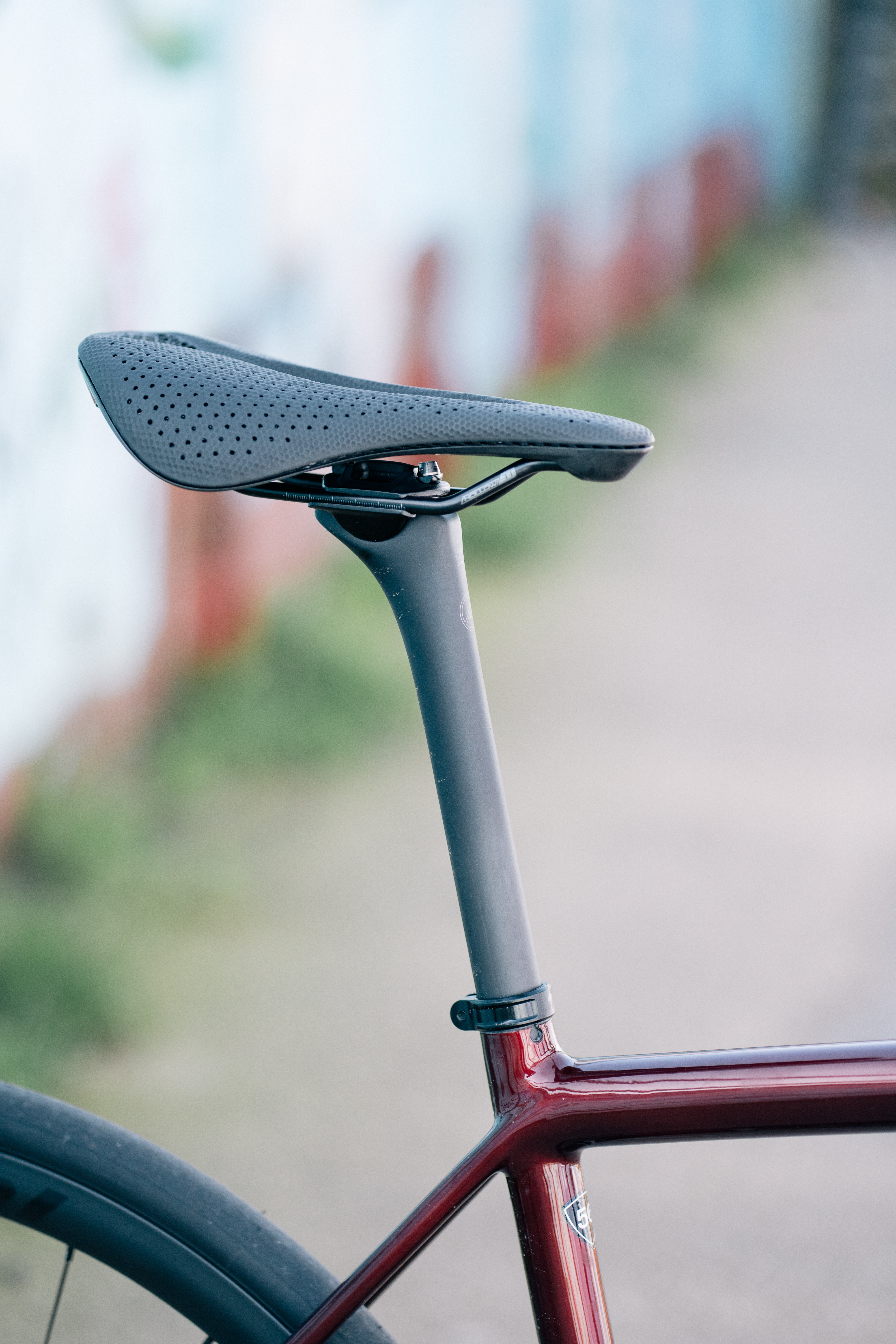
Roval, or the greater Specialized ecosystem, takes care of all the finishing kit, with shallow Alpinist wheels, Specialized Turbo tyres, and a 3D printed Power saddle that, while certainly not to my tastes, I do appreciate that many riders do get on with it.
Many bikes have a clearly identifiable weak link in the spec, but there isn’t an obvious place where Specialized has cheaped out. Perhaps the tyres, but while I am yet to find a bike that isn’t improved by slapping a set of GP5000 S TRs to, the stock options are perfectly fine, if perhaps a little narrow, as I’ll get to later on.
Image 1 of 5
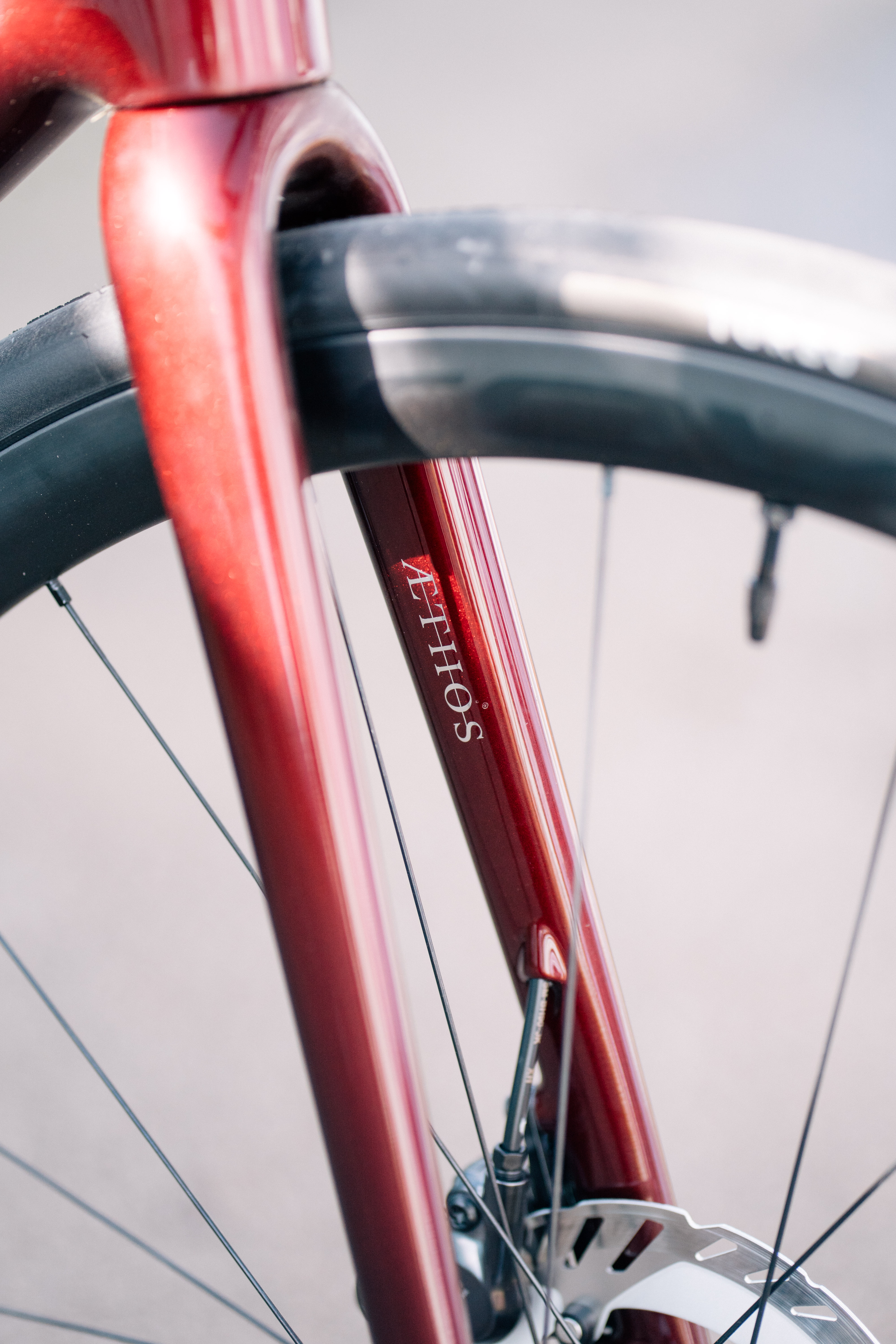 This detail in the fork is tasty. In fact, the paint on this red version is so nice I repainted my own bike red. (Image credit: Specialized Aethos)
 The finishing kit is all Roval or Specialized.(Image credit: Specialized Aethos)
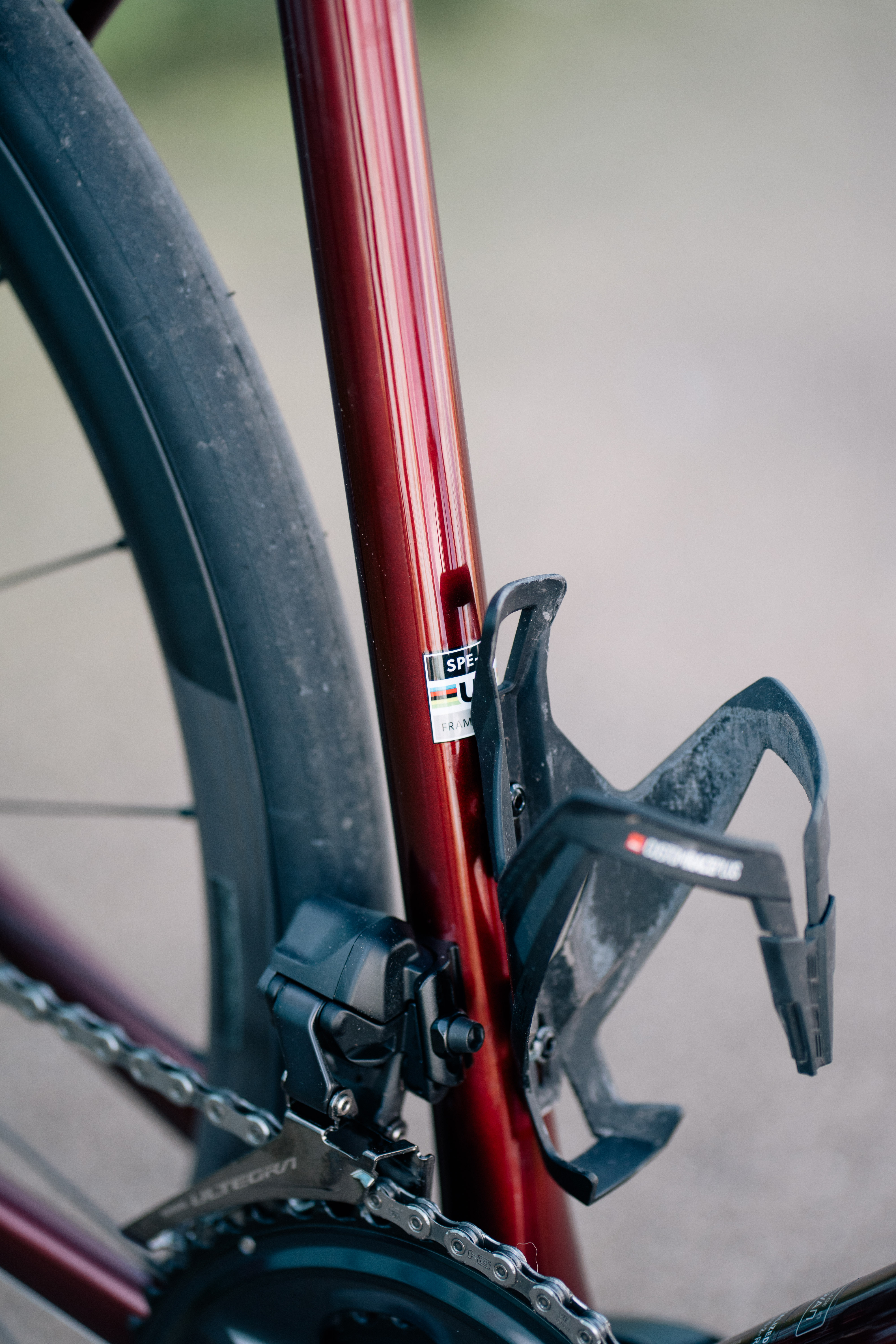 It has a UCI approved sticker, though I don’t think anyone is going to race it in any serious capacity. (Image credit: Specialized Aethos)
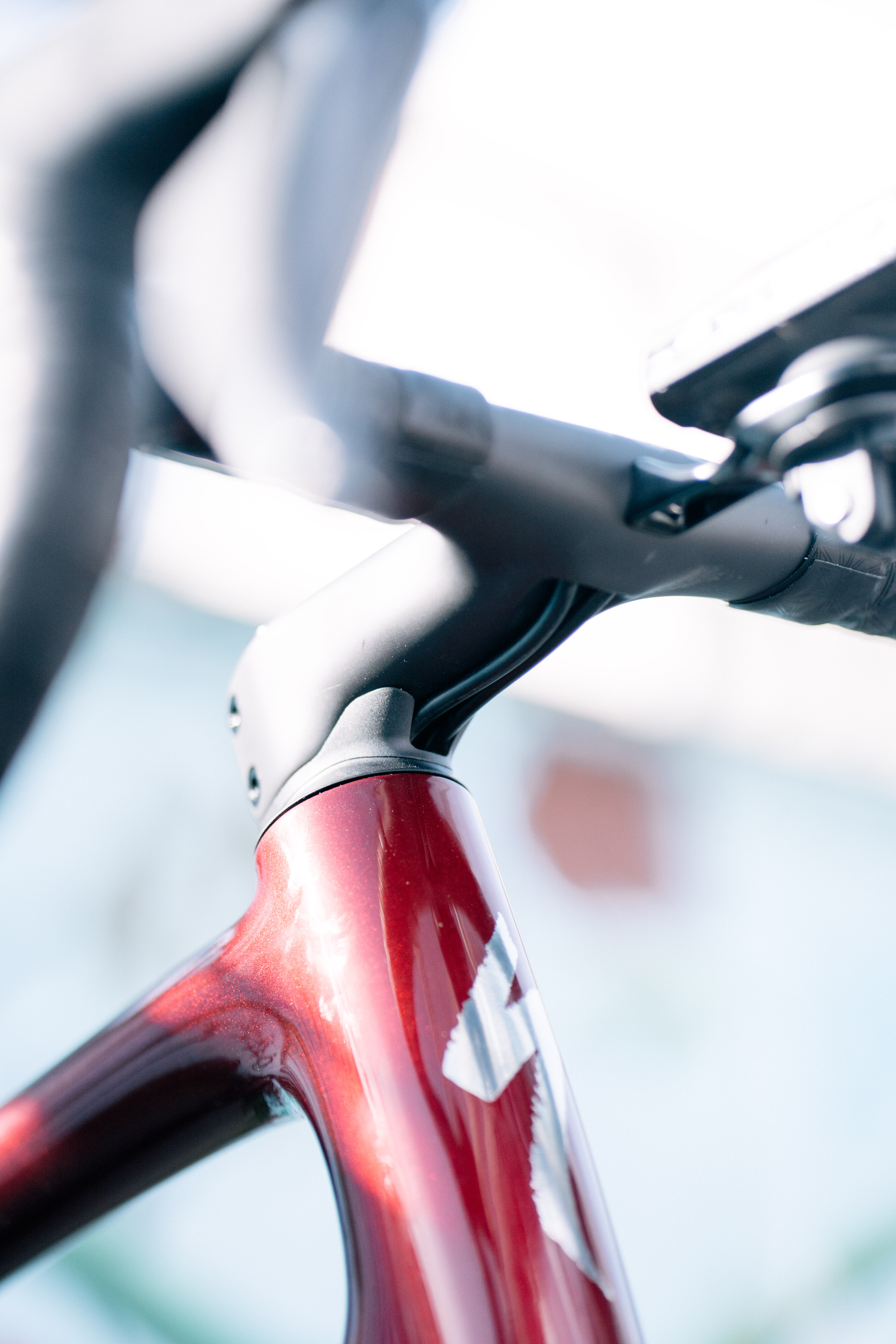 The cable routing is neatly arranged and accessible under the stem. (Image credit: Specialized Aethos)
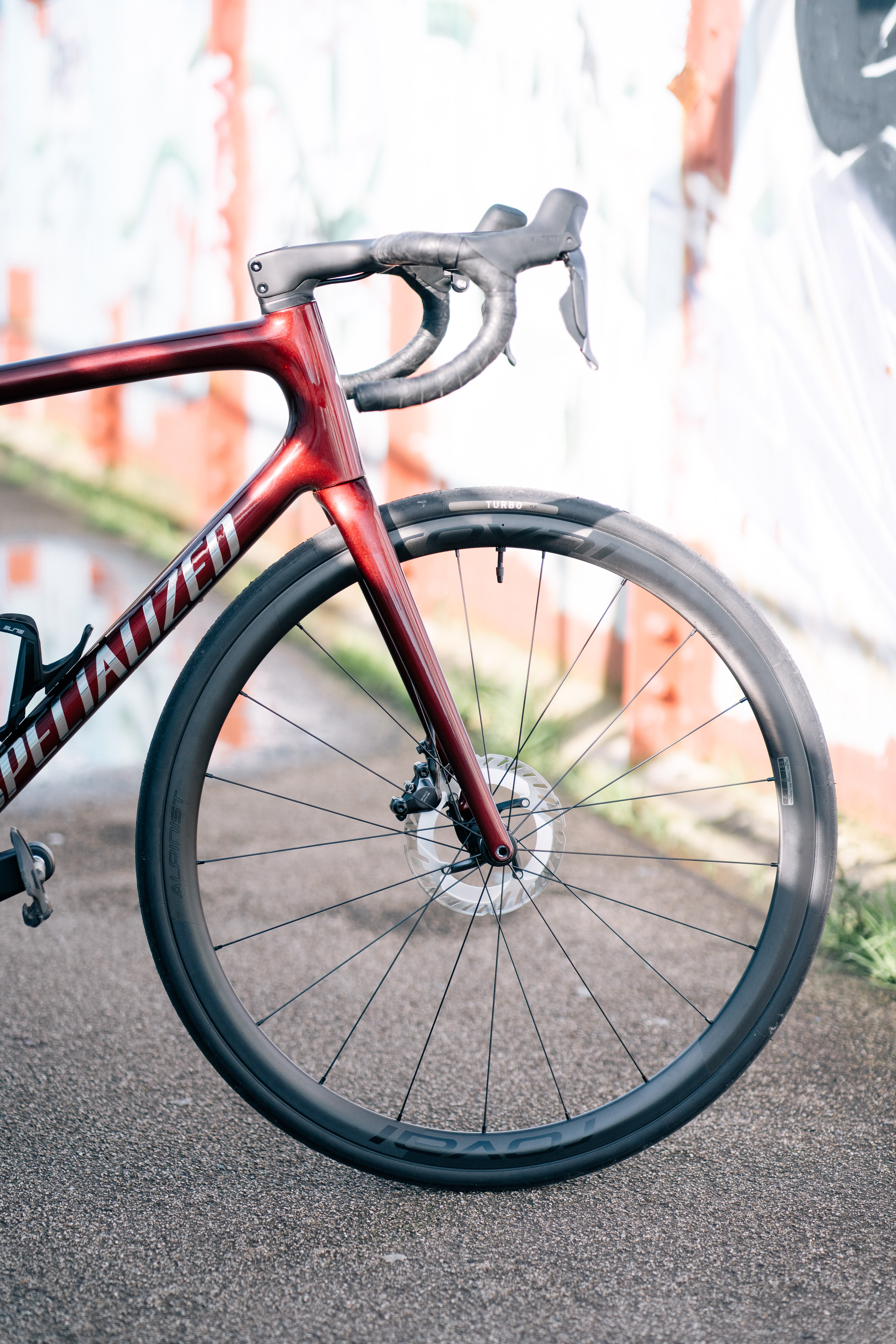 Shallow wheels do look right here. You could fit lightweight allrounders, but what would be the point?(Image credit: Specialized Aethos)Performance
Thank the Lord: It’s not crap. They say never meet your heroes, and I have to admit I was ready to be let down by the new Aethos. I try not to pore over geometry charts until I’ve actually ridden test bikes, to save from colouring my perceptions unduly, and so, with the online discourse swirling around the new endurance-y nature of the beast, I was expecting it to ride like the Roubaix – a bike that is perfectly pleasant to ride, but isn’t what I would jump to call exciting.
What I found was still a bike that feels very much like a road bike. Given it is a lightweight thoroughbred, it seems right to compare it to the Scott Addict RC, though it’s worth noting that I had a top-spec model of that machine. The Addict, like the Pinarello Dogma, has a razor’s edge feel to it that is so engaging it’s beguiling to ride, and the Aethos has similar qualities, but they are more muted. The ride characteristics are still sharp, but the cornering is, for want of a better phrase, more elegant.
Explaining the differences, a half degree in the head angle and other small geometry tweaks can make it not the easiest thing in the world, but the difference between the new Aethos and the Dogma or Addict RC is a little like the difference between white tie and black tie outfits. Both are extremely smart, but one is more elegant, and the other perhaps slightly more exciting, with black tie allowing for a little more creativity. Yes, I am writing this just after the Oscars and having received an invite to a black-tie wedding, but regardless, I think it stacks up.
On the hilly loop I do every week, there’s a downhill chicane after a series of off-camber sweeping bends. On a well-handling bike I shouldn’t have to brake, but any nerves or lack of confidence and it does require a dab or two. The Aethos required a finger hovering near the vicinity of the front lever, but not any actual use. It tracks extremely well, and while the tyres aren’t world-class, they are extremely fine for a stock set, and before I was gainfully employed testing bikes, they’re what I used to spend my own money on.
Climbing is, as you might expect, also good. The shallow rims and general low mass mean that accelerating from slow speeds on steep gradients is a pretty simple thing. The flip side of this is that when at high speeds, it’s much harder to wring more speed out of it, which is the opposite of many aero bikes I’ve tested, like the new Cervélo S5, which I am currently riding also. I really, really like the cockpit. It has the feel of traditional round bars with the elegance of an integrated cockpit, and for protracted climbs, I really love being able to wrap my hands fully around the tops, rather than resting my palms on a deep, wing shape.
I think the climbing prowess is slightly marred by the gearing selection, which comprises a 52/36 chainset paired with an 11-30t cassette. I appreciate this will see me cancelled among older readers, but nobody is taking an Aethos on a chain gang or racing flat crits, so there would have been very little drawback to speccing an 11-32, or even an 11-34 block at the back to allow customers to tackle steeper gradients with more ease. My local test loops regularly see gradients in excess of 20%, and while this isn’t common, it’s also not that unusual for challenging loops.
Image 1 of 6
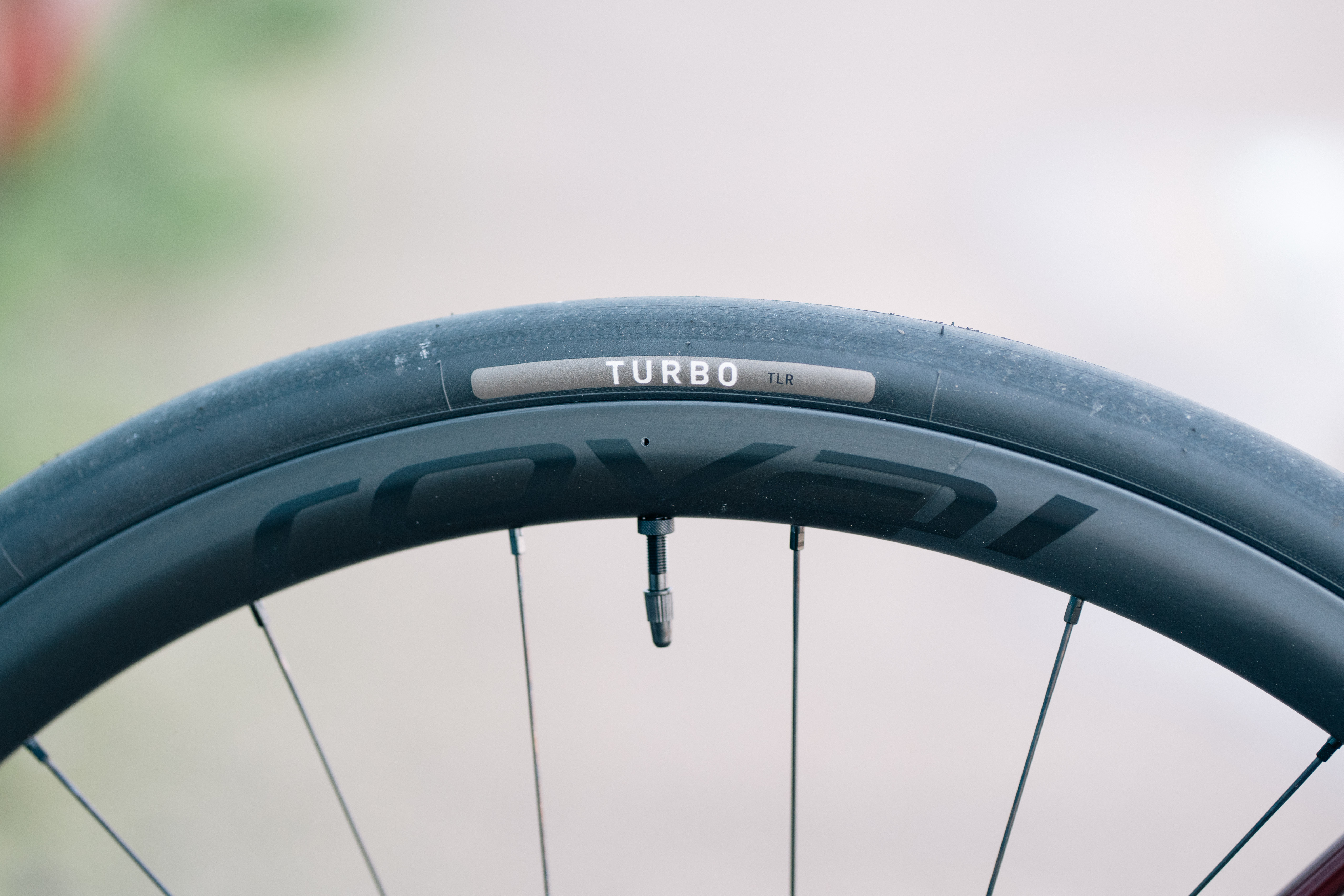 The stock tyres are perfectly fine, but a little narrow for the bike. (Image credit: Will Jones)
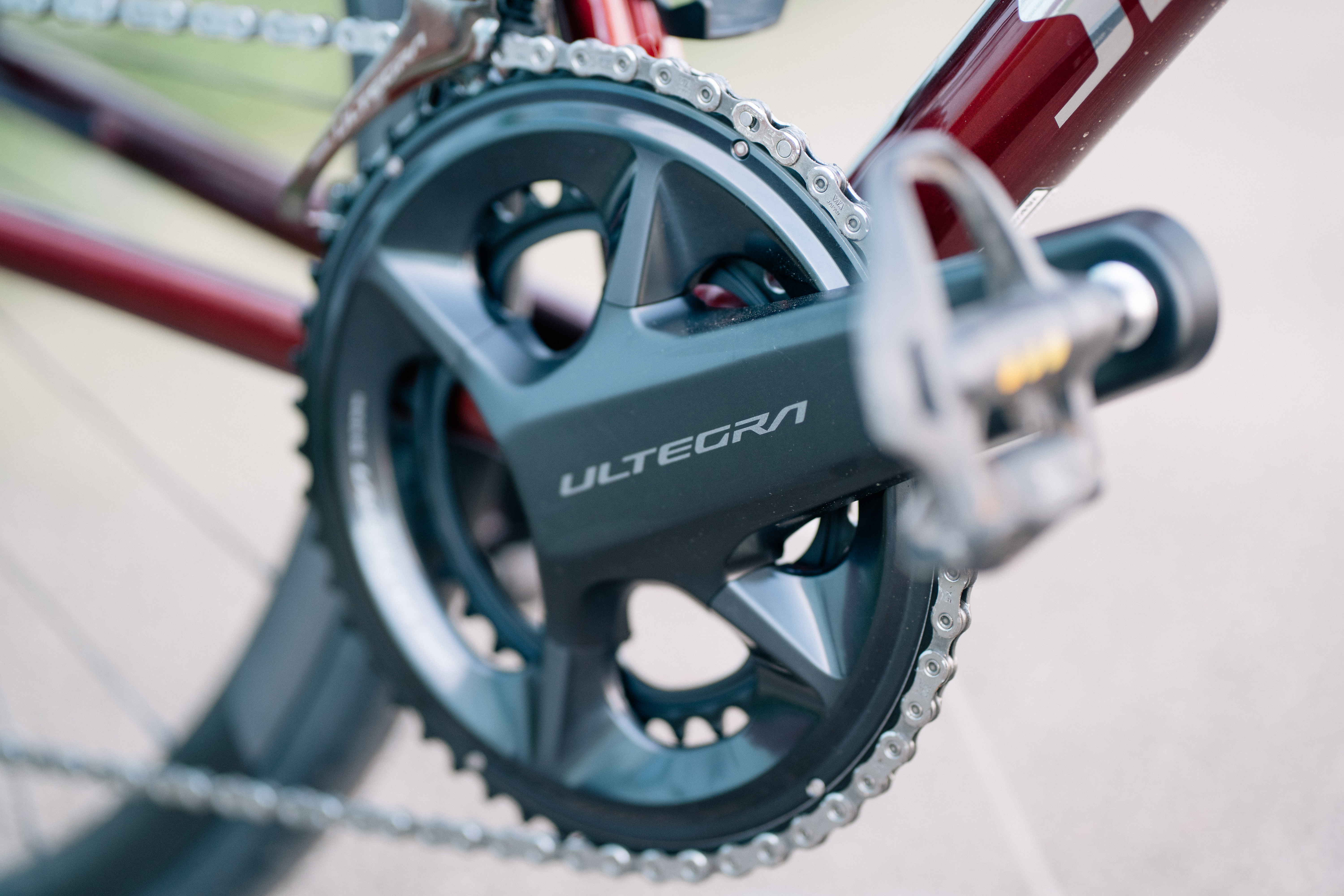 The chainset is also fine, but the rear cassette is over-gearing the setup for what is a lovely climbing bike. (Image credit: Will Jones)
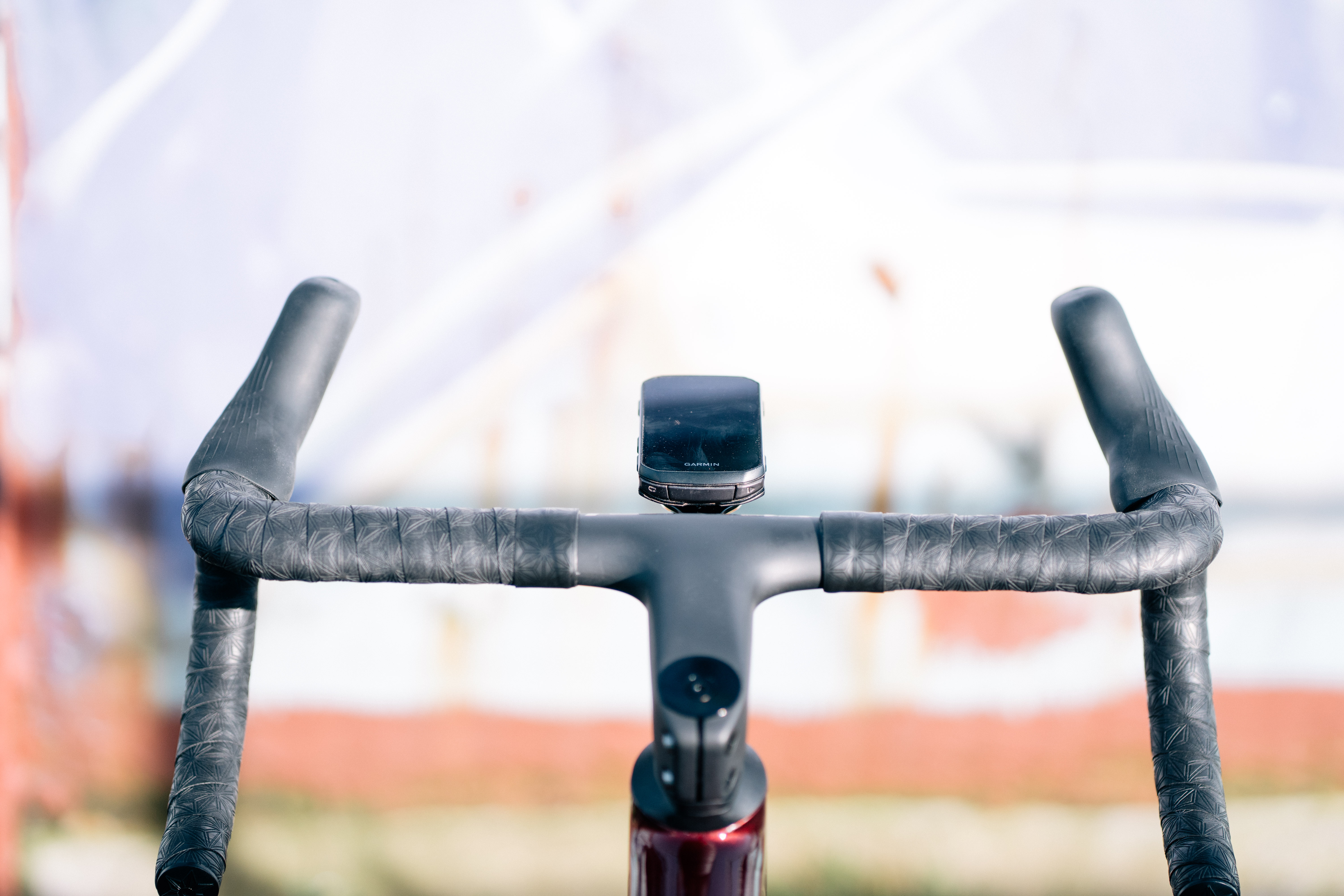 The cockpit is also great, but you can’t change the width or length at point of sale which is becoming more common elsewhere. (Image credit: Will Jones)
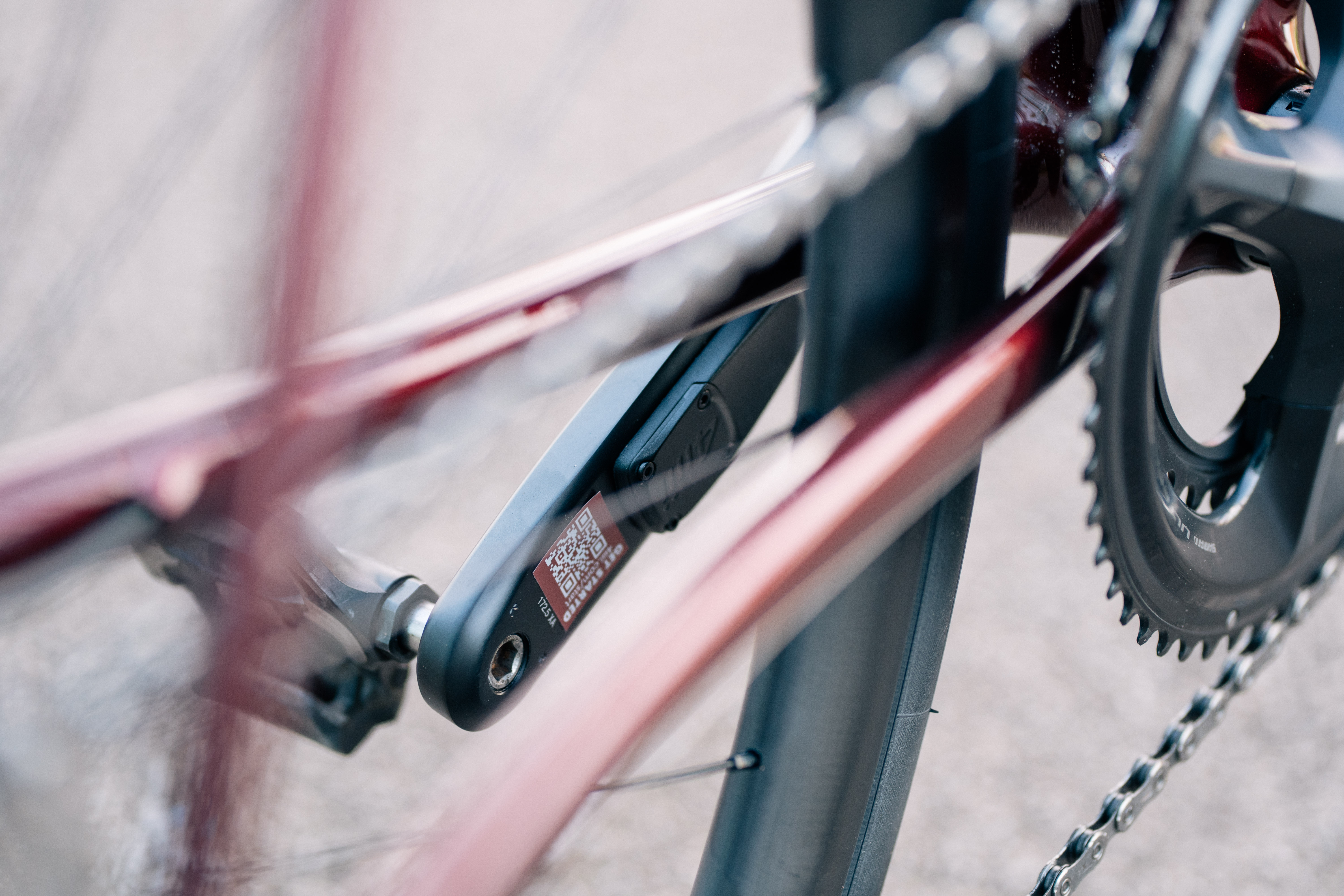 You do get a single sided power meter at this tier. (Image credit: Will Jones)
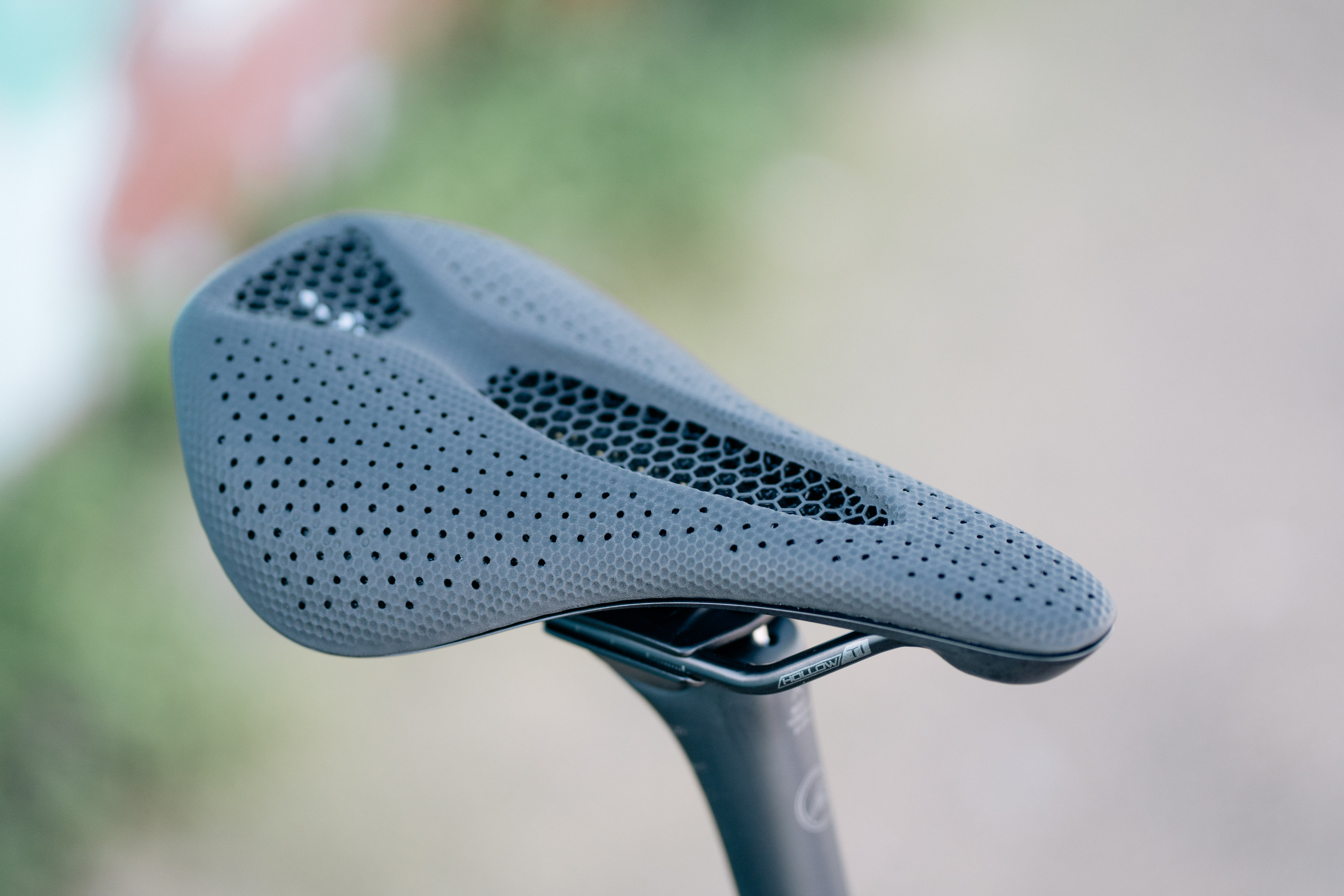 I have skinny snake hips so these Power saddles are too wide for me, but I know a great many people get on well with them. (Image credit: Will Jones)
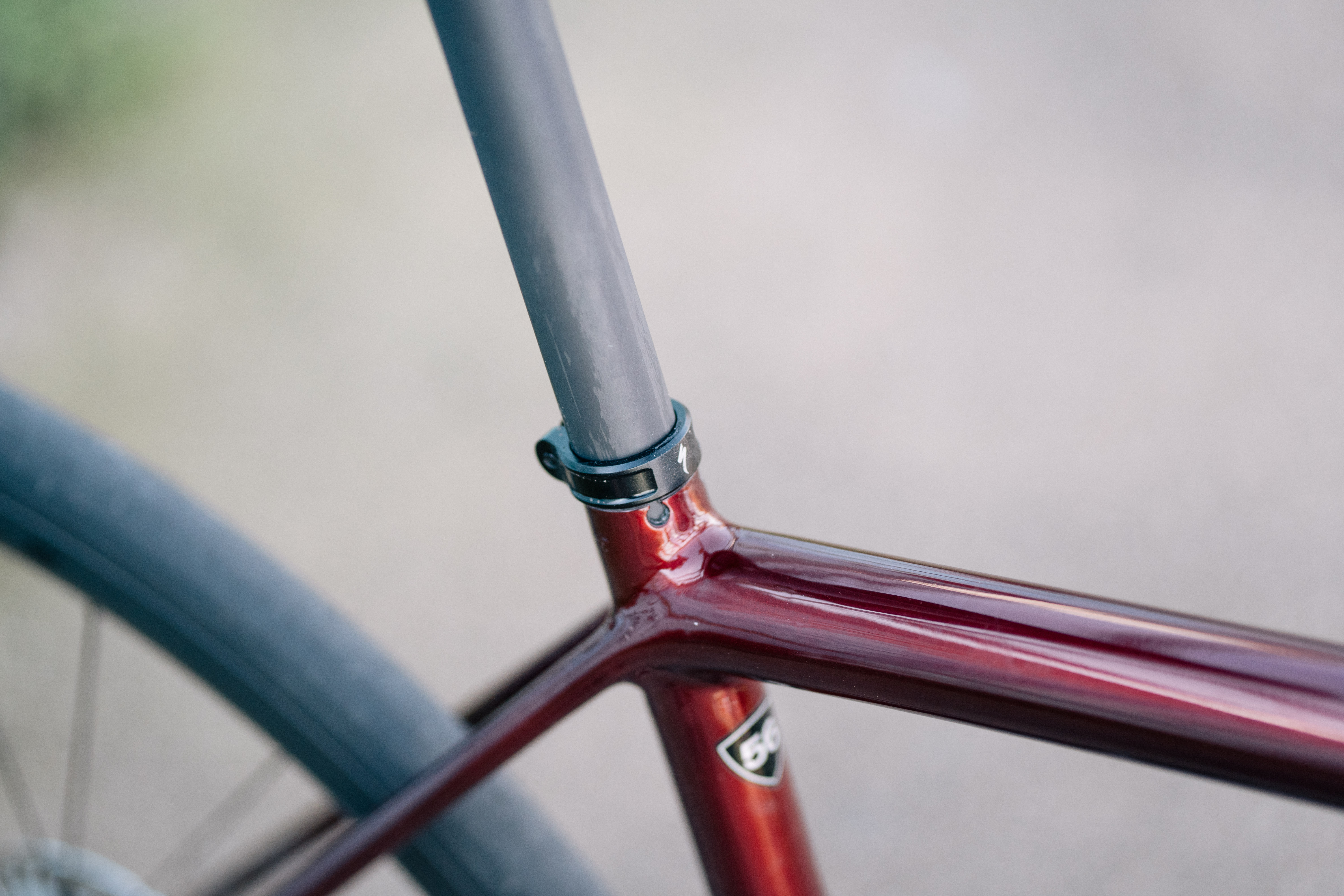 Hallelujah, an external seatpost clamp!(Image credit: Will Jones)
The position makes it a very happy bike to be on for extended periods, my disagreements with the saddle notwithstanding. It’s far more of a reasonable fit, and even totally slammed I didn’t feel like the discs in my lower spine were in any danger of making a bid for freedom. It strikes me as a bike that’s tailor made for big alpine sportives like the Marmotte or the Maratona in the Dolomites, though again for these I’d say you’d be better off increasing the gear range. You’ll enjoy the descents without being scared half to death thanks to the pleasant geometry, and on the climbs you won’t be overly worried about being under-aero, all while in a position that won’t leave you hating life six hours into the day.
While the tyres are totally fine, I actually think Specialized is doing the bike a disservice by speccing it with 28c tyres. It’s clearly just a move to keep the system weight down, and with tyre clearance up to 35c and the more reasonable geometry it’s begging for 30s or even 32s. The Turbo tyres come in a 30, and the new Turbo Cottons come in a 32, so it isn’t like Specialized doesn’t have the options in its in-house range. Yes, it might impact system weight, but it would make it a better bike on a greater number of roads.
I know it’s never going to happen, but I actually think the new Aethos has the makings of an incredible winter bike if only it had mudguard mounts. It has the space, it has the geometry, and while I’m not going to mark it down for this, it would have been very cool, and something I’m sure the Specialized marketing team could have spun into a positive. It could call them Fendr, or something much more American, like Linebackr.
Either way, I fitted clip-on ones for some winter group rides, and they’re almost universally hateful things, but not everyone has the luxury or the inclination to ride Zwift all winter.
Value
Does the Aethos represent good value? In my spec, the ‘pro’ tier with Ultegra, you’re spending £7,249 or $8,500. Taking a similarly specced lightweight machine as a comparator, the Ultegra spec Scott Addict CR 20, which is Ultegra, will cost you $5,999. It comes with carbon Syncros wheels, and you do have to suffer the indignity of an alloy stem, but you get a carbon bar, and it means you can swap your cockpit to whatever you like. It has decent tyres, rides like a dream (though it is a little more racy).
I’m not totally sure where that $2.5k is going if I’m being honest. Maybe there’s a slight weight differential, but it’s not going to be huge. For only $500 more than an Ultegra-spec Aethos, you can get a Dura-Ace Addict RC with the integrated cockpit.
In contrast, the also-very-lightweight Factor 02 VAM is $11,299 in an Ultegra spec, so perhaps it is more that the Addict appears to be very good value now, rather than the Aethos being catastrophically bad, but at least with the Factor you can spec your cockpit of choice at point of sale, something Specialized still doesn’t offer and something that really does hold it back. My bike came with 40cm bars, which is fine for a bike with ‘endurance’ in the marketing lingo, but it’s certainly not my preference, and I know for a 58 you’ll be getting 42cm bars, which are so wide by modern standards they’re almost certainly going to be a bigger issue.
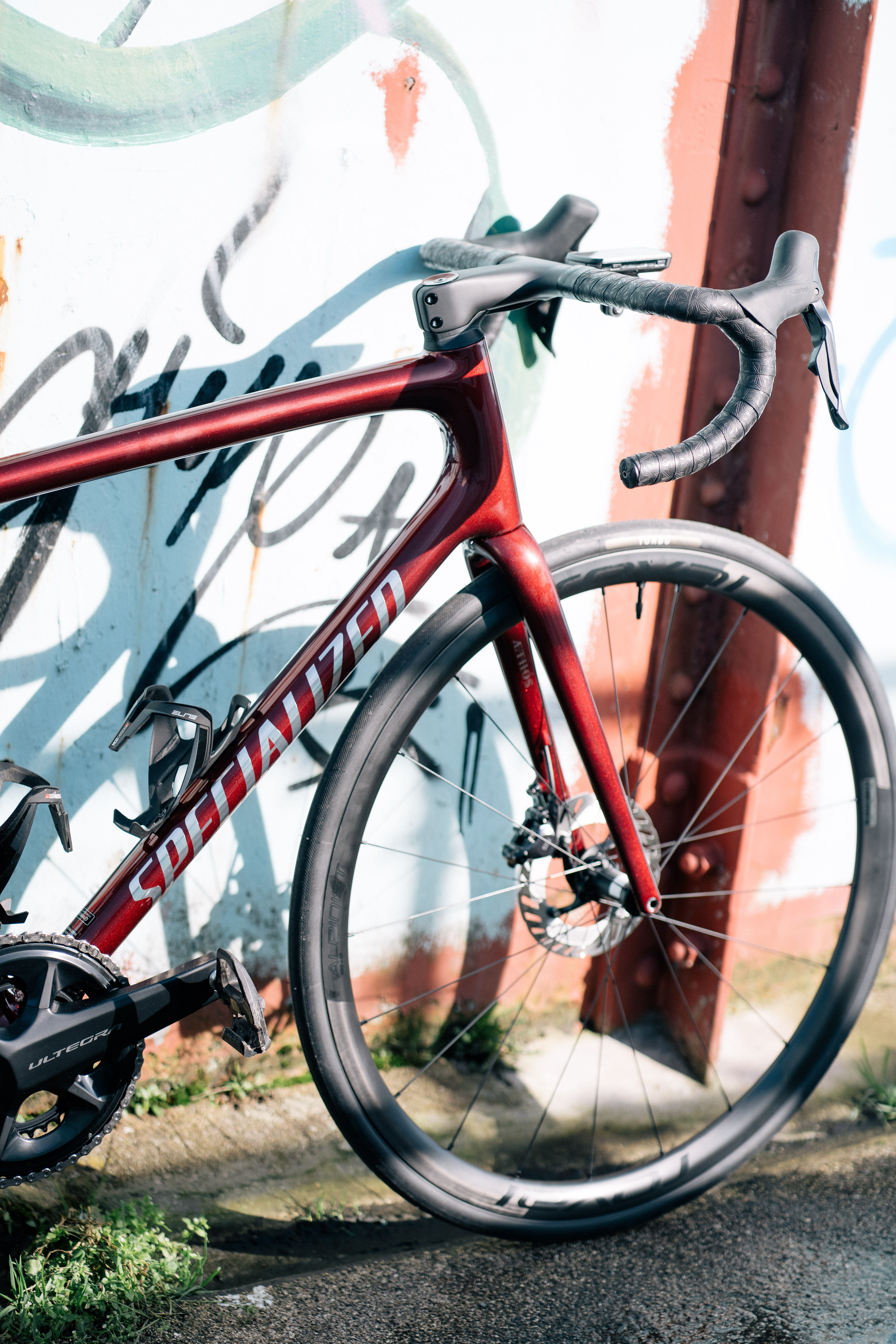
A great bike, if slightly less cool than it’s younger self… but the same could be said of me so let’s not be too harsh now. (Image credit: Will Jones)Verdict
Honestly, I really liked the new Aethos. I don’t think it’s as cool as the old one, and part of me hopes Specialized continues to use the moulds it has to manufacture limited runs of the first version for those who want it, in much the same way Pinarello still makes small numbers of the rim brake Dogma F frameset, but I think the new one makes much more sense to much more riders, and that’s a good thing because it’s beautiful to ride, despite being a touch over-geared out the box.
My colleague Josh’s hot take from the launch, to give you a glimpse inside the conversations that go on at Cyclingnews HQ, is that if you want the wider tyre clearance of the Aethos and the low weight, then you should just buy a Crux, as it also allows you to do gravelly stuff. I think this is a valid argument, but only on the proviso that you genuinely want to ride off-road (and I mean properly off-road, as 35c can handle very broken backroads with ease). If you are only road riding, then my personal feeling is you’ll enjoy the proper road geometry of the Aethos more when it really counts. It’s an excellent bike on its own merit, if perhaps a little expensive for what you’re getting.
I do think, knowing what 35c tyres can handle, it is now asking serious questions as to what the Roubaix is for. With the clearance fully maxed out, you’re getting a very capable all-road machine without the added weight and without the complexity of the Future Shock suspension system in the steerer tube.
Swipe to scroll horizontally
Design and aesthetics
Some sensible tweaks to a well respected platform, plus it looks stunning.
9/10
Weight
It’s a light bike. In this tier it’s certainly among the lightest out there.
9/10
Build
All the finishing kit is top drawer, though I think it is slightly over-geared and the tyres are too narrow. Not being able to spec your cockpit is also an annoyance on a bike at this price point, but you do get a power meter.
8/10
Performance
Hard to fault for what it offers. There’s no aero, but it doesn’t claim to have any, and for big days out on the road in the hills it’s pretty brilliant.
9/10
Value
You can find more for your money elsewhere, but it’s not the most expensive option in its class either.
7/10
Overall
Row 5 – Cell 1
84%
Specialized Aethos Pro: Price Comparison