
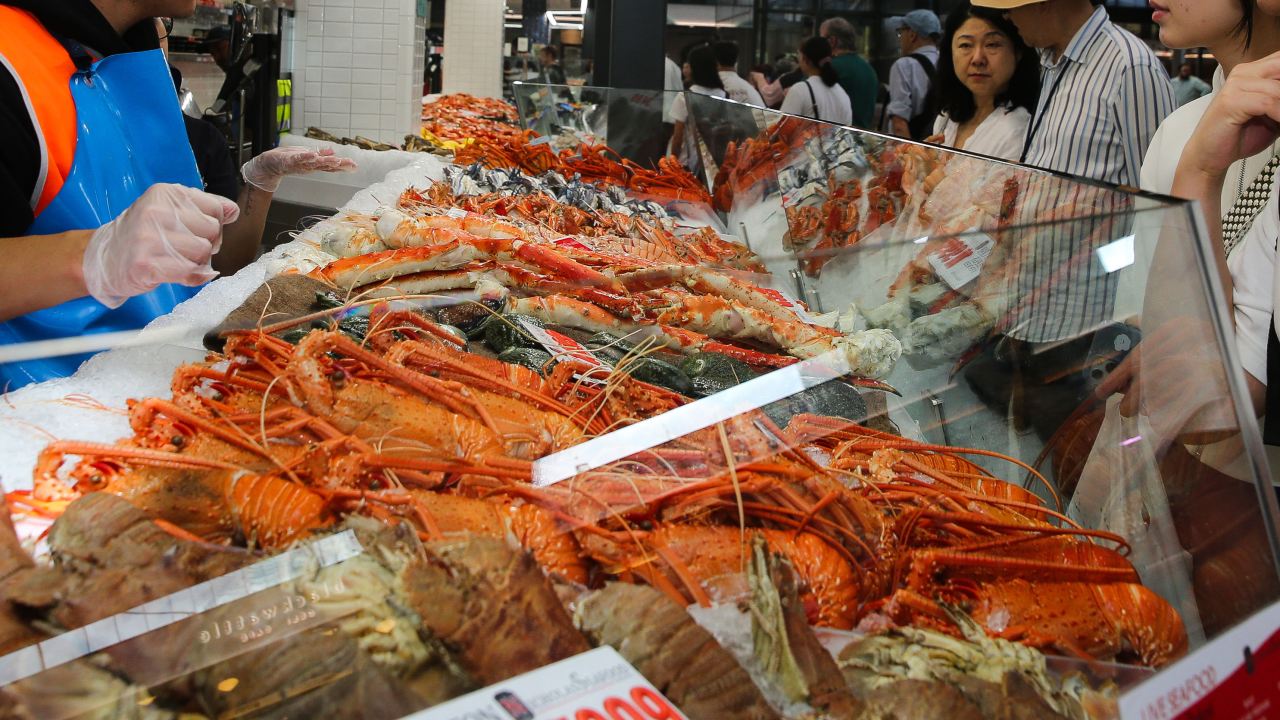
Higher seafood prices are on the cards this Easter as fuel supply shortages and prices mean the nation’s fishermen are forced to pass on costs.
Diesel shortages and subsequent price rises have impacted many local industries and heaped pressure on costs elsewhere in the economy.
Australia’s seafood industry has already taken action, with the Sydney Fish Markets on Monday introducing a temporary fuel levy on all seafood purchases supplied by commercial fishermen through its auction.
This levy is passed directly to commercial fishermen to assist them with rising fuel costs, the Sydney Fish Markets said.
The market said that supply and prices “remain stable” currently and it was “too early to be definitive on any flow through impacts”.
“Individual wholesalers and retailers will make their own decisions about pricing, and there are many factors that go into their pricing decisions.”
It comes as some fishermen have been forced to leave their boats docked for most of the week, the Sydney Morning Herald reported, as diesel prices hit $3 per litre in NSW.
Easter is a particularly popular time for fisheries around the nation as families enjoy seafood during the religious holiday.
The Sydney Fish Market said it expects to sell about 650 tonnes of seafood this weekend, including 100 tonnes of prawns and nearly one million oysters.
Fuel supply issues have not directly impacted operations at the Coffs Harbour Fishermen’s Co-operative, though its executive officer Dea Hamilton said future supply depends on diesel stock levels at the Newcastle terminal and tanker deliveries for next week.
“While fuel supply has not yet disrupted operations, rising fuel prices continue to place pressure on commercial fishers,” Ms Hamilton told SkyNews.com.au.
“Higher operating costs may make it economically challenging for some operators to continue unless market prices or catch volumes adjust accordingly.”
Ms Hamilton lauded the initiative by the Sydney Fish Market to help fishermen battling the fuel price increases.
“The initiative that SFM has demonstrated ongoing support for loyal suppliers with an 81c fuel rebate, and Coffs Co-op members will appreciate the recognition of the challenges they face in the coming weeks,” she said.
The Sydney Fish Market’s CEO Daniel Jarosch warned that Australians could see fish price increases for product at the lower end of the price spectrum.
“(Fish at) the lower end of the price spectrum are more impacted by increases in input costs, such as fuel costs,” Mr Jarosch told SkyNews.com.au.
“Your lowest value species are theoretically more impacted potentially from the fuel price increases. But that is primarily because of the uncertainty that commercial fishermen have in what price they will achieve at the day, on any given day.”
He also noted that commercial fishermen were “coming under pressure” from the high diesel prices, forcing them to question whether it is worth venturing onto the ocean to fish.
“There (are) a range of species where the commercial fishers are questioning whether it is viable in the absence of support,” Mr Jarosch said.
The crisis is also ravaging lobster farmers in Western Australia who have also been forced to cut back operations due to lacklustre fuel supply and high prices.
Local lobster farmer Basil Lenzo said he will be forced to start charging customers more as his fuel costs have doubled over the past few weeks and he has cut back his fishing operations to every other day.
“What was an inconvenience three weeks ago is really escalating now,” Mr Lenzo told The Australian Financial Review.
Western rock lobsters are the main choice for much of Australia’s east coast and are popular across Asia.
Mr Lenzo and other WA lobster fishermen travel upwards of 30 nautical miles offshore to collect their catch before heading back to land.
If the war drags on further, Australians will see price increases as early as before Easter.
“It’s a growing and substantial risk as well as a cost that will probably end up going straight through to the consumer,” Mr Lenzo said.
“The industry wears it for a certain point in time, but the market will adjust.”
Oil prices remain elevated at about US$106 per barrel, well higher than the pre-Middle East conflict price of about US$70 per barrel.