
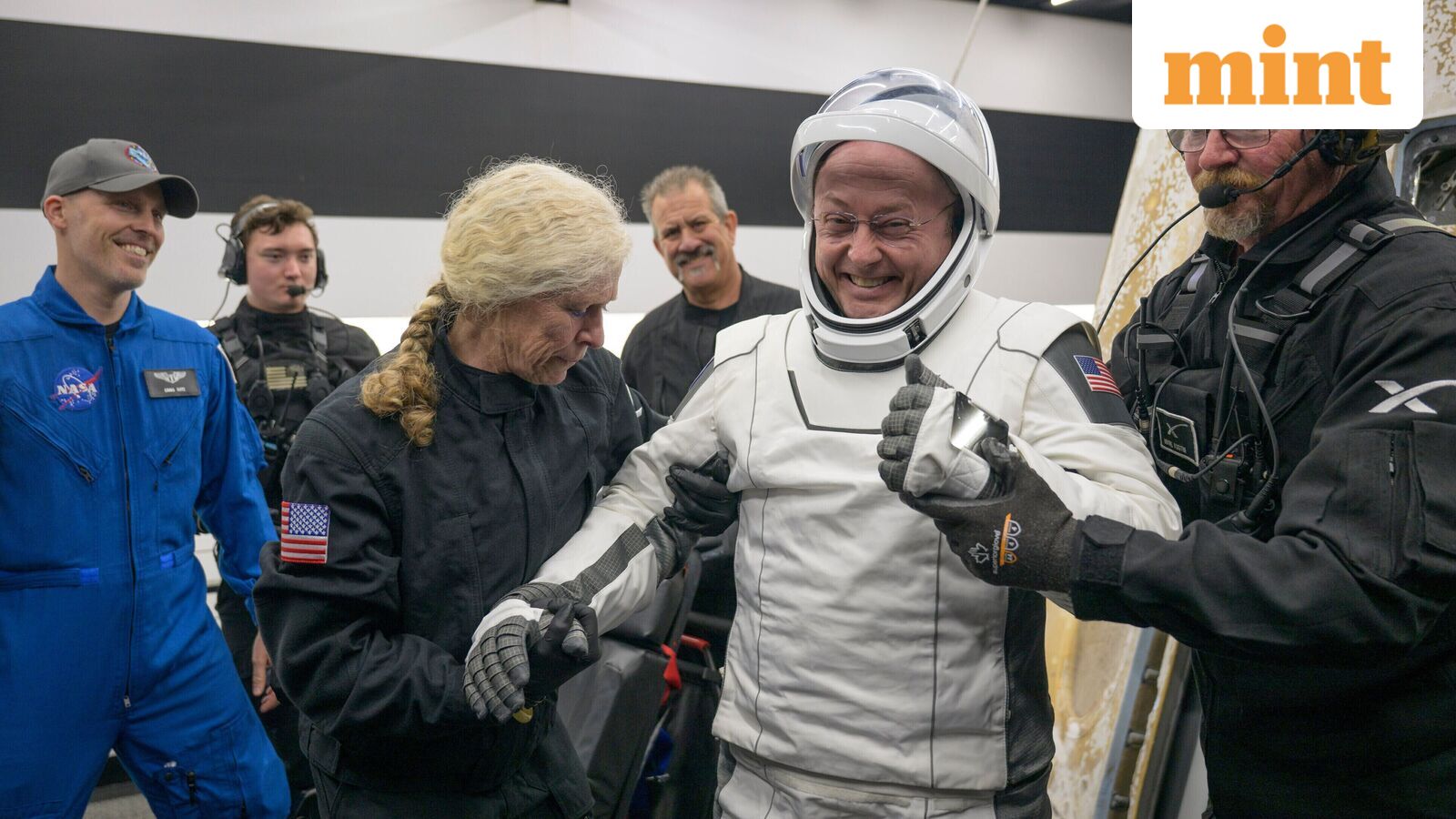
Veteran NASA astronaut Mike Fincke has revealed new details about a mysterious medical episode that prompted the agency’s first in-space evacuation earlier this year.
The incident occurred on January 7 aboard the International Space Station (ISS), when Fincke suddenly fell ill while preparing for a scheduled spacewalk.
“It was completely out of the blue. It was just amazingly quick,” Fincke said in an interview from Houston’s Johnson Space Center.
‘All hands on deck’ response
Fincke described how the situation escalated within seconds, with his crewmates immediately recognising distress.
“My crewmates definitely saw that I was in distress,” he said. “It was all hands on deck within just a matter of seconds.”
He recalled being unable to speak, though he felt no pain and has no memory of the episode itself. The incident lasted around 20 minutes before he recovered.
Doctors still searching for answers
Despite extensive testing, doctors have yet to determine the exact cause of the episode.
Fincke said medical teams have ruled out a heart attack and confirmed he was not choking. However, other possibilities remain under investigation, including potential links to prolonged exposure to microgravity.
The astronaut had spent 549 days in space across missions and was over five months into his latest stay when the episode struck “like a very, very fast lightning bolt.”
Role of ISS medical systems
The ISS’s onboard medical capabilities played a crucial role during the emergency.
Fincke noted that the station’s ultrasound machine was used during the incident, and he has undergone numerous follow-up tests since returning to Earth. NASA is now reviewing medical data from other astronauts to identify any similar cases.
Mission impact and early return
The medical emergency forced the cancellation of a planned spacewalk—one that would have been Fincke’s 10th—and led to an early return for the crew.
SpaceX transported Fincke and his crewmates back to Earth on January 15, more than a month ahead of schedule. Upon landing, they were taken directly to a hospital for evaluation.
Fincke expressed regret over the disruption, particularly for fellow astronaut Zena Cardman, who missed out on her first spacewalk.
Privacy and ongoing investigation
Fincke said he cannot share further medical details, emphasising NASA’s commitment to astronaut privacy.
“The space agency wants to make sure that other astronauts do not feel that their medical privacy will be compromised,” he explained.
NASA continues to investigate the case, analysing historical astronaut health data to determine whether similar unexplained episodes have occurred in orbit.
‘This was space, not you’
The astronaut admitted he initially felt responsible for the disruption caused by his illness.
“I’ve been very lucky to be super healthy. So this was very surprising for everyone,” he said.
However, colleagues—including NASA administrator Jared Isaacman—encouraged him to stop blaming himself.
“This wasn’t you. This was space, right?” they told him. “You didn’t let anybody down.”
A rare reminder of space risks
The unexplained incident highlights the unpredictable health risks astronauts face in space, even for seasoned veterans like Fincke.
While he has since recovered and feels healthy, the case remains unresolved—offering a rare glimpse into the medical uncertainties of long-duration spaceflight.
Also Read | Artemis 2 food menu spiced up with 189 items: What will NASA astronauts eat?