
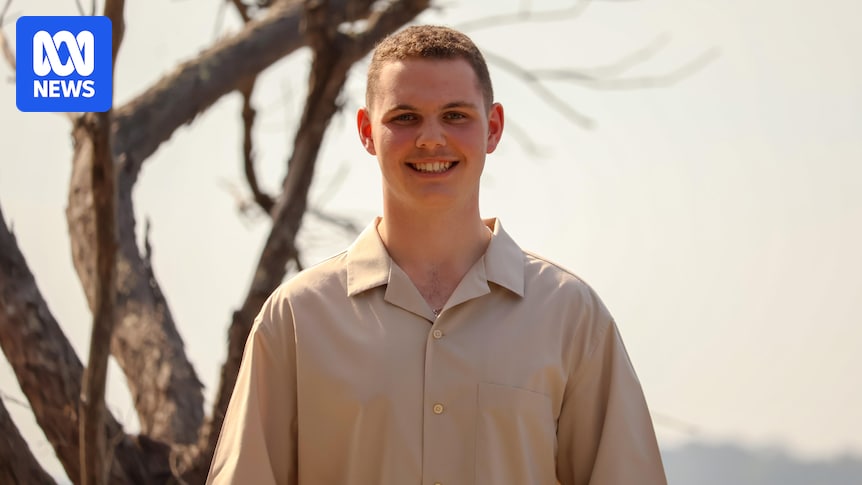
The past few years have been “bumpy” for Hunter and his mother.
Inflation and rising rental costs bit into their single-parent household budget.
Then the “explosion” came.
Their home on the New South Wales’ Mid North Coast, which they had for more than 10 years, was being put up for sale.
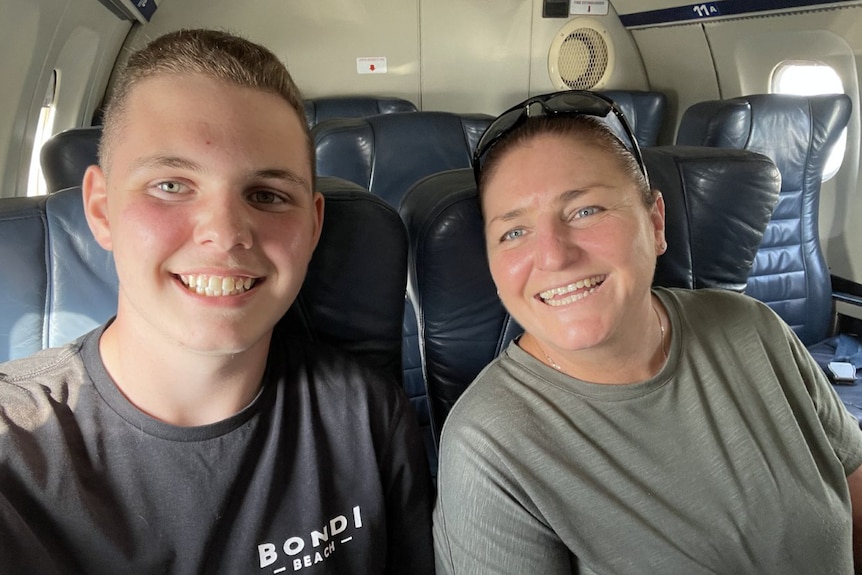
Hunter and his mum live in the NSW coastal town of Port Macquarie. (Supplied: Hunter)
Even with multiple jobs, Hunter’s mother was outmatched by the depths of Australia’s housing inequity.
Only two alternatives remained: living in their car or with Hunter’s elderly grandmother.
“That scares me today, to think that was literally it,” the teenager, 16, says.
Hunter says, in his experience, Australians think helping single parents is a waste of money.
(Supplied: Hunter)
Two jobs not enough for inflated rents
Hunter’s mother often went without when he was growing up.
Sacrifices that paid for his private Port Macquarie schooling, or investments into his future.
“Every opportunity that comes up in extracurriculars, the arts, the sports, she’s always put that first,” he says.
“She won’t question it, she’ll just do it.
“She really makes sure that I have what she didn’t.”
Hunter’s mother also grew up in a single-parent household, living in public housing while his grandmother worked three jobs.
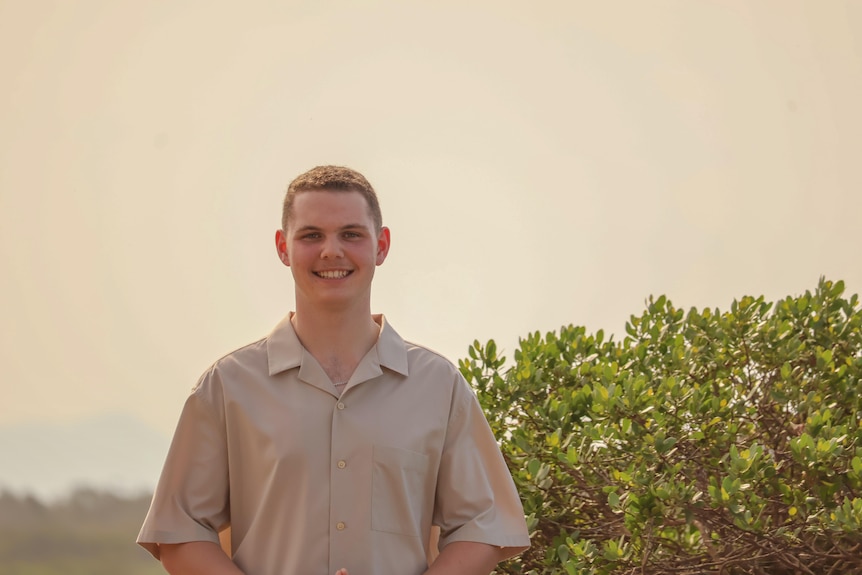
Hunter remembers his mum cancelling gym memberships and other things to provide him with opportunities. (Supplied: Hunter)
The teen was very young when they started renting their former home.
It was a “saving grace” after struggling with previous bouts of housing insecurity.
But after they were evicted, more than a decade on, their options had only worsened.
Port Macquarie’s average rent skyrocketed, with the coastal town becoming an investor’s market.
His mother got a part-time job in addition to full-time work, but it wasn’t enough to cover inflated rental costs.
“There were plenty of rentals, but they were rentals for $800 a week,” Hunter says.
He also believes his mother’s attempts to secure another property were hindered by single-parent bias.
“Even if there were rentals that we could afford … when you’ve got the perfect couple who applies, the single parent goes well down on the priority list,” he says.
“Even if you do have the money, you can’t get anything because there’s that instant stigma.”Busting harmful myths about single mums
Jenny Davidson, chief executive at the Council of Single Mothers and their Children, says it can be “very difficult to pinpoint bias”.
Unaffordability, coupled with low vacancy rates, makes it easy for realtors to insist there is too much demand.
Still, she had heard similar stories.
“We have anecdotal information around biases that single mothers won’t pay the rent, or they’ll get a boyfriend that will trash the joint, or their kids will damage the property,” she says.
“The irony is that single mothers make great tenants because they want to get into a house, prioritise paying their rent, maintain it like a home, and stay in that area while their children are engaged in that school.”
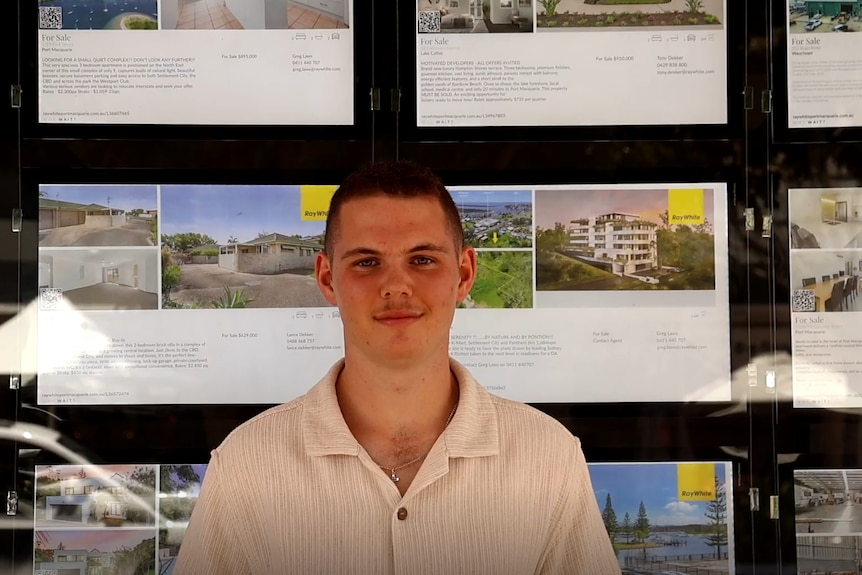
Rents of $800 were way beyond what Hunter’s mum could afford. (Supplied: Hunter)
‘I didn’t have anything’
Before losing his rental, Hunter had structure, an easy relationship with friends and a game plan for year 11.
That all changed overnight.
His belongings were packed into cardboard boxes after moving in with his grandmother.
His mother’s bed now lay inches away from his.
He felt himself grow distant from friends because he didn’t want them to know he was homeless.
Financial hardship resources:
“My mental health was out. My mum’s was as well, because then that’s when she picked up another job,” he says.
“There was nothing good about it.
“I couldn’t learn, I couldn’t excel.
“I couldn’t do anything with the space I was in because when you’re in that environment, you don’t have any motivation to get up.
“It was just a very depressing time.”
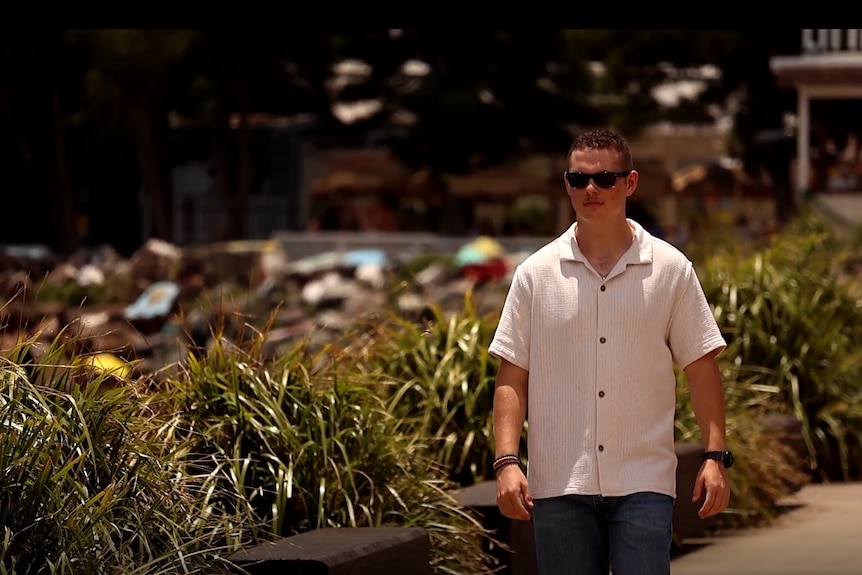
Hunter says he often feels the only way to be alone is to go on a walk. (Supplied: Hunter)
More single parents becoming ‘lifelong renters’
Single mothers are increasingly at the brunt of Australia’s housing crisis, Ms Davidson argues.
The group is almost four times more likely to experience homelessness or insecure housing.
Ms Davidson says they are disadvantaged by multiple factors, including insufficient child support payments or an inability to return to the property ladder.
The problem also begins with a lack of available social and public housing.
About 640,000 households need social housing but face an average waitlist of more than 10 years, according to research conducted by the UNSW City Futures Research Centre.
The postcodes where rent takes half your pay cheque
It leads to more single mothers becoming “lifelong renters” — an option in itself that is increasingly difficult to achieve.
“They are competing with double-income applicants for family homes,” Ms Davidson says.
“So, we have a burgeoning situation where, once you don’t, you’re never going to own a home, and you can’t get public housing.
“And if you then cannot get a rental property, families are raising children in garages, spare rooms, caravans.
“Or they’re roofless, and they’re living in tents and vehicles.”
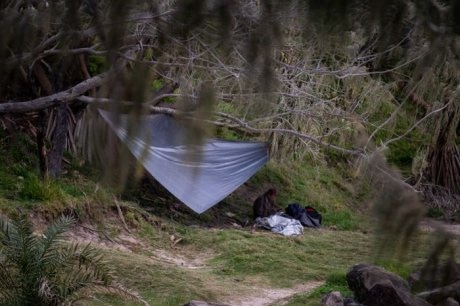
Coastal NSW has become a particular hotspot for homelessness. (ABC News)
An ‘almost hidden crisis’
In Hunter’s experience, “a single-parent income affects everything”.
“Cost-of-living is huge for everyone, but especially a single-parent income because you’ve got one income that has to stretch over way more things.”
Homeless mother of seven denied social housing over Centrelink income
More than 30 per cent of single-parent families are now living below the poverty line, according to the 2025 Household, Income and Labour Dynamics in Australia (HILDA) survey.
One-third of children living in single-parent families are also in poverty — compared to 12 to 14 per cent for those living in dual-parent homes.
The study deducts housing costs, highlighting the acute role of housing costs in this crisis.
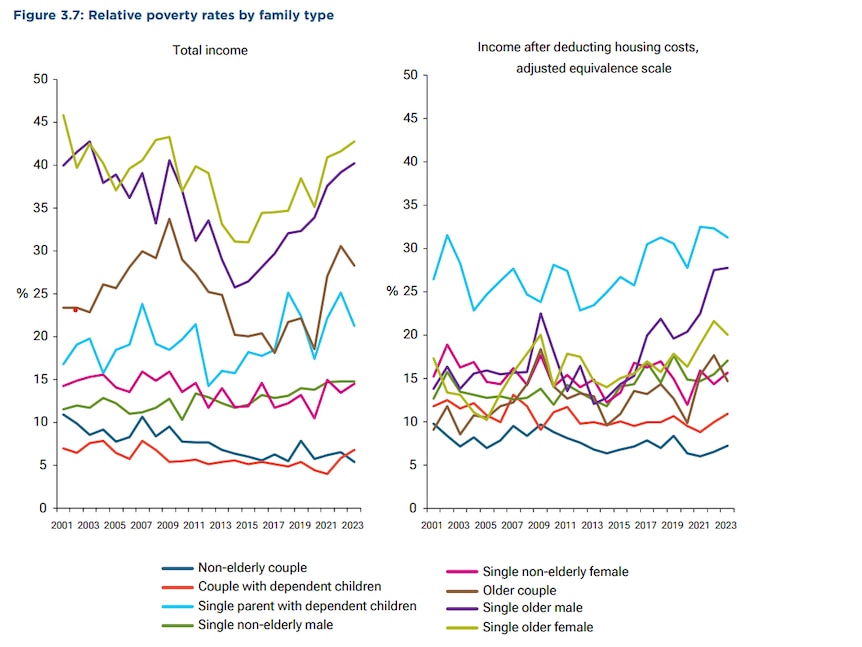
Relative poverty rates, taking housing costs into account. (Supplied: The Household, Income and Labour Dynamics in Australia Survey)
The study’s co-director, Rodger Wilkins, looks at HILDA results from as far back as 2001, as well as household data from the 1980s.
He says there has been a trend of worsening single-parent poverty since the 1990s.
“It really should be considered a national priority,” Professor Wilkins says.
“There really is this almost hidden crisis in our community.
“It’s not getting adequate attention.”Support not going where needed
Hunter’s mother has now bought an apartment for the pair — a hard-earned respite after years of insecurity.
But he acknowledges how rare that possibility can be for those facing homelessness.
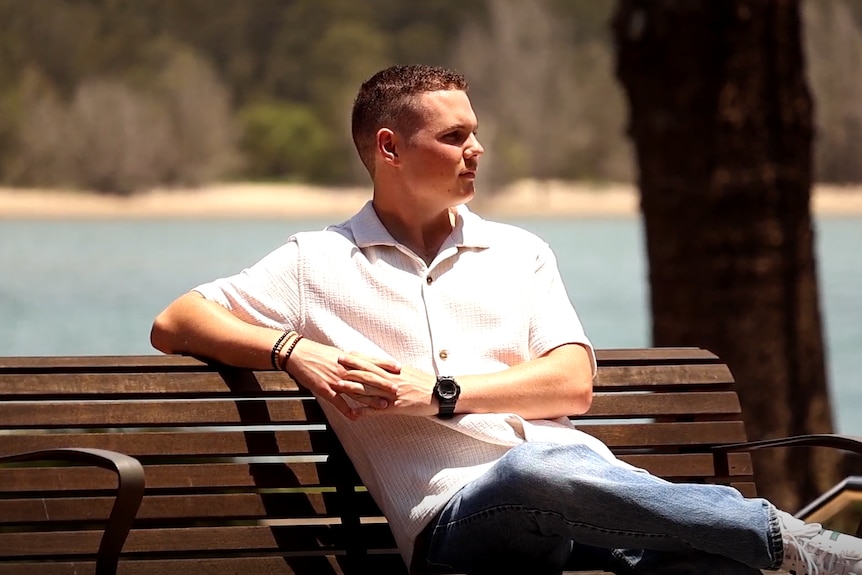
Hunter says incentives aren’t taking the most disadvantaged into consideration. (Supplied: Hunter)
“[Home buyer] Incentives are really put towards young people, which, as a young person, I love,” Hunter says.
“But actually, the area that needs to be focused on more is middle-aged women.
“Because normally, they’re the most disadvantaged.”
Homelessness crisis for older women in NSW
He thinks of the families who are not as fortunate as he was.
“There are other kids my age who didn’t have the choice to go to someone’s house and stay,” he says.
“There are people I know who do pitch the tent near the beach in the bush.
“And most homeless — 99 per cent — are people who work hard. Who have or had jobs, who had a good education, who try hard.
“They just don’t have the support.”
For single mothers, he believes that is especially the case.
“There’s not a lot of support, there’s not a lot of talk,” Hunter says.
“Because it’s a subject that’s easy not to worry about if it doesn’t affect you.”

The ABC’s Heywire competition is open to all regional Australians aged between 16 and 22.
The annual competition provides a platform for the younger generation, in pockets of Australia that rarely see the spotlight, to “tell it like it is”.
If you are aged between 16 and 22 and would like to find out more about the ABC Heywire Competition, go to the ABC Heywire website.