
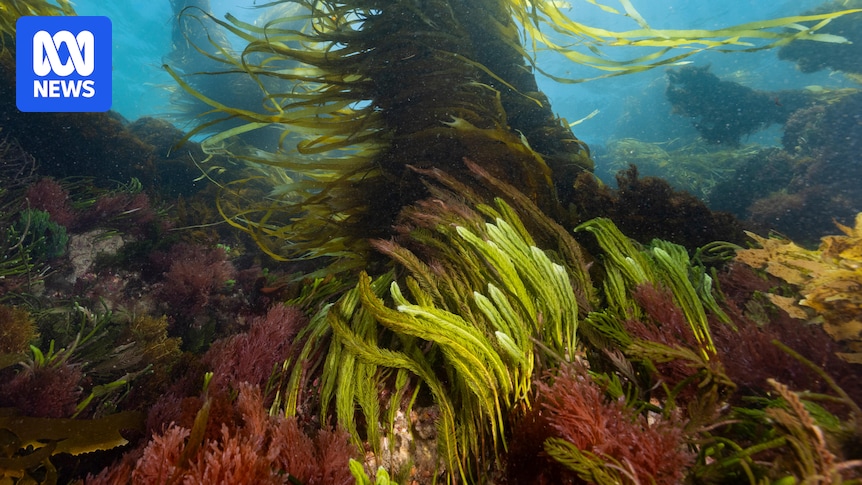
South Australia’s south-east coast is known for being rough and rugged, with cold water smashing into limestone cliffs.
But below the surface, the region is part of the Great Southern Reef, a system of interconnected reefs stretching from the New South Wales coast to southern Western Australia.
“We are sitting here on the global hotspot of regional biodiversity of seaweed,” Deakin University lecturer and seaweed researcher Alecia Bellgrove said.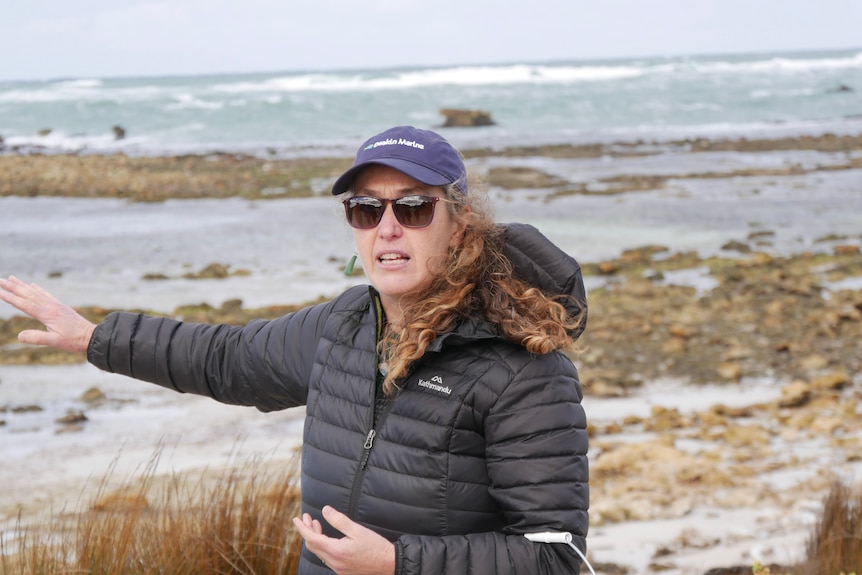
Alecia Bellgrove leads a beach walk at Port Macdonnell. (ABC South East SA: Sam Bradbrook)
“There are more species of seaweed in the South East Australian coast than anywhere else in the world and most of them are endemic to this region,” Dr Bellgrove said.
“Just like we have koalas and kangaroos and platypus on our land and [in our] rivers, we have all this amazing diversity in our oceans as well.”
Experts say the Great Southern Reef is facing a number of challenges, including marine heatwaves and the toxic algal bloom affecting parts of South Australia’s coastline.
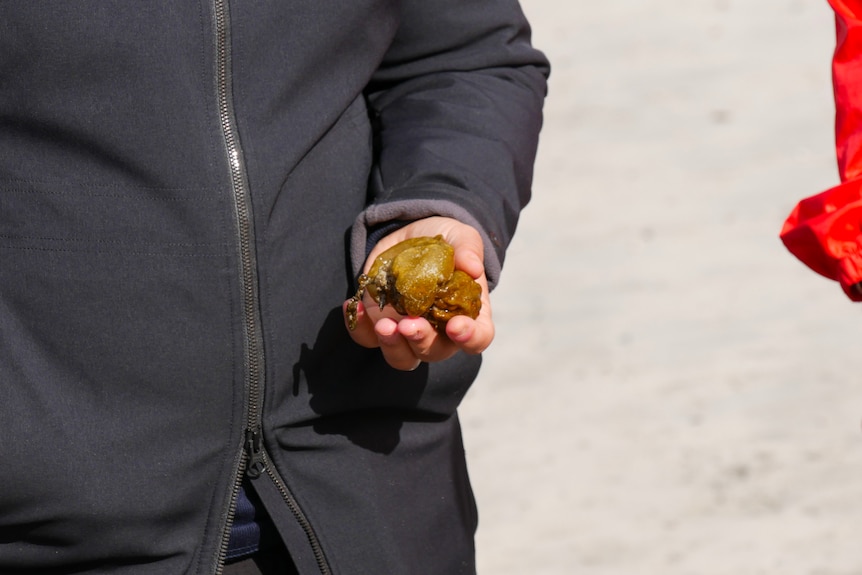
The seaweed washing up on the beaches of Port Macdonnell has become a treasure for locals wanting to learn more. (ABC South East SA: Sam Bradbrook)
In one coastal town, residents have started an event to help the public recognise the importance, and beauty, of their seaweed.
Locals leading charge
Up to a third of the SA’s coastline has seen ocean life wash up dead on beaches and reefs be decimated by the state’s toxic algal bloom.
The Limestone Coast has been left untouched by the bloom though and in Port Macdonnell, about 30 kilometres from Mount Gambier, residents have started an event to learn more about their local seaweed.
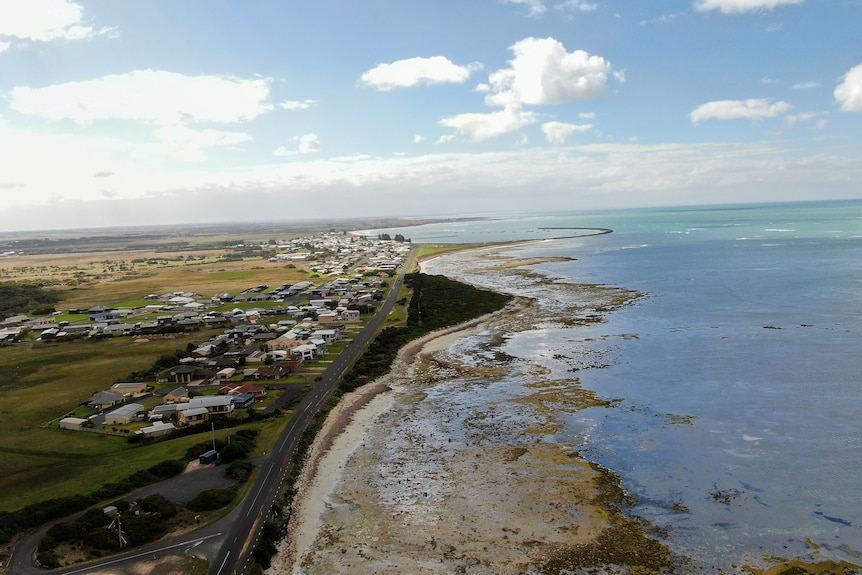
Port Macdonnell is about 30 kilometres from the regional centre of Mount Gambier. (ABC South East SA: Sam Bradbrook)
The festival, called Seaweed. A Celebration, includes beach walks to collect seaweed samples, talks from researchers and art exhibitions celebrating local ocean life.
It was organised by Holdfast Limestone Coast, a group of artists and citizen scientists looking to pair their artistic interest in seaweed with data collection and monitoring of the coastline.
“If you had have asked me why I was doing this several years ago, I would never have imagined that I would be loving seaweed like I do,” co-founder and artist Jo Fife said.
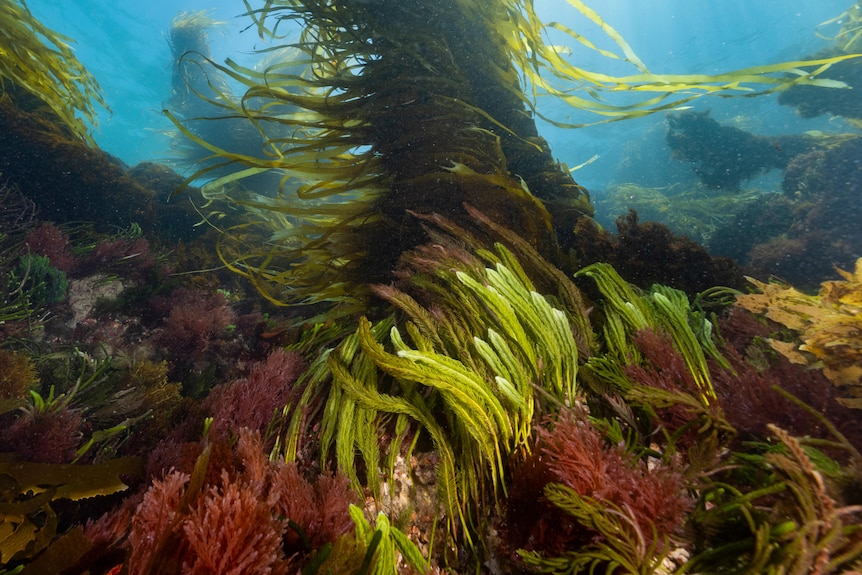
The Great Southern Reef is one of the most biodiverse parts of the world’s oceans for seaweed. (Supplied: Stefan Andrews/Great Southern Reef Foundation)
“For me, initially, it was the textures and the colours and the movement that they have when they are in the water.”
“I guess that’s the artist in me that saw that.”
The group’s purpose has grown from gatherings to paint their favourite seaweed samples to promoting citizen science and collaborating with researchers.
Sally O’Connor said watching the algal bloom in other parts of the state meant locals were not taking their coasts for granted.
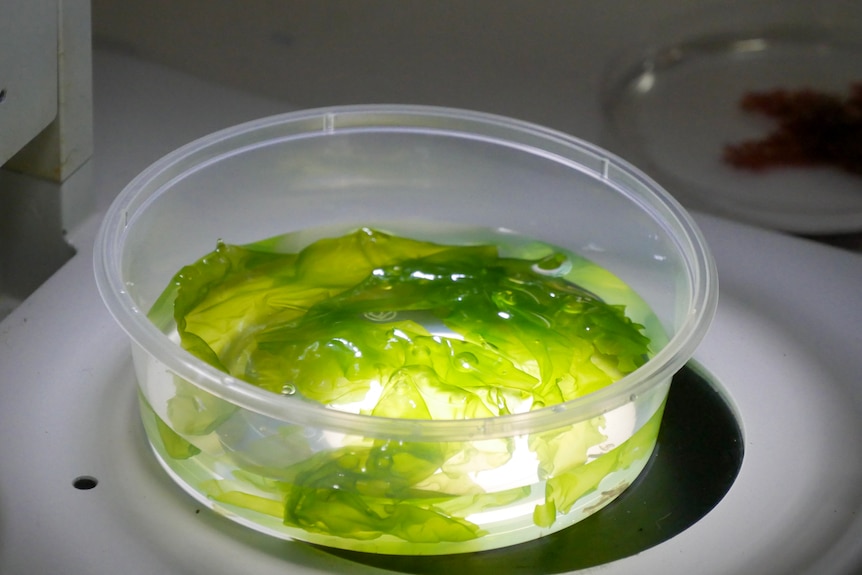
Beachgoers took home some seaweed samples to put under the microscope as part of the event. (ABC South East SA: Sam Bradbrook)
“It’s just wonderful to be able to go down on our beaches and see things as they should be,” she said.
“It’s devastating to see what’s happened through the algal bloom to the metropolitan beaches and up in the gulfs.
“I hope that it doesn’t hit here, it may do, who knows?”
Reefs facing challenges
While the Limestone Coast has escaped the toxic algal bloom, Dr Bellgrove said the Great Southern Reef still faced a number of threats.
She said an ongoing marine heatwave, which had been put forward as one of the causes of the algal bloom, had already taken a toll.
“We’re seeing species dying off, or the geographical range of which species are distributed is constricting,” she said.
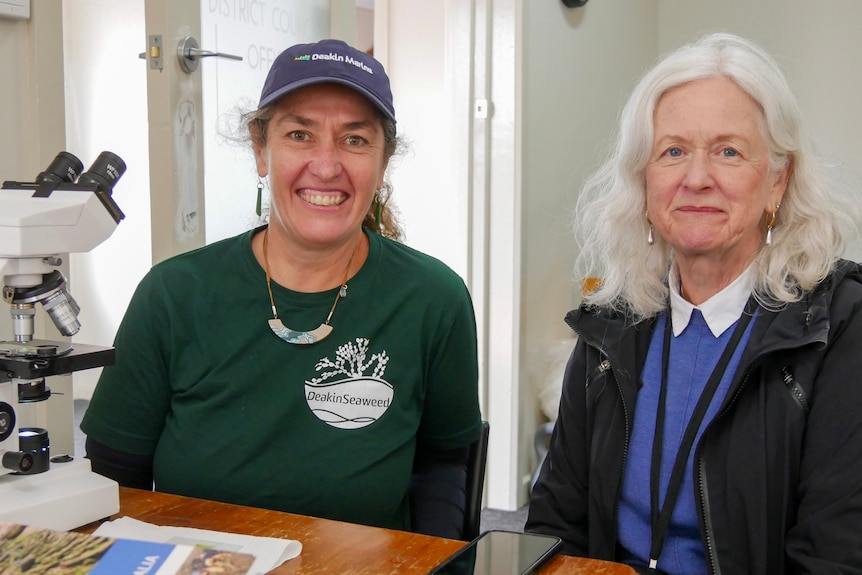
Alecia Bellgrove and Holdfast Limestone Coast’s Sally O’Connor say they want more people to see the beauty of seaweed. (ABC South East SA: Sam Bradbrook)
“The bull kelp, which lots of people will know, that big, strong kelp that grows in the surf zone that used to be up into New South Wales, now it doesn’t go past Tathra [in NSW].
“We need to make these seaweeds visible, both in terms of the wonder and the importance in the ecosystems, and also the plight that they’re now facing.”
Ms O’Connor said one of the goals of Holdfast Limestone Coast was to better understand the health of the local coastline.
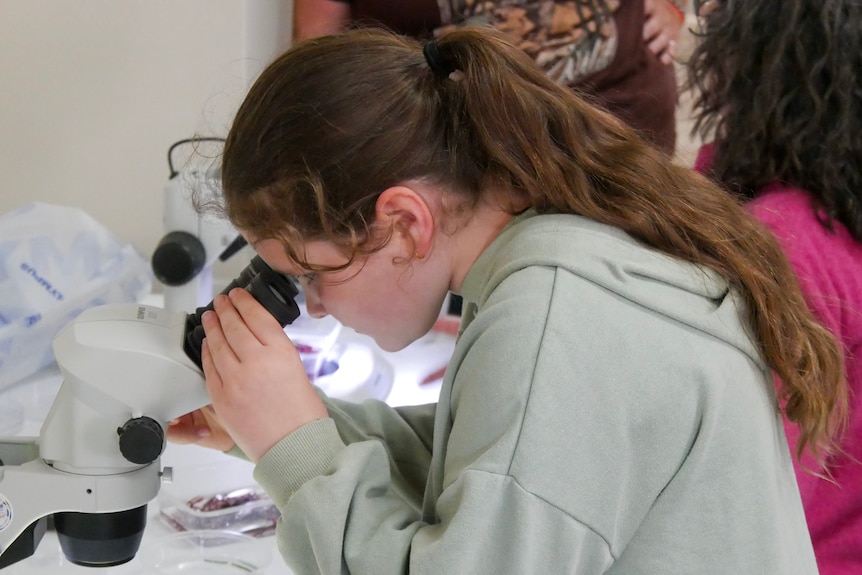
The organisers of Seaweed. A Celebration hope it encourages more citizen scientists to keep an eye on the coast. (ABC South East SA: Sam Bradbrook)
“People have said if there’s a bushfire on the land and some of the forests are destroyed with that, the people are in uproar,” she said.
“But what’s happening under the sea is out of sight, out of mind.”