
Australian freight and logistics company New Energy Transport has partnered with logistics provider ANC to complete Australia’s first fully electric end-to-end intercity delivery.
In doing so, the companies established the nation’s inaugural “green corridor” between Sydney and Canberra, which could be a first step toward a potential transformation of the country’s road freight sector.
The milestone delivery saw New Energy Transport move essential household goods for the sustainable toilet paper company Who Gives A Crap from a Sydney distribution centre to Canberra using a Windrose electric prime mover on a single charge.
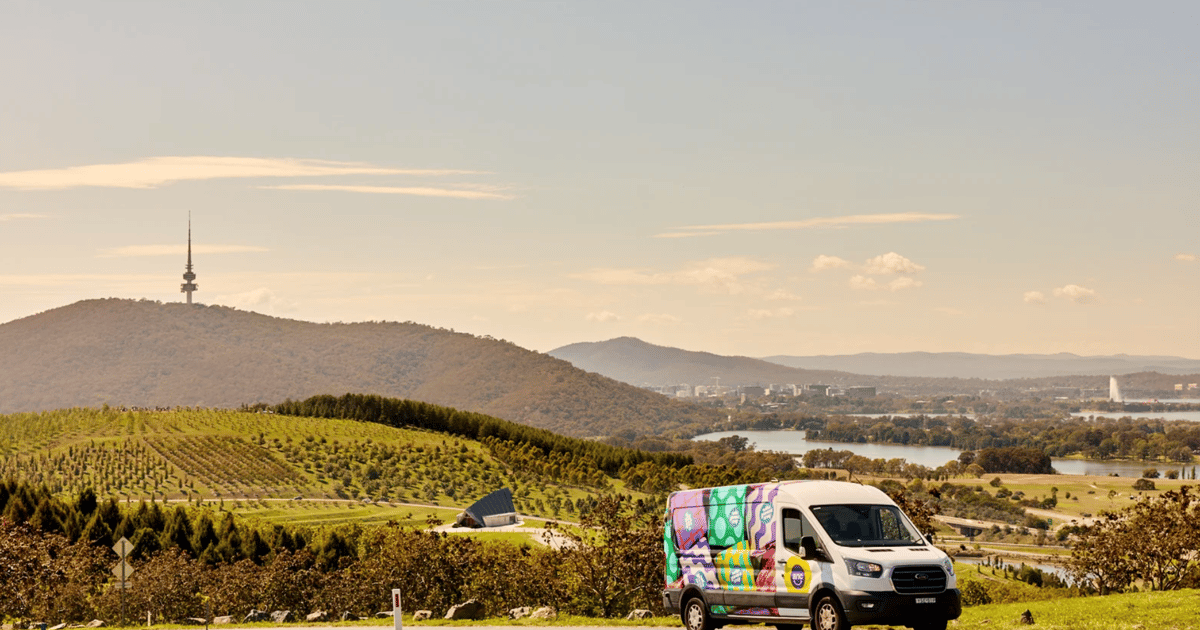
At New Energy Transport’s cross-docking facility in the capital, partner ANC Delivers completed the final leg to end customers using electric delivery vans from its fleet of more than 100 zero-emission last-mile vehicles.
The successful operation represents a significant proof point for the viability of electric heavy-duty freight on one of Australia’s busiest intercity routes, demonstrating that battery-electric trucks can now handle the demands of long-haul logistics without compromising on range or operational efficiency.
The achievement comes as Australian distribution networks face critical visibility gaps as EV adoption accelerates, underscoring the urgency of coordinated infrastructure planning to support the transition to electric freight.
Dan Bleakley, co-chief executive of New Energy Transport, framed the delivery as evidence that Australia must accelerate its shift away from diesel dependency.
“Australia must act now and seize this moment to decouple from diesel,” Bleakley said.
“Australia’s major transport buyers, including our supermarket chains who depend on diesel-based trucking to deliver food to millions, have a responsibility to accelerate the transition to resilient road freight.”
Bleakley called for coordinated government action to catalyse broader industry adoption.
“Governments at all levels also have a major role to play. By co-investing in charging infrastructure and making electric prime movers more affordable through targeted subsidies and incentives, they can catalyse industry adoption and unlock long-term economic, productivity, and energy security benefits for Australia,” Bleakely added.
The call for policy support echoes recent moves by financial institutions, with Australia’s FC committing AU$60 million (US$41 million) to slash EV loan rates via a Hyundai partnership.
Simon Griffiths, co-founder and chief executive of Who Gives A Crap, positioned the company’s participation as part of a broader commitment to decarbonising the supply chain.
“We are proving that the transition to electric vehicle fleets isn’t just a future goal – it’s possible right now. By integrating EV freight into our own operations, we’re demonstrating that the solutions are ready and effective for Australian commerce,” Griffiths said.
“Our goal is to help shape the future of zero-emission freight in Australia. We know that as more businesses make the switch to electric, we create the collective momentum needed to transform our national logistics network.”
The companies have committed to rapidly scaling operations, with plans to commence daily Sydney-to-Canberra electric B-double operations in the third quarter of 2026.
From that foundation, New Energy Transport and ANC intend to expand zero-emission end-to-end operations along the Sydney-Canberra corridor before extending to other major freight routes along Australia’s eastern seaboard, potentially establishing a network of electric freight corridors connecting the country’s major population centres.
The development arrives as Australia’s electric vehicle infrastructure landscape undergoes rapid evolution, with ABB and Ampol deploying Australia’s first 400kW ultra-fast EV chargers in Sydney, addressing a critical barrier to heavy-duty electric vehicle adoption.
Meanwhile, research institutions are advancing the technical foundations for grid integration, with Australia’s CSIRO doubling down on vehicle-to-grid testing capabilities through a AU$3 million laboratory expansion, exploring how electric freight vehicles could eventually provide grid services during periods of stationary operation.