
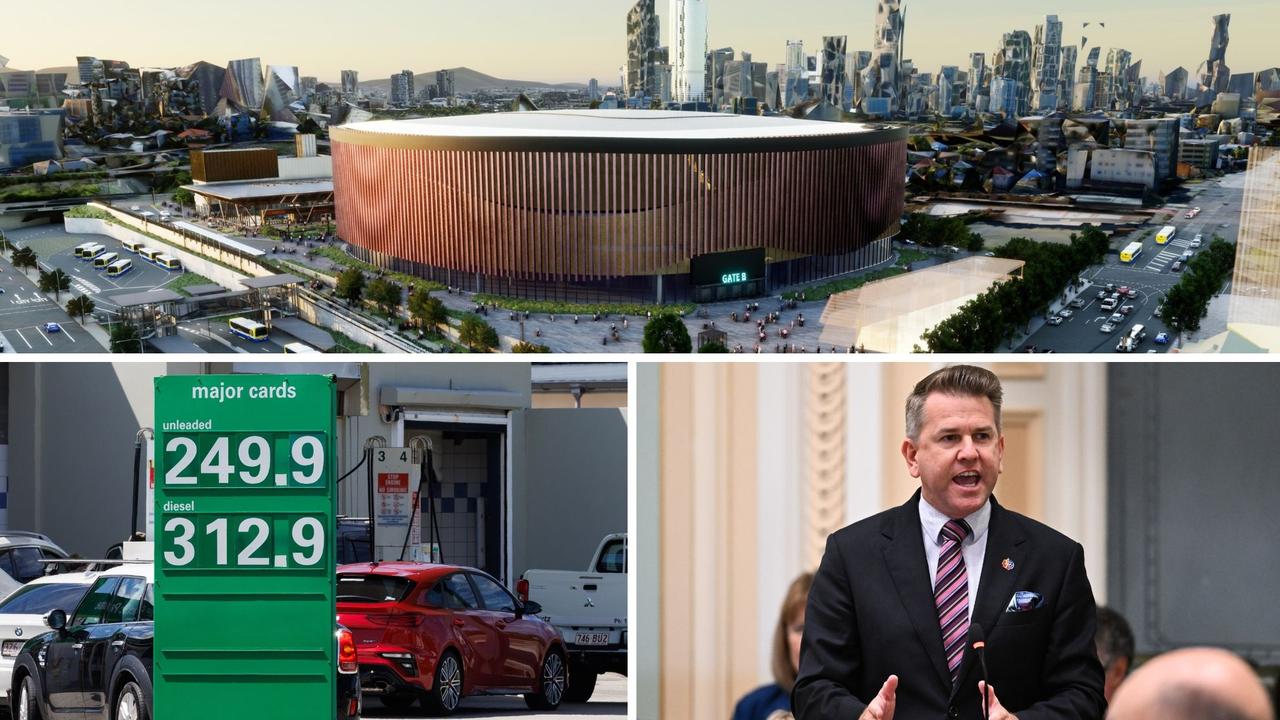
A surge in construction costs driven by soaring diesel prices is threatening to punch a significant hole in Queensland’s Olympic budget, with estimates suggesting the bill could climb by up to $700 million.
The Civil Contractors Federation has released modelling showing constructions costs would escalate between seven and ten per cent due to the global fuel crisis sparked by the Middle East conflict.
The state’s $7.1 billion Games envelope is heavily exposed to construction, and even a modest 7–10 per cent increase is translating into hundreds of millions of dollars across major projects.
It would mean the $3.8 billion Brisbane Stadium at Victoria Park cost would hit $4.18 billion under a 10 per cent increase, while the National Aquatic Centre climbs from $650 million to $715 million and the minor venues program tips over the billion-dollar mark, increasing from $935 million to just over $1.02 billion.
Civil Contractors Federation Queensland secretary Damian Long said while 7–10 per cent is being discussed publicly, cost pressures in some parts of the sector are already significantly higher.
“For fuel-reliant works like earthmoving, it could be as high as 17 per cent,” he said.
“It’s bigger than just diesel. Materials like PVC pipes — which rely on oil — are up around 40 per cent, and now there are warnings supply could tighten because of resin shortages.”
The combination of fuel costs, freight surcharges and material constraints is creating a layered cost shock, with contractors now factoring in volatility across the entire supply chain.
“Houston, we have a problem,” Mr Long said.
He said contracts already underway had largely been priced before the fuel crisis escalated, insulating them in the short term, but warned new projects — including elements of the Olympic build — would be exposed to the new cost base.
“There’s still time to mitigate through design,” he said, pointing to potential specification changes and alternative materials.
“As long as fuel is available, the work will go on — it just becomes a cost exercise.”
Australian Constructors Association chief executive Jon Davies said urgent reform was needed across both the private and public sectors to protect the industry and ensure critical infrastructure delivery can continue.
“Earthworks at Victoria Park are due to start soon and that machinery runs on diesel,” he said.
“If diesel is rationed or supply to other industries prioritised, those works could be delayed and an already tight stadium schedule squeezed. ”
According to the latest weekly ACCC report, diesel prices have jumped to 303.5 cents per litre, up 10 per cent in a week across Australia’s five largest cities.
International refined diesel benchmarks have also surged 17 per cent amid tightening supply and export restrictions in parts of Asia.
Transport and Main Roads said it was working closely with industry to manage the impacts on Queensland projects, while Games Independent Infrastructure and Coordination Authority (GIICA) insisted that 2032 venues would be delivered within the existing funding envelope.
Deputy Premier Jarrod Bleijie, asked on Wednesday how the fuel crisis would impact the Games delivery, said the government was focused on bringing productivity up and costs down.
“It is concerning and we are obviously aware of that,” he said.
“In the 7.2bn budget, the recent PVR we completed, which was for white water rafting… we have managed to get that on what was the budget, despite other costs and things.
“Every contract you enter into has contingencies and we’ll just keep trying to drive the cost down, drive productivity up, which will naturally drive the cost down to build the stuff.”