
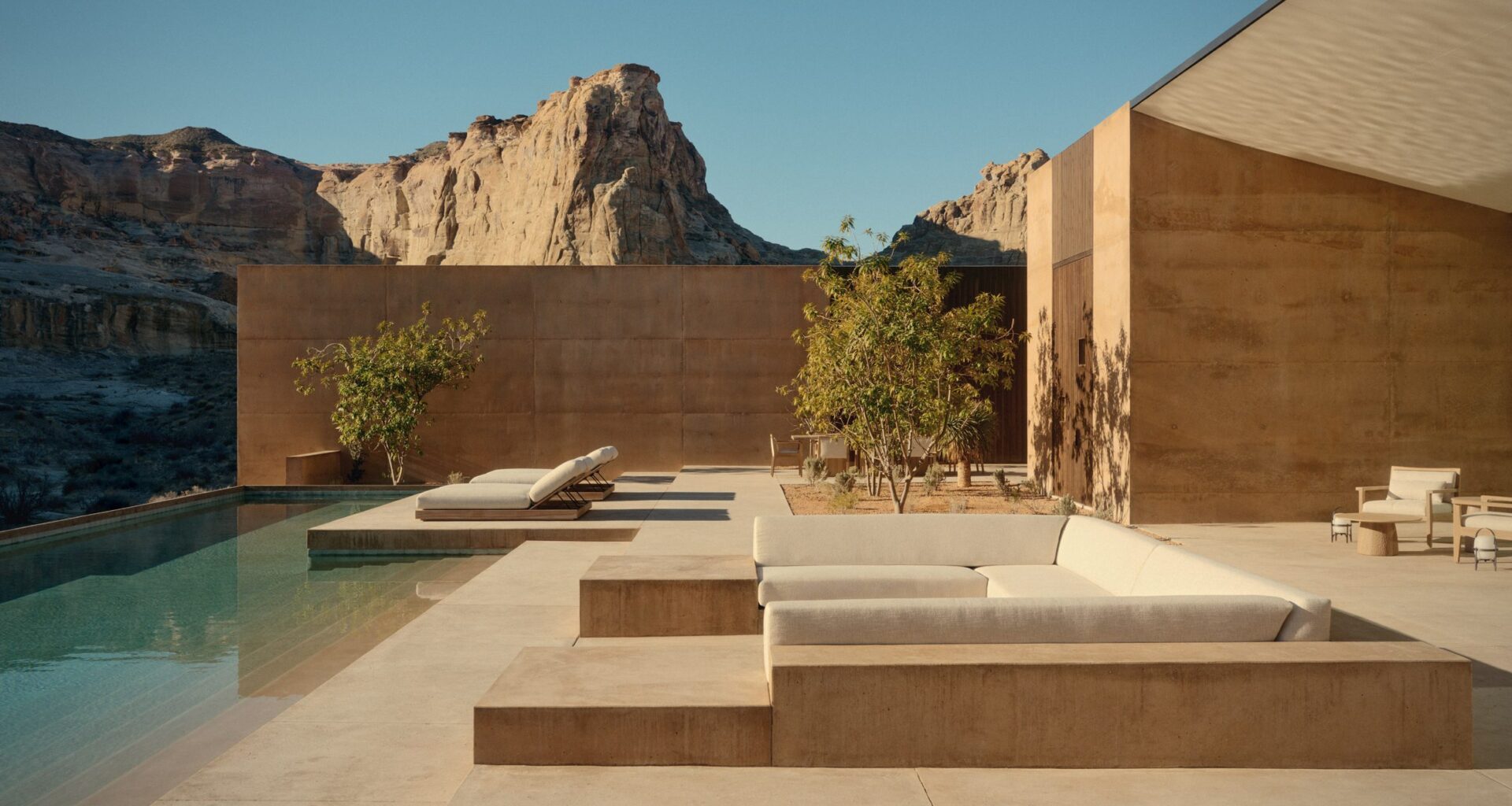
Los Angeles-based Masastudio has completed a six-bedroom private villa at the Amangiri resort in Utah, USA informed by the region’s dramatic rock formations.
The residence is situated on Amangiri‘s vast desert site, just over the state line from Page, Arizona, and close to popular natural landmarks including Horseshoe Bend and Antelope Canyon.
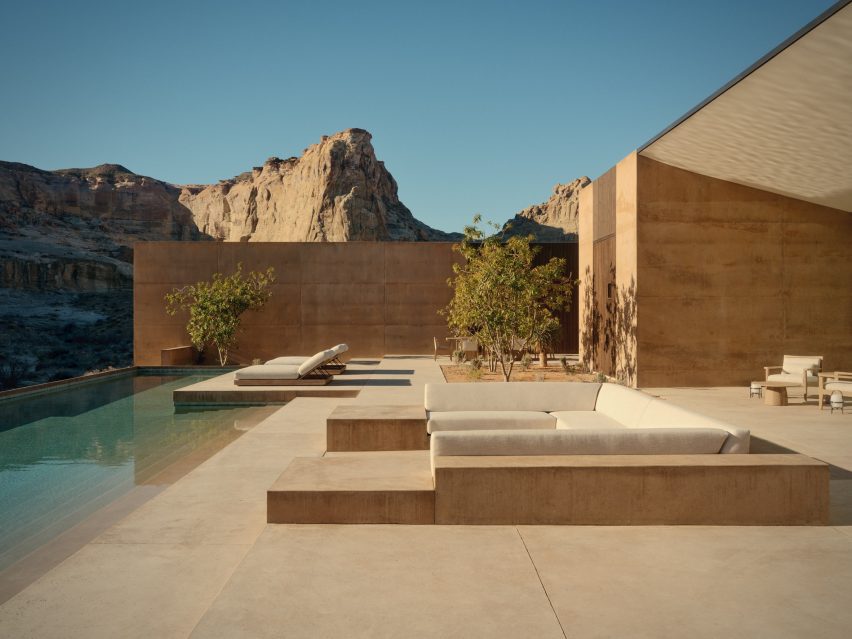 The first Amagiri villa to complete is positioned against a rock escarpment to aid privacy
Masastudio founders Marwan Al-Sayed and Mies Anderson returned to the remote property they designed and completed in 2009 to create a series of villas in the same minimalist architectural style for which Amangiri is known.
The first of these to complete is a 12,001-square-foot (1,115-square-metre) residence, which is set away from the main resort and tucked against a cliffside.
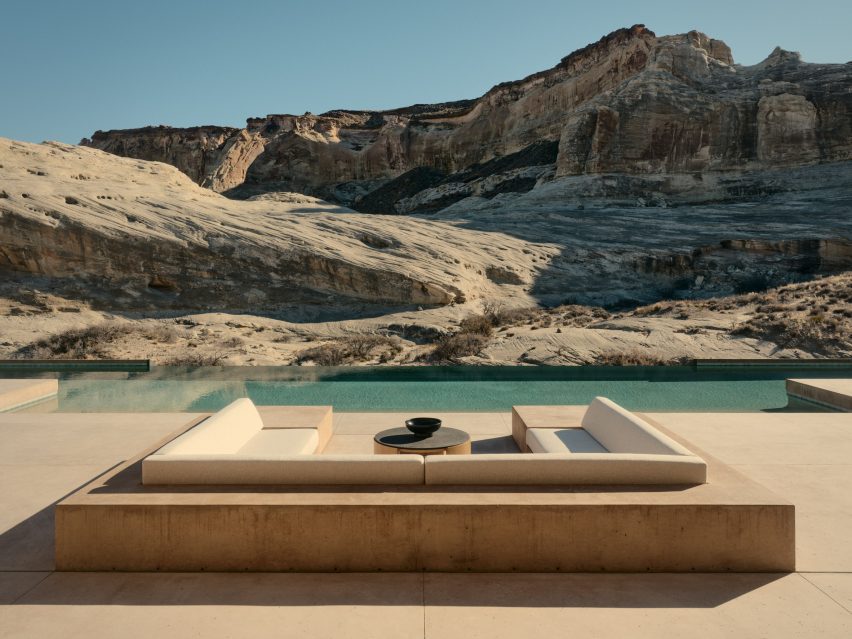 The main outdoor terrace includes a conversation pit and a 35-metre swimming pool
Sculpted over millions of years, the sandstone buttes and mesas that surround the property create a striking backdrop that the architecture needed to complement.
“Our task was really just not to mess up this landscape,” Al-Sayed told Dezeen. “Having worked on the resort and been on the site for all these years, we wanted the residents to feel like it’s a spa.”
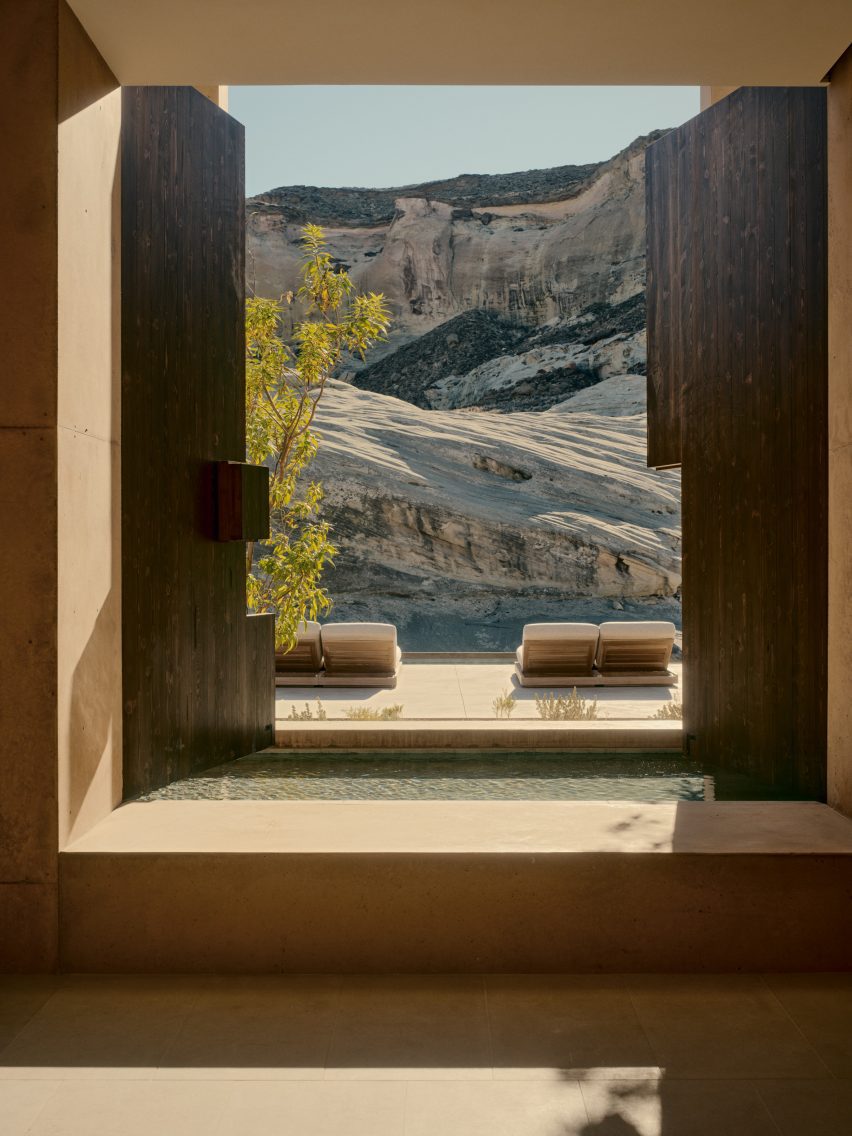 Wooden shutters swing open to allow light into the entry vestibule
While the hotel structures are oriented to face out to the landscape, the villa is more introspective, with the main outdoor living spaces surrounded by tall escarpments to create privacy.
Appearing to emerge from the terrain, the residence is primarily constructed from concrete that’s mixed with locally sourced sand so that it blends into the landscape.
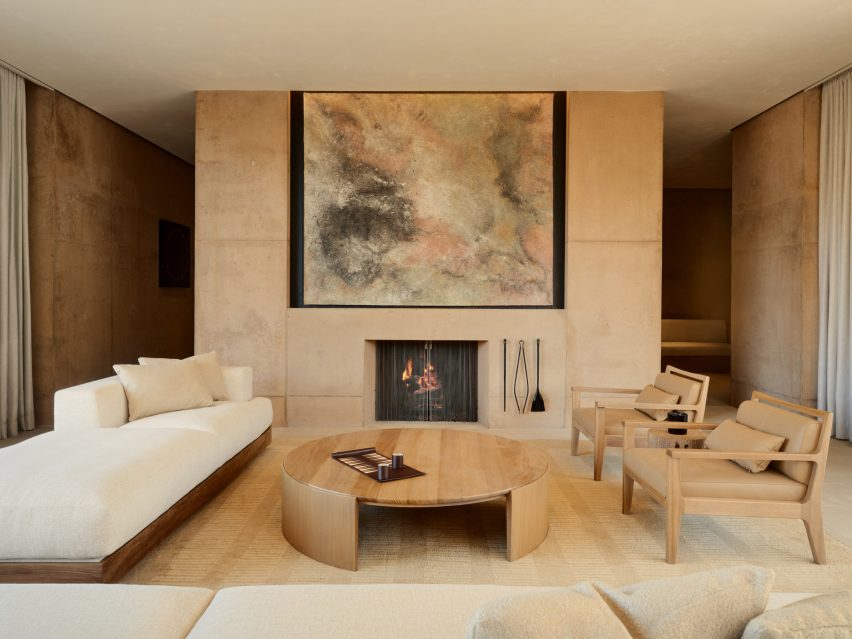 An artwork by Ulrike Arnold is displayed above the fireplace
A series of narrow skylights and voids of various shapes are carved from the building, casting slivers of light that shift throughout the day as a reference to the slot canyons found nearby.
“We took the time to go hiking in the canyons,” said Anderson. “The light that comes in from the eroded holes in those canyons intuitively informed the architecture.”
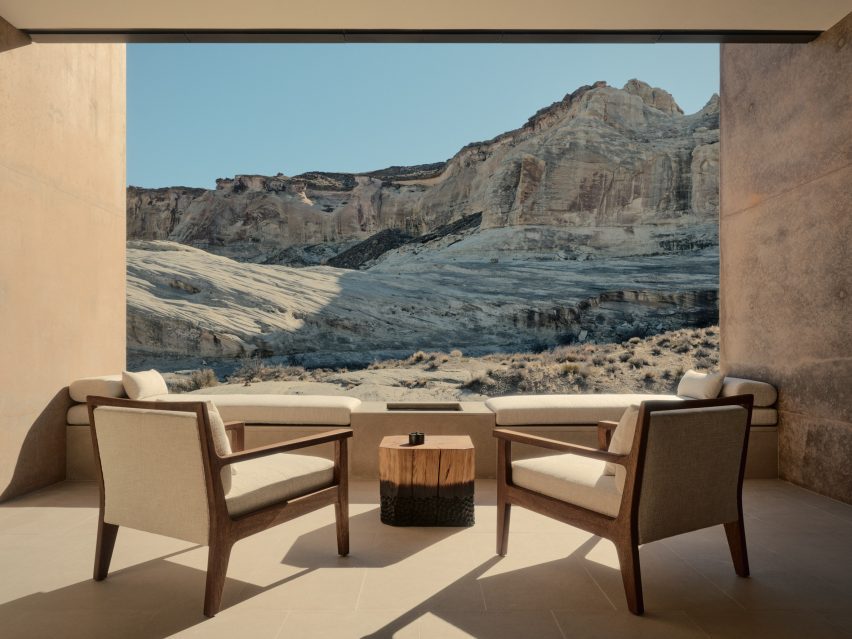
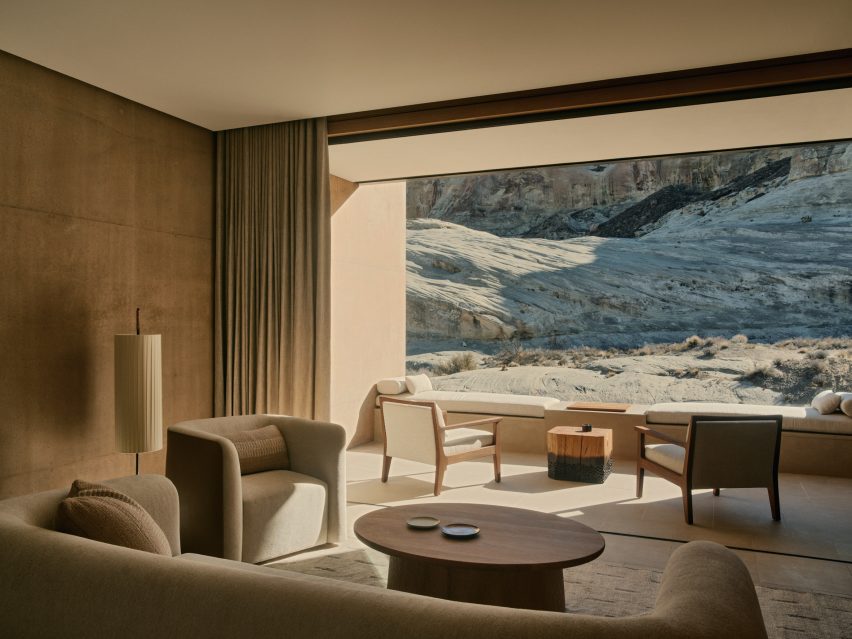 The suites have fully retractable glass walls and face the rock formations
The main house is rectilinear in plan and unfolds in a procession of spaces that play with compression and expansion.
“When you enter into the first volume through the front door, the view is removed unless the big shutters are open,” said Al-Sayed. “Instead, a silver metallic leaf acts as a constantly changing light work.”
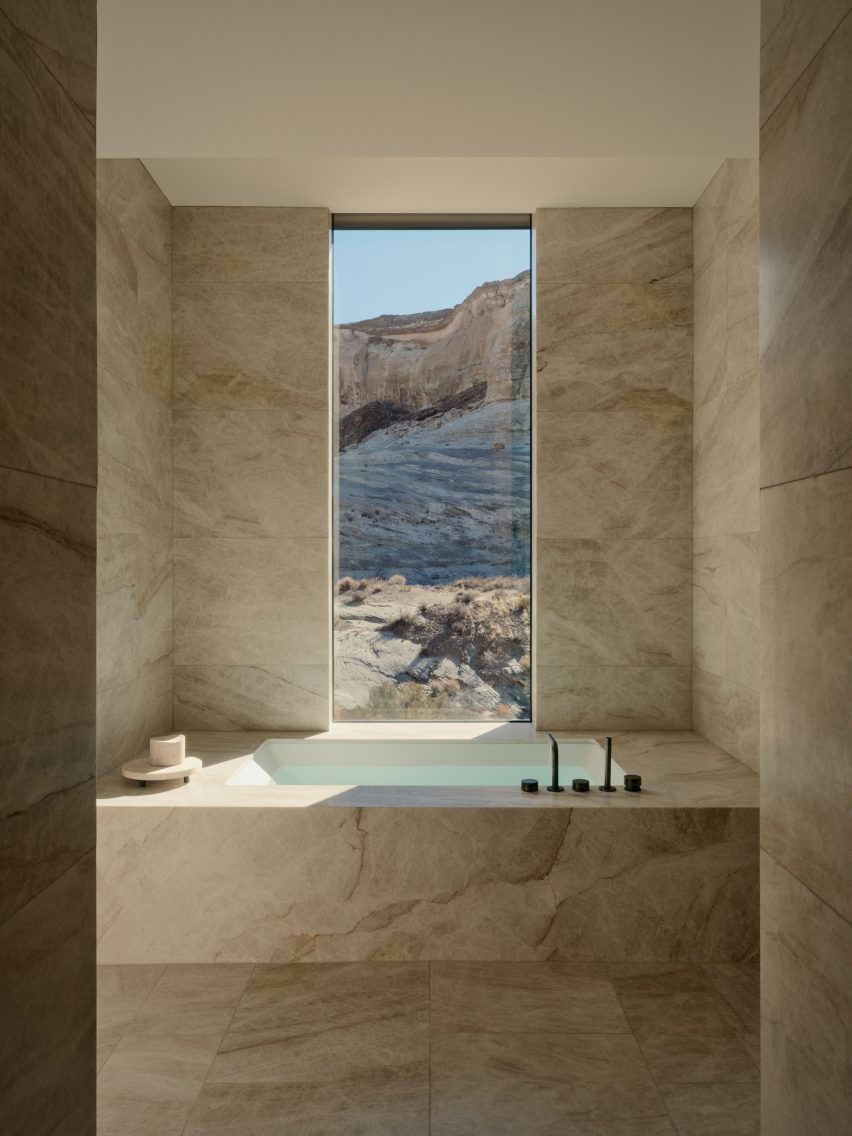 Stone-lined bathrooms resemble an extension of the landscape
This compact entrance vestibule leads through to a huge open-plan lounge, dining and kitchen space, flanked by floor-to-ceiling glass panels that slide open to the outdoor living areas on either side.
Over the dining table, a sculptural oculus appears to have been eroded by the elements – like the hoodoo rock formations in the vicinity – and was influenced by a Navajo prayer titled Walking in Beauty.
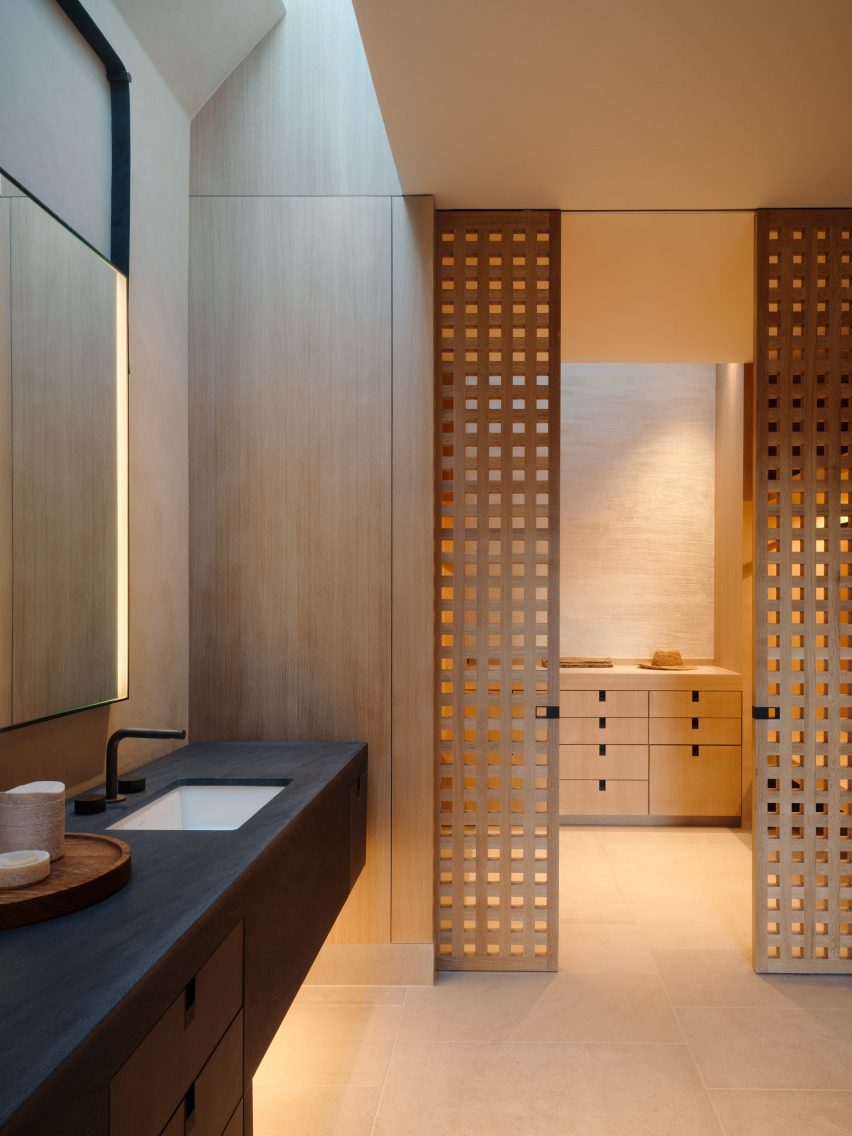 Skylights and voids bring in light from above, similar to the nearby slot canyons
The lounge includes an artwork over the fireplace by Ulrike Arnold, Amangiri’s artist in residence, who works with earth sourced from the immediate surroundings.
From the centre of the living space, the ceiling gently curves up to meet the overhanging roofline that’s supported by monolithic vertical elements. These help to regulate the internal temperature, because “being in the desert is so much about remaining warm and cool,” said Anderson.
 The concrete is mixed with locally sourced sand to help the architecture blend into the landscape
The villa’s interiors are designed so as not to detract from the views, and therefore feature blond wood that blends with the concrete and neutral-toned minimalist furniture.
A handful of decor elements reference the pioneering history of the American West, including a side table with a lasso-like base, triangular coat hooks informed by cattle branding irons, and the light fixture below the oculus based on the double barrels of a shotgun.
Kelly Wearstler and Masastudio design California home as a “modern ruin”
The expansive outdoor terrace includes a 114-foot (35-metre) infinity pool, a conversation pit and loungers, and an outdoor kitchen and dining area.
Towards the back of the house are a games room and an office, on either side of the enclosed prep kitchen, then two suites that overlook the rocky desert landscape.
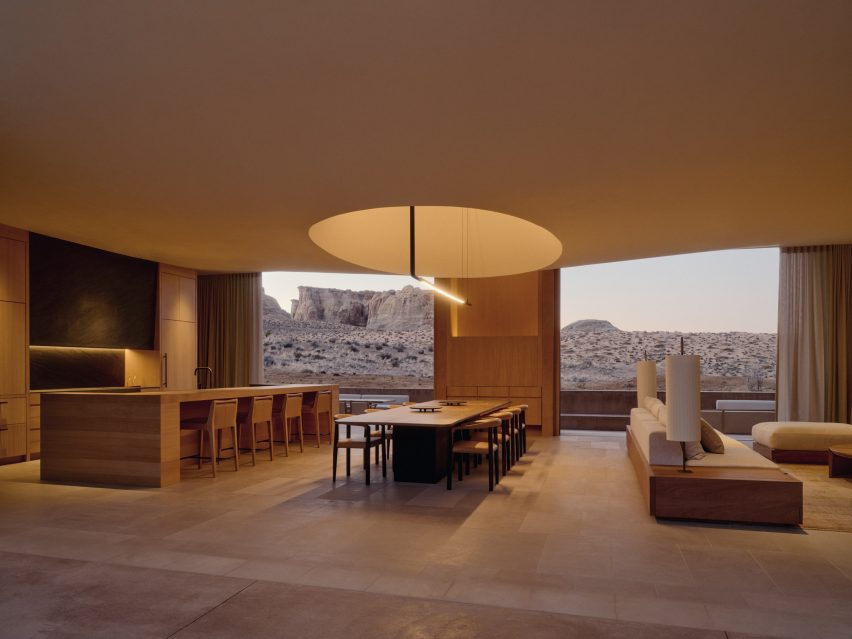 An oculus above the dining table appears as if eroded from the ceiling
A series of smaller pavilions nestled into the site accommodate the remaining four guest suites, as well as a gym, a sauna and steam room, car port, and service areas.
Villa residents and guests also have full access to the main resort amenities, including the fitness centre and spa, and the restaurants at both Amangiri and Camp Sarika – a series of 10 tented suites on the other side of the property.
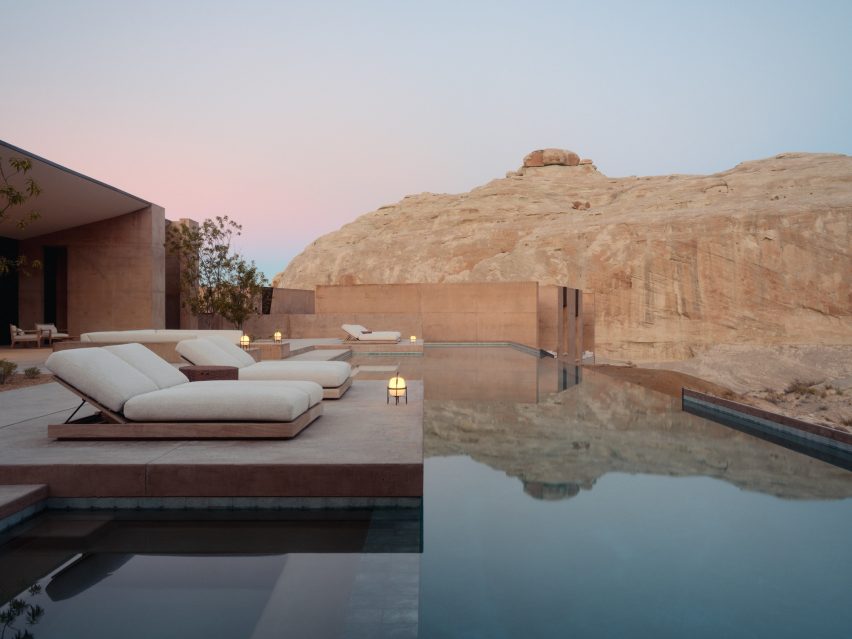 The six-bed villa is set away from the main Amangiri resort
Among Aman’s other hotels and resorts around the world are the brand’s New York City location, inside a 1920s skyscraper converted by Denniston Architects, and the Kyoto outpost designed by Kerry Hill and set within a secret garden.
Masastudio has previously collaborated with Kelly Wearstler on a California residence designed as a “modern ruin”.
The photography is courtesy of Aman.