
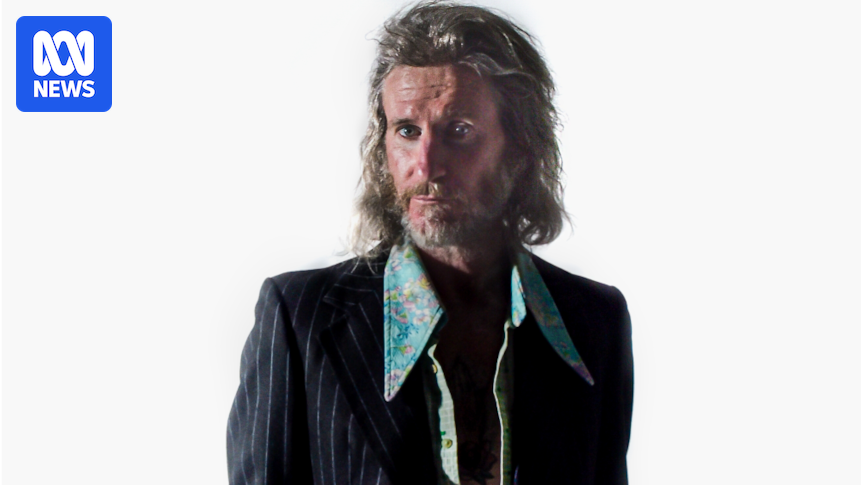
Tim Rogers is frontman of You Am I, one of Australia’s most beloved rock bands.
He’s a solo artist, with a string of acclaimed albums to his name. He’s been a writer, an actor, a host on radio and TV, and as of last year is a member of the ARIA Hall of Fame.
Hear Tim Rogers on the Take 5 podcast
Decades in the public eye have meant he’s done just about every media engagement possible, and now he finally adds a chat with Zan Rowe for Take 5 to that list.
Picking songs that revolve around the theme of “living”, Rogers offered a clutch of reflections from a life in music, and insights that reveal how wide his tastes run, and how deeply he considers the world around him.
The skills to pay the bills
As the squealing guitars of Magic Dirt’s 1994 song Ice fade away, Zan asks for Rogers’s perspective on making a living as a musician in the current day.
The economics of music have shifted dramatically since acts like You Am I and Magic Dirt were thriving. For an artist, making one’s way in the world is far more complex now.
“Everyone’s got this dog barking. You need to pay rent and the electricity bills,” Rogers says.
It’s not just cashflow that’s the issue. There’s a structural inequity that those who work in non-typical industries like music must face.
“Ads [Magic Dirt frontwoman Adalita Srsen] and I were talking about real estate stuff, about just trying to get a loan. The question will come up, ‘What do you do?’ You say, ‘We’re artists’ and you just get laughed out of the building.
“So, we all do performances that we wouldn’t necessarily want to do. Doing the tribute shows, which I’m very glad to do, there’s a little bit of a mercenary element about it.”
Loading Instagram content
The tribute shows Rogers mentions are an increasingly common way for musicians from earlier eras to make a buck in an industry that fawns over fresh faces only to dump them when the next one rolls around.
Rogers himself has toured singing songs of The Rolling Stones with compadres Adalita, Tex Perkins, and Grinspoon’s Phil Jamieson, and The Beatles with Josh Pyke and The Living End’s Chris Cheney.
Playing other people’s songs is not why they got into the business, but Rogers says it’s a great way to keep afloat in lean times. He just has to remember that the paycheque is almost as important as the show.
“If I get asked to sing Rolling Stones songs or whoever the artist is, The Beatles or whatever, I think, ‘Well, I love those songs. This is easy’.
“Tex [Perkins] and I, if we get asked, ‘Hey, will you sing 20 Stones songs?’ I go, ‘Yeah, yeah, yeah.’
“They say, ‘Can we tell you about what you’re going to get for a performance?’ It doesn’t matter. I mean, this is just what we do. We kind of do it every day anyway.
“But you have to factor it in. ‘Oh my God, that means I can maybe spend a couple of weeks writing and not going back to mowing lawns for a while’.”The importance of Hourly, Daily
While the Take 5 is all about other people’s songs, Zan couldn’t resist asking about You Am I’s third album, beloved Australian classic Hourly, Daily, which turns 30 this year.
Tim Rogers’s song choices:Magic Dirt — IceJake Thackray — The BullJoni Mitchell — Just Like This TrainNRBQ — I Want You BadMartha Wainwright & Linda Thompson — Or Nothing At All
Rogers credits drummer Rusty Hopkinson and Hoodoo Gurus guitarist Brad Shepherd for hipping him to the power pop that would ultimately influence the album musically.
He also says he was deeply inspired by his peers who were treading similar territory.
“There was great pop music coming out at the time, you know, bands like Swervedriver and Teenage Fanclub, where they had power, but they also had pop smarts. I just would hear that and go, ‘Oh, I want that.’
“Thankfully, Andy and Russ went, ‘Yeah, we’ll go with that. But can we freak out at the end of every song and finish with a big calamitous things falling over?’ ‘Sure’.”
“It wasn’t really the style of the time to write something like that. But that’s what the band were kind of listening to. Pop music and power pop.”
You Am I and Friends play Hi Fi Way
The album’s depiction of suburbia is as visceral as it is vivid — neighbours coughing up their lungs, cabbies telling you not to use the mirror, chip shops, milk bars and the complex relationships happening beyond manicured suburban lawns.
“It’s a pretty strange record,” Rogers reflects.
“We did 200-and-something shows the year that we wrote that record and I was missing home.
“I guess I just needed something to keep my fragile little noggin together where we were doing these endless tours of the States. So, it was Patrick White books and Gerard Manley Hopkins poetry and definitely Kinks records.”
Rogers’s day‑to‑day reality was miles from the quiet suburban scenes he wrote. The writing perhaps offering a calmer place to slip into amid the whirlwind he was living.
“I refer to it as our Sullivans record,” he says. “It’s all about tea and toast, when really it was kind of party drugs and hard alcohol.
“But where I went to for my own peace of mind was the Sullivans aspect of Australian living. It was just where I went to when I was in a hotel in St Petersburg, Florida, desperately wanting some peace.”
The only thing that matters
The way a person lives — their priorities, their whole sense of the world — can shift when children arrive.
Rogers’s daughter, Ruby Rogers‑Garcia, released her first album last year with her band, Ruby and the Clumsy Dollies.
“She came out to Australia for the Hall of Fame time and doing her own shows. I was the bass player in her band and it was terrifying. I love those songs so much,” Rogers says.
Loading Instagram content
As he plays the final song of his Take 5, Martha Wainwright singing Linda Thompson’s Or Nothing At All, Rogers says he’s only now beginning to understand unconditional parental love. That there’s no right or wrong way to live when one is happy and safe.
“One night we probably had a couple of shandies and Ruby extrapolated upon, you know, ‘What do you want from me?’ And I thought … ‘Absolutely nothing, just your existence.’
“I remember my mother saying to me as a kid, because I was mucking up a lot and really didn’t have a lot of prospects, she said to me one time, ‘I actually just want you to be happy.’
“I think I read too much late-19th-century Russian literature where the expectations are so great on the kids and to become something respectable.
“Ruby just happens to be brilliant, but I just want her to be happy, you know? She could be all these things or nothing at all.”
Tim Rogers plays shows in Canberra, Newcastle, Sydney and Milton through April.
Hear the Take 5 podcast any time on ABC listen.