
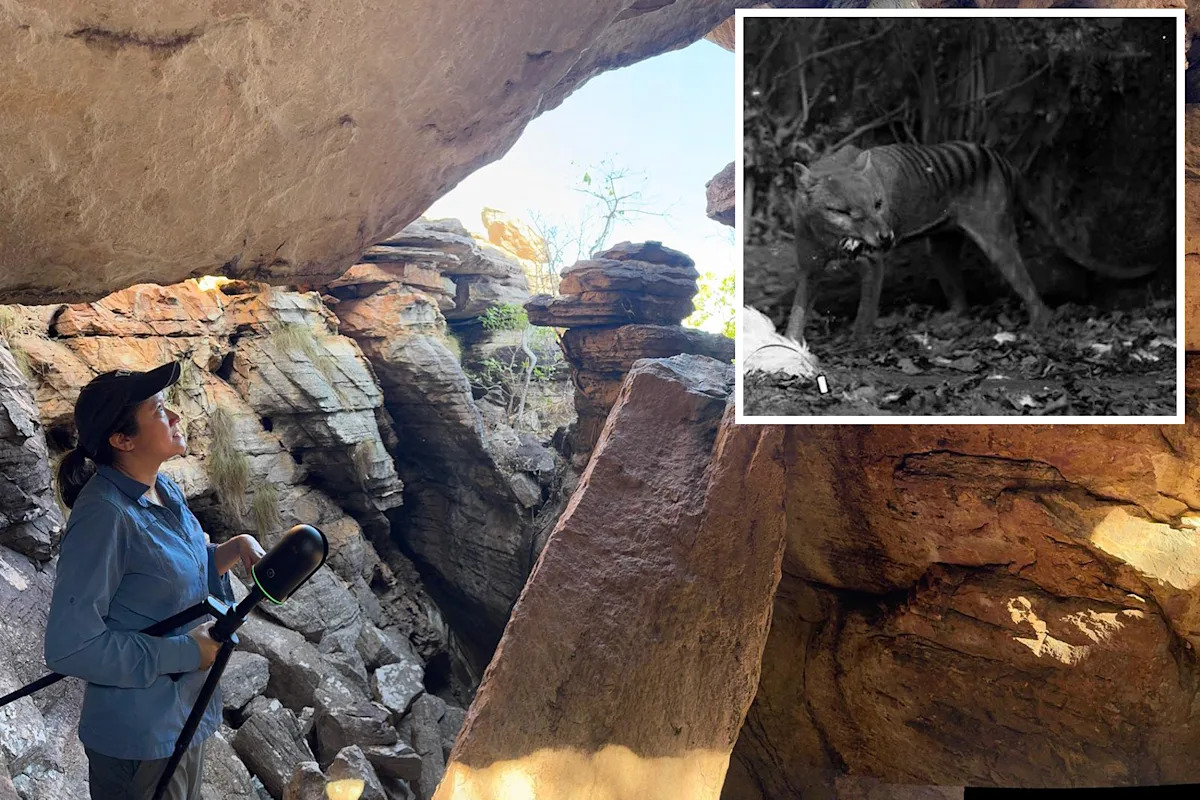
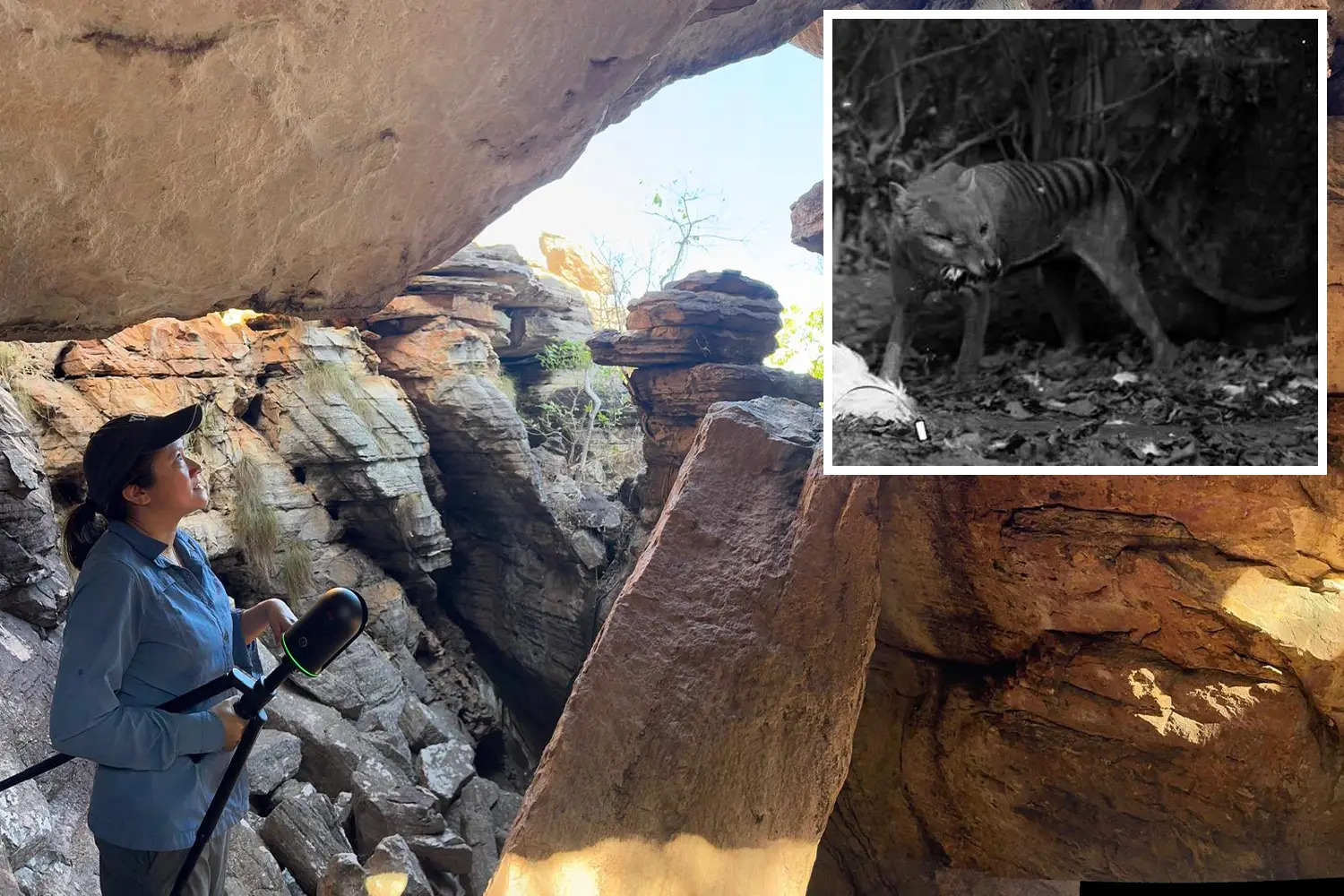
Griffith University’s Dr Andrea Jalandoni inside a cave where the paintings showing Tasmanian tigers have been documented. Source: Griffith University/Harry J Burrell
Newly released images of a Tasmanian tiger (thylacine) have scientists questioning when the species disappeared from Australia’s mainland.
The last-known captive tiger died in 1936 at a zoo in Hobart, and the unearthing of new pictures or paintings always sparks excitement, as experts scour for clues to better understand these long-lost creatures.
Scientists have long believed the dog-sized marsupial predators, along with the Tasmanian devil, were driven to extinction on the mainland 3,000 years ago, following the arrival of a new apex predator, the dingo.
But paintings inside caves at northwest Arnhem Land in the Top End, showing both species, have been dated by Griffith University researchers as just 1,000 years old.
The project’s lead, the university’s chair of rock art research, Professor Paul Taçon, shared two theories about the age of the paintings.
“The artists who made the more recent paintings may have seen actual living thylacines, and some of these creatures may have survived longer in Arnhem Land,” Professor Taçon said.
“Alternatively, artists may have been inspired by earlier paintings.”
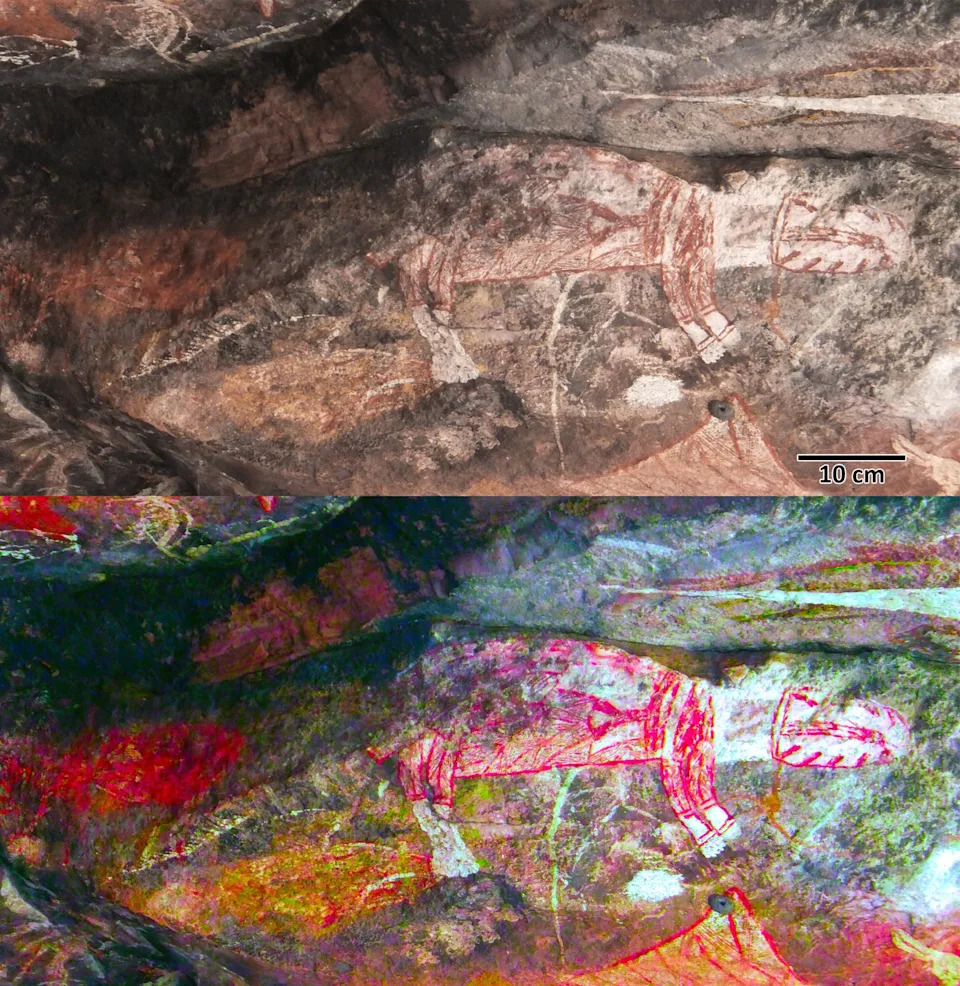
A red and white painting of a Tasmanian tiger at Injalak Hill, and an enhanced version. Source: Paul S.C. Taçon
Australia haunted by extinction of Tasmanian tiger
Australia has one of the worst rates of modern extinction in the world, with species like the Christmas Island shrew and the Toolache wallaby being wiped out.
More than 23 animals have been wiped out since the 1960s, over 100 since European settlement.
One species, the mountain mist frog, is understood internally to be extinct, but the Australian government is yet to make the official declaration.
The fate of some unusual or cryptic species, like the elusive Bathurst grassland earless dragon, is unknown.
But arguably, it’s the loss of the tiger that’s haunted the nation most, with many refusing to accept its extinction.
Recent research suggests the species could have persisted until the 1980s or even 2000s in remote Tasmanian wilderness areas.
Some believe it survives in the state’s southwest. Others swear there are isolated populations on the mainland, but images purported to depict them have been dismissed by experts as nothing but mangy foxes.
Texas-based gene company Colossal Biosciences is refusing to accept extinction is forever, and is attempting to “play God” and bring it back from the dead.
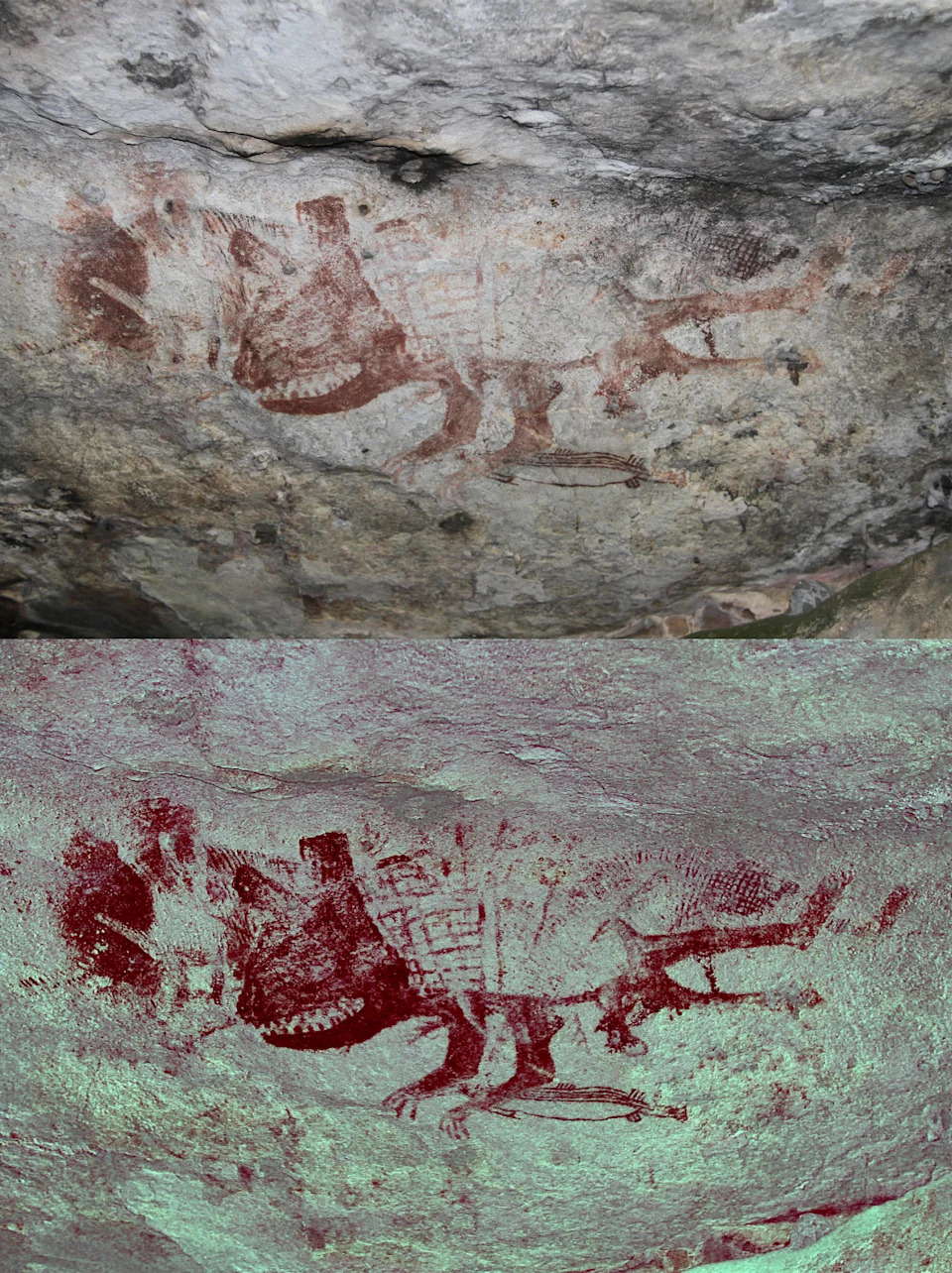
A rare painting of a Tasmanian devil inside a cave, and an enhanced version. Source: Paul S.C. Taçon
Multi-generational connection to Tasmanian tigers
There’s still a wealth of Indigenous information about the species that isn’t widely known.
Griffith University’s project involves working with Traditional Owners to document the species’ cultural and scientific significance.
Co-author Dr Andrea Jalandoni noted that the paintings had been retouched multiple times, indicating they held significance for multiple generations.
“These depictions show that the thylacine held a meaningful place in everyday life and local knowledge long before it went extinct,” she said.
Djalama man and co-author of the study, Joey Nganjmirra, explained the animals were important to his ancestors.
“They used to tell stories about going hunting with thylacines,” he said.
Referred to as the djanggerrk in the Kunwinjku language, the tigers played a cultural role as protectors during stream crossings.
In the mid-1800s, Indigenous groups in Tasmania also told European settlers about the marsupial’s incredible swimming ability.
It’s believed tigers were more culturally important than devils on the mainland, because there had previously only been 150 tiger images documented, versus just 23 of devils.
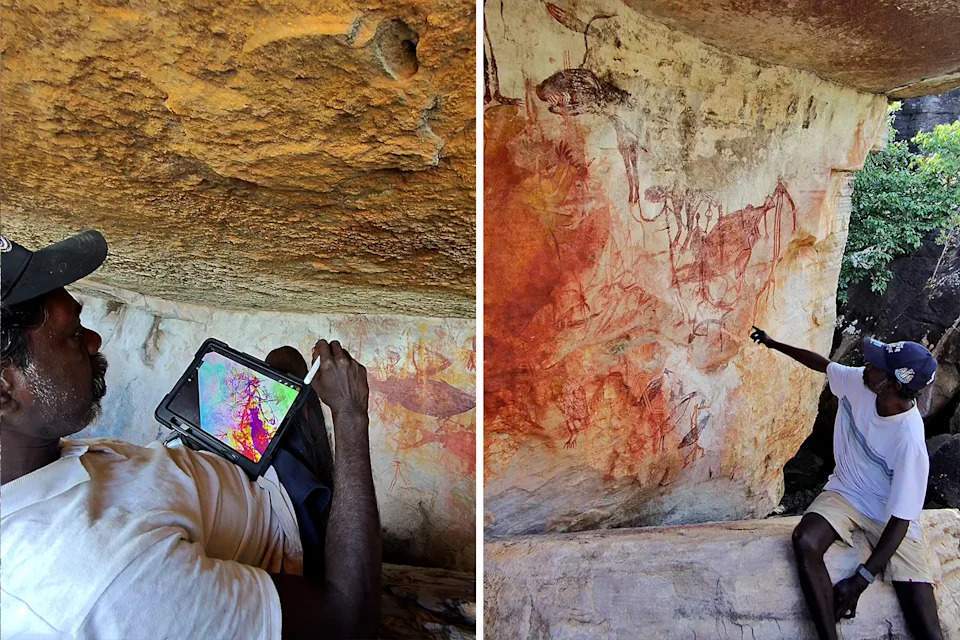
Djalama man and co-author of the study, Joey Nganjmirra, documenting Tasmanian tiger and devil paintings. Source: Griffith University
14 new images documented for the first time
The newly documented images consist of 14 showing tigers and two of devils, and they were painted using clay and ochre.
They are located at Awunbarna, on Australia’s north coast, and Injalak Hill, which is further inland, along East Alligator River.
Some had been known since the 1990s but had never been documented in detail, while others have been painstakingly researched over the last three years.
The research has been published in the journal Archaeology in Oceania.
Do you have a story tip? Email: newsroomau@yahoonews.com.
You can also follow us on Facebook, Instagram, TikTok, Twitter and YouTube.