
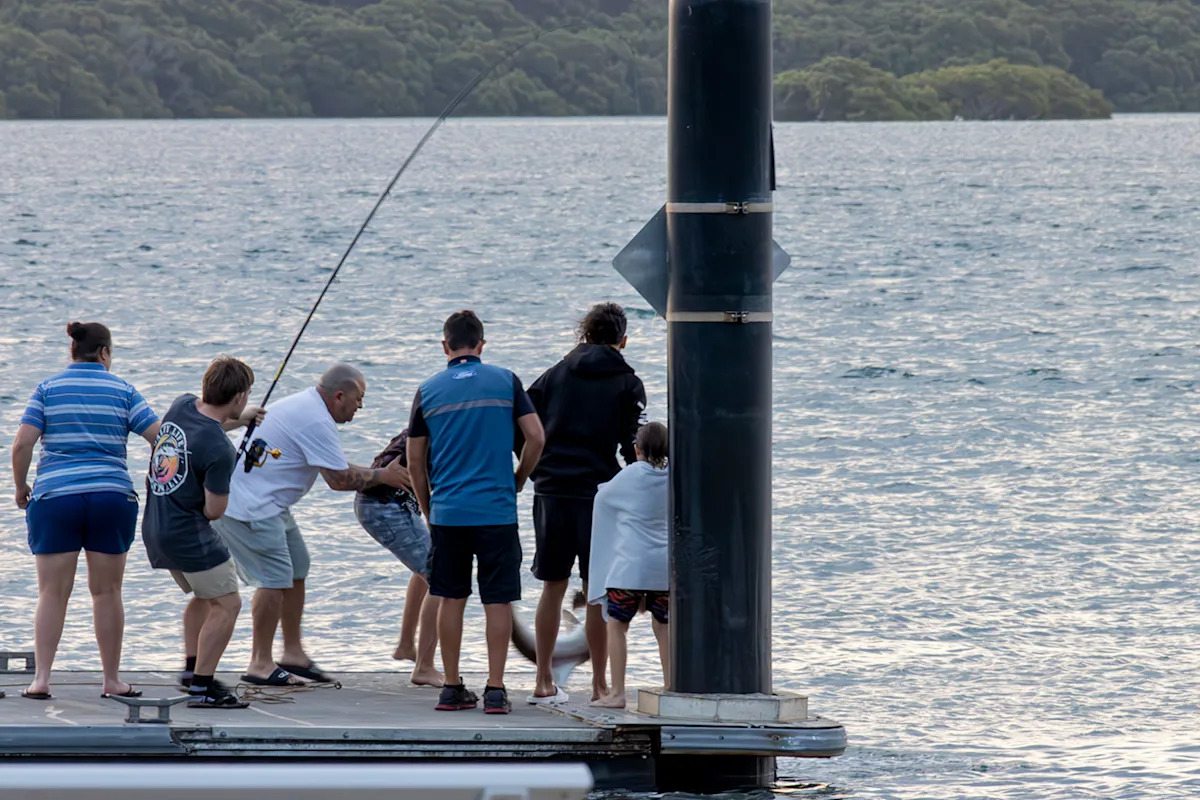
Australian fishermen will soon be banned from targeting five increasingly rare species of sharks, putting an end to some exemptions that have allowed them to be caught despite worrying declines.
The great hammerhead, scalloped hammerhead, along with three species of thresher shark — the Pelagic, bigeye, and common — will receive new global protections under a United Nations treaty.
The species are now categorised as Appendix I, indicating they face localised extinction around a significant portion of their habitat.
The announcement was made by the Convention on the Conservation of Migratory Species of Wild Animals (CMS), which held its week-long COP15 talks in Brazil, examining new evidence about threats and recovery.
Australia is among 132 member countries, and the European Union, which will now need to demonstrate they “strictly protect” the sharks by preventing deliberate killing, capture or disturbance, and controlling other factors that could endanger them.
Lawrence Chlebeck, a marine biologist with the charity Humane World for Animals, said the change will compel Australia to close some exemptions that have allowed for limited commercial and recreational take.
“Now, scalloped hammerheads and great hammerheads will need to be no-take species throughout Commonwealth waters,” he told Yahoo News.
He suspected the CMS would investigate and further restrict the taking of mako sharks over the coming two COPs.
Protecting sharks a ‘good look’ for Australia
Off-shore net and line fishing of scalloped and great hammerheads has been concentrated in Northern Territory waters, as the species is largely protected in NSW and Queensland, and the take is negligible in Western Australia.
The CMS listing will not impact state and territory fishing regulations, only Commonwealth waters.
Hammerhead shark numbers have plummeted by 80 per cent in Australia’s waters, and they remain particularly vulnerable to commercial bycatch as their unique head shape is prone to becoming caught in nets.
When they are accidentally caught, then released by recreational fishermen, they often appear to swim off uninjured, but frequently die during the hours that follow.
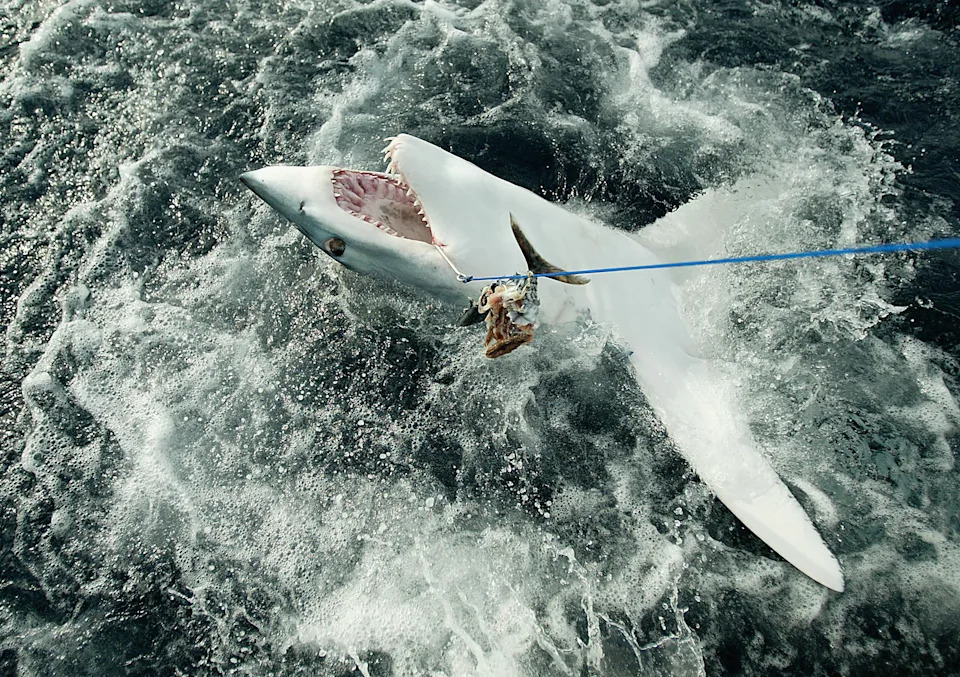
Chlebeck predicts protection of mako sharks (pictured) could be on the agenda at future COPs. Source: Getty
(Getty Images)
Chlebeck said even though the Appendix I listing was “forced upon Australia”, complying with it will still be a “good look”.
“It brings us more into the global fold that we have been before,” he said.
Appendix I compels signatories to take actions to protect species in their own waters.
But all five species have also maintained their Appendix II — which outlines a need for international cooperation on conservation and management.
Shark expert welcomes tighter shark-catching restrictions
Australian Marine Conservation Society shark expert Dr Leonardo Guida welcomed the announcement by the CMS.
While he said fishing in Australian waters is “relatively well-managed”, he said it is still beset with issues like catching hammerheads for trade.
“Any strengthening in protections at a global level for sharks and rays is welcomed, given that we see globally upwards of 37 per cent of them are threatened with extinction,” he told Yahoo News.
40 species given new global protections
The announcements at COP15 were not restricted to sharks, with many mammals and birds also protected.
The talks are aimed at preventing the decline and extinction of species that migrate across borders, ensuring global cooperation.
While most nations are members, several high-profile countries like the United States, Russia, Canada, Indonesia, and China are not.
Among the 40 new species given added protection was the cheetah, which has fragmented populations across northwestern, eastern and southern Africa and central Iran.
Flesh-footed shearwaters, gadfly petrels, flesh-footed shearwaters, snowy owls, giant otters, and triped hyenas were also uplisted.
Do you have a story tip? Email: newsroomau@yahoonews.com.
You can also follow us on Facebook, Instagram, TikTok, Twitter and YouTube.