
Industry leaders believe that AI technology can revolutionise the media and advertising ecosystem, but urge caution against talent becoming too reliant on machines, particularly younger talent.
They encourage companies to embrace AI technology, particularly in removing operational friction, contextual targeting and delivering performance at scale, but warn that human oversight is essential.
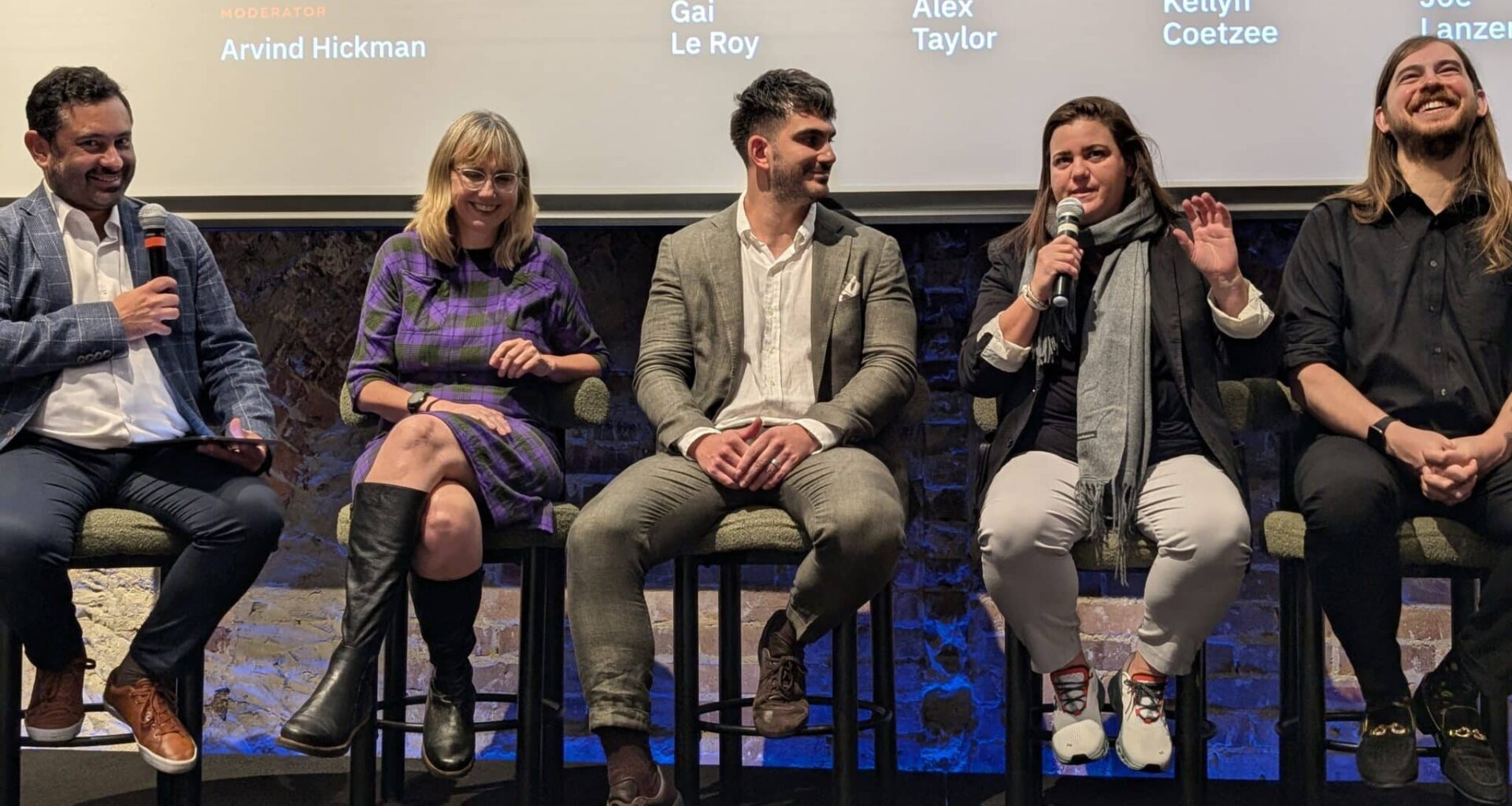
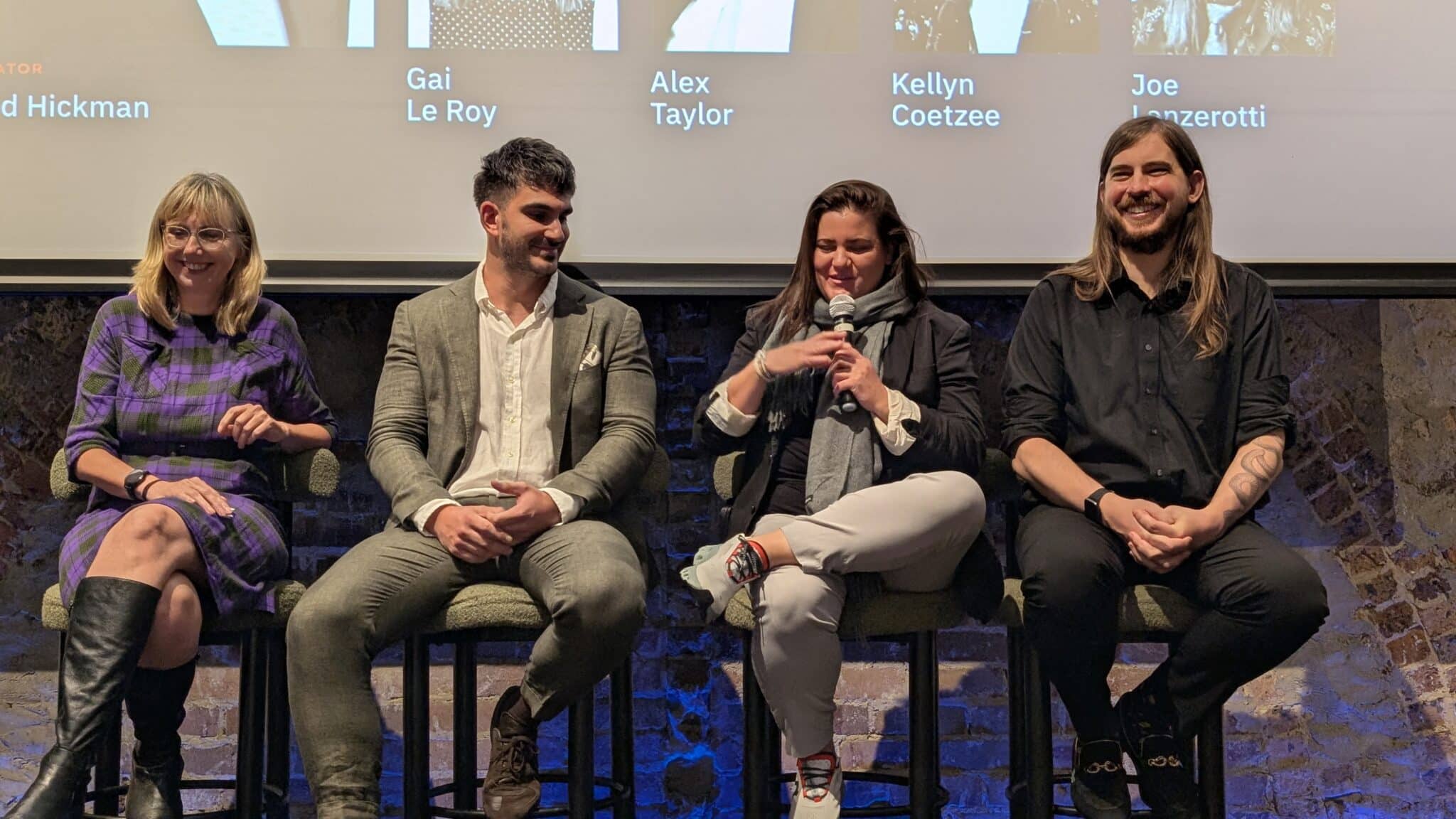
These were some of the key messages of a thought-provoking panel discussion at the latest Kargo Insights and Bites event, which featured Kargo Global senior director of media strategy Joe Lanzerotti, IAB Australia CEO Gai Le Roy, Zenith head of digital Kellyn Coetzee and HCF media lead Alex Taylor.
The panellists broadly agreed on where AI is useful, even if somewhat overhyped, and where it may have a damaging impact on the industry—an issue that agencies, marketers and media owners are struggling to grapple with.
“If there’s one thing that keeps me up at night it’s training at that entry level piece,” said Le Roy, who represents the online advertising sector.
“As we all age, in five years’ time, we don’t have the pipeline in place (to train junior staff the foundations of advertising, planning and buying). That is not good for the global industry.”
Le Roy was addressing a question about how young talent will be trained if AI technology automates processes to such a degree that organisations rely on it to complete tasks throughout the advertising ecosystem.
There is also the added layer that jobs at the entry level will largely be taken by machines, and companies are increasingly downsizing internships and other pathways for young talent to enter the industry.
It is a concern shared by Zenith’s Coetzee, who questions how the industry will train and coach coming through in the future.
“When they’re using AI, how do they know what good looks like?” she said. “They might generate an Insights report and think, ‘okay, that makes sense to the client’, but a client might push back and say that it isn’t exactly what they are looking for.
“How do we get our managers and directors to train new people coming in with AI and not have them just be like, ‘don’t use it’…I don’t know if as an industry we people are well trained to train new people with AI.”
Kargo’s Joe Lanzerotti is also cognisant of the challenge to train the next generation, but observes that AI could change their roles.
“We have found that AI is bringing the younger generation and new people entering the industry up the value chain further,” he said.
Striking the balance between human ingenuity and machine intelligence was a common theme of the discussion.
Taylor, who works in the heavily regulated insurance industry, takes a cautious approach to using AI.
“Leaders don’t need to worry about AI replacing people, they need to worry about AI replacing people’s thoughts,” he said. “We don’t want employees using AI as a crutch and becoming heavily dependent on it, and therefore their skills are decaying over time. Everybody essentially loses from that.”
He encourages business leaders to embrace AI technology where it makes sense, but use it in a responsible way.
This was a point echoed by Lanzerotti, who said that it is important to train new talent to understand the appropriate time to use AI versus when they genuinely want a human perspective.
“AI is a tool, like a flashlight or a calculator,” he said. “You would not give a calculator free reign over your media budget just because it could be math better than you.
“At the end of the day we are in a relationships industry and AI cannot have relationships.”
Where AI is valuable
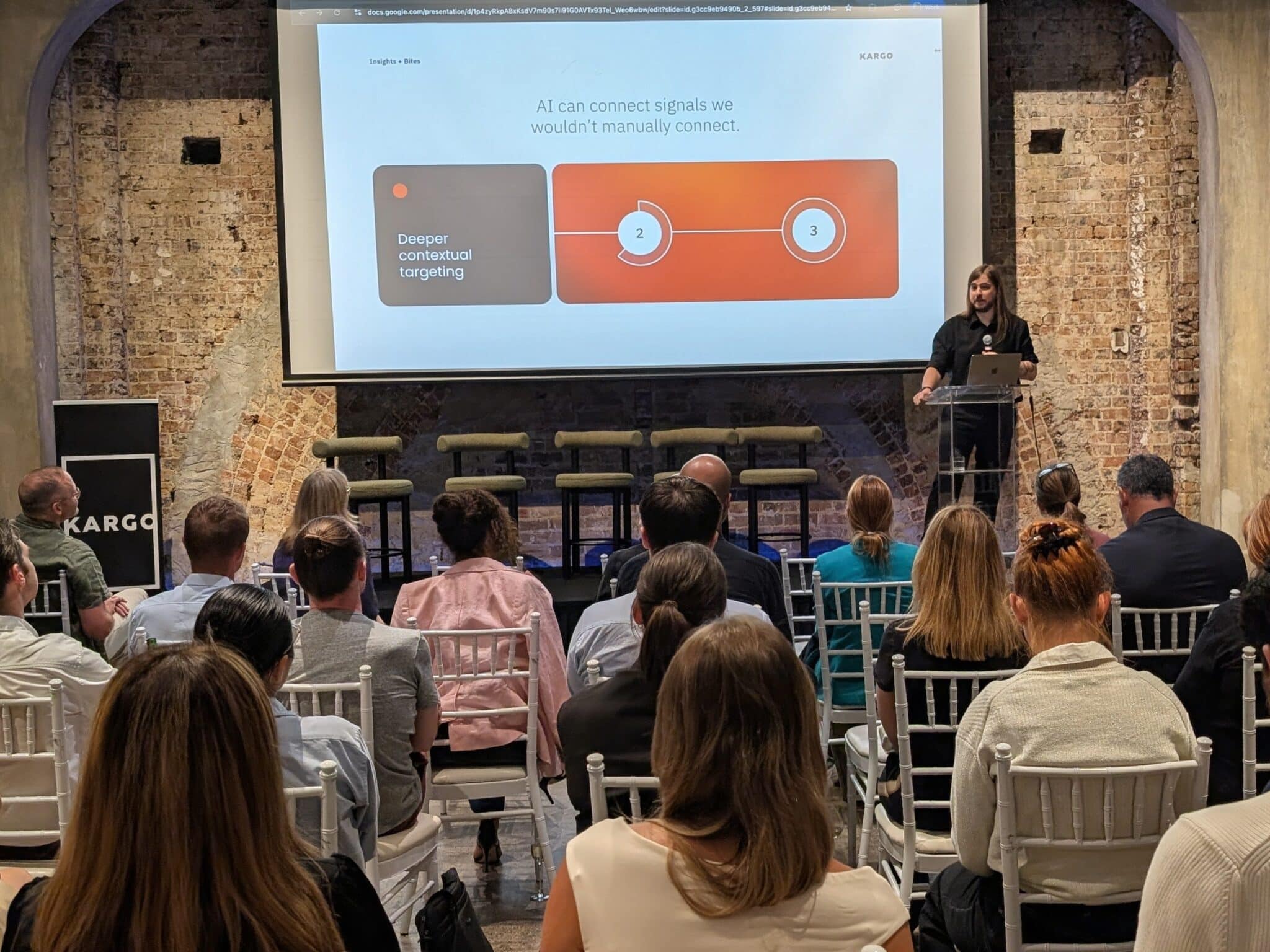
There was broad consensus about where AI tools can enhance the workflow. These include removing operational friction, contextual intelligence and creative optimisation.
“It’s in the operations side of things that we are seeing the most success in cleaning up processes and working more efficiently,” Le Roy observed.
Lanzerotti said that AI technology allows smaller clients without internal creative teams to do more with less, particularly in building creative and accessing inventory.
HCF’s Taylor added: “Programmatic has been really good at finding the ‘who’, but what contextual intelligence is good at working out the ‘why’ and the ‘where’.
“From a marketer’s perspective, having more sophisticated contextual intelligence is creating better attention, higher quality reach and greater efficiency.”
Where AI tech is being overhyped is companies engaging in unnecessary large scale automatic rollouts, that it is disrupting the whole industry all at once (it’s only disrupting low value repetitive tasks), and that it should automate everything.
Le Roy believes AI tech is overhyped in creative (most of it is slop) and measurement (blind faith it will self-optimise systems and measurement accurately is misplaced).
All panellists agree that AI is not designed to replace humans but will evolve the role that they play.
“How do we balance machine versus human thinking? It’s more about, how do we protect what was inherently human in the first place,” said Taylor.
“You can take millions of data points, use AI to compress it into a handful of insights, but it’s up to humans to really make sense of those insights. It’s up to marketers to understand what the business purpose is, to understand what the customer problems are, and use those insights to address those to get a competitive advantage.”
From a media agency perspective, AI is “isolated to the data that is put in”, but humans understand the context, argues Coetzee.
“Does that AI understand that there’s a TV campaign in market? Doesn’t it understand our competitor just did a massive activation and so on. AI is only as good as the data and still needs humans to give it that context and understand why this matters to clients and what they can get out of it.”
A question of sustainability
One part of the AI tech revolution that often gets overlooked is how damaging it is to climate change and the industry’s push to decarbonise.
Coetzee admits it is a massive problem, and the industry is grappling with how to measure the carbon footprint of different AI tools, such as OpenAI and Anthropic’s Claude.
“We need a reliable way to measure the cost of the service we are using, whether that’s energy or water consumption,” she said.
“When I do AI training, sustainability is a part of it. For example, do you need to use AI to make everyone a Simpsons character in a client presentation. Is the application of that AI necessary, considering the cost of every token.”
Taylor admits that there is a balancing act between balancing care for the environment and driving results in the organisation. He said that Scope 3 can help marketers identify publishers that produce more carbon and adjust their media plans accordingly.
Kargo’s Lanzerotti, who lives in Chicago, admits that Trump’s disdain for climate change (he refers to it as a hoax) has meant sustainability issues are currently lower down the agenda of corporate America.
“At Kargo, we’re approaching AI innovation with a strong focus on sustainability and accountability,” he said. “We’ve achieved CarbonNeutral certification in partnership with Climate Impact Partners by offsetting our 2023 greenhouse gas emissions, and we’re actively measuring our 2026 emissions to maintain this status.
“We’re also working closely with The Alpine Project to measure and better understand our Scope 1, 2, and 3 emissions, ensuring that as we scale AI-driven solutions responsibly. Alongside this, our partnerships with Ad Net Zero and The Climate Registry reflect our commitment to driving more sustainable practices across digital advertising and media.”
Join more than 30,000 advertising industry experts
Get all the latest advertising and media news direct to your inbox from B&T.
Subscribe