
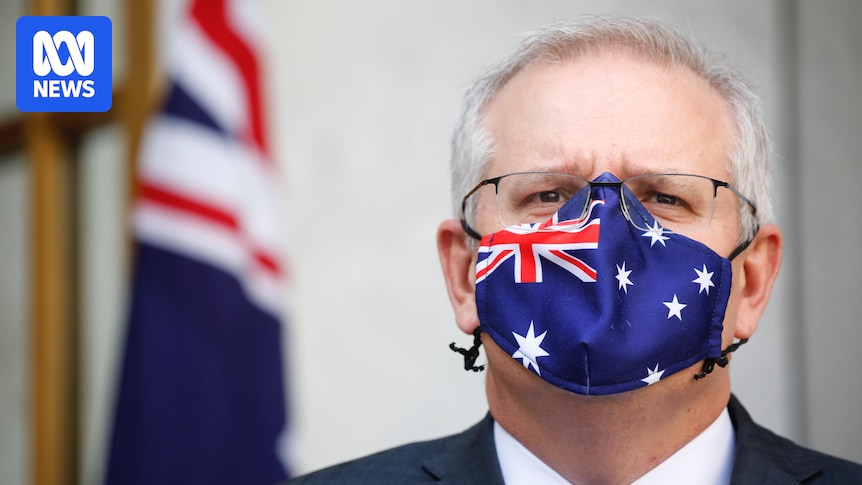
Addressing Australians is a rare occurrence for our nation’s prime ministers — and they usually come as the nation is facing a major challenge.
Wars, pandemics, and historic First Nations moments have been announced using the address to Australians.
PM to urge Australians to ‘play their part’ in Iran response
Tonight, Anthony Albanese will employ it again.
The address will interrupt live broadcasts on all channels at 7pm AEDT as the local impact of the Iran war continues to intensify.
He is expected to urge Australians to save fuel for areas and industries that “most need it”, though speculation is that he is unlikely to announce fuel rationing at this stage.
But first, let’s look to the history books to see how rare an address like this really is.
1941: ‘Men and women of Australia, we are at war with Japan’
Prime Minister John Curtin takes credit for what is commonly regarded as the first national address of its kind in 1941.
Experts say, in reality, this was likely Robert Menzies.
The Liberal prime minister who preceded Curtin also used this form of address in speeches, most notably in his 1939 announcement of Australia’s entering a war with Germany.
However, Mr Curtin’s speech announcing Australia is now at war with Japan marks a significant moment in history — the encroaching threat of conflict on Australian shores.
Darwin was bombed for the first time several months later, on February 19, 1942. It is now thought that the Japanese were not intending to invade Australia, but rather to seize raw materials and secure a perimeter.
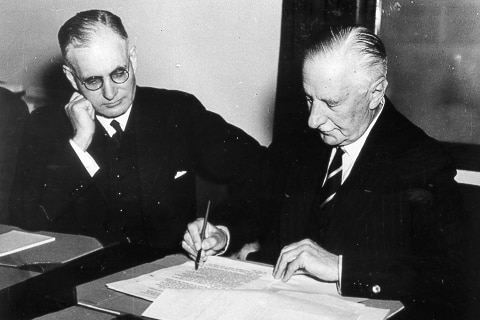
Governor General Lord Gowrie signs the declaration of war against Japan with Prime Minister John Curtin looking on. (Wikimedia Commons: Creative Commons licence)
But Mr Curtin’s speech urges Australians to serve the nation in its “darkest hour”.
“Men and women of Australia: The call is to you, for your courage; your physical and mental ability; your inflexible determination that we, as a nation of free people, shall survive,” he says.
Australian troops would continue to fight until World War II ended in August 1945.
1975: ‘They are not welcome facts’
Following the 1975 dismissal of Gough Whitlam, Malcolm Fraser was tasked with stabilising the country in the wake of a serious rupture.
While the dismissal itself was not an address to the nation, Mr Fraser, a week later, told Australians of some “not- welcome facts”.
Among those was the fact that the economy was “about $4,000 million in the red”.
PM Gough Whitlam was sacked 50 years ago today. How the constitutional crisis unfolded
“Unemployment is now estimated to rise to over 400,000 early in the new year,” Mr Fraser gravely announced.
“Tens of thousands of school leavers will start life on the dole.”
He ended his speech by warning that it would not be a “quick and easy task to overcome the difficulties created by past policies.”
“Australia has had three dark years,” Mr Fraser added.
“We are like a family that has greatly overspent its income.”
Mr Fraser would serve until 1983, when he lost the election to Bob Hawke.
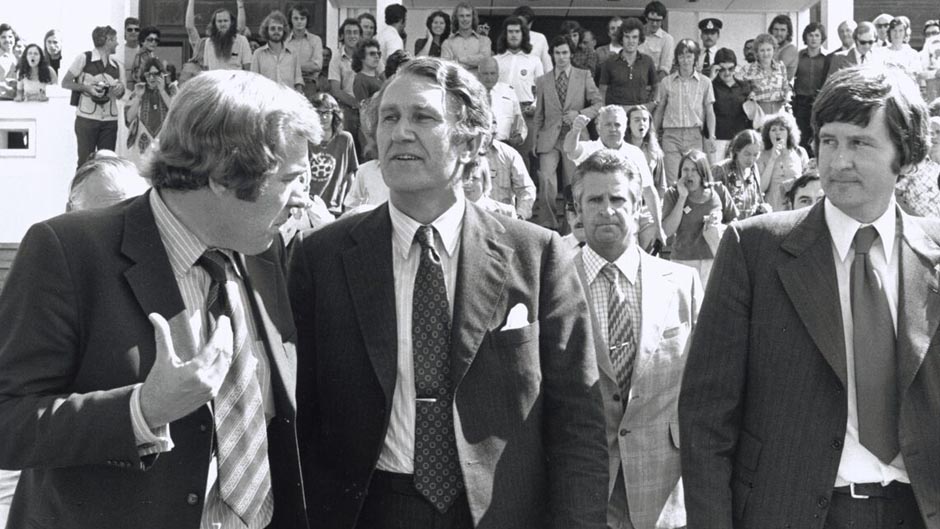
Malcolm Fraser was appointed caretaker prime minister following Gough Whitlam’s dismissal. (Supplied: National Library of Australia)
1993: ‘The truth was native title’
In 1993, Paul Keating made a national address to end the “lie of terra nullius” and assert the “truth” of native title.
Following the High Court’s Mabo decision, Mr Keating told Australians he would introduce the ruling into the Australian Parliament.
He describes it as “unquestionably just” and an opportunity to right a wrong.
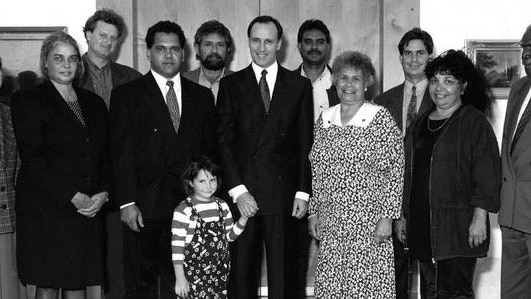
Paul Keating (centre) at the time of the Mabo decision. (ABC TV: Four Corners)
“We owe it to Aboriginal Australians, to all Australians – indeed, we owe it to our fair and democratic traditions and to future generations – to recognise native title,” he tells Australians.
“Tonight, we are within reach of an enlightened, practical response to Mabo.
“I’ll be proposing legislation to parliament this week, which meets both the spirit of the High Court’s decision and Australia’s responsibilities and needs.”
The Native Title Act was later passed, providing recognition and protection of native title, and establishing a way to determine native title claims.
2003: Sending ‘Australian forces to action to disarm Iraq’
In 2003, John Howard announced Australia would be joining the war in Iraq.
Howard defends decision to invade Iraq
Mr Howard said Australia would join other nations “to deprive Iraq of its weapons of mass destruction”.
In his speech, he also leaned on a blooming US alliance — a friendship he guessed would “grow more rather than less important as the years go by”.
“Australia has been a terrorist target at least since the 11th of September 2001,” Mr Howard told the public.
“Australia is a Western country with Western values. Nothing will or should change that. That is why we are a target.”
The ADF maintained a small presence in Iraq until December 2013.
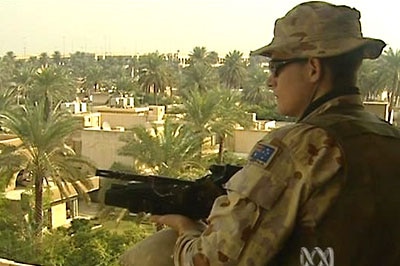
An Australian soldier stands guard in Iraq, file photo. (ABC News)
2008: ‘We say sorry’
Not quite a formal national address, Kevin Rudd’s parliamentary national apology was nonetheless broadcast live and watched by millions.
The journey to Mr Rudd’s formal apology began with the Bringing Them Home report — the findings of an inquiry instigated by the Human Rights and Equal Opportunity Commission in 1995.
But it would be almost 13 years before Mr Rudd delivered his landmark speech.
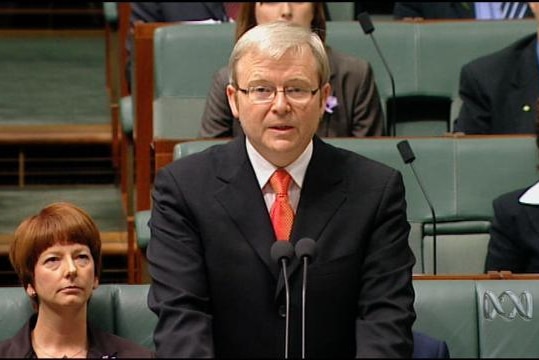
Kevin Rudd apologises to the Stolen Generations and its descendants. (ABC News)
In his address, Mr Rudd noted that “the time has now come for the nation to turn a new page”.
“For the pain, suffering and hurt of these Stolen Generations, their descendants and for their families left behind, we say sorry,” he said.
“To the mothers and the fathers, the brothers and the sisters, for the breaking up of families and communities, we say sorry.
“And for the indignity and degradation thus inflicted on a proud people and a proud culture, we say sorry.”Loading…
Months later, Mr Rudd would make a more unremarkable national address regarding the global financial crisis.
He used the opportunity to announce a $10.4 billion strategy, as he spoke of the “economic equivalent of a national security crisis”.
2020: ‘I want to talk to you about the global coronavirus’
That’s how Scott Morrison, in March 2020, brought us what would be the first of his public updates during the pandemic.
Only his initial address constituted a national address, though his broadcast updates became staples in COVID’s early days.
At the time, COVID had made its way to 114 countries — including Australia.
“While this is a global health crisis, there are very real and significant economic impacts,” he told us.
“For all of these reasons, we have been taking the coronavirus very seriously.”
Loading…
His address also outlined the government’s early action plan, which included protecting Australians, their jobs, and bouncing back stronger.
Some estimates say there were about 900 COVID-19 deaths in Australia that same year.