
29m agoWed 1 Apr 2026 at 8:41amHere’s the latest9m agoWed 1 Apr 2026 at 9:01amAnalysis: The PM is asking, not telling, Australians to make changes in coming weeks
 9m agoWed 1 Apr 2026 at 9:01amAnalysis: The PM is asking, not telling, Australians to make changes in coming weeks
Albanese used his address to lean into a different strategy to the one used during COVID. The key emphasis here was choice. The prime minister is asking, not telling, Australians to change the way they behave in the coming weeks.
Albanese is actively trying to demonstrate he is a strong leader following criticism over his handling of the Bondi terror attack.
But the risk for the PM is that if he uses what is widely seen to be a break-glass measure, such as a live national broadcast to repeat his call for people to stay calm and not panic-buy fuel, he risks being responsible for creating exactly that: panic.
Read more analysis on the PM’s national address below:
18m agoWed 1 Apr 2026 at 8:52am
A rare and relatively brief history of national addresses

Addressing Australians is a rare occurrence for our nation’s prime ministers — and they usually come as the nation is facing a major challenge.
Wars, pandemics, and historic First Nations moments have been announced using the address to Australians.
Most recently, Scott Morrison used a national address in 2020 to bring Australians news of the COVID pandemic. Before that, Kevin Rudd’s parliamentary national apology was broadcast live and watched by millions, as was his statement regarding the global financial crisis.
Tonight, Anthony Albanese employed it again, in an address that urged Australians to switch to public transport over the coming months, while assuring Australians they should otherwise carry on as normal.
34m agoWed 1 Apr 2026 at 8:37am
Analysis: The government will not be heavy-handed

The prime minister’s address also sends a signal “this was not going to be COVID 2.0”, the ABC’s Patricia Karvelas says.
“That to me was the subtext to tonight’s address,” she said.
“That his government would not be heavy-handed with you.
“He’s appealing to the better side of Australians to rethink their movements, the way we all behave in the community, and he specifically says in this address that it’s about preserving our fuel reserves.
“His message was not one of alarming people.”
42m agoWed 1 Apr 2026 at 8:28am
Analysis: PM’s message made clear governments can’t insulate us from everything
The ABC’s Patricia Karvelas says the prime minister also made it clear “governments cannot insulate us from everything”.
“What was really significant in tonight’s address from the prime minister is what I really think is a softening up for the future,” she said.
“He says go and enjoy your Easter but equally start thinking about adjustments you can make.
“One of them being very immediate of course — don’t take more petrol than you need.
“What he’s telling us tonight is what he expects in coming weeks in terms of our behaviour … to try to preserve our fuel reserves.”
The prime minister also told Australians to take public transport over the coming weeks, if it’s an option for them.
50m agoWed 1 Apr 2026 at 8:20amWhat can we take away from the PM’s statement?
The ABC’s Patricia Karvelas has provided some analysis on the prime minister’s national address just now.
“I think what it does demonstrate is the depth and the extent of this Middle East crisis and the tsunami of consequences it’s causing our nation,” she said, speaking of how rarely prime ministers give a national address.
“What I thought was key in that address were a few things.
“One of his messages was essentially that his government has your back and that he anticipates over the next few months that things will be bleak.
“That there will be severe economic consequences and that the government will do everything in its power to try and assist Australians.
“That is an unambiguous message from the prime minister.”
54m agoWed 1 Apr 2026 at 8:16am
Here’s the PM’s full national address
In case you missed it, here is the full video of Anthony Albanese’s statement this evening.
Loading…
As mentioned earlier, it is only the sixth time a prime minister has delivered a national address.
1h agoWed 1 Apr 2026 at 8:10am
Recapping what the PM just said
Political reporter Maani Truu has recapped the prime minister’s address to the nation.
Read the full story here:
1h agoWed 1 Apr 2026 at 8:03am’The months ahead may not be easy’: PM
In his closing comments, Albanese warns there will be tough months ahead.
“The months ahead may not be easy,” he says.
“I want to be upfront about that.
“No government can promise to eliminate the pressures that this war is causing.
“I can promise we will do everything we can to protect Australia from the worst of it.”
The PM says these are “uncertain times”.
“But I am absolutely certain of this: we will deal with these global challenges, the Australian way,” he says.
“Working together — and looking after each other. As we always have.
“Thank you and good evening.”
1h agoWed 1 Apr 2026 at 8:02am
PM urges Australians to ‘do their bit’
The PM is now talking about how Australians can help the situation and urges people to not panic buy fuel.
He says those hitting the roads this weekend should fill up like normal and “think of others”.
“If you’re hitting the road, don’t take more fuel than you need — just fill up like you normally would. Think of others in your community, in the bush and in critical industries,” he says.
He also urges motorists around the country to use public transport instead if possible.
“Now, it’s the Australian way that people want to do their bit — and there are simple ways that you can,” he says.
“You should go about your business and your life, as normal. Enjoy your Easter.”
1h agoWed 1 Apr 2026 at 8:02amThe government will shield Australians in ‘uncertain times’, PM says
Albanese says he wants to speak directly to the country about what the government is doing “to shield Australia in these uncertain times”, and also what they can do to help the nation.
“Leaders from both sides of politics, from right around the country, are working
together to keep Australia moving,” he says.
“So that if the global situation gets worse and our fuel supplies are seriously
disrupted over the long term, we can co-ordinate the next steps together.”
Albanese says the fuel excise has been cut in half and the Heavy Road User Charge has been reduced to zero for the next three months.
“We are working to bring the price of fuel down,” he says.
“To make more fuel here and to keep it onshore.
“And get more fuel here — using our strong trading relationships with our region to bring more petrol, diesel and fertiliser to Australia.”
1h agoWed 1 Apr 2026 at 8:00am
I know families are doing it tough: PM
Albanese says that Australia is not an “active participant” in the Iran war but that our nation is paying higher prices because of it.
He says he knows we are seeing price hikes reflected at service stations and supermarkets.
“I know that you’re seeing this at the servo and at the supermarket,” he says.
“And I understand farmers and truckies, small businesses and families are doing it tough.
“And the reality is, the economic shocks caused by this war will be with us for months.”
 (Supplied)1h agoWed 1 Apr 2026 at 8:00amThe prime minister is speaking now
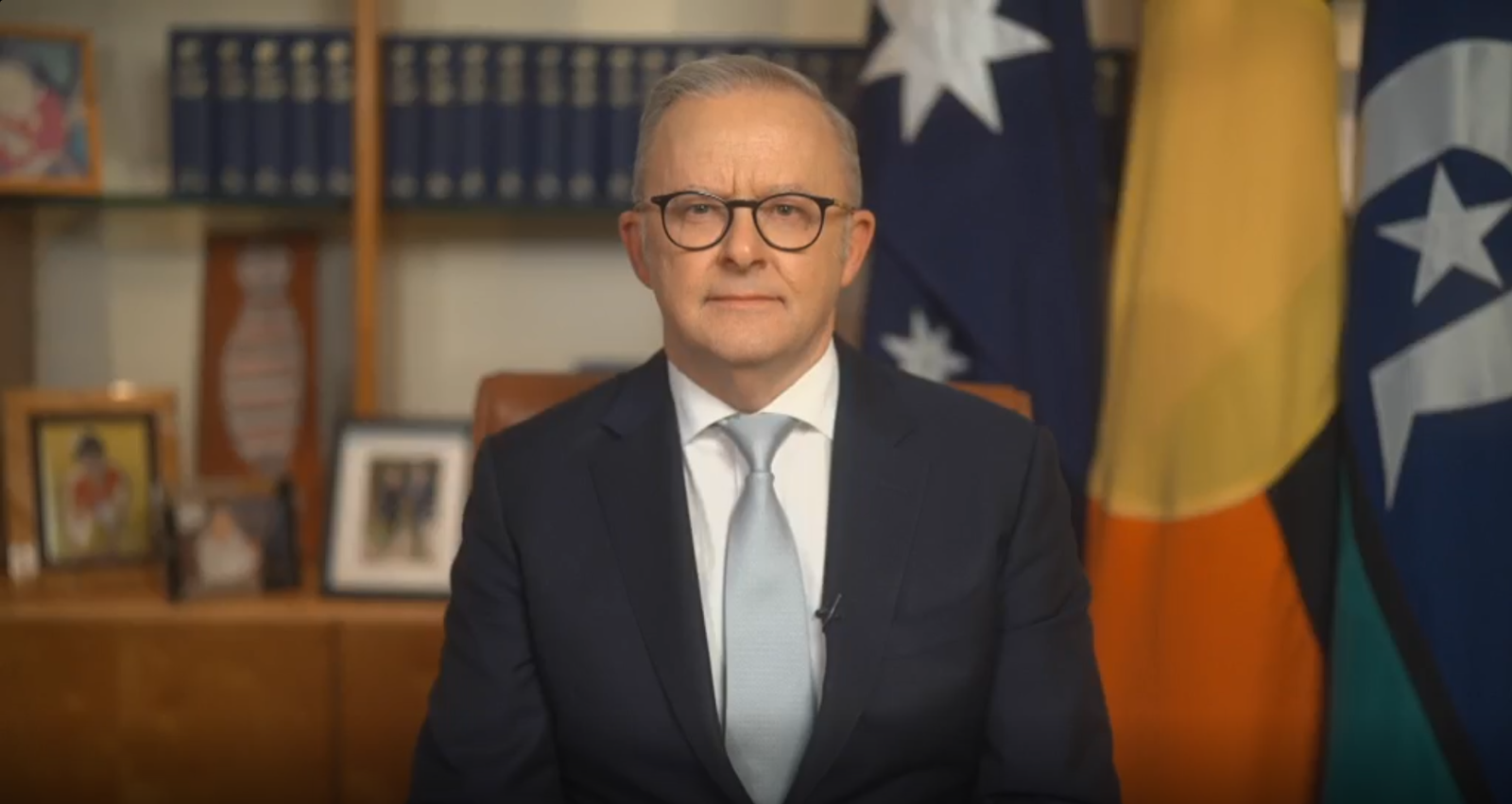
Anthony Albanese is now addressing the nation with a pre-recorded statement.
This is only the sixth time a national address has been given in Australian history.
1h agoWed 1 Apr 2026 at 7:53am
Thank you for joining the Q&A with Matthew Doran

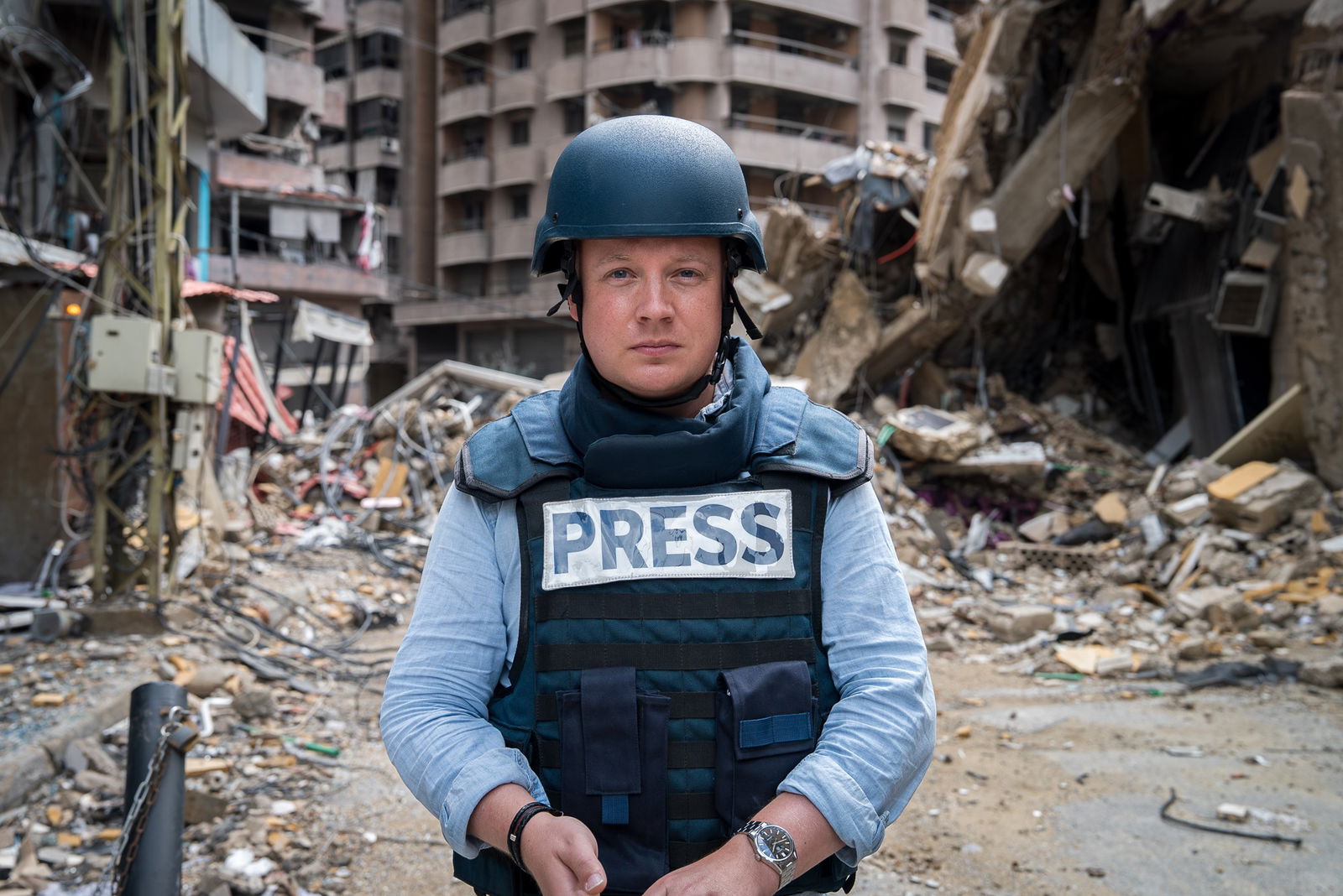
Thank you for putting in your questions for the ABC’s Middle East correspondent Matthew Doran.
We received dozens of insightful and interesting queries and some lovely comments, but we could only get through so many in this hour.
We hope you’ll join us again in the future to ask more and keep up with our coverage.
The Q&A session is wrapped up now, as we make way for a national address from Prime Minister Anthony Albanese, but have a read over what others have asked below.
 Q&A with the ABC’s Middle East correspondent Matthew Doran. (ABC News: Hamish Harty)1h agoWed 1 Apr 2026 at 7:50amPrime minister to deliver national address in 10 minutes

Anthony Albanese is delivering a national address about Australia’s response to the war in the Middle East.
He is expected to outline the federal government’s response to the Middle East conflict and encourage Australians to play their part by saving fuel.
1h agoWed 1 Apr 2026 at 7:49am
Q&A: What was the goal of the war?

What do you think the actual initial goal of the war is/was? What evidence of the Iranian nuclear program was there? — Alex
Hi Alex,
Tulsi Gabbard, the Director of National Intelligence in the Trump administration, gave an insight into this very issue a few weeks ago.
Appearing before congress, she said the US and Israel had very different goals — the US was looking at destroying Iran’s missile capabilities, while Israel was focused on targeting the Iranian leadership.
The issue around Iran’s nuclear capabilities has been debated for years. In fact, Benjamin Netanyahu has been warning of Iran’s development of its nuclear program for more than three decades, well before he was prime minister.
Iran does have enriched uranium. But some experts, including former head of the Iran branch of Israel’s military intelligence Danny Citrinowicz, have questioned whether it had the technology to turn that into a weapon just yet.
Clearly there has been a desire to reshape the Middle East — to try to change the face of Iran, and its influence on the affairs of the region.
But the US and Israel have clearly learnt that aerial bombardment isn’t enough to enact regime change. And the opposition on the ground in Iran doesn’t have the firepower to suddenly take control of the country.
1h agoWed 1 Apr 2026 at 7:49am
Qatar says Iran missile struck tanker in its waters
Qatar says a tanker leased to its state-owned energy company was struck by an Iranian missile in the Gulf country’s territorial waters on Wednesday.
“Qatar was targeted … by three cruise missiles launched from Iran,” the Gulf state’s defence ministry said in a statement.
Qatar’s military “intercepted two of the cruise missiles, while the third missile struck an oil tanker leased to QatarEnergy in Qatar’s territorial waters,” it said.
“Coordination was established with relevant authorities to evacuate the tanker, which had 21 crew members on board, without any human casualties,” the defence ministry added.
Reporting with AFP
1h agoWed 1 Apr 2026 at 7:38am
Q&A: Will there be accountability for the school strike in Iran?
The US hit on the girls school in Iran was clearly a war crime. Matthew Doran, what is the likelihood of the US being held accountable? — Emily Bye
Hi Emily,
This was one of the most shocking incidents in this war — and it happened in the first few hours.
I think it’s important to see how the rhetoric from the US has shifted on this issue, as it’s become clearer that this was a US Tomahawk missile which hit the school.
It’s moved from denial and obfuscation, blaming Iran for pushing out propaganda, to a promise to investigate — and an investigation underway.
According to US media reports, citing an internal investigation, the school was hit due to a targeting mistake.
We need to remember that the United States is not a member state of the International Criminal Court. It also generally doesn’t recognise the jurisdiction of the International Court of Justice.
That means “accountability” has to be internal.
A country like the United States, which holds itself out to be a bastion of the rule of law, should have the appropriate checks and balances to investigate and to hold people to account.
Think of what Australia did in launching an investigation into alleged war crimes by Australian special forces in Afghanistan — that was showing it had the ability to shine a light on its own alleged misconduct.
In Trump’s America, getting that accountability may be a stretch. But this case has been well documented to the point that it will be very difficult to sweep it under the carpet, and dismiss as actions in the “fog of war.”
1h agoWed 1 Apr 2026 at 7:29am
Q&A: What is happening in Jordan?
Hi, Jordan is more or less stuck in the middle of this war but you don’t hear much about what, if anything, has occurred. Why? No oil/ refineries? Not a big American presence? — Margaret
Hi Margaret,
Thanks for your question — it’s a really interesting one.
We have heard a bit about Jordan — specifically, the main air base which the US uses in the country, Muwaffaq Salti in the south.
Jordan tries to keep a pretty tight lid on information about how it’s been affected by strikes. But you do see information on social media about missiles being intercepted over Jordan, en route to Israel, and fragments falling on the country.
We were there a few days ago and heard the warning sirens ringing out multiple times a day. But unlike in Israel, where you get immediate information about where things are hit, the Jordanian authorities withhold a lot of that information.
There has, of course, been damage in Jordan. But it’s nowhere near what the Gulf has experienced.
1h agoWed 1 Apr 2026 at 7:20am
Q&A: What comes next in the war?
Say the war ended right now. What would that look like for the coming months and years? How likely is it that boats would get moving? I’ve seen refineries all over have been exploded, that’s got to take years to rebuild right? —Steven
Hi Steven,
I think if the Strait of Hormuz was to reopen to all traffic, without restrictions, ships could get moving pretty quickly. There’d obviously be a bit of a traffic jam, as it is a narrow shipping channel (hence why the IRGC has been able to put it in such a chokehold), but navigation could restart.
The infrastructure damage is another matter altogether.
When Iran hit one of the Qatari refineries about a fortnight ago, it sparked a massive fire. The CEO of the company which runs it said it could take five years or so to repair, and the cost of that to Qatar’s finances would be $US20 billion in lost revenue per year.
You’ve also got to consider the impact this has had on the Gulf states. These are countries which have benefitted from a huge expat population, and many of those foreigners have fled as a result of the war.
Their economies will take a huge hit as a result. And luring foreigners back could take some time.
There’s clearly been extensive damage in Iran — the full extent of which we’re still learning, given the restrictions on information getting out. But for a country going through immense economic pain as a result of sanctions, that too will take years to repair.
In Israel, a country which is somewhat more resilient when it comes to war — it’s almost conditioned for conflict — we need to remember that the end of the war with Iran may not, and likely will not, spell an end to the war in Lebanon.
As much as Hezbollah dragged Lebanon into this current conflict by firing upon Israel in solidarity with Iran, it’s viewed as something quite distinct from the broader regional war — mainly because of its proximity to Israel. The IDF has already invaded southern Lebanon too — a very different set of circumstances to Iran.