
Updated April 1, 2026 — 2:53pm,first published 1:00pm
Save
You have reached your maximum number of saved items.
Remove items from your saved list to add more.
Save this article for later
Add articles to your saved list and come back to them anytime.
Got it
AAA
The WA government will ask WA Governor Chris Dawson to declare a ‘state of emergency’ to give Energy Minister Amber-Jade Sanderson extraordinary powers to compel fuel suppliers to cough up sensitive information about fuel stocks and supply chains.
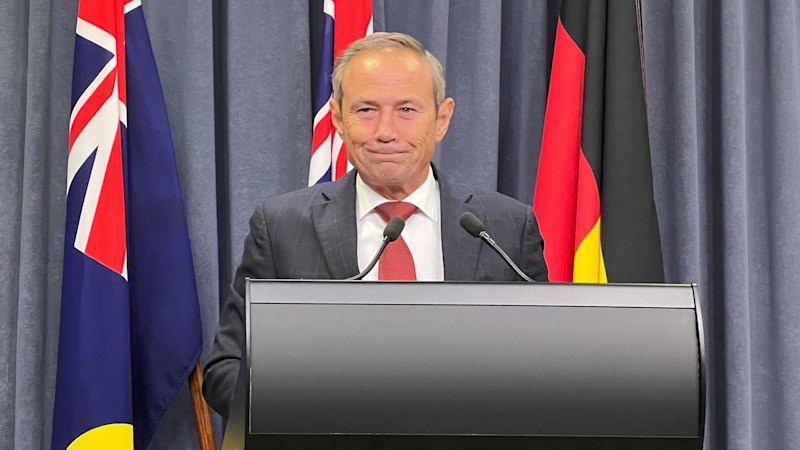
Premier Roger Cook and Sanderson travelled to Government House on Wednesday to request that Dawson make the declaration as described in the Fuel, Energy and Power Resources Act.
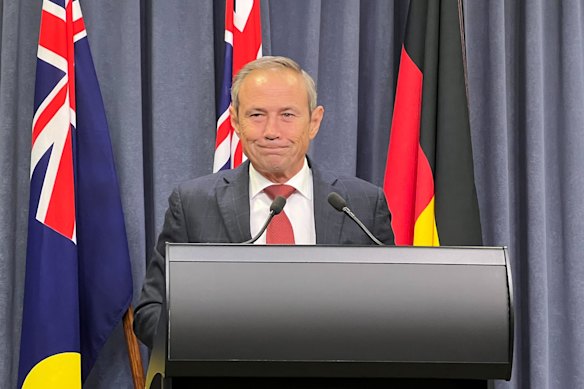 WA Premier Roger Cook addressing the media on Wednesday.Hamish Hastie
The extraordinary powers, which have never been used, can only be unlocked if the governor declares a ‘state of emergency’ under section 43 of that act.
Cook played down the terminology used in the act and said it was not a state of emergency like the one declared during COVID-19 under the Emergency Management Act.
“Let me be very clear, we are not declaring a state of emergency. We are utilising the emergency powers under the Fuel, Energy and Power Resources Act,” he said.
“This is not what people experienced under COVID. It’s a completely different act of Parliament. It’s very specific powers which we need in order to create some transparency around fuel supply chains.”
Parliament will be reconvened on April 14 in the middle of a six-week break to ratify the emergency powers, but they will take effect from midnight on Thursday morning.
Cook wrote to suppliers including BP, Viva and Ampol on Friday, calling on them to share information, including their total fuel holdings, where they have sent fuel to since the beginning of the Iran war, and the contracts they have signed until June.
The deadline for that information was on Tuesday and Cook said they had not received all the information they required.
“We’ve had a lot of success, fuel is flowing to places where we are experiencing shortages. However, challenges remain. Particularly in the Goldfields and the Wheatbelt,” he said.
“Unfortunately, our efforts are being hampered by not having the full visibility of the fuel supply chain.
“We aren’t getting the full transparency that we need.”
Three of six companies that received the letter did not respond formally.
Cook said some companies had legal advice that they could not provide that information, and the enactment of extra powers would see that advice superseded.
Related Article
The state will use the information to better direct fuel to the areas it needs to go.
Sanderson said if companies failed to comply, significant penalties of up to $100,000 a day would apply.
She said the information would be used to identify towns struggling with fuel supply.
“It’ll allow us to identify those singular towns that are challenged and those regions that are challenged, particularly in the Goldfields, and ensure that they have the fuel that they need,” she said.
“It’ll give us visibility in the future. I think this is an important part of preparing us for further shocks or further challenges with the supply chain, and gives us clearer visibility of how we manage this going forward.“
With US President Donald Trump flagging he would pull out of the Iran war within three weeks Cook was asked whether he could rely on those public statements for his government’s decision-making on fuel.
“No, we can’t rely on we can’t rely on what you see around the world at the moment, we cannot predict this situation. It’s a global conflict. Well, it’s a conflict in the Middle East with global implications,” he said.
“We were obviously encouraged by the idea that the conflict will be over soon, but of course, it’s done significant damage to the global supply chain, so it will be a while before we can also we can say that we’re in the all clear.”
Chamber of Minerals and Energy chief executive Aaron Morey said the move to use extraordinary powers was a good thing for decision-making by the government.
Morey said the chamber was confident in the coming weeks and months that his members would continue to receive their contracted supplies of fuel, noting most companies had between seven and 12 days of fuel in storage on sites.
From the start of this week, WA adopted the national fuel security plan system, which is currently at level two.
Level two suggests fuel supply is OK, but there are localised disruptions.
According to the Prime Minister’s website, level two suggests that consumers only buy the fuel they need and make voluntary choices to use less fuel to avoid higher fuel prices.
At a state level, it urged state governments to use laws to get information and data from fuel importers and distributors and improve freight efficiency as well as monitor and report on fuel station supplies.
Level three suggests that the ongoing fuel supply will be disrupted, and governments will call for reduced use of fuel to ensure major industries can continue operating.
This includes a directive that all state governments look for practical measures to help reduce fuel use.
Start the day with a summary of the day’s most important and interesting stories, analysis and insights. Sign up for our Morning Edition newsletter.
Save
You have reached your maximum number of saved items.
Remove items from your saved list to add more.
 Hamish Hastie is WAtoday’s state political reporter and the winner of five WA Media Awards, including the 2023 Beck Prize for best political journalism.Connect via X or email.From our partners