
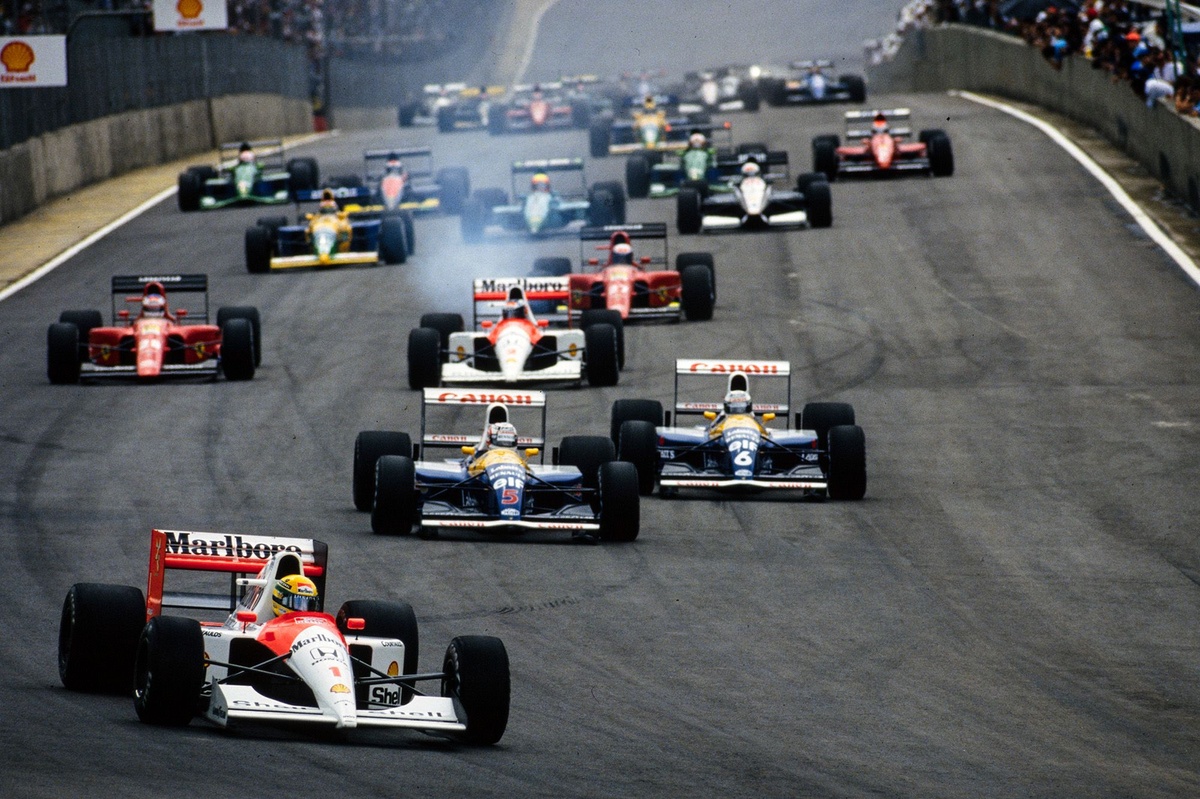
When it comes to the crunch, we’ve favoured crowns won with cars that weren’t the best over dominant seasons. While pumping in win after win in the best car is harder than the greats make it look and some campaigns have been near perfection, there is something special about a fight against the odds, which pushes the drivers to dig deep, particularly when that effort is rewarded.
Putting in a great season is about optimising the car and circumstances every time out – or close to it. If done with the best car, the result is win after win. But if done in a lesser machine, a bit of luck is sometimes required to get the job done – or some intra-team rivalry with your chief opposition…
To spread the joy, we’ve limited this list to one entry per driver, even though some of the greats have multiple candidates.

Watch: Top 10 F1 Title Campaigns | Autosport Retro
10. Nigel Mansell, 1992
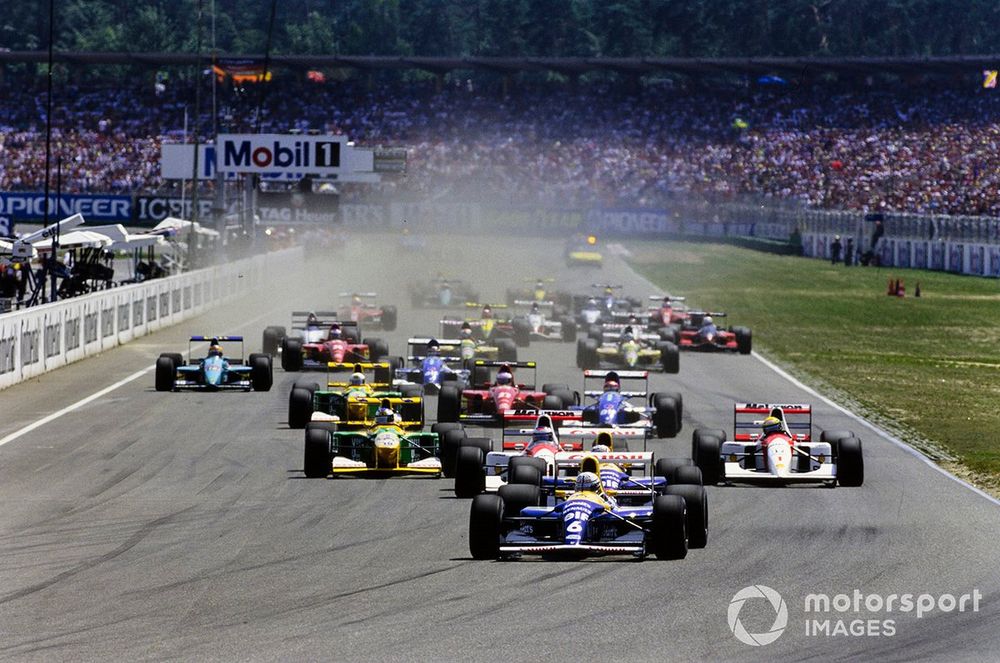
Mansell was unstoppable with the Williams FW14B
Photo by: Motorsport Images
Wins/starts: 9/16
Points margin: 52
Yes, the Williams FW14B is one of the greatest F1 cars, but Mansell truly crushed the opposition in 1992. In a car that suited his aggressive style and strength, he did not give the opposition a chance in the way that Williams did the following year.
With team-mate Riccardo Patrese not so comfortable with active suspension, Mansell stormed to 14 poles from 16 races and scored more points than Patrese and McLaren star Ayrton Senna combined. Only at Canada (Senna) and Hungary (Patrese) did he not top the times.
Mansell also won a then record nine times from 16 races and it should have been more. He lost a comfortable Monaco Grand Prix lead due to a wheel problem that forced a pitstop, was set to recover from a mediocre strategy at the Belgian GP when an electronics issue robbed him of power, and he was removed from the Australian finale when hit from behind by Senna.
Mansell had also planned to help Patrese win the Italian GP, before both cars were struck by hydraulics problems, and suffered an engine failure when attempting something similar in Japan. Only in Canada, with an ill-judged early move on Senna, did Mansell obviously throw away points.
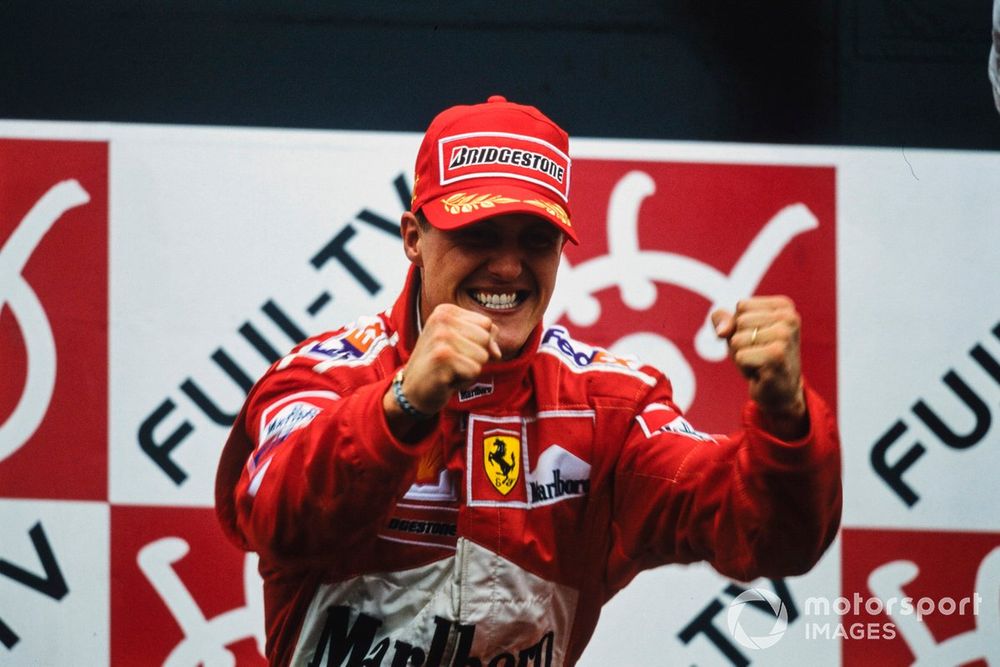
Schumacher’s breakthrough crown for Ferrari, against tough opposition in Hakkinen and McLaren, laid the groundwork for his era of dominance
Photo by: Motorsport Images
Wins/starts: 9/17
Points margin: 19
Which of Schumacher’s seven titles was the best? His 1995 crown deserves a mention as he consistently got the better of a Williams team that (usually) had a faster car, though there was the shunt at Imola.
His 2002 season was close to perfection, with 11 wins, five seconds and a third from the 17 races – his worst result coming after a stirring recovery drive in Malaysia! But he did not face a strong challenge that year and was gifted victory in Austria by team orders as early as round six in May.
So, we’ve gone for 2000, a campaign in which he had to take on and beat perhaps his fastest rival – Mika Hakkinen. It’s also the season in which he finally gave Ferrari its first F1 drivers’ crown for 21 years.
There was very little to choose between Ferrari’s F1-2000 (10 wins, 10 poles) and the McLaren MP4-15 (seven and seven), with the advantage swinging back and forth at various points during the campaign.
There were some classic Schumacher moments, including defeating both McLarens at a rain-hit Nurburgring and the Japanese GP victory that clinched the crown – a race Schumacher later picked as the race of his life.
Perhaps Schumacher’s only mistake of note was moving over on Giancarlo Fisichella’s Benetton at the start in Germany, resulting in a crash that took them both out. His other non-scores were not his fault, while his only non-podium finish came after a slow pitstop and deflating tyre in Spain.
What elevates this campaign was the level of opposition from McLaren and Hakkinen, who put in some brilliant performances his own, including famously catching and passing Schuey at Spa and playing his part in their epic Suzuka showdown.
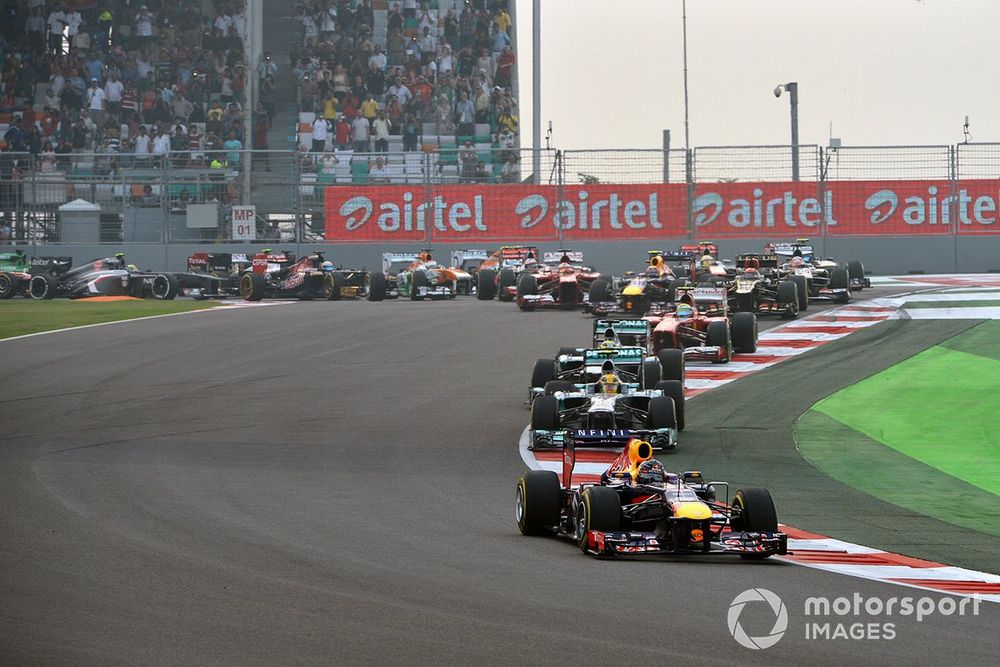
Vettel’s dominance over the course of 2013 gives it the edge over his 2011 title success
Photo by: Sutton Images
Wins/starts: 13/19
Points margin: 155
It’s hard to decide whether 2011 or 2013 was Vettel’s finest campaign. The key stats (points and wins) marginally lean to 2013, plus it was in the later season that Vettel matched Alberto Ascari’s record of nine consecutive world championship GP victories. On raw pace, it could also be argued that the opposition was closer to Red Bull by then, witness Vettel’s nine 2013 poles to his 15 in 2011.
The fragile Pirelli tyres neutralised Red Bull’s car advantage early in the season, Vettel ‘only’ scoring three wins in the first eight races. But once Pirelli reintroduced stronger tyres from 2012 following failures at Silverstone, Vettel became unstoppable. Ten wins in the final 11 races smashed the opposition and included a charge through the pack after an early tyre stop to win the Indian GP by 29.8 seconds.
Read Also:
Vettel mastered the RB9, complete with exhaust-blown diffuser and high rake, in a way that team-mate Mark Webber (who ended the season winless) could not. A record-equalling 13 victories helped Vettel to 397 points, enough to win the constructors’ crown on his own.
There was the blip of Malaysia and the ‘Multi-21’ saga, where Vettel ignored team orders to overtake Webber for victory, but it’s hard to find fault with Seb’s 2013 when it comes to on-track performance.
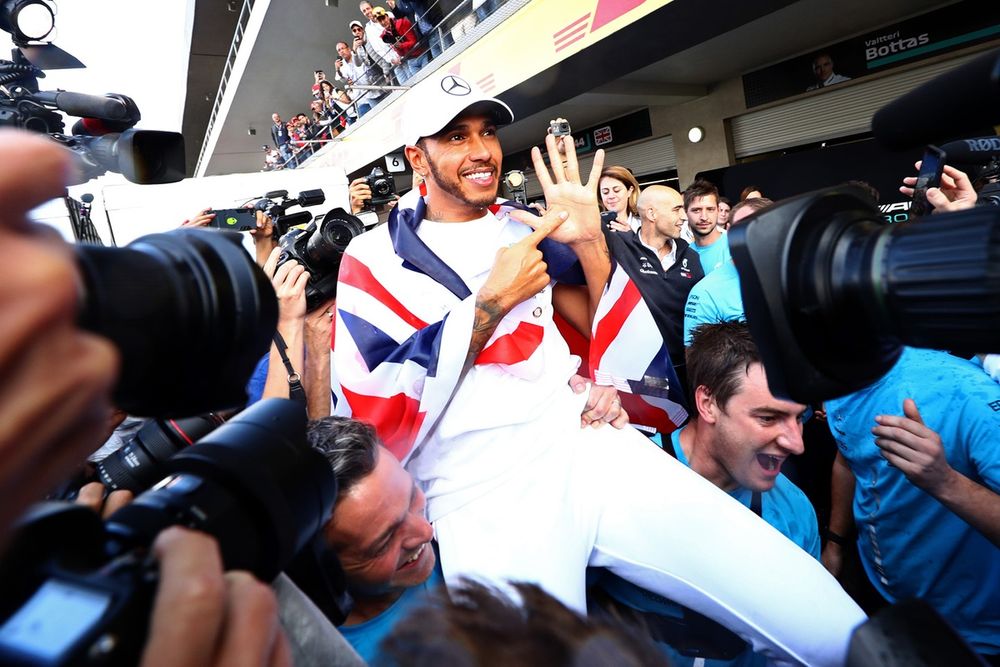
It wasn’t Hamilton’s most dominant, but battling back against the Ferraris and team-mate Bottas make it Hamilton’s greatest title so far
Photo by: Dan Istitene / Getty Images
Wins/starts: 11/21
Points margin: 88
Going by the numbers, the obvious Hamilton season would be 2020. He took 11 wins from his 16 starts, scored one of his greatest victories in Turkey and won the title by 124 points.
But the W11 is one of the all-time great F1 cars, team-mate Valtteri Bottas sometimes got close and Hamilton has to be held partially responsible for losing at Monza. In 2018, Bottas only finished ahead of Hamilton in three of the 21 races and Mercedes was sometimes up against it in a way it was not in 2020.
Ferrari had a better car for significant chunks of the 2018 season, particularly in the first part of the campaign. And yet a combination of Ferrari missteps and Hamilton brilliance meant the Briton was in the lead of the championship even before Mercedes developments put the W09 on top of the pile.
Hamilton recovered to second after being hit by Kimi Raikkonen in the British GP, demonstrated his wet-weather skills by both winning in Germany from 14th on the grid and taking a crucial pole in Hungary, then defeated the Ferraris with a brilliantly opportunistic drive in Italy despite Raikkonen and Vettel locking out the front row.
Aside from finishing behind Bottas in Bahrain, China and Canada, Hamilton maximised his points potential during the season and seemed to get better when he needed to in the midst of the battle with Vettel, who made errors as the pressure increased. Hamilton’s final tallies of 11 wins and 11 poles flattered the sometimes diva-like W09.
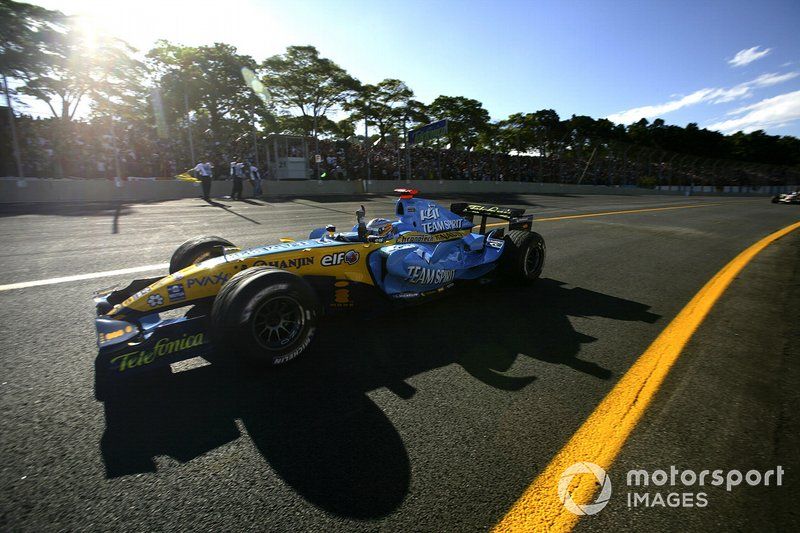
Alonso and Renault saw off the might of Schumacher and Ferrari to clinch a second consecutive title
Photo by: Glenn Dunbar / Motorsport Images
Wins/starts: 7/18
Points margin: 13
If you think Alonso is good now, you should have seen him in his early F1 days! After Schumacher’s Ferrari winning streak got going, it was only Alonso and Renault that beat him in a championship fight – the Italian squad was never really in it during the one-year, one-set-of-tyres-per-race season of 2005.
As in 2005, Alonso and Renault start the year strongly, taking six wins and three seconds from the first nine races. That included a tense, high-pressure duel with Schumacher in the Bahrain opener that Alonso won by 1.2s.
Then Schumacher and Ferrari came on strong, winning five of the next seven. That run kept Schumacher in the game but a rare Ferrari engine failure in Japan handed victory to Alonso and virtually guaranteed him the crown.
The advantage between Renault and Ferrari swung back and forth but Alonso’s characteristic relentlessness shone through: from 18 races he was first or second 14 times. And it could have been even better.
Along with Jenson Button, Alonso was one of the stars in tricky conditions at the Hungaroring and looked set to win, only for a wheel problem to put him out. And at Monza he had to start 10th due to a dubious penalty for ‘impeding’ Felipe Massa’s Ferrari before engine failure put the Renault out having charged to third.
Only at Indianapolis, where he finished fifth, did Alonso lack pace compared to team-mate Giancarlo Fisichella and, even then, he had a V8 with more mileage on it than the Italian’s.
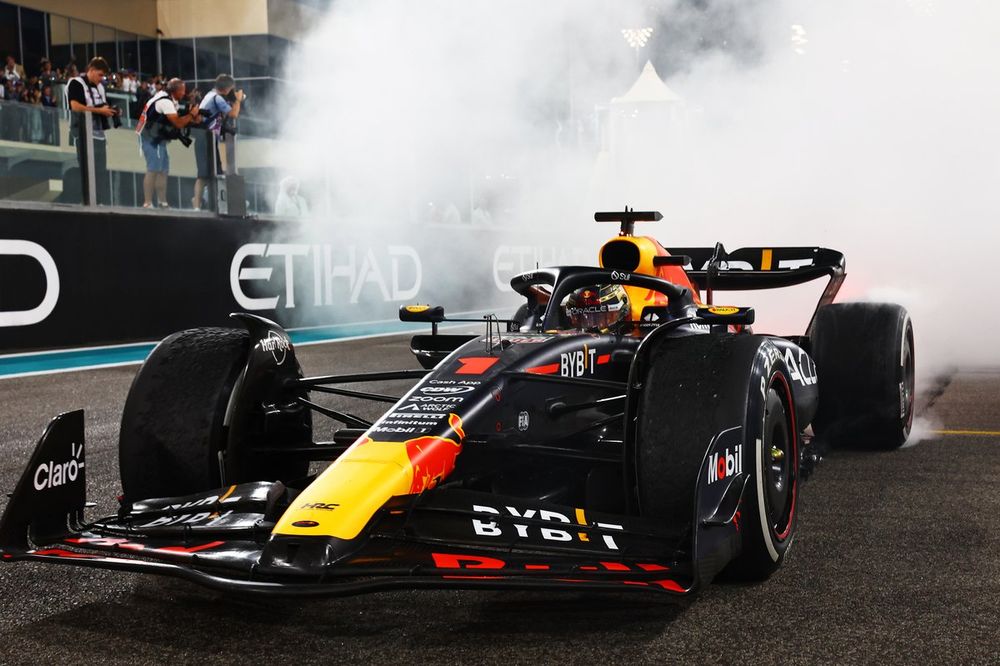
Verstappen produced statistically the most dominant F1 campaign ever
Photo by: Red Bull Content Pool
Wins/starts: 19/22
Points margin: 290
We have tended to favour battles against the odds or performances within tight championship fights on this list rather than dominant campaigns. The pressures are less when there is no real contest but, such was his consistently high level, Verstappen’s near-perfect 2023 has to be here.
Yes, he probably had to dig deeper in 2021 and 2024, but the sheer numbers of Verstappen’s 2023 season are remarkable. He took a record 19 wins from 22 races, not to mention four victories from six sprints, led 76% of the GP laps, scored more than twice the points of team-mate Sergio Perez and would have won the constructors’ crown on his own.
Of the three races Verstappen didn’t win, two were lost to Perez due to having to recover from a driveshaft failure in qualifying in Saudi Arabia and unfortunate pitstop timing in Azerbaijan, though the second Red Bull had genuine pace at the latter. Only in Singapore was Red Bull beaten in 2023 and, even then, Verstappen was flying at the end as he made his way from 11th to fifth.
The RB19 was undoubtedly the car of the season, one of the great F1 designs, but to make the most of it so regularly and deliver those sorts of numbers is far harder than Verstappen made it look.
4. Jim Clark, 1963
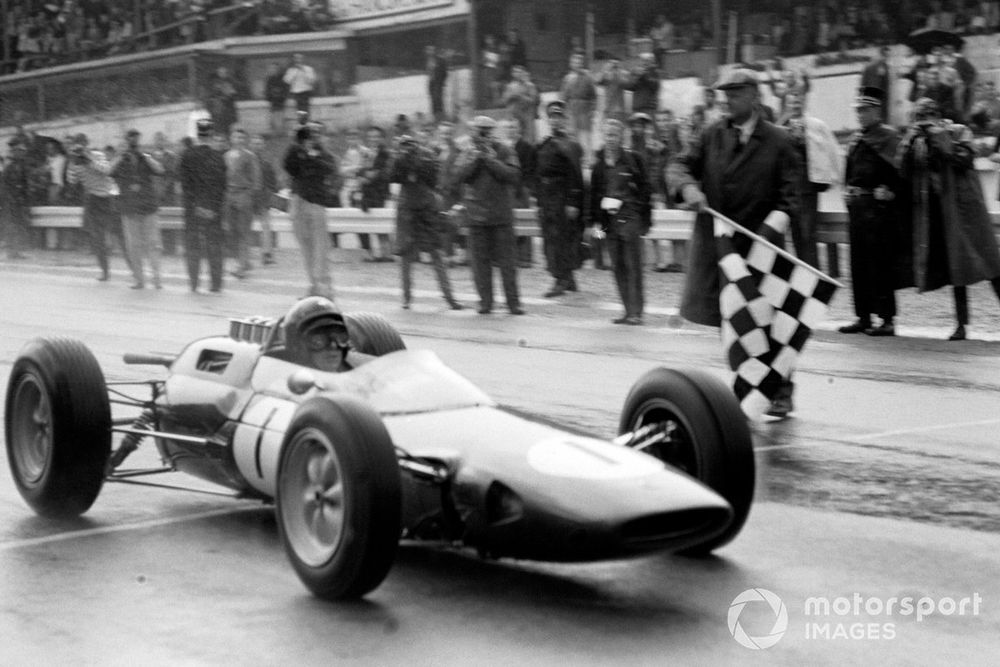
Did Clark get close to perfection in 1963?
Photo by: Rainer W. Schlegelmilch / Motorsport Images
Wins/starts: 7/10
Points margin: 25 (maximum score)
Only the best six results counted for the 10-round 1963 world championship and such was the dominance of Clark and his Lotus 25 that one of his dropped scores was a win! He took a maximum 54 points (when nine was chalked up for victory) but actually scored 73 out of a theoretical maximum of 90.
Clark led 71% of the laps during an era when reliability was far poorer than it is today, took seven poles and six fastest laps, and his Belgian GP (a wet-weather masterclass) and French GP (nursing a broken engine) wins were outstanding.
Read Also:
Of the races, he didn’t win, Clark was leading at Monaco when gearbox trouble struck, finished second to an inspired John Surtees at the Nurburgring despite a misfire, and was third at Watkins Glen after losing time at the start thanks to a dud battery. The monocoque Lotus 25 was an F1 game-changer but, from a driving performance point of view, Clark was faultless in 1963.
And that’s before we mention his five non-championship F1 wins, near-miss in the Indianapolis 500 and victory on his British Saloon Car Championship debut!
His 1965 season wasn’t bad either…
3. Ayrton Senna, 1991
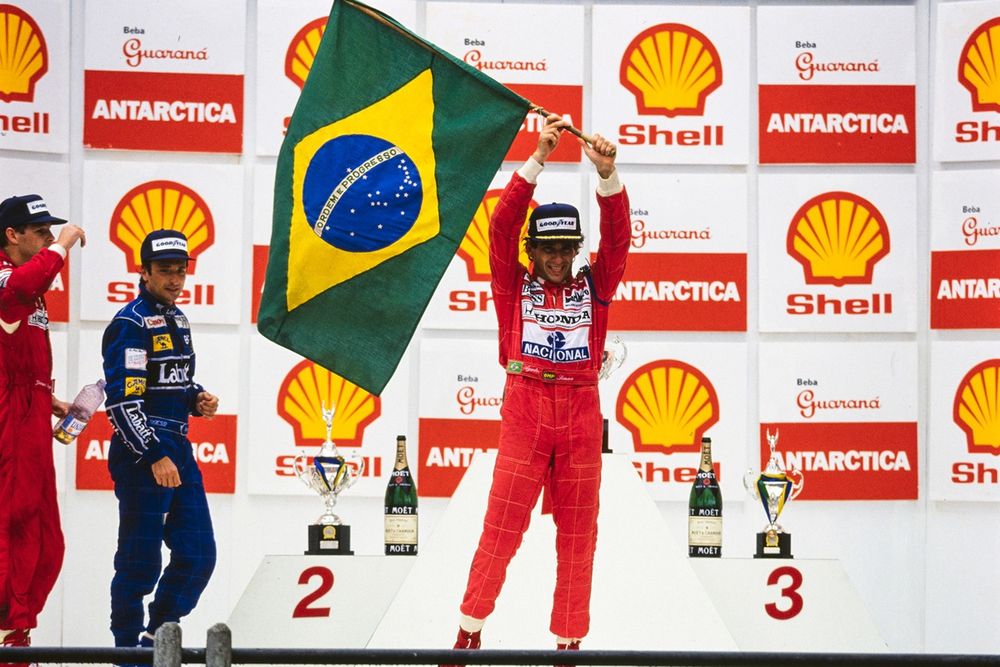
Another entry in this list where the driver outperformed the car to take the title
Photo by: LAT Images via Getty Images
Wins/starts: 7/16
Points margin: 24
Senna’s third title is often remembered as one in which he built up a lead by winning the first four races, then fought off a rearguard action from the ever-growing threat from Mansell’s Williams-Renault. But that does Senna and McLaren-Honda an injustice.
Once teething problems were ironed out, the FW14 was faster than the MP4/6. After nine of the 16 rounds, Mansell had closed to within eight points when a win brought you 10.
Senna pushed McLaren and Honda hard for developments and those bore fruit at the Hungaroring, where Senna took a brilliant pole, then held off the Williams challenge throughout. A more fortuitous victory at Spa gave Senna the buffer he needed and the title was his when the chasing Mansell went off at Suzuka.
Only at the Spanish GP, where he suffered a spin and ended up fifth on a day he should have been on the podium, did Senna give points away. Had he not moved aside for team-mate Gerhard Berger in Japan, he’d have matched his 1988 win tally, scored with the dominant MP4/4, with a McLaren team that was about to lose its place at the top of the tree.
2. Jackie Stewart, 1973
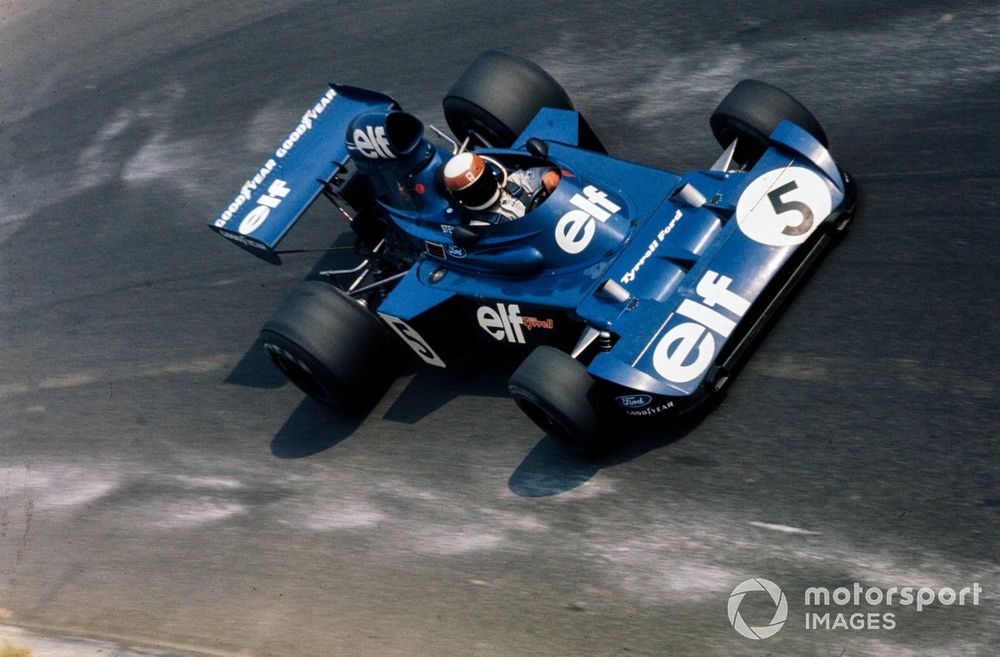
Stewart’s third and final F1 title is rated as his best
Photo by: Motorsport Images
Wins/starts: 5/14
Points margin: 16
If we were putting more emphasis on dominant campaigns, Stewart’s 1971 season would be a candidate, but there was something special about the Scot’s third and final world title.
Lotus won the constructors’ crown with seven wins and 10 poles from 15 races thanks to the legendary type 72 and it’s probably fair to say the new McLaren M23 was also better than Stewart’s stubby Tyrrell 006, which was tricky if rapid.
A slow puncture limited Stewart to third in the season-opener in Argentina and the Tyrrell couldn’t match Emerson Fittipaldi’s Lotus in Brazil despite Stewart driving “my heart out”. He won brilliantly from 16th on the grid in South Africa, lost a likely second due to brake failure in Spain, then reeled off wins in Belgium (after team-mate Francois Cevert spun) and Monaco.
Brake and tyre issues hampered Stewart in Sweden and Austria, but errors were few. He did spin off attacking Ronnie Peterson for the lead at the British GP, but there was a gearbox glitch that contributed to the off.
Stewart led a fortuitous Tyrrell 1-2 at the Dutch GP, which he and Cevert duplicated in the German GP at the fearsome Nurburgring. Much has been made of the idea that the talented and improving Cevert was beginning to truly challenge his team-mate, but over the course of the season Stewart still had a significant edge.
His charge from 20th to fourth following a puncture at Monza, which secured the title, was the only time he set fastest lap all season, underlining what he’d been up against. He also believes it was the race of his life.
Read Also:
Yes, Peterson, who took nine poles and led the most laps for Lotus, suffered misfortune, but Stewart’s was a brilliant all-round campaign – he really should not have been able to clinch things with two rounds to go in 006.
Stewart had done all this having decided early in 1973 that he was going to retire. Due to Cevert’s fatal crash in practice for the US GP finale, Stewart never got to start what would have been his 100th world championship GP, but there was no doubt who the best driver in the world was.
1. Alain Prost, 1986
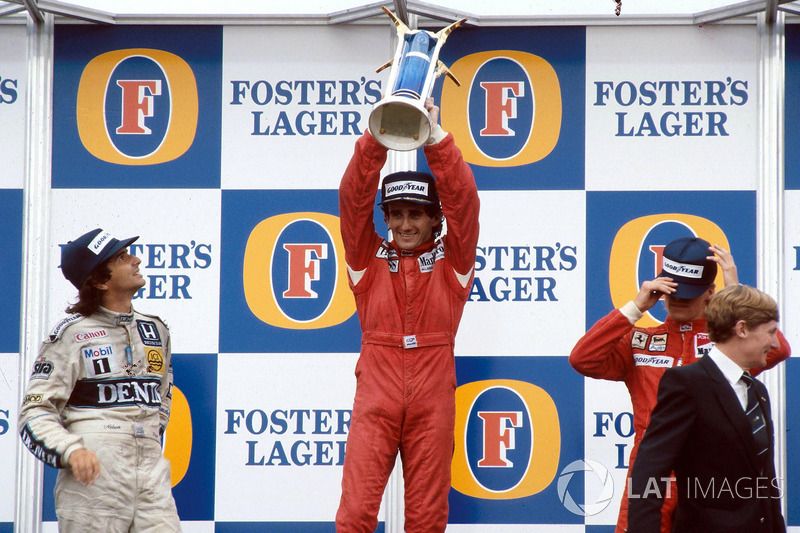
Prost celebrates the win and the title in that dramatic Adelaide showdown
Photo by: Sutton Images
Wins/starts: 4/16
Points margin: 2
Is this the archetypal title steal? The ageing McLaren MP4/2 design, in C form, was the third-fastest car of 1986. Even though it was a better proposition in races compared to qualifying, the McLaren was still usually inferior to the Williams-Honda. Williams took nine wins from 16 races, led 55% of the laps and comfortably won the constructors’ championship. And yet the drivers’ title went to McLaren driver Prost.
Mansell tended to set the pace and was doing everything he needed to do in the Australian GP decider before being cruelly robbed by his infamous tyre blowout, but Prost’s success was truly one against the odds.
Prost looked set for a fine podium from ninth on the grid at the Brazilian GP opener before an engine failure and was third in Spain despite a faulty readout that suggested he was going to run out of fuel.
After falling foul of a fuel efficiency farce at Imola in 1985, Prost won a similar race this time, then added Monaco success from his only pole of the year.
Arguably his best drive came at Spa. After being involved in a first lap pile-up, Prost’s McLaren had suspension damage and finished with bent engine mountings. He nevertheless charged to sixth and set the fastest lap.
Thanks to the ‘best 11 results count’ rule, that single point didn’t end up being part of his total, but it was another example of Prost squeezing everything he could get in 1986.
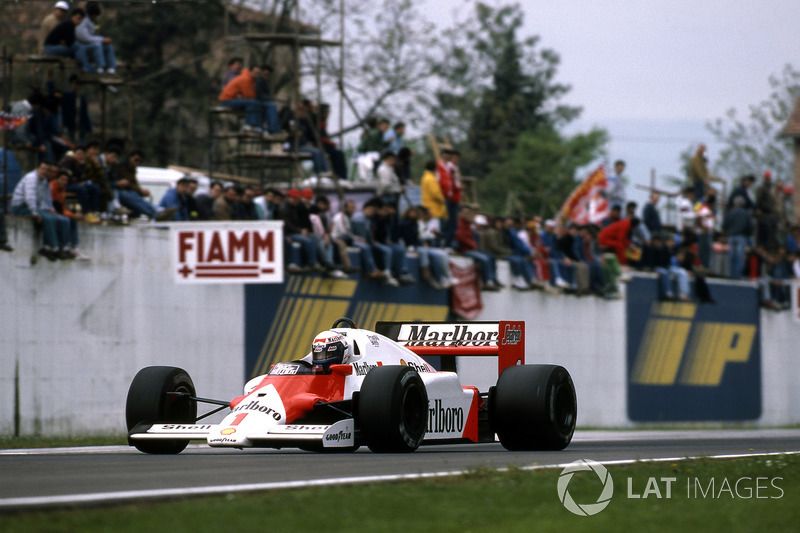
Prost had the third-fastest car this year, but maximised his results at every round
Photo by: Sutton Images
That Belgian GP was the first of four Mansell wins from five races as Williams stamped its authority on the season. But Prost split the FW11s in Canada and France, and was (a lapped) third at Brands Hatch, while in Detroit – not his favourite circuit – Prost outscored both Williamses despite an intermittent cut-out issue in a race won by the Lotus of Ayrton Senna, another who put in a brilliant season in inferior machinery.
When Prost retired from the Hungarian GP, round 11 of 16, he was fourth in the table, 11 points behind Mansell. He won next time out in Austria, only to suffer both an engine failure and disqualification in Italy following a brilliant charge through the field.
Nobody could match Mansell in Portugal, but Prost was best of the rest, helped by Senna spluttering low on fuel and a spin from Nelson Piquet. Prost then demonstrated his smooth style in Mexico. On a day all the Goodyear runners were plagued with tyre wear and the Pirelli-shod Benetton of Berger ran non-stop to win, Prost managed a one-stop strategy and misfiring engine to finish second.
That gave Prost an outside shot of the championship, setting the scene for his dramatic Adelaide finale success following Mansell’s tyre blowout and Piquet’s precautionary pitstop. It was just reward for a brilliant campaign, maximising a car that was rarely the quickest to score 11 podiums.
Read Also:
Prost also convincingly outperformed team-mate Keke Rosberg, who scored just one top-three, throughout the campaign. Only at Hockenheim, where the Finn took pole and seemed set for second ahead of Prost before both McLarens ran dry, did the 1982 world champion show the MP4/2C might have been capable of scoring more points than Prost delivered.
Read Also:
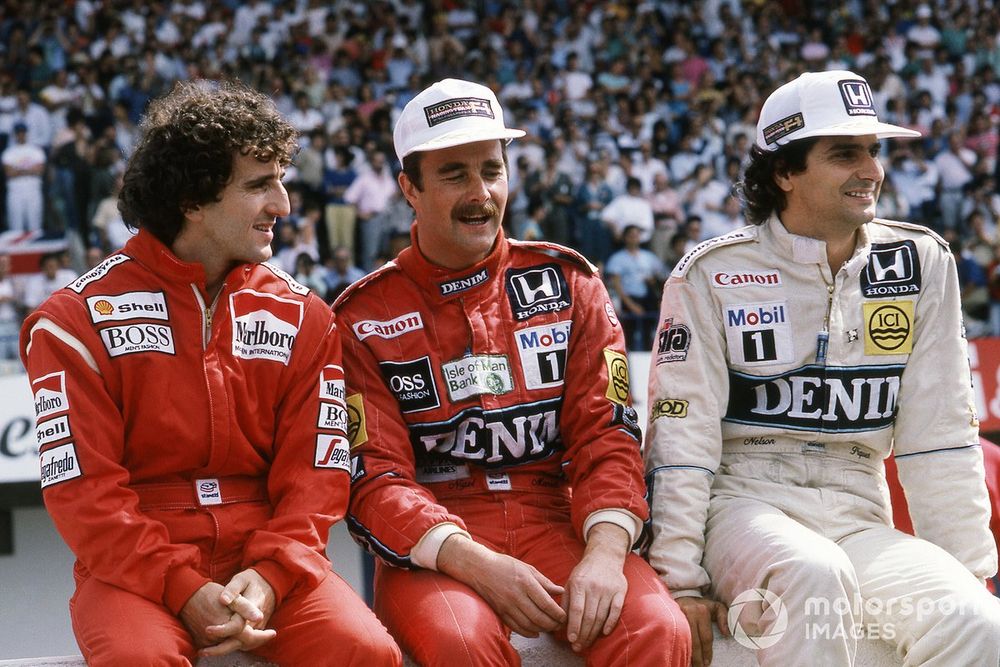
Do you agree with Prost’s 1986 triumph being named the greatest F1 title-winning campaign?
Photo by: Sutton Images
We want to hear from you!
Let us know what you would like to see from us in the future.
– The Autosport.com Team