
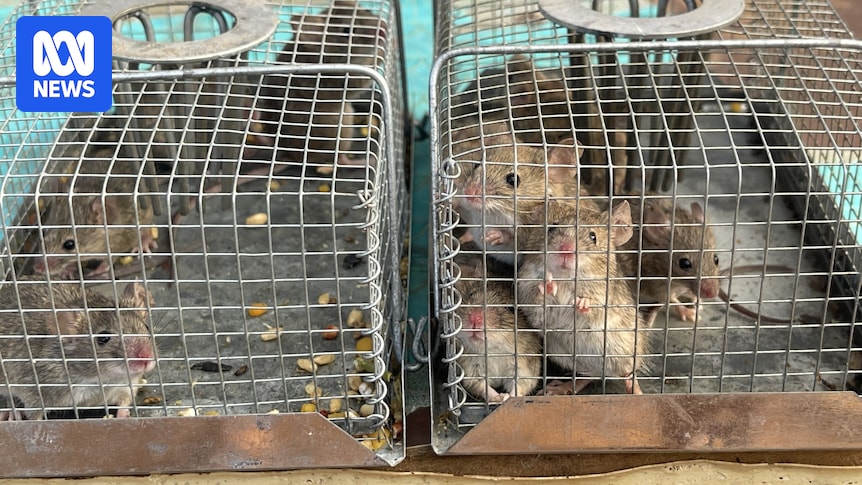
A leading Australian mouse researcher says mice are at plague proportions in Western Australian grain paddocks and urgent action is needed.
It comes as residents of regional communities say the number of mice in their homes is unprecedented, with mice chewing through plastic containers, milk cartons and food containers.
CSIRO research officer Steve Henry, who has studied reported mouse numbers in paddocks from Geraldton to Esperance, said the figures were alarming.
“I’m really concerned,” Mr Henry said.
“When you’re getting over two to three hundred mice per hectare, then you’ve really got cause for concern.
“They’re counting between three and four thousand burrows [six to eight thousand mice] per hectare in some locations.”
Mr Henry said he visited WA in 2022 when numbers were high, but this year the problem was worse.
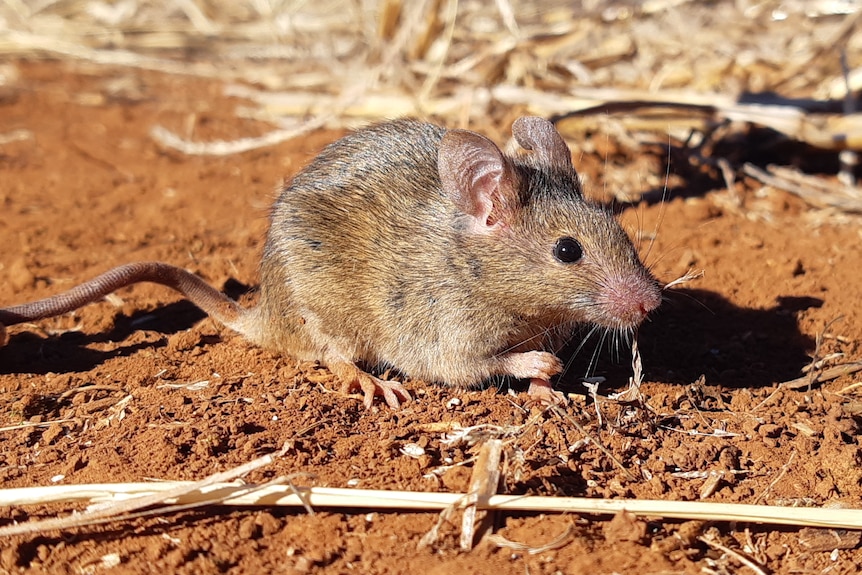
Farmers are reporting more mice infestations across Western Australia’s farming region. (Supplied: CSIRO)
Grain paddocks surround the small community of Morawa, 360 kilometres north-east of Perth.
Long-term resident and pest controller, Peter Cekanauskas, came home from a week away to find mice had taken root in his pantry.
“It was like a horror story,” he said.
“A dozen mice were visibly running over everything, amongst torn bags of self-raising flour and sugar.”
He placed 7.5 kilograms of bait around his property, which was consumed in less than three days — an amount he estimated could kill about 75 kilograms of mice.
Mr Cekanauskas said the problem was widespread, and he was being called out to more mouse infestations than ever before.
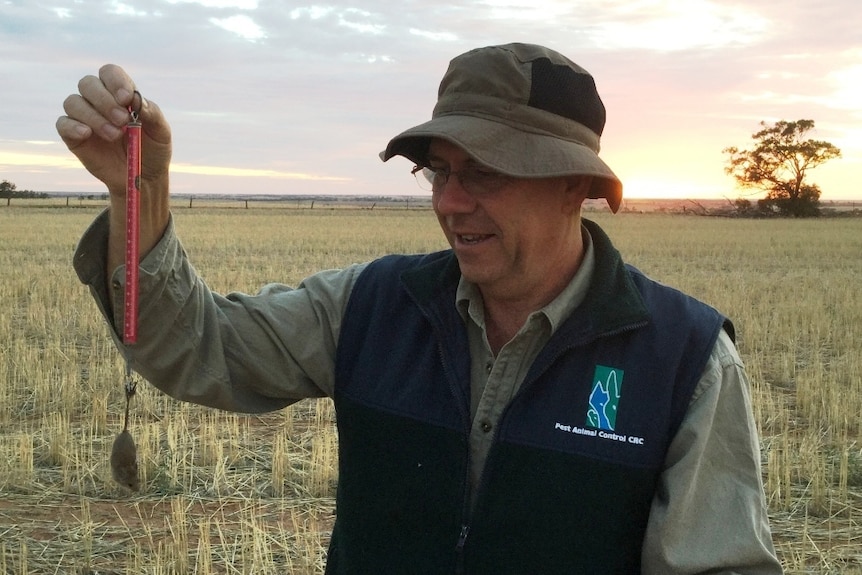
Steve Henry says he has never seen mouse numbers so high in Western Australia. (ABC News: Alice Kenney)
He said a resident told him mice had eaten their way through a plastic container of rolled oats, and nibbled through UHT milk containers, creating a flood.
“My supplier of chemicals has remarked that he’s had an increase of sales in this area,” he said.
Mice don’t stop breeding
Mr Henry said mice could breed prolifically.
“Mice start breeding when they’re six weeks old, they have six to 10 babies every 19 to 21 days, they give birth, and within two or three days, they fall pregnant again,” he said.
“So where you have 100 females per hectare, in three weeks’ time that’s going to be 600 per hectare.
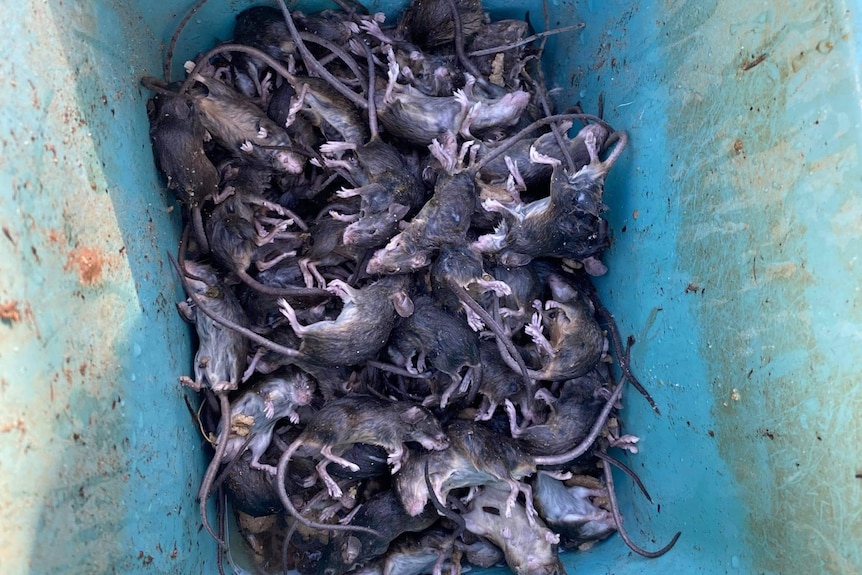
New South Wales experienced a serious mouse plague in 2021. (Supplied: Kylie Jordison)
“I’m seeing videos of hundreds of mice running around … at Ravensthorpe where they’re running a seed cleaner there’s mice all over the place.”
Farmers are preparing to seed this season’s grain crop, but before they do, Mr Henry said it was essential they checked their paddocks for mice.
“It’s really important farmers in those areas are prepared to bait as they sow the crop or they could sustain some significant [crop] losses,” he said.
“We don’t want this to spiral completely out of control and we end up seeing something like we saw in New South Wales in 2021.”
Spreading baits is the latest problem for WA farmers who have reduced their paddock movements to conserve fuel, with supply shortages an ongoing challenge for the agricultural sector.