

What does it take to make a petrol-head tradie curious about home electrification?
Cabinet maker Matt Imlach says the extra $500 a month in diesel costs will do it – when combined with the federal home battery rebate and the real possibility of going just a little bit off-grid.
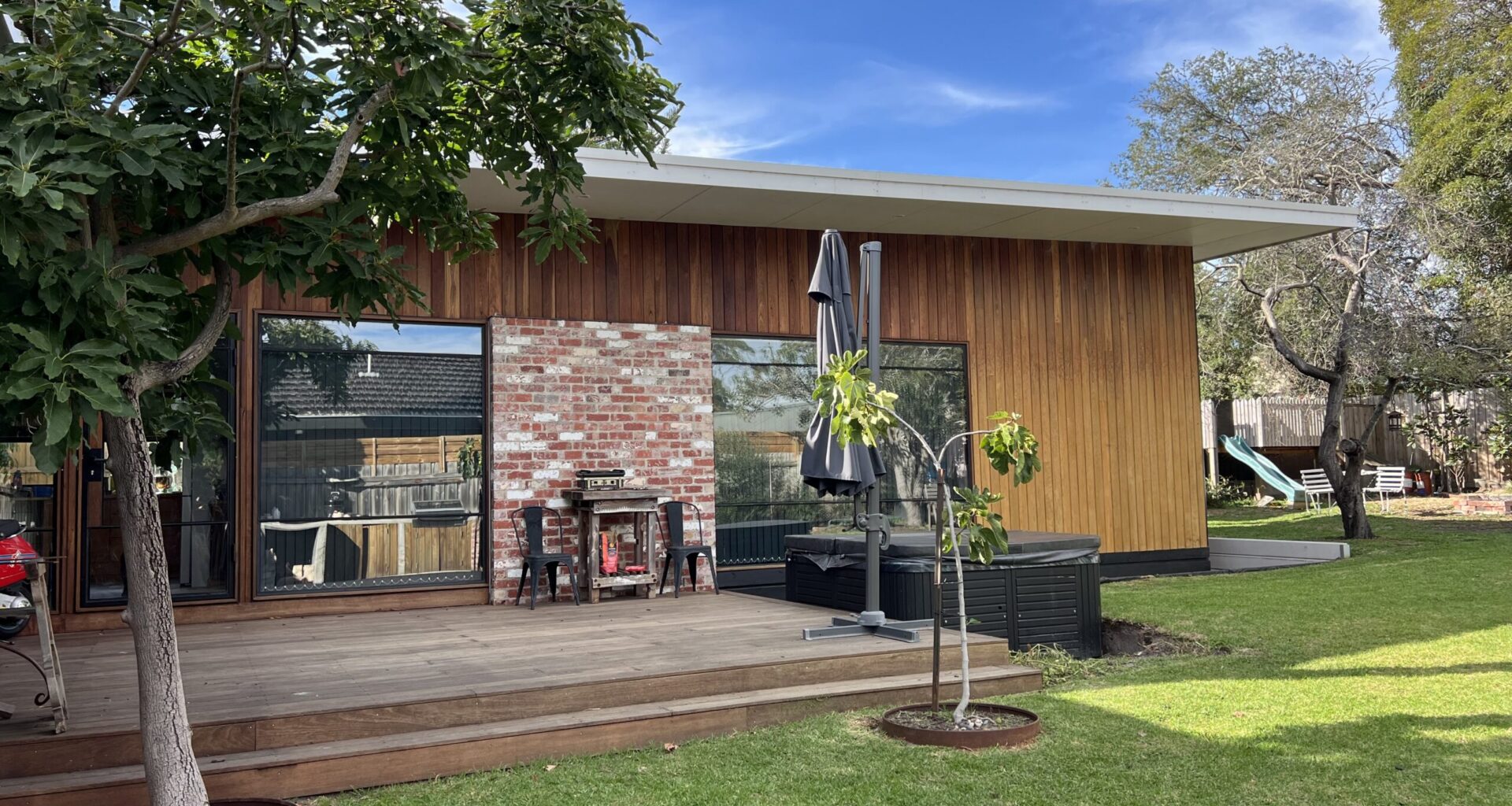
Imlach designed and built his family’s Frankston, Victoria, home in 2022 with a view to electrification: a roof angled just so and sized for maximum solar capacity that will heat a spa and a future electric vehicle (EV), double glazing even on the curved windows and thermal blankets in the ceiling, and all-electric heating.
But after more than a year of humming and hawing over installing solar, it was only this week that the whole vision made sense.
That was when he saw the size of the dent the federal battery rebate is making to the total cost of a 12 kilowatt (kW) solar system and a 33 kilowatt hour (kWh) battery.
“The utopian situation is you have solar, a battery, you have at least one electric car, and then you can be self-sufficient with power,” he told Renew Economy.
“I’m really considering the whole electrification thing generally.
“I’ll keep the gas on our house, literally just for the cooktop because I love cooking with gas, but the continuous gas hot water I’m happy to make that electric once we’re all set up with solar.”
War, rebates make electrification relevant again
Imlach is one of the next wave of Australians who are catching the electrification bug – they love their gas cooktop and V8, but can see the benefits of solar, batteries and EVs as a second car.
Smart Commercial Solar managing director Huon Hoogesteger says the Iran war has pushed people who were indifferent, as well as those who were ideologically opposed, into taking a serious look at home electrification.
“The people who were resistant to renewables, particularly EVs, were doing so as a push back not against the technology itself but what it means. And that resistance now has been superseded by something much bigger than that,” he told Renew Economy.
“For them, it’s now about sovereignty and national security.”
And it’s made the big capital investments of solar and batteries, the ones that catalyse those other decisions such as buying an EV, relevant for people like Imlach who put off the decision when feed-in-tariffs began their precipitous fall.
“There is no doubt that this Iran war will do more for the renewable energy industries in Australia and catalyse more investment in electrification than any rebate, and be more enduring than any rebate,” Hoogesteger says.
By this week, 300,000 households had used the federal battery rebate scheme, with many more expected to flood in ahead of changes scheduled for the start of May when the rebate for batteries larger than 14 kW will be cut.
Battery installer VoltX Energy said today that inquiries for both home batteries and solar are up 200 per cent in the last fortnight, partly due to the May deadline and partly due to fears about the Iran war oil price surge spilling over into other energy costs.
And last week, Carsales released its search data and said queries for EVs tripled between February and March, with the popular brands being BYD, Tesla, Polestar, Zeekr and Geely.
There’s no doubt that electrifying the home cuts bills, as organisations from IEEFA (about $1,200 annually), to Rewiring Australia (up to $4100 a year if you add an EV), to the Grattan Institute (bills can halve) have modelled the cost savings.
But it’s taken petrol and diesel prices at eyewatering levels and the federal rebate reducing by a third the cost of a home battery, to create the push factors to encourage the indifferent – and the resistant – to try electrification out.
By the end of February this year, Clean Energy Regulator data showed South Australia and Queensland were still leading solar installations, with 56 and 53 per cent of households respectively.
They are followed by Western Australia, the ACT, NSW — even though as the most populous state it is the second highest by number of installations — Victoria, the Northern Territory and Tasmania.
Family EV the next step after solar
Electrifying family cars is the next step after the solar-battery investment – Hoogesteger says his landcruiser-driving sister-in-law bought an EV last week.
The landcruiser was costing $400 a tank to fill, and their local Ampol petrol station in Dural, New South Wales (NSW), has not had fuel for more than a week.
Imlach is now seriously looking at swapping the family car in the next two years to electric.
“I’m a huge petrol head. So I’ve had plenty of V8s, I’ve got a super bike that I ride at Phillip Island, and I love the noise and the power and all that sort of stuff,” he says.
“But I’m also a bit of a data guy, and you can’t really argue when it comes to bills. You can’t really argue with electric cars if you can get your house independent from the electrical grid.”
But for a work car, he needs something that can do a lot of kms in a week and carry a lot of stuff. He’s hanging out for an electric ute that can match his Ranger Wildtrack.
“Because I’m a tradesman and I need a dual cab – for carrying tools, carrying materials, having a trailer and also dropping off and picking the kids up from school – I’m kind of limited to what kind of vehicle I can use for work,” he says.
Imlach seriously looked at an electric Ford Transit last year, until he realised it only had a range of 180 km – he travels up to 800 km a week between jobs on the Mornington Peninsula and throughout the east of Melbourne.
Given the options available – MG’s latest ute for example doesn’t have the non-braked towing capacity, Imlach says – tradies might be the hardest, and in some ways also the easiest cohort of people to convince, says the Smart Energy Council’s Tim Lamacraft.
“Tradies are one of the most electrified cohorts in the country. Their tools are battery powered, solar panels on roof racks, coupled with batteries, running fridges and microwaves, are a common sight,” he says.
“Tradies epitomise the DIY, energy independence ethos that electrification brings.
“My prediction is that in under 10 years EV vans and utes will be the norm on building sites.”
As for Matt Imlach, as of today he’s trading in his Ranger for a Byd Shark.

Rachel Williamson is a science and business journalist, who focuses on climate change-related health and environmental issues.