
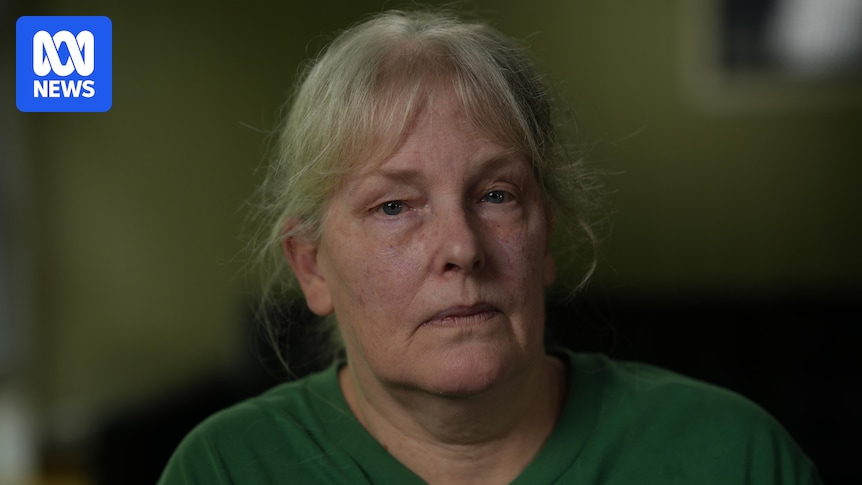
The paperwork is overwhelming, stacked across Sandra Byron’s kitchen table — hundreds of pages of medical reports, legal letters, and correspondence with the federal government.
It is the outcome of her adverse reaction to a COVID-19 vaccine, and the four-year battle with the government’s vaccine compensation scheme that followed — a process Ms Byron and her husband have described as “absolute torture”.
“There are still hundreds of us left, apparently, facing this with no seeming accountability,” Ms Byron told 7.30.
She suffered medical complications following an AstraZeneca vaccination in 2021.
“My hands have been rated as functionally useless,” she said.
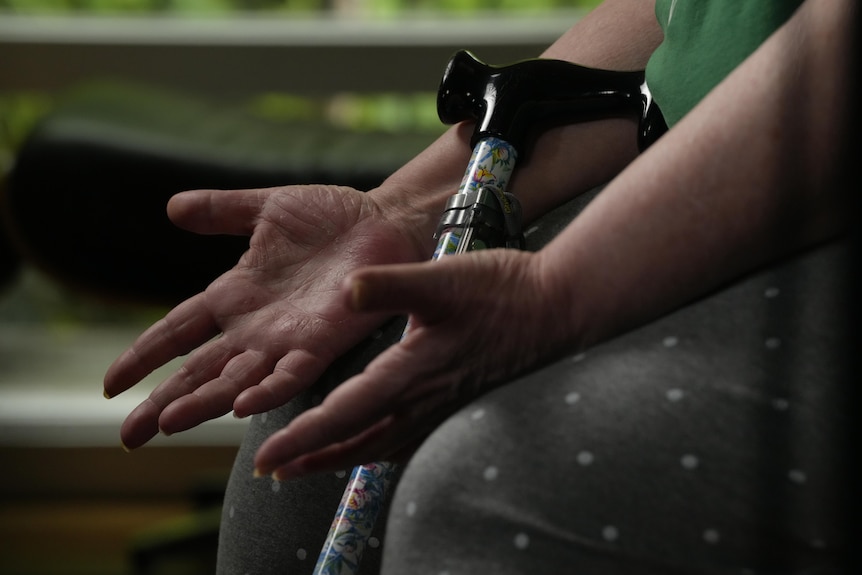
Doctors diagnosed Sandra with Guillain-Barré Syndrome and Capillary Leak Syndrome. (ABC News: Jerry Rickard)
“I can’t do anything for myself … I can’t be touched, can’t have a hot shower, can’t have a normal meal.”
Doctors confirmed the vaccine triggered Guillain-Barré Syndrome, an autoimmune disorder that attacks peripheral nerves, and Capillary Leak Syndrome, a rare but serious disorder impacting blood vessels.
Both are recognised — but rare — side effects of the AstraZeneca COVID-19 vaccine.
In Australia’s initial vaccine rollout in 2021, Guillain-Barré Syndrome was reported at a rate of around one in 100,000 people following vaccination, while capillary leak syndrome was considered extremely rare.
Ms Byron says she supports vaccination but was “just very unlucky to be very catastrophically vaccine-injured”.
Over 74 million vaccine doses were administered nationally during the COVID pandemic, and there were 23,080 reports of ‘serious’ adverse events following immunisation.

To support the vaccine rollout, the federal government set up a compensation scheme. (ABC News: Steve Cavenagh)
“My brain doesn’t work properly; my speech comes and goes, so I do a lot of nodding because it’s easier than talking,” Ms Byron said.
“The level of pain is extreme. It affects every aspect of my physical and mental health.”
But Ms Byron says that, as “horrific” as the complications have been, it’s no longer the worst part.
“It’s insignificant compared to the torture that’s been going on since we applied to the vaccine claims scheme in February 2022.”
Falling through the government ‘safety net’
The federal government designed the COVID-19 Vaccine Claims Scheme to compensate for rare cases of serious harm and to maintain public confidence in the national vaccination program.
The scheme recognises 11 specific vaccine-related conditions — including Guillain-Barré Syndrome, pericarditis, myocarditis and thrombosis with thrombocytopenia — but only if they are linked to particular vaccine brands and meet strict eligibility criteria.
To receive compensation, applicants must pass through multiple stages of scrutiny and assessment, including internal review, independent expert consideration, and external legal advice.
At each stage, further information can be requested. That process can repeat, and often does, according to claimants and lawyers.
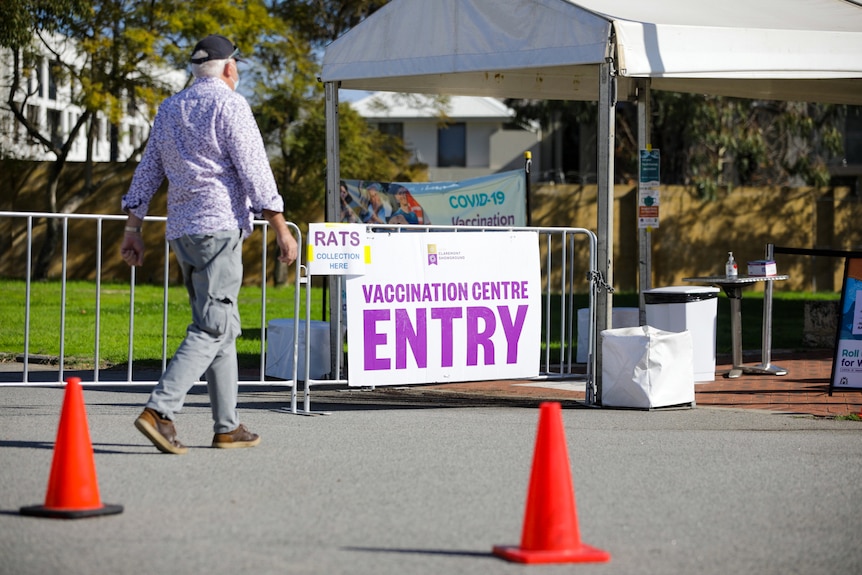
Over 74 million vaccine doses were administered nationally during the pandemic. (ABC News: Keane Bourke)
In practice, that means claimants providing detailed evidence about their condition, treatment, and future care needs, often across multiple specialists.
“They always say there’s just one final thing,” Ms Byron told 7.30.
“But there is never a final thing.”
Correspondence seen by 7.30 shows the scheme repeatedly sought further material from Ms Byron’s treating team, including detailed reports, justification for treatment frequency, and itemised costings across multiple disciplines.
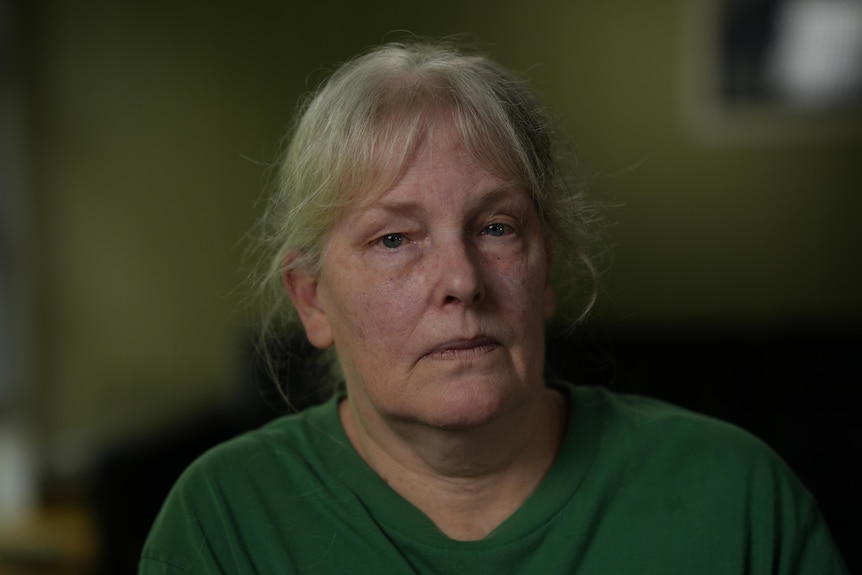
The fight for compensation has been “torture” for Sandra Byron. (ABC News: Jerry Rickard)
In one instance, she was required to undergo an additional occupational therapy assessment arranged through the scheme. It took close to a year for that appointment to be scheduled.
The assessment was required by the scheme, and until it was completed, the claim could not progress.
Ms Byron said she felt “coerced” and “threatened” to comply with the scheme or risk not receiving any compensation.
“If you do not provide the required information … the claim will be assessed solely on the information that has been provided,” one letter from Services Australia states.
‘Additional harm’
Ms Byron’s treating doctors raised concerns in writing to the scheme, not just about her condition, but about the impact of the process itself.
One specialist said they were concerned about “the effects of this claim process” on her mental wellbeing.
Her GP went further.
“Her vaccine-induced conditions have been continually worsened by years of delays in settling her claim,” they wrote.
“They have denied her care and treatment and caused additional physical and psychological harm.”
Ms Byron’s doctor said her health was continuing to deteriorate because she was not receiving the care she urgently required, despite treatment plans being supported by specialists engaged by the scheme.
A psychiatrist documented: “Her level of frustration is such that she feels they are trying to kill and torture her.”
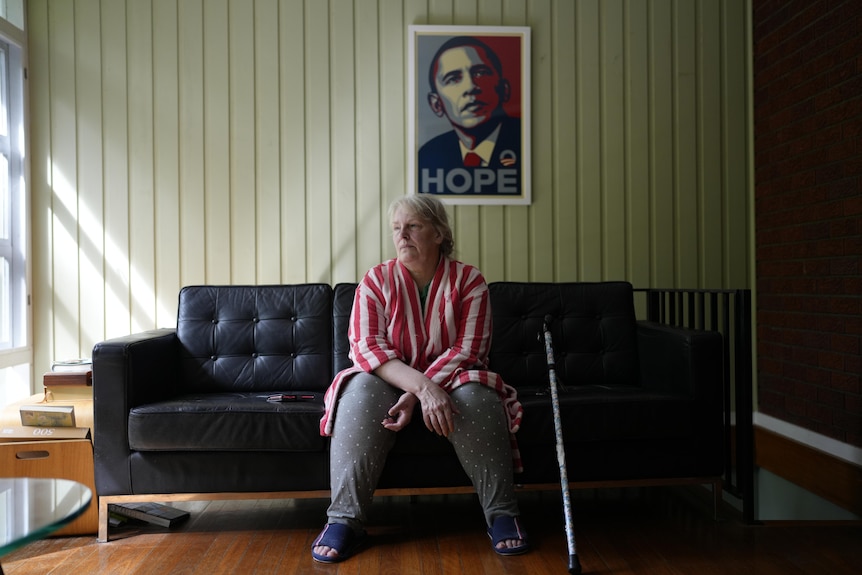
Specialists have written to the scheme, saying that the wait is worsening the harm for Ms Byron. (ABC News: Jerry Rickard)
Her solicitor, Kirstin Smith, says the process has become circular — information is provided, then requested again.
She has also lodged a complaint alleging her client was penalised for raising concerns about the scheme.
In that complaint, Ms Smith alleges Ms Byron was told by a Services Australia staff member that her claim had been delayed because she had made complaints, “and that further complaints would mean that the review would be dealt with even more slowly.”
Services Australia has said it will review the complaint.
In a statement to 7.30, the agency’s General Manager Hank Jongen said it takes all customer complaints seriously and undertakes a thorough review of any issues raised.
He said where matters raised have a bearing on the assessment of a claim, additional time may be required to ensure they are fully considered and that the customer is not disadvantaged in the final outcome.
“We’re sincerely sorry if recent interactions have caused further distress,” he said.
‘Heads should bloody roll’
Claimants with serious medical injuries say they are stuck in a system with no clear time frames, little transparency, and no single point of accountability while their health deteriorates.
Medical negligence lawyer Tanya Neilson says she’s “never seen anything” like the scheme administered by Services Australia.
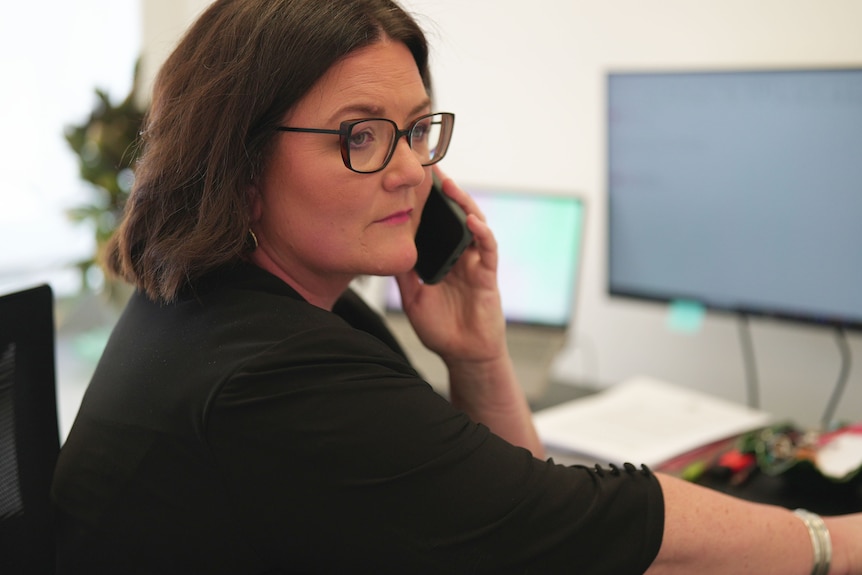
The majority of Tanya Neilsen’s clients’ claims remain unresolved. (ABC News: Tom Hartley)
Her firm is currently acting for 151 claimants. Of those, 143 are unresolved, described as the “most complex and vulnerable” applicants, who have been in the system “for years”.
“We regularly get asked by our clients, ‘Do you have a time frame for me? I can’t wait any longer’,” Ms Neilson told 7.30.
“We have clients who are suffering financial hardship, including homelessness, or really significant mental health issues, including suicidality and major depression … which is really, really alarming.”
David Goode, a grandfather from Eildon, Victoria, is still waiting for an outcome on his claim, first lodged more than four years ago.
Before his vaccination injury — a chronic form of Guillain-Barré Syndrome — he spent his life outdoors fishing, camping, and hunting.
Now, he says his world has shrunk to four walls, a television, and old magazines he once authored, as he often suffers painful electric shock sensations that shoot through his body without warning.
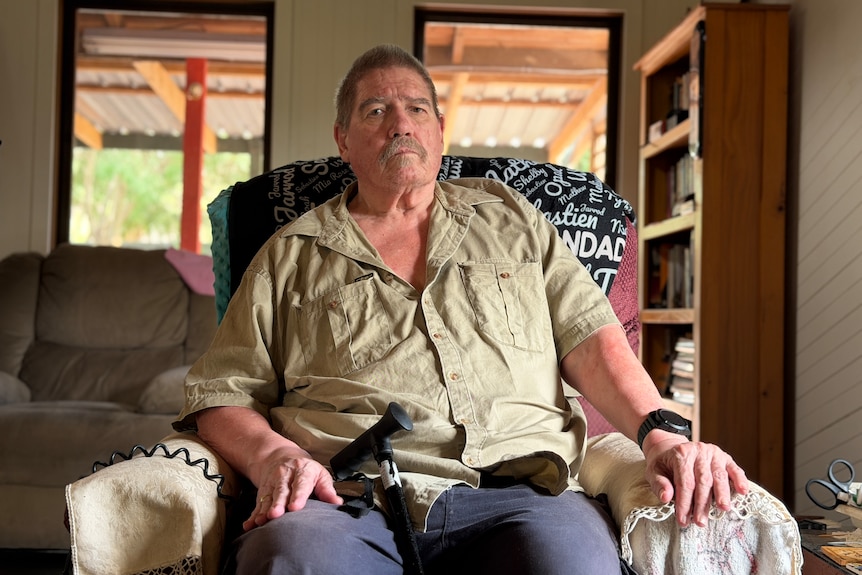
David Goode is still waiting for an outcome on his claim, first lodged more than four years ago. (ABC News: Andy Ware )
“The only time I go out is every three weeks to the local hospital for my infusions,” Mr Goode told 7.30.
“I’ve got mates who come around, but I can’t leave the house, because I’m afraid I’ll collapse and not be able to get up, which has happened so many times I’ve lost count.”
Mr Goode’s claim would cover the basics — a new chair, bed, and ongoing treatment.
At times, his sadness and frustration with the scheme give way to anger.
“Heads should bloody roll in the government … they won’t acknowledge it, you don’t exist — they just want you to roll over and die.”More valuable dead than alive
For some, the problem is not just how long the process takes, but what is offered at the end.
Kathleen Kelly, who has been in the scheme for more than three years, spoke to 7.30 six months ago about the toll her claim had taken on her health, finances and family.
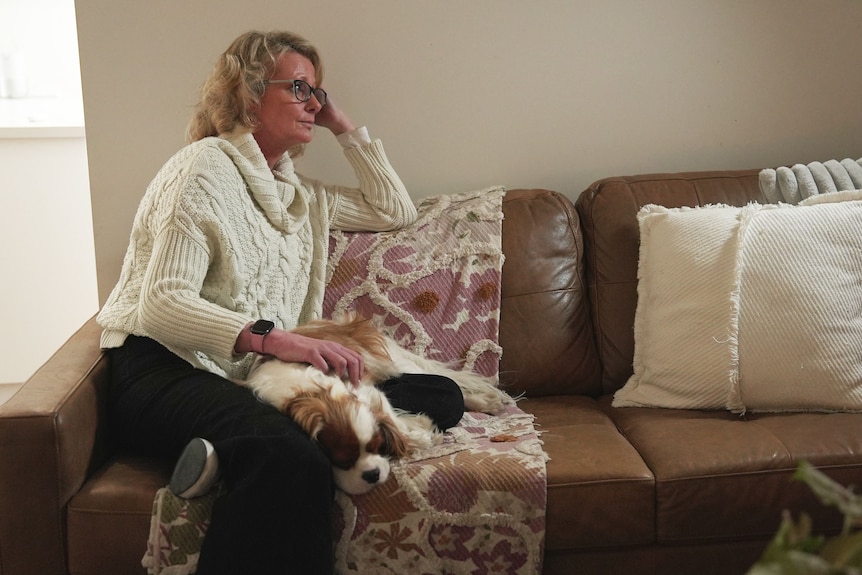
Kathleen Kelly says her vaccine injury has taken an enormous toll on her life. (ABC News: Tom Hartley)
“I’ve had 12 surgeries. I’ve had 27 hospital stays. I’ve lost my business, lost a lot. It’s been pretty shit, all my savings have gone,” she said.
Since then, she has been made an offer.
She describes it as “paltry” — about 10 per cent of what she applied for, which doesn’t cover future costs, only past out-of-pocket expenses and care. The scheme has refused to pay any of Ms Kelly’s future expenses.
Her lawyers say Services Australia is relying in part on earlier medical evidence that used the word “maybe” when describing her long-term prognosis.
Ms Kelly will be asking for the offer to be reviewed.

Ms Kelly is looking to have her compensation offer reviewed. (ABC News: Tom Hartley)
All that happened while she was facing the mental and physical anguish of another surgery — this time, to install a pacemaker.
She feared she was going to die.
Under the scheme, different provisions apply in the event of a death claim.
Ms Kelly says that creates a stark and deeply confronting reality.
“My kids may get more if I died on the operating table than what I get if I live under the current offer.”Who is accountable?
Responsibility for the compensation scheme is split and complicated.
The policy was written and sits within the federal health portfolio — but Minister Mark Butler didn’t respond to questions — and his office directed questions to Services Australia.
While Services Australia administers the scheme, it ultimately sits under the federal finance portfolio.
Finance minister, Katy Gallagher told 7.30 via a statement that she sympathised with those awaiting outcomes but the process had to be thorough.
“In these rare cases, the impacts on individuals have been serious and, in some cases, life-changing,” the statement read.
“My thoughts are with everyone who has been affected and with those who are still waiting for their claims to be resolved.
“The assessment of these claims can take time due to the requirement for applicants to provide detailed medical evidence, and for this to be evaluated by independent experts.
“Given the complexity of individual circumstances, it’s important this process is robust and thorough to ensure people receive the compensation they are entitled to.”
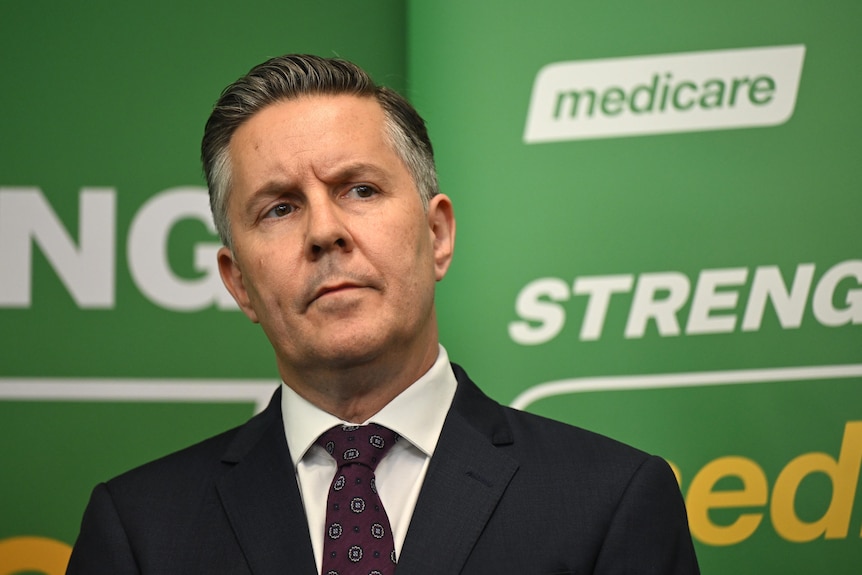
The compensation scheme sits under the federal health portfolio, but is administered by Services Australia, which sits in the finance portfolio. (AAP: Lukas Coch)
Services Australia says 4,964 claims have been lodged, and of those, 560 have resulted in compensation. A further 2,895 have been deemed not payable, while another 535 “remain active”.
It also says claims are finalised in an average of 530 days, but “finalised” includes claims that are rejected, not resolved.
That distinction matters to people still waiting for an outcome.
David Goode says the agency’s answer and the silence from the ministers is “bloody disgusting”.
“I’d like someone to just acknowledge it, just stand up and say ‘yes, we know about it’,” he said.
“That would be a good start, as well as the compensation.
“The money I’m claiming won’t get my life back, but hopefully it will give me a better life in the future for what I need.”
Watch 7.30, Mondays to Thursdays 7:30pm on ABC iview and ABC TV
Contact 7.30
Do you know more about this story? Get in touch with 7.30 here.