
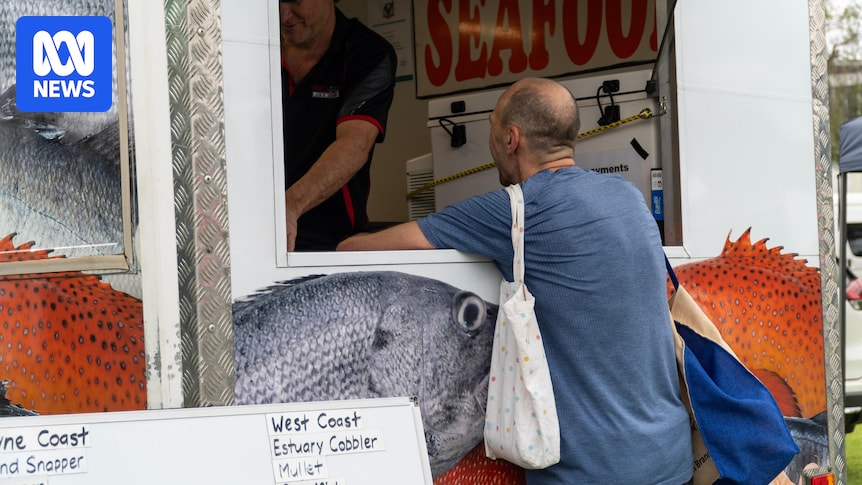
Families hoping to enjoy fish and chips on Good Friday will have to choose between paying top dollar for locally caught fish or opting for cheaper, imported alternatives from as far away as South Africa and New Zealand.
Fish retailers say the cost of some fresh local fish has more than doubled as they struggle to meet peak Easter demand, driving consumers to imported supplies.
It’s the first Easter period for retailers under the state’s tough new demersal fishing laws, which halved catches in some regions and shut down commercial fishing along a 700-kilometre stretch of the West Coast.
Well-travelled fish
In the Great Southern, Albany fish and chip shop owner Trent Brennan said supply had remained steady in the lead-up to the holiday, but customers were opting for imported fish based on price.
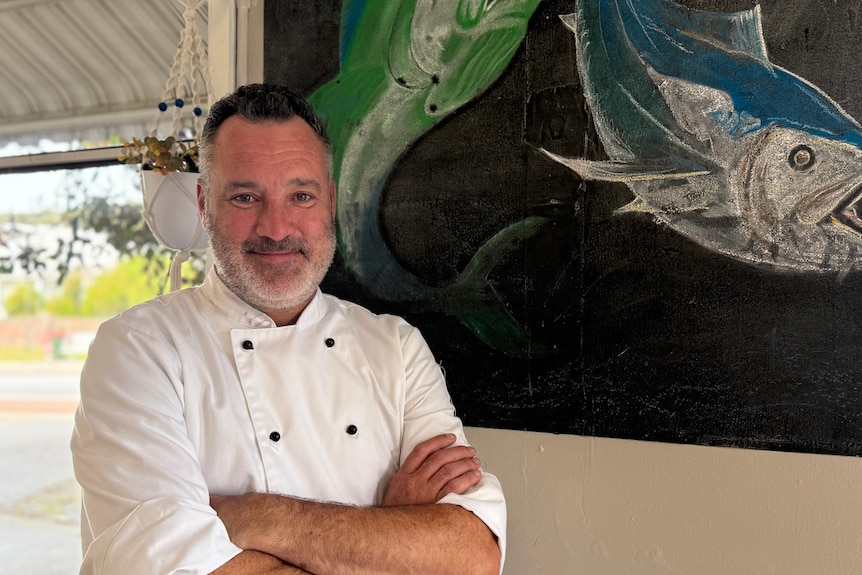
Trent Brennan is the owner of Ocean and Paddock in Albany, Western Australia. (ABC Great Southern: Kate Forrester)
“We are offering South African imported fish, and we’ve seen a massive increase in people buying that,” he said.
“I’ve definitely seen customers’ buying habits change this year in the lead up to Easter.”
The prices of local supply, meanwhile, have increased substantially.
“On our demersal species, three months ago a portion of our Nannygai was around $28, and now we are at $35,” Mr Brennan said.
North of Perth in Geraldton, seafood retailer Brolos Fresh has a range of fresh fish on sale, but this year, very little is locally caught.
Manager Luke Emery said fresh fish supply had “dried up” in stark contrast to last year, when staff at the store were processing several tonnes of pink snapper, caught by local fishers just offshore.
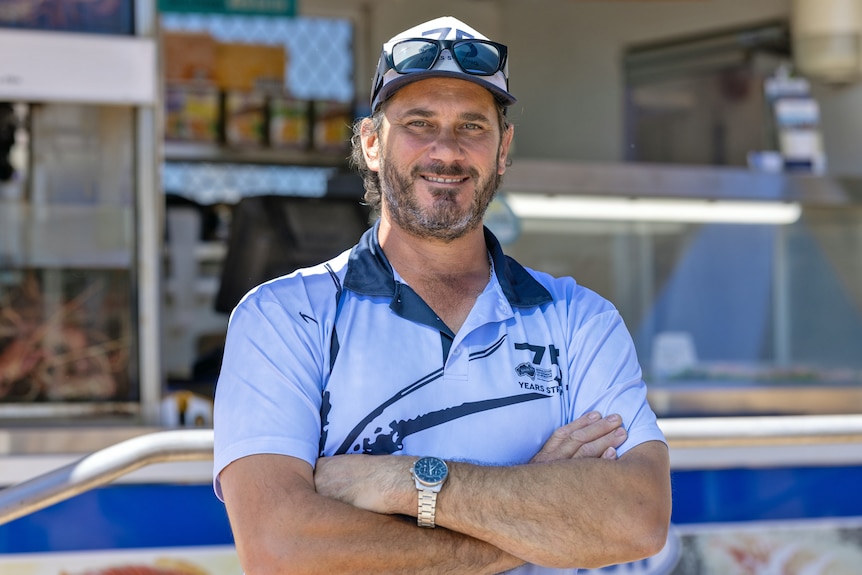
Luke Emery says the fish supply in WA has “dried up”. (ABC Mid West Wheatbelt: Chris Lewis)
Instead, the business had been mainly sourcing fish from the Pilbara, Carnarvon, and Augusta regions.
“We’ve even had to bring pink snapper across from New Zealand as well,” he said.
“That seems a bit alien for us; it’s usually sitting on our doorstep.”
Even shark, often regarded as the most economical fish, was hard to find, with prices increasing from $20 a kilogram to over $40.
“People are fighting price-wise to keep fish in Perth, so we have to compete with those prices to bring it up here,” he said.
Mr Emery said, as a result, his regular shoppers were buying less.
“We used to have people come and buy 2 or 3 kilos at a time; they just come and buy a little bit at a time now,” he said.
West Australian Fisheries Minister Jackie Jarvis acknowledged lower fish stocks this Easter and rising prices, but said her decision to permanently close commercial fishing for demersal species on the west coast was necessary to ensure the industry’s long-term sustainability.
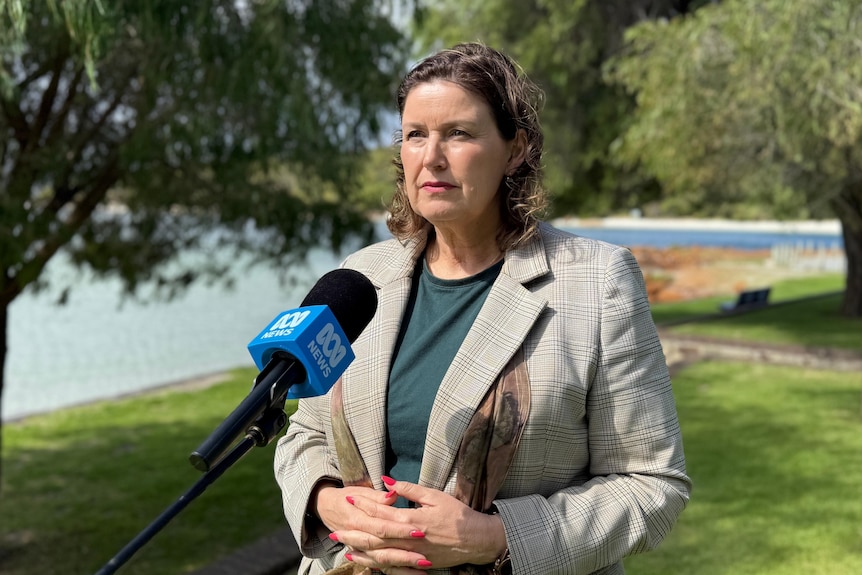
Jackie Jarvis has apologised for fish stocks in the system being lower than usual this Easter. (ABC Great Southern: Kate Forrester)
“I’m mindful that prices have gone up, but prices were already going up before the ban was implemented,” Ms Jarvis said.Uncertain times for fishers
As fishers grapple with the demersal fishing reforms, their businesses face rising costs, with increasing fuel prices meaning Mr Emery’s business was barely breaking even.
“There’s the availability, which has driven up the price, then you’ve got fuel for logistics, which has driven up the price a bit more now because fuel levies have risen,” he said.
Albany fish processor and owner of Albany Seafoods, Tony Westerberg, said fishers were in limbo with no clarity yet on the government’s proposal to reduce commercial catch limits by 50 per cent on the south coast.
“There is no need for this reduction,” he said.
“The small amount of fish local operators catch — once that’s cut by 50 per cent — will be devastating for local restaurants and fish and chip shops.”
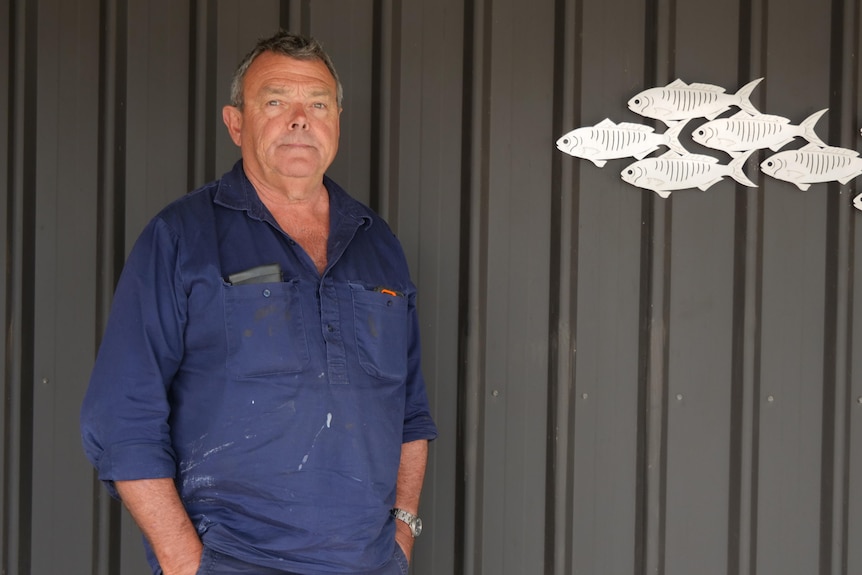
Tony Westerberg supplies bait to commercial and recreational demersal fishers in WA. (ABC Great Southern: Rosemary Murphy)
Mr Westerberg said commercial fishers had been told the catch limits would be implemented as an annual seasonal line and trap fishery closure between April and September, but this had not happened yet.
The Department of Primary Industries and Regional Development said the state government was working with stakeholders and would meet in mid-April to help inform the proposed 50 per cent commercial catch reduction in the South Coast Bioregion.
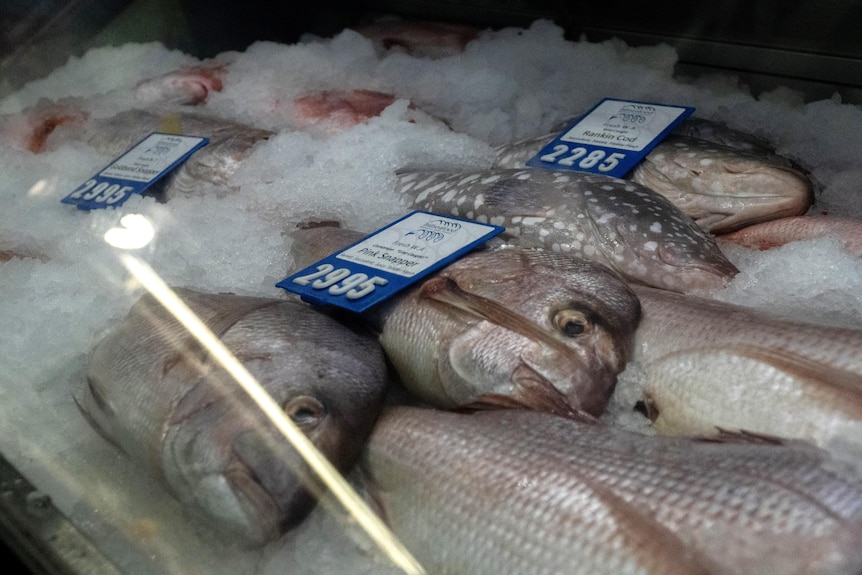
Shoppers are being urged to support local fishers in the lead-up to Easter. (ABC News: Bridget McArthur)