
An oil tanker called the STI Steadfast is currently sailing down the east coast of Australia, bringing a shipment of jet fuel from South Korea.
The value of its cargo has more than doubled in recent weeks.
And while it will dock in Victoria in the coming days, future arrivals of jet fuel may not be so steadfast.
“In April, I think there’s going to be enough jet fuel coming in, but May is a bit of a concern,” said Lurion de Mello, a senior lecturer with Macquarie University’s Centre for Transforming Energy Markets.
Iran war live updates: For the latest news on the Middle East conflict, read our blog.
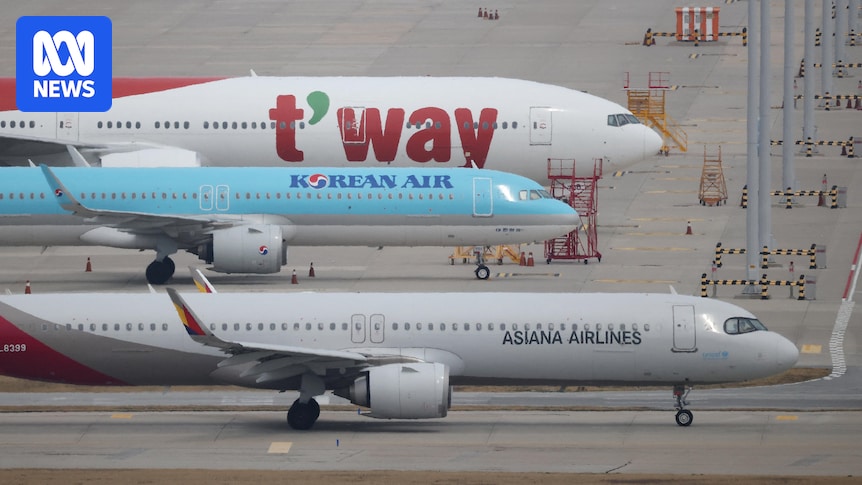
The Iran War and the closure of the Strait of Hormuz have up-ended international air travel.
Across the world, airlines are starting to ground planes, cut routes, and increase prices to try to deal with the soaring cost of jet fuel.
Australia imports most of its jet fuel from Asia, particularly China, Singapore and South Korea.
But those countries rely on the Middle East for crude oil, which local refineries then convert into jet fuel — meaning they are also vulnerable.
“We’re starting to see strains, in terms of supply,” said Zameer Yusof, a senior clean oil products analyst at commodity data company Kpler.
“Our expectation is that we’re going to see refinery run cuts totalling about 2.7 million barrels per day as of April.”
Iran war hits hard on the streets of Asia
That reduction in refining will lead to a decrease in jet fuel production.
Australia’s biggest jet fuel supplier, China, is now restricting exports to prioritise domestic needs.
Mr Yusof said China usually exports around two million tonnes of jet fuel a month, and that has started dropping “dramatically”.
“Next month we expect that to pretty much get sliced in half to one million tonnes or so,” he said.
Singapore, which also supplies a large portion of Australia’s jet fuel, has reached an agreement with Canberra to ensure the continued “flow of essential goods including petroleum oils”.
Australia’s other major supplier of jet fuel is South Korea, which is facing its own problems.
South Korea facing ’emergency mode’ from own airlines
South Korea is one of the world’s biggest exporters of jet fuel, but like much of Asia, its refineries are heavily reliant on crude oil coming through the Strait of Hormuz.
The country has introduced a series of significant domestic energy-saving measures and has put export restrictions on naphtha, another refined oil product.
It has capped jet fuel exports, to keep them at the same level as last year, and a spokesperson for the South Korean transport ministry told the ABC the government “is not considering any measures to redirect jet fuel supplies for domestic use at this moment”.
While Seoul is not stopping the flow of jet fuel, it is facing increasing domestic pressure.
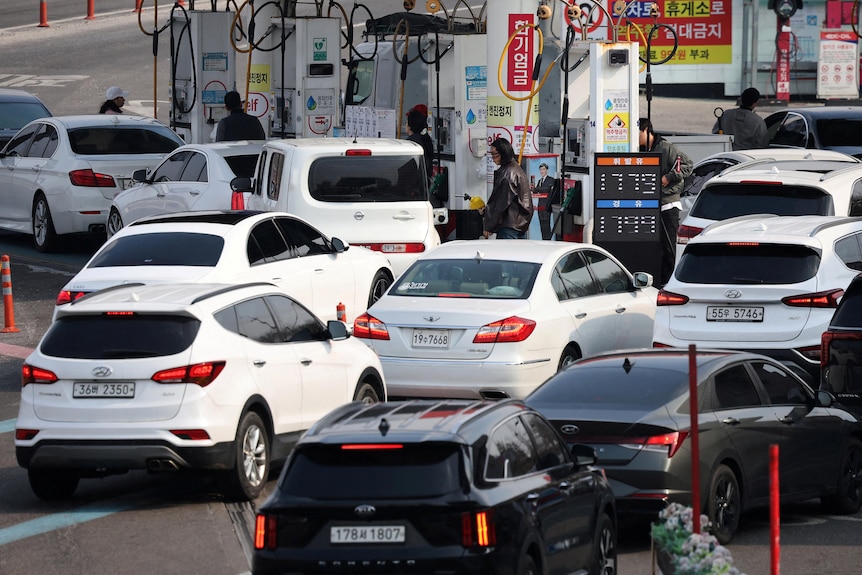
The ongoing war in Iran has raised fears of a widespread oil supply disruption from other Gulf countries. (Reuters: Kim Hong-Ji)
The country’s flagship carrier, Korean Air, recently announced to staff that it was entering “emergency mode”.
The airline told the ABC that will involve “implementing internal cost-reduction measures” but said it had “no plans to ground any flights at this time”.
It is the third airline in South Korea to enter “emergency mode”, according to local news reports.
Mr Yusof said he thinks there is a “material risk” of South Korea restricting exports.
“To me, it’s difficult to see South Korea continuing to export jet fuel unrestrained with this happening in the background,” he explained.
“I strongly suspect the airlines will start lobbying the government for more guaranteed supply rather than allowing exports to Australia and South-East Asia.”
Dr de Mello said, given the close strategic energy partnership between Australia and South Korea, he “wouldn’t be too concerned” but conceded “we don’t know what’s going to happen over the next two or three weeks with the war”.
Jet fuel limits could have flow-on effects for Australian flights
Korean Air said fuel typically accounts for about 30 per cent of total costs, but “that proportion is expected to more than double if current high prices persist”.
While it is currently focused on internal cost-cutting, other airlines have already taken more drastic measures.
Vietnam Airlines is planning to cancel 23 routes per week from this month, according to the country’s aviation authority, while budget airline VietJet will also reduce flights.
Qantas and Virgin have both moved to increase ticket prices, while JetStar is cancelling some flights between Australia and New Zealand.
Air New Zealand is set to cut more than 1,000 flights in the coming months.
Air France, Thai Airways and EasyJet are among those increasing ticket costs, while carriers like Alaska Airlines and India’s biggest airline Indigo are introducing a fuel surcharge.
Airlines in Asia were among the first to start introducing measures to address expected fuel shortages, in what Mr Yusof described as a “sneak preview” of what is to come.
“South-East Asia is sort of the canary in the coal mine for Australia and the rest of the world,” he said.
Mr Yusof said there will be stopgap measures and alternative options in the coming weeks and months, but there will still be shortfalls.
“I think it’s very difficult to expect that you can fly to Bali at will, on short notice, and on the cheap.”
What are the options for Australia?
Australia currently has 30 days’ worth of jet fuel held in reserve.
The country’s limited refining ability has left it “particularly exposed” in the crisis, according to Mr Yusof, but Australia’s natural resources could still be a saviour.
There has been speculation Australia could exchange its natural gas for refined oil products in bilateral deals with countries like China, which Mr Yusof said was “something the government has to pursue”.
There are reports that the prime minister could soon visit Singapore and possibly Malaysia, in a diplomatic effort to shore up Australia’s fuel supplies.
The federal government has also said it has been looking at alternative suppliers.
Dr de Mello said these alternative suppliers could include several tankers from the US, with shipping data showing some “mixed fuel” shipments en route to the country, which he said may include jet fuel.
Mr Yusof described shipments from America as a “band aid”, as opposed to a “sustainable solution”, because of the long voyage times and increased freight costs.
And he warned that the fuel crisis will continue for months.
“We expect this to have a tail that will last at least until the end of the year, even if the conflict stops today.”
Loading…