
A small but destructive species of deer has been detected in New South Wales for the first time in more than a decade.
Hog deer were recently detected by landholders across the Southern Tablelands and the Central West, using images filed by landholders using the feral scan app.
It is the smallest species of feral deer in Australia, with males growing up to just 70 centimetres in height and females up to 60 centimetres.
Authorities are mobilising to eradicate the deer amid concerns about their impact on the environment and the difficulty of trapping them due to their size.
Until now, populations of the pest have been limited to the south east of Victoria, in coastal areas of Gippsland.
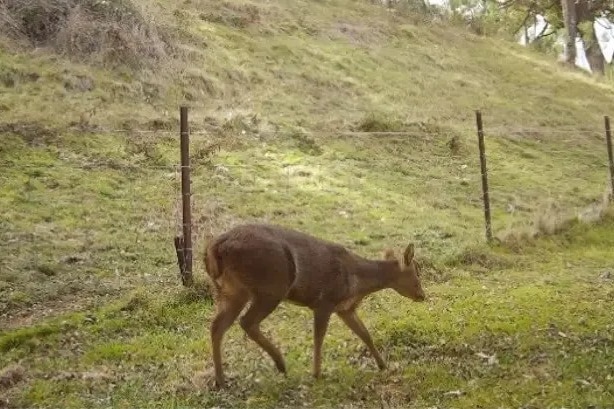
A landholder in southern New South Wales sighted and reported this feral hog deer. (Supplied: Jordan Crooka)
Hog deer were identified in south-east New South Wales in 2014, but were successfully eradicated.
Now small numbers have been found between Blayney and Yass.
Nathan Cutter is the acting manager for vertebrate pests biosecurity at the Department of Primary Industries and Regional Development (DPIRD).
He said there has been at least one confirmed sighting as well as reports from other landholders who have shot a number of hog deer.
“We don’t want a new species of feral deer establishing in New South Wales or anywhere else in Australia,” he said.
“We have confirmed detection of small numbers of hog deer so we’re working collaboratively with landholders in the area to report or control hog deer.
“If they don’t have the skills or equipment to do that management then Local Land Services and contractors will assist.”
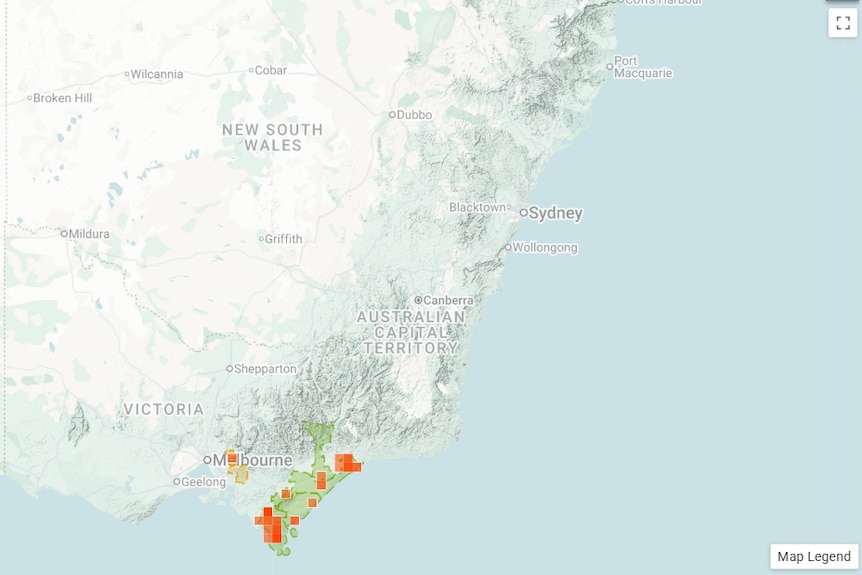
Feral hog deer have established populations in coastal Victoria. (Supplied: Invasive Species Council)
‘Confident’ in eradication
Best practice methods for management of the pest include trapping, ground shooting and aerial shooting in coordination with wider pest control initiatives.
Mr Cutter said he was confident the species could be eradicated.
“At this stage we’re very confident it’s a small number of deer that has been detected … landholders in that area are already aware and we have provided emphasis to that in terms of notifying the wider community.
“There is no evidence to say how the feral hog deer ended up in the Southern Tablelands,” Mr Cutter said.
“We’re taking tissue samples of any feral hog deer that are found and shot and that will help us determine a little bit more information on them through genetic profiling.”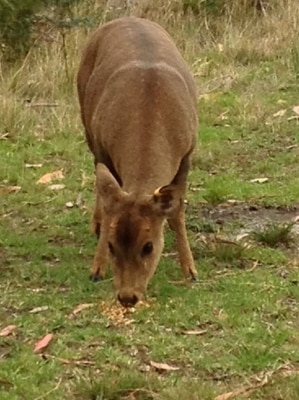
Feral hog deer are the smallest of the feral deer species, and as a result they are much harder to trap and kill.
Possibly ‘deliberately’ introduced
While Mr Cutter cannot confirm how they were introduced into NSW, others believe hunters could be responsible.
CEO of the Invasive Species Council, Jack Gough, said it appeared the deer were deliberately introduced by hunters for sport.
“I’m very concerned that having hog deer, which are only found on the very far south coast of Victoria, turning up thousands of kilometres away in New South Wales tells you that someone has transported them deliberately,” he said.
“I would suspect it is hunters who want to have them for their sport.
“This is bad news and I’m pretty disgusted.”
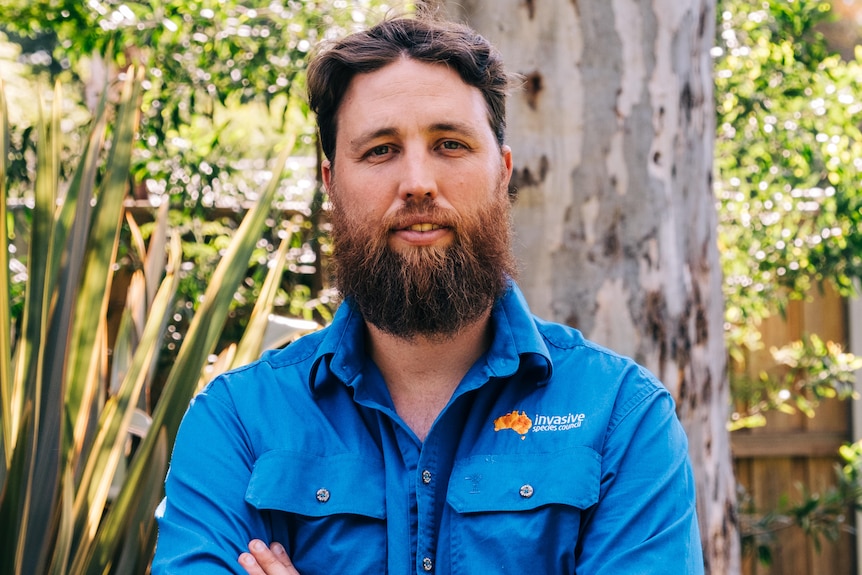
Jack Gough from the Invasive Species Council believes the feral hog deer have been brought into southern New South Wales by hunters. (Supplied: Invasive Species Council)
Mr Gough said the impact on the environment and agriculture could not be underestimated.
“They’re the smallest of the deer species and much harder to catch and kill,” he said.
“[They’ll’] be trashing and trampling the place and having impacts on agriculture, impacts on our bushland and our wildlife.
“We don’t want that extra feral animal brought into New South Wales at a time when we have feral pigs on the rise [and] other deer species like sambar and fallow deer.”