
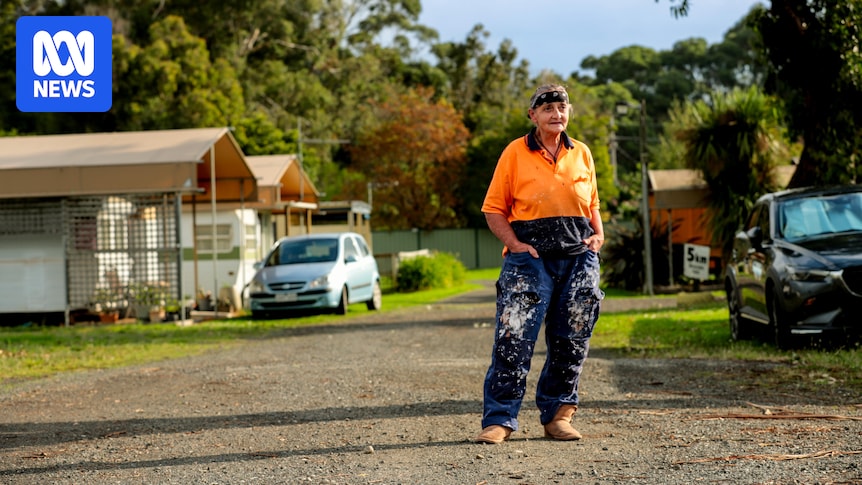
In one small-town community, the ripple effects of the fuel crisis aren’t always where you would think.
It’s roughly 12,000 kilometres from Foster, nestled deep in Victoria’s verdant South Gippsland hills, to the Strait of Hormuz.
Lately, it hasn’t felt so far.
“It’s really disappointing that this has all happened,” says local caravan park owner Noel Sheard.
“We didn’t need this.”
As the US clambers for an off-ramp to the globally disastrous war with Iran, the ripple effects of the fuel crisis it has created are being felt by communities throughout Australia.
In a peaceful pond of a town like Foster, population about 2,000, those ripples are starting to crash into one another.
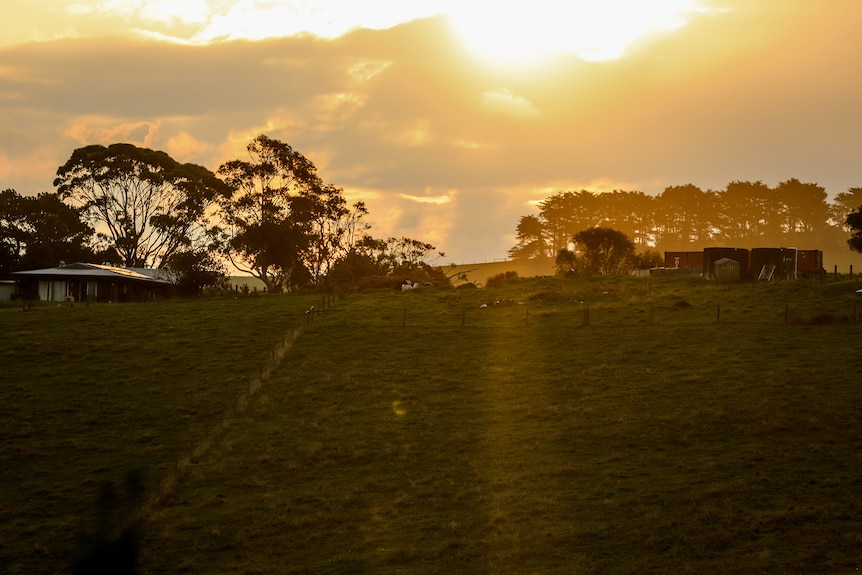 The town of Foster in South Gippsland is surrounded by farming properties. (ABC News: Jeremy Story Carter)
“We should still be busy now,” sighs local cafe owner Nicole Holder.
“But I’ve already started to think about the security of the business going forward.”
The fate of her cafe, like so many livelihoods around the country, has somehow become intertwined with the outcome of an international war.
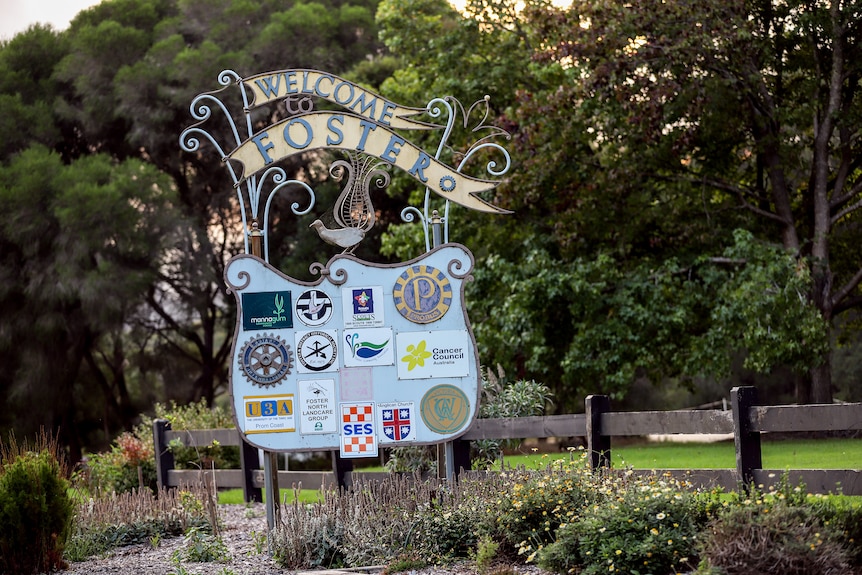 Foster is a gateway town to Wilsons Promontory in Victoria’s South Gippsland region. (ABC News: Jeremy Story Carter)
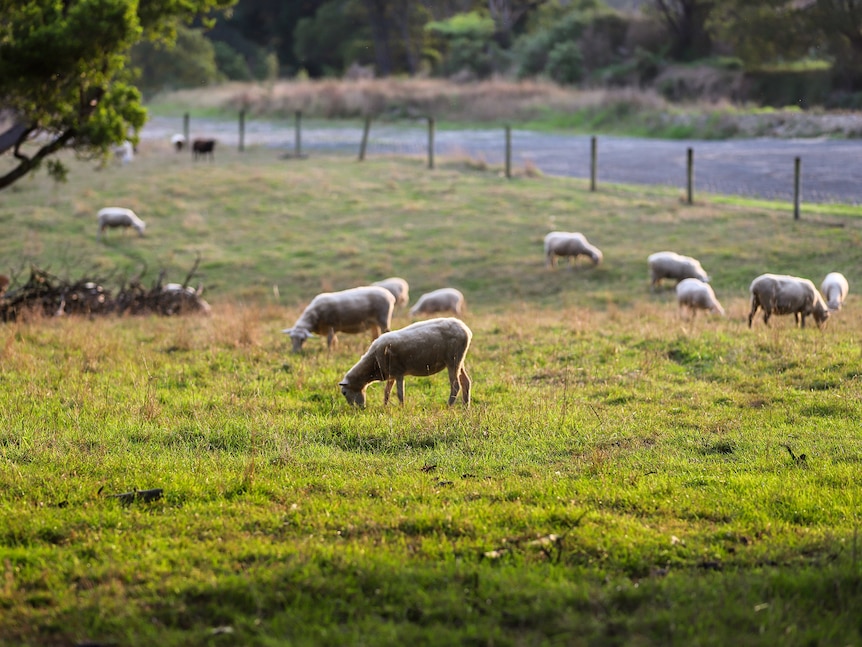 The rural area surrounding Foster supports a range of industries, including livestock farming. (ABC News: Jeremy Story Carter)
It might be bewildering, if there weren’t painfully literal explanations to be seen through her cafe window.
The tourists — both regional and international — who use Foster as a gateway to the picturesque Wilsons Promontory National Park are becoming harder to spot on the main street.
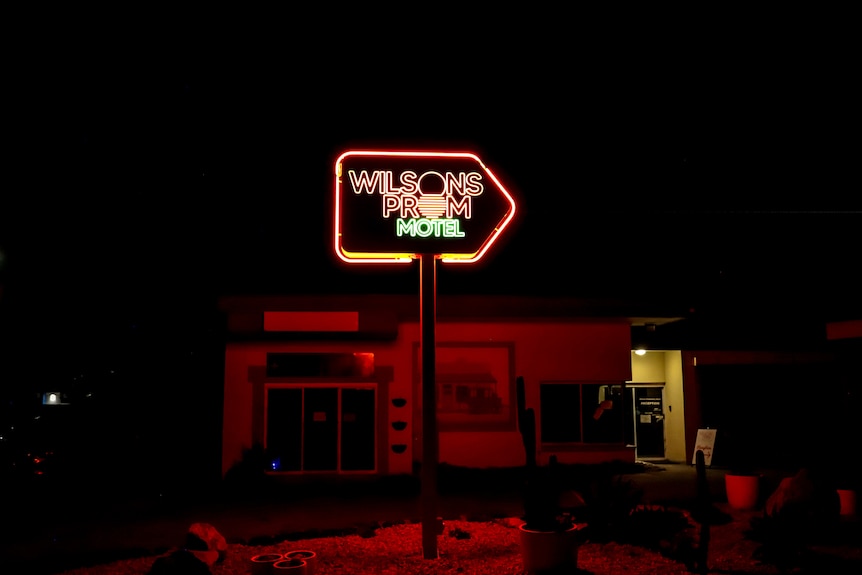 Foster is a gateway town for tourists exploring Wilsons Promontory National Park. (ABC News: Jeremy Story Carter)
Locals, who almost to a person rely on cars or trucks to get around, are spending more on fuel and less on coffees.
“The last two weeks have been definitely lower, and we noticed a dramatic drop-off from last week to this week,” Holder says.
As customers spend less, deliveries of coffee beans and other ingredients from Melbourne, a 2.5-hour drive away, are now costing more due to fuel levies.
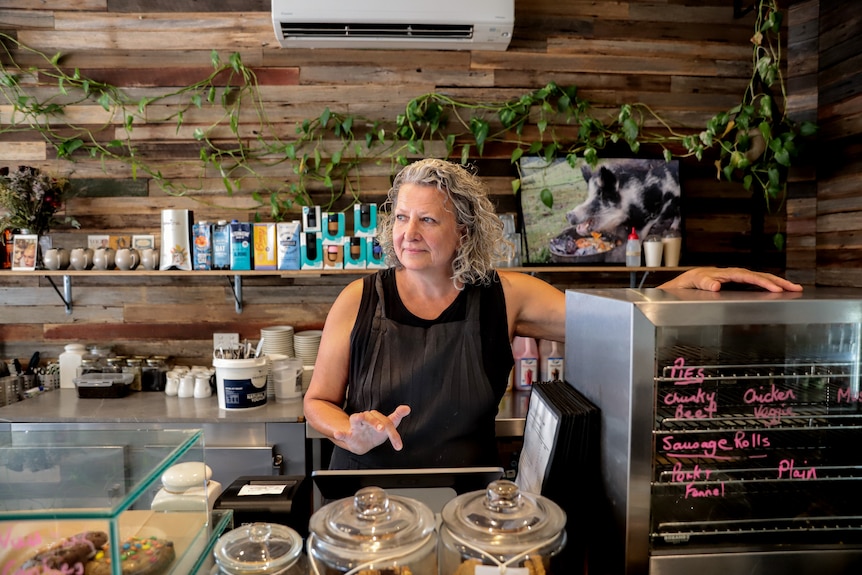 Nicole Holder runs a cafe in Foster.(ABC News: Jeremy Story Carter)
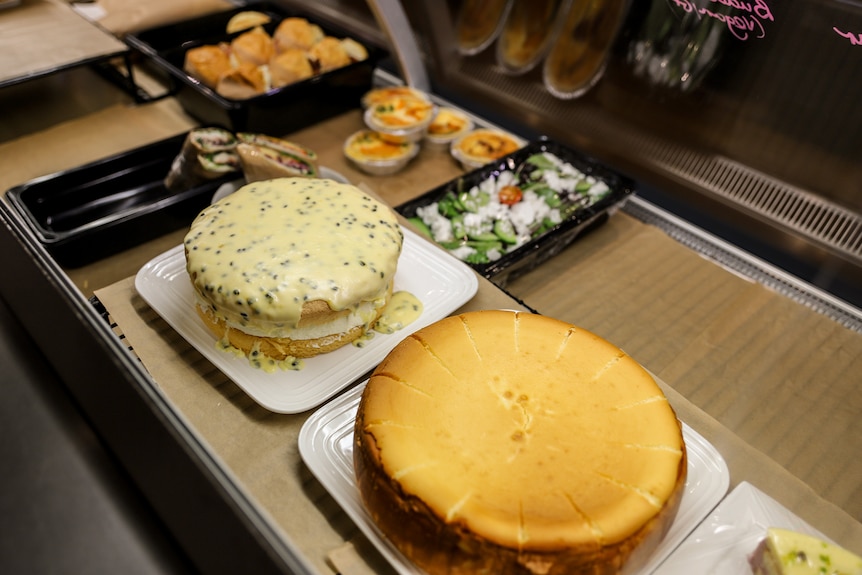 Cakes at The Kitchen Table cafe in Foster.(ABC News: Jeremy Story Carter)
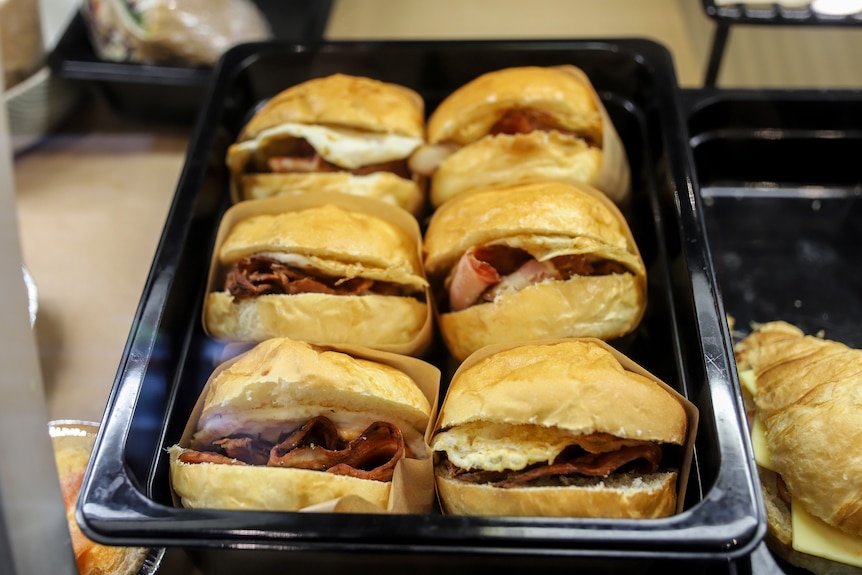 Bacon and egg rolls for sale at The Kitchen Table cafe in Foster.(ABC News: Jeremy Story Carter)
The cafe is closing earlier each day.
Holder has been caught in a bind: she is now buying over a fortnight block instead of weekly to reduce the number of deliveries, and pulling back on menu items with a short shelf-life such as salads, to reduce wastage.
All the while, she is wary of passing on rising costs to cash-strapped locals.
There’s only so much she can absorb.
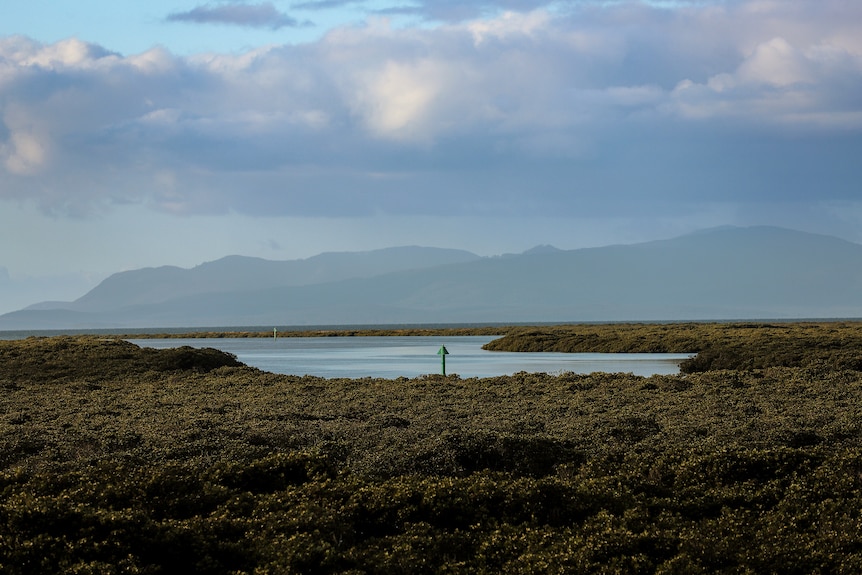 Wilsons Promontory looms prominently on the horizon from Port Franklin and Foster.(ABC News: Jeremy Story Carter)
“If we can’t keep open at the same rate that we’re used to, then I’m going to have to start reducing staff hours, and hopefully not having to lay anybody off,” she says.
“But if it gets any worse than it is, that could be a possibility.
“It would be very hard because some of the staff need these jobs.”
Under the pump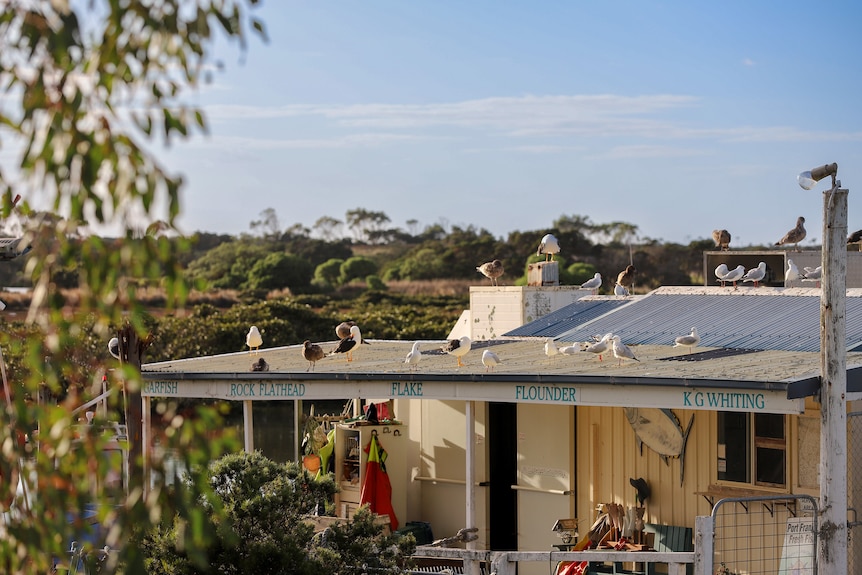 The nearby fishing port of Port Franklin is a base for local fishermen supplying fresh fish to the wholesale market.(ABC News: Jeremy Story Carter)
Across the road at Foster Seafoods, where luminescent rows of locally caught fresh fish lay in wait of an Easter rush, there is news from offshore.
“We have heard of one particular trawler that may not be going out again after it unloads today,” owner Alice Duncan says.
“They will be tying up at the wharf until fuel prices come back down because their fuel has gone … rather high.”
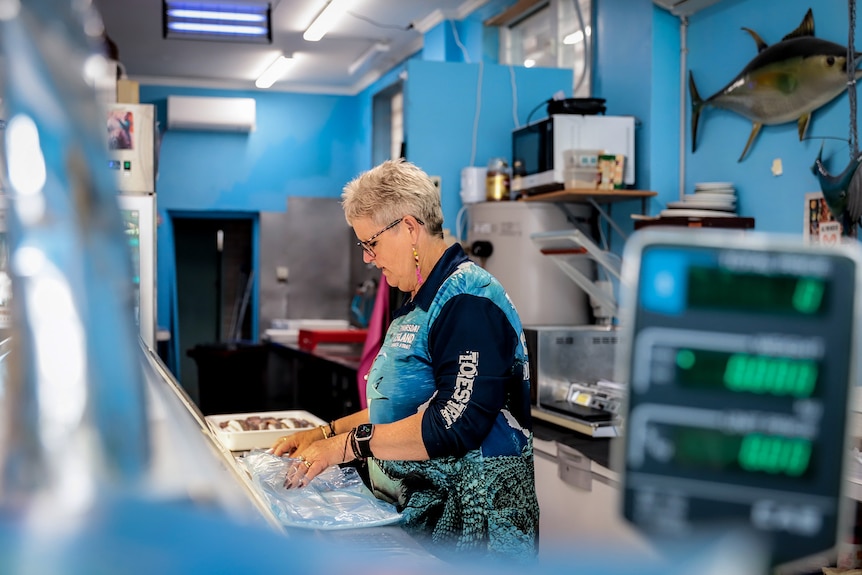 Alice Duncan from Foster Seafoods.(ABC News: Jeremy Story Carter)
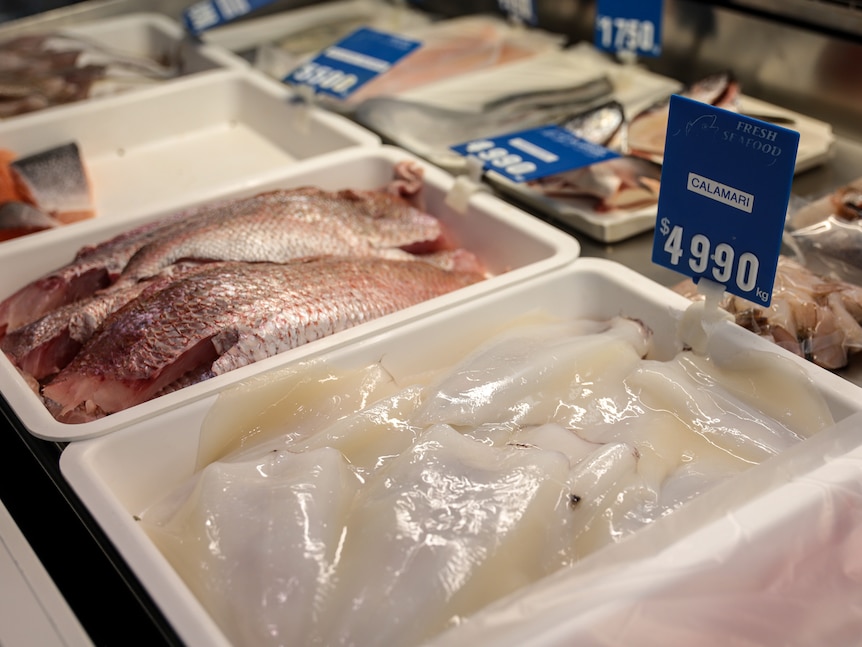 Fresh fish at Foster Seafoods.(ABC News: Jeremy Story Carter)
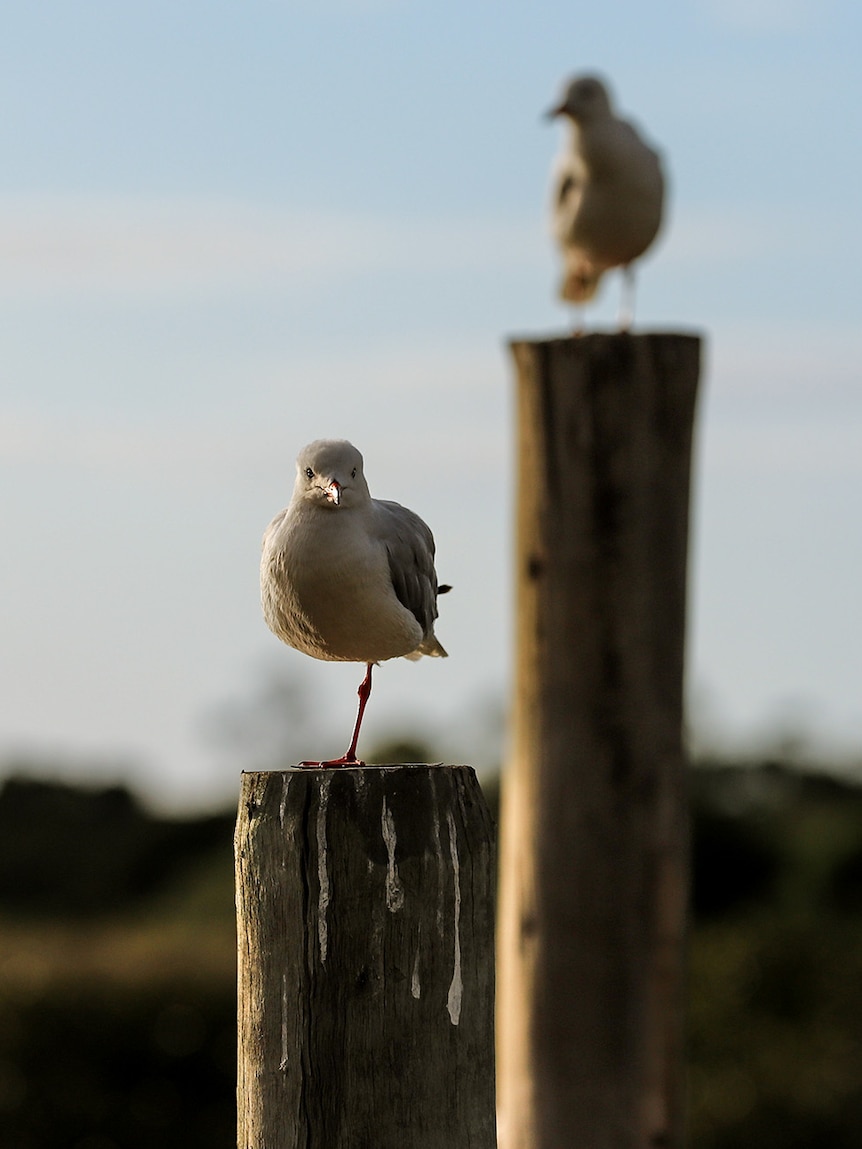 The fishing port of Port Franklin is just a few kilometres south of Foster, on Corner Inlet.(ABC News: Jeremy Story Carter)
A little further on at the lawn bowls club, seniors Ian McLeod and Norm Cooper amble across the green under greying skies.
“To get to Foster, everything’s got to come by truck, right? There’s no other way,” McLeod, 71, says.
“Anything that’s gone to the supermarket has already noticeably gone up.
“But if you haven’t got the money already and now it’s got dearer … well, it certainly isn’t making it any easier.”
 Locals on the green at the Foster Bowls Club.(ABC News: Jeremy Story Carter)
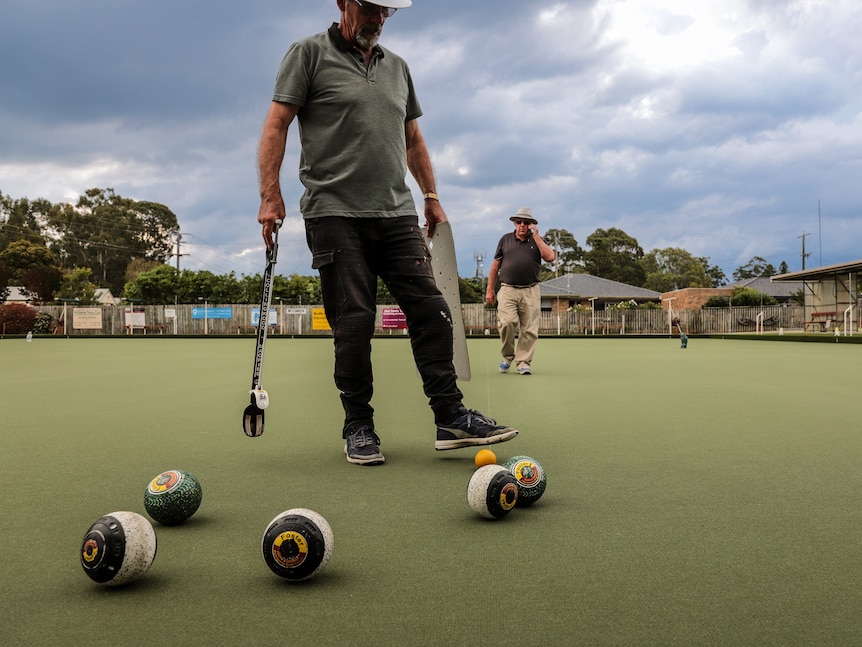 Locals on the green at the Foster Bowls Club.(ABC News: Jeremy Story Carter)
Members often travel to towns around Gippsland to play against other lawn bowls clubs.
It is done in the name of friendly competition, but it is also how the clubs support each other’s survival.
Even with government measures to bring down the cost of fuel, that activity could be at risk.
“The old petrol money that we all share to go to bowls clubs is starting to get from $20 to now you need $50. That’s a lot of money. A lot of money,” McLeod says.
“It’s not good for your mental health to not get out of the house.”
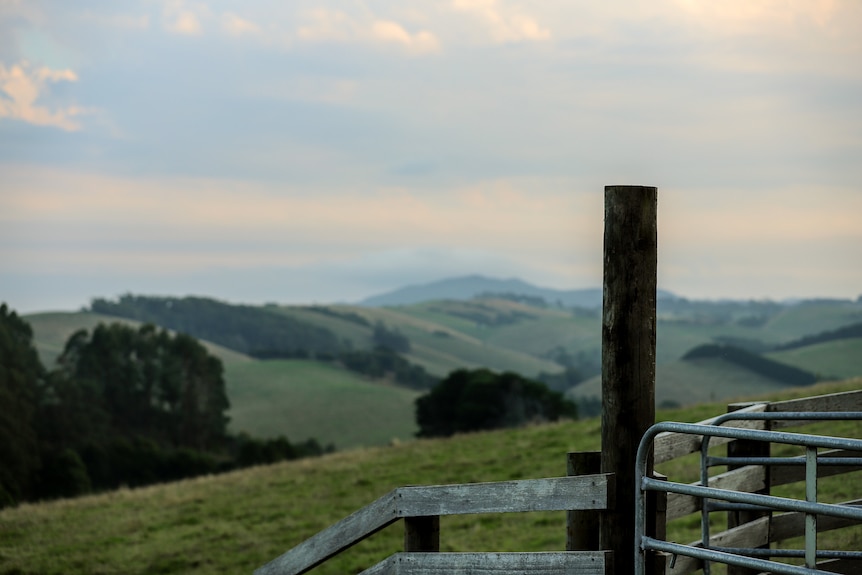 The distances locals need to travel in the region are becoming a bigger problem during the fuel crisis.(ABC News: Jeremy Story Carter)
Over the fence at the football ground, where the club is still celebrating former junior-turned-West Coast Eagle Willem Duursma being taken as the no.1 pick in last year’s AFL draft, fuel is the talk of training.
“On Saturday we have to be in Tooradin [more than 100km away] by 8:45am — so it’s a case of carpooling, because we can’t afford to do one trip for one child,” says Foster local Shannon, as her son jogs across at the end of training.
“I’ve never heard so much talk about carpooling.”
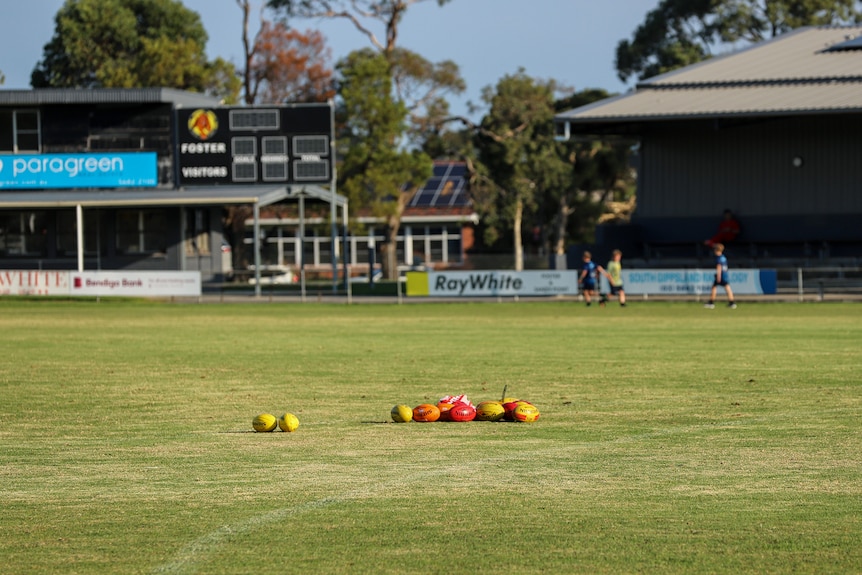 The local footy team is an integral part of the community in the rural town of Foster.(ABC News: Jeremy Story Carter)
 Foster Football and Netball Club is a hub for junior sport in the area.(ABC News: Jeremy Story Carter)
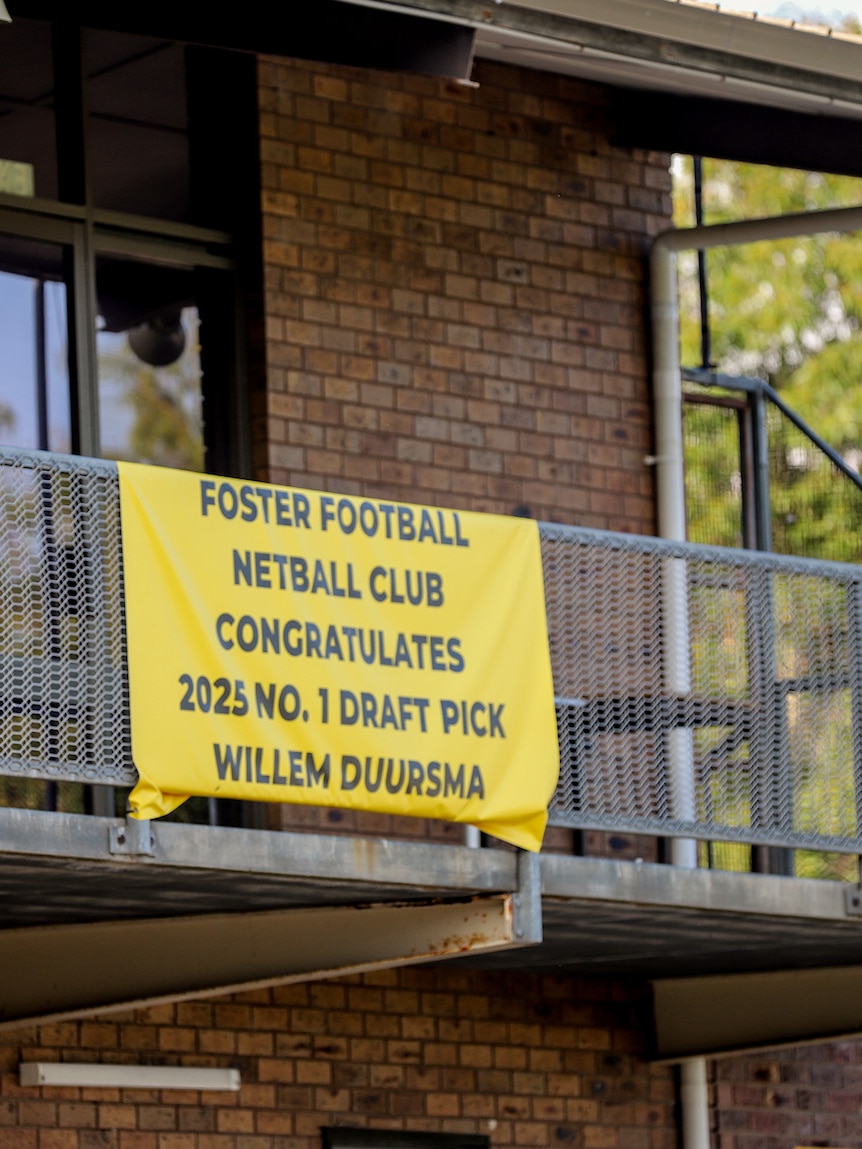 Former Foster junior Willem Duursma recently debuted for West Coast Eagles after being taken no.1 in the draft. (ABC News: Jeremy Story Carter)
 The football club sits at the heart of the community in Foster.(ABC News: Jeremy Story Carter)
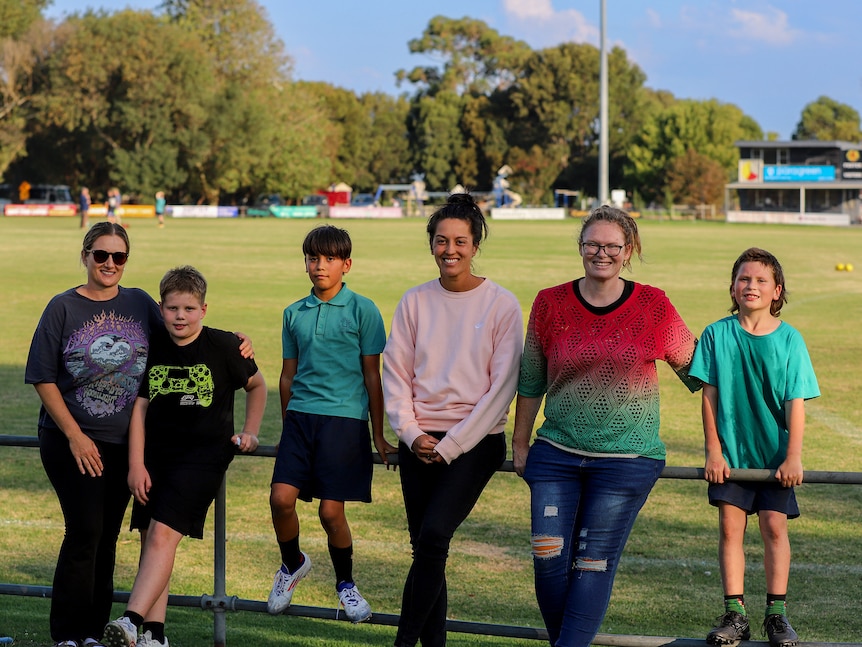 Sport, such as junior football, is a big part of the rhythm of life in the rural town. (ABC News: Jeremy Story Carter)
She had planned on making the almost 9-hour round trip to Bendigo this week for her parents’ 50th wedding anniversary.
“I said to Dad, ‘I’ll come up and take you out for lunch,’ and he said, ‘No, don’t do that. It’ll cost you twice as much,'” she says.
“It doesn’t feel right.”
‘Everything’s dead’ 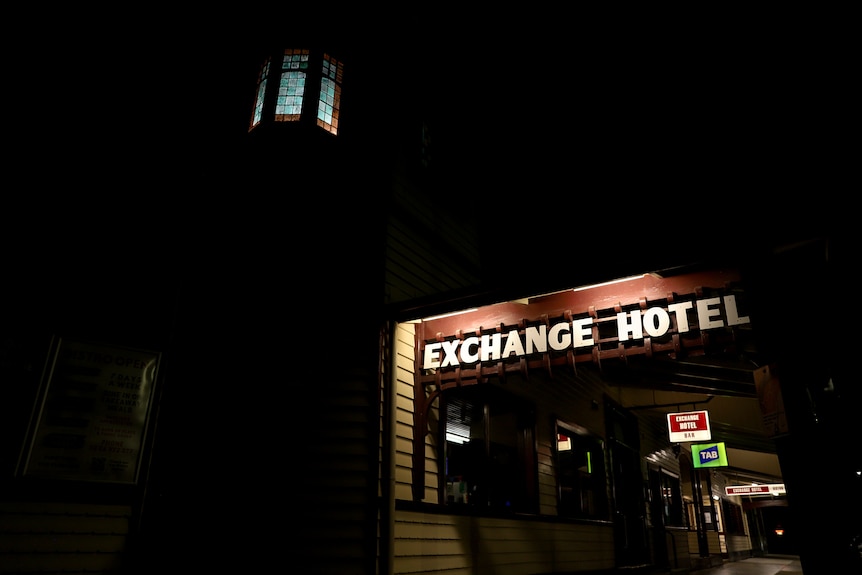 The Exchange Hotel in Foster.(ABC News: Jeremy Story Carter)
At the nearby pub, duty manager Anthea Busuttil says there is a COVID-era reflex kicking in around town.
Everyone feels like things could change again at a moment’s notice.
“Talk to anyone around here and they have some sort of opinion about the petrol or diesel prices,” she says.
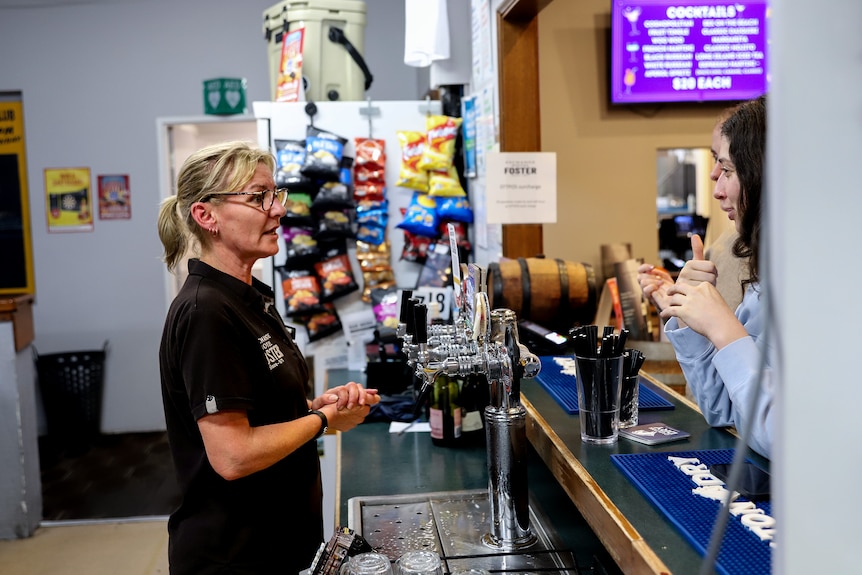 Anthea Busuttil serving customers.(ABC News: Jeremy Story Carter)
Over the bar, Rex Williams nods in sleeveless affirmation.
A former truck driver who grew up in town, Williams is quick to point to the impact on the trucking industry.
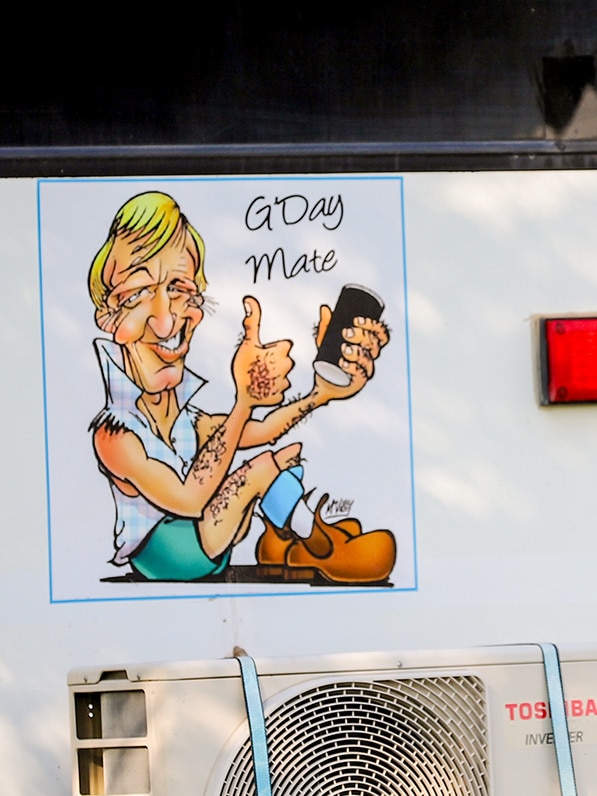 Tourists and road trippers pass through Foster to explore Wilsons Promontory and surrounding regions. (ABC News: Jeremy Story Carter)
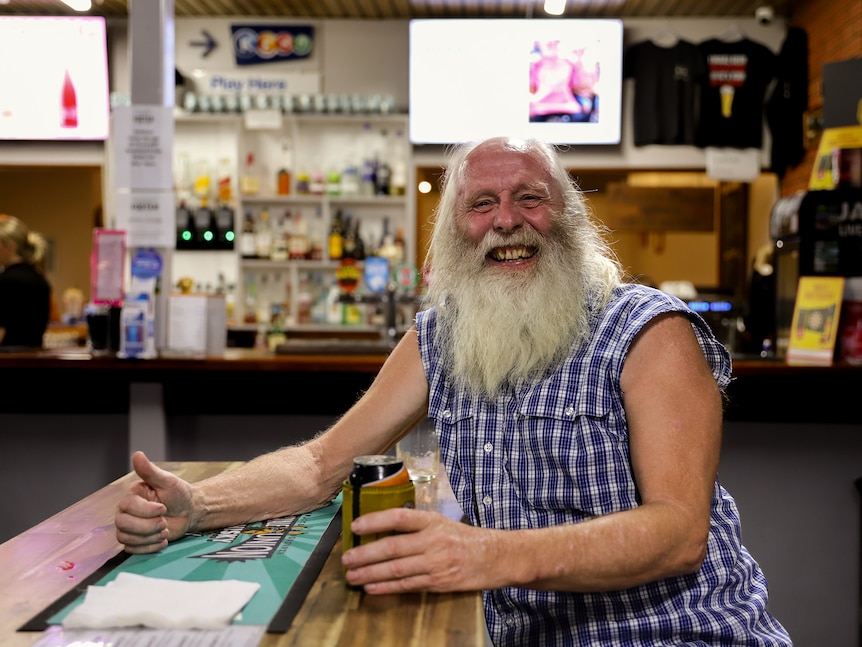 Foster local Rex Williams props up the bar at the town’s Exchange Hotel. (ABC News: Jeremy Story Carter)
The government may have eliminated the heavy vehicle road user charge for the next three months, but he says those in the industry have been hurting.
“All that food and everything you see in the supermarket, somewhere on the way it has had to be on a truck,” he says.
“A lot of guys I’m talking to, it has been cheaper to turn around and park the trucks. You’re not going forward, but you’re not going backwards.”
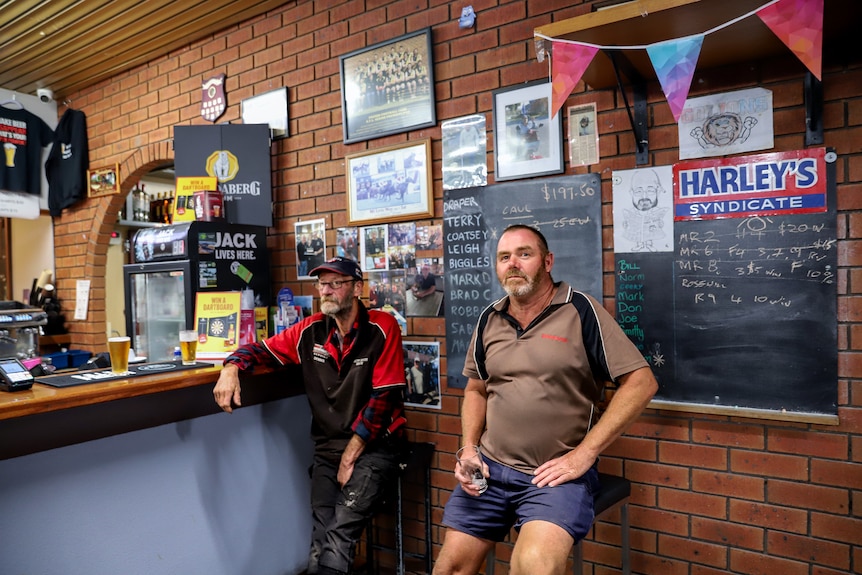 Chris Carns’s trucking business has come to a complete halt due to fuel prices.(ABC News: Jeremy Story Carter)
At a nearby bar stool, Chris Carns says his trucks have not gone anywhere all week.
“Everything has just stopped,” says Carns, who has two semi-trailers that normally deliver hay and other items to farmers.
“Everything’s dead. This is way worse than COVID for us. It’s pretty scary.”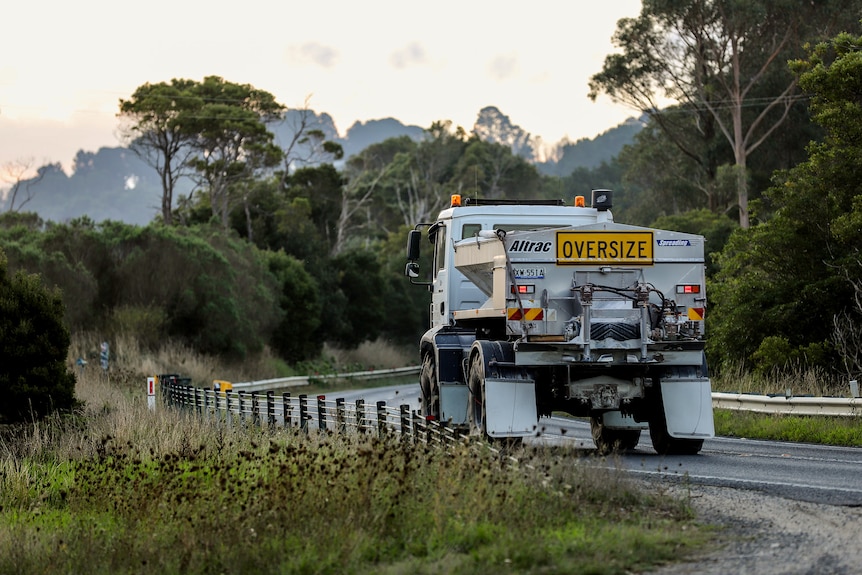 The rural community in South Gippsland is home to agricultural and other industries. (ABC News: Jeremy Story Carter)
Just out of town, dairy farmer Mitchell Jones should be pleased with the farm’s bumper crop of maize.
Only, he can’t help but think how much extra it’s going to cost to harvest this year.
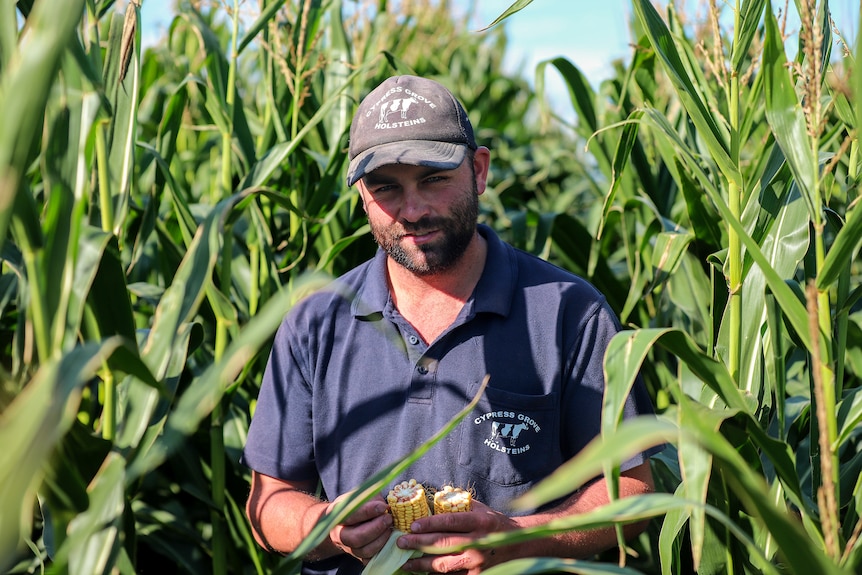 Mitchell Jones inspects a maize crop ready for harvest on his family’s farming property, outside Foster in South Gippsland.(ABC News: Jeremy Story Carter)
“I can’t expect [contractors] to charge the same amount as what they did last harvest,” he says.
“But we can’t do without it.
“The work’s got to be done.”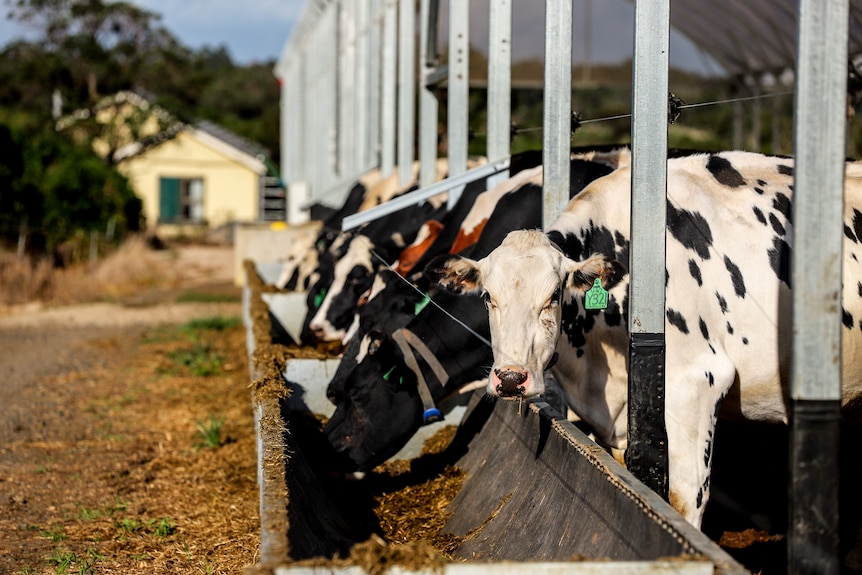 Holstein cows feeding on the Jones family farm, just outside of Foster. Dairy farms are a common sight in the region.(ABC News: Jeremy Story Carter)
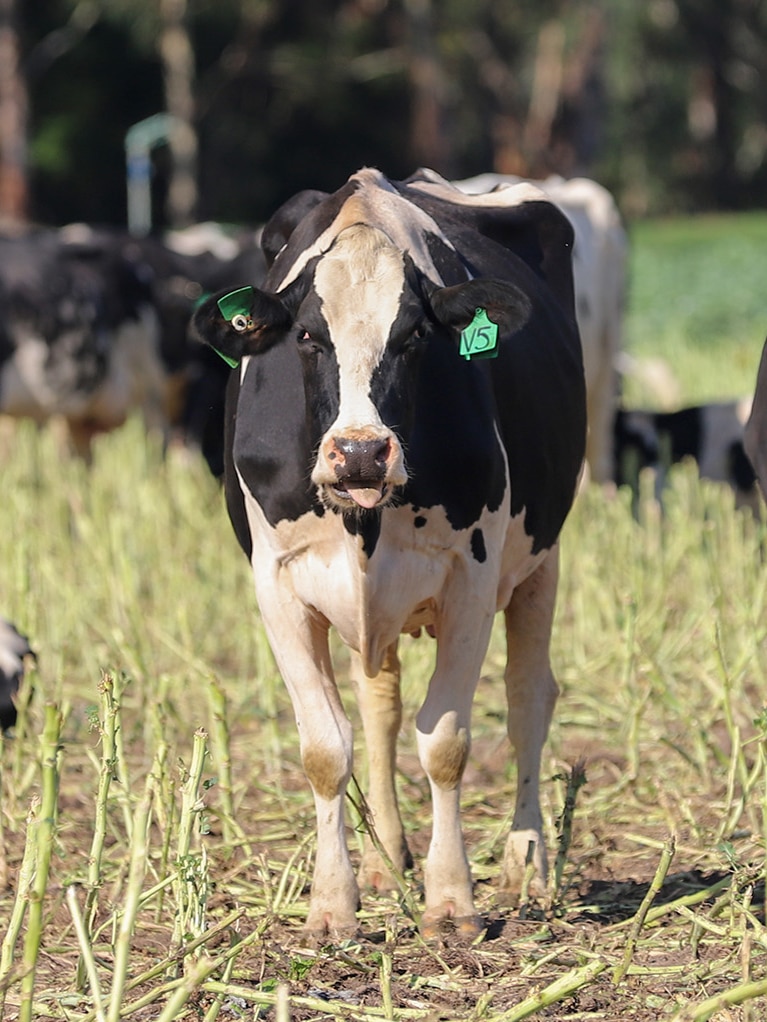 Dairy farming and other agriculture are major industries in South Gippsland.(ABC News: Jeremy Story Carter)
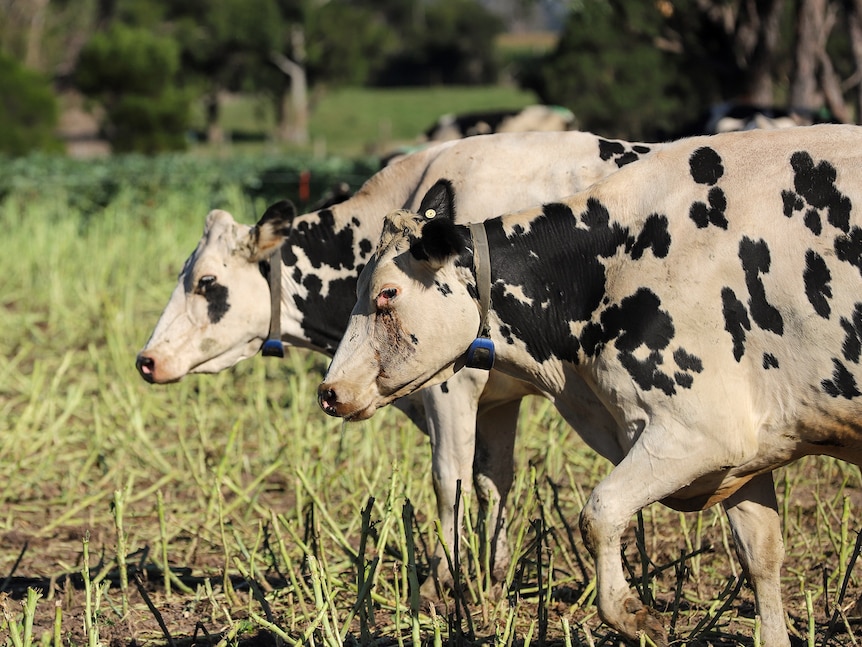 About a third of Victoria’s milk supply comes from dairy farms in the South Gippsland region.(ABC News: Jeremy Story Carter)
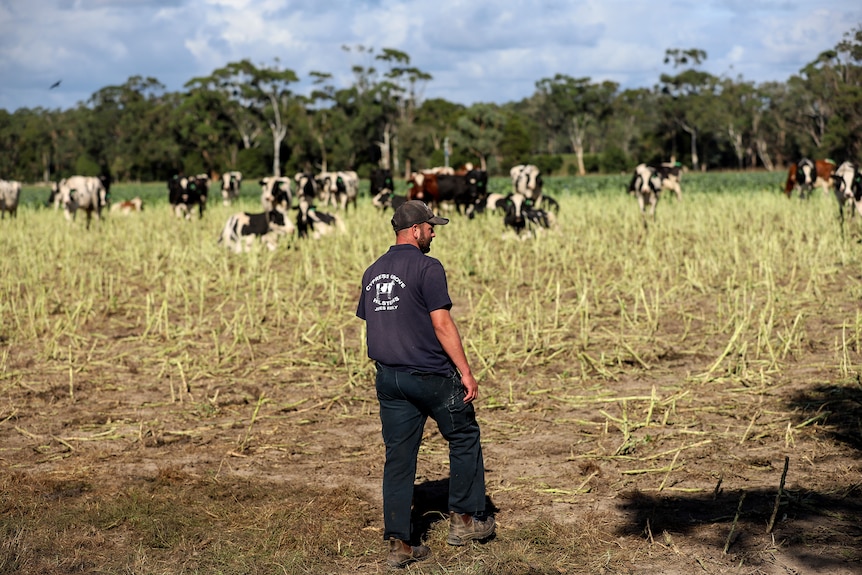 The Jones family runs a Holstein stud at Cypress Grove, just out of Foster.(ABC News: Jeremy Story Carter)
About 150,000 litres of milk is transported out of the farm each week.
Given everyone involved in the supply chain is experiencing cost pressures, Jones thinks the price of milk in supermarket fridges may ultimately have to rise.
Alongside tractors, quad bikes and machinery, the farm has a mixer that uses 100 litres of diesel each day to blend crops such as maize with pasture for a protein and energy-rich feed for 850 Holstein cows.
The sharp rise in diesel costs has made it a punishing line item on the family farm’s balance sheet.
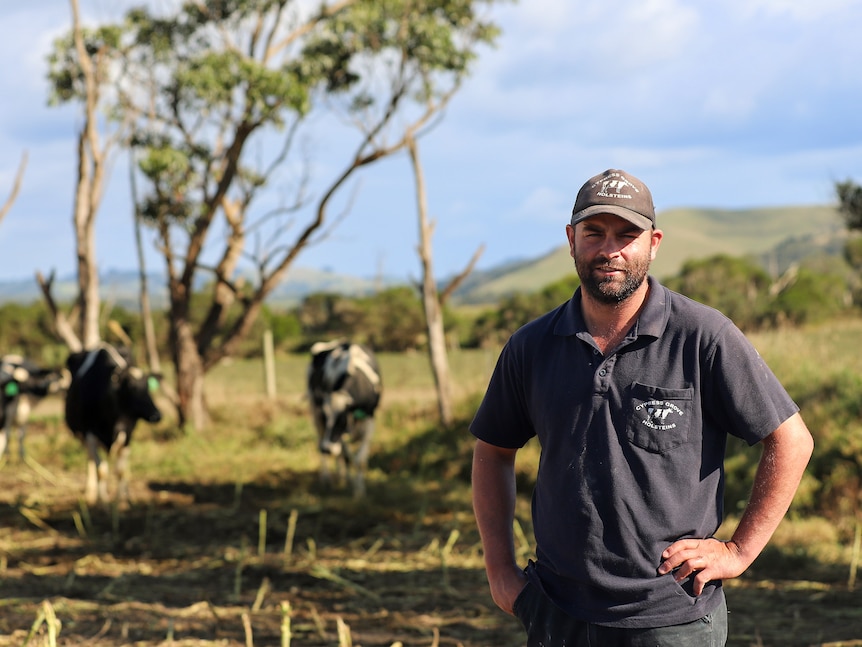 Mitchell Jones and his family have Holstein cows on their farming property outside of Foster.(ABC News: Jeremy Story Carter)
“We were not exactly getting ourselves way in front as it was, so this is going to be another challenge,” he says.
“At the moment, it’s in freefall.”
If you look out from the Jones dairy farm to the South Gippsland Highway, you might see James MacFadyen’s taxi winding around the hillside.
MacFadyen started his taxi business six years ago after his mum split her head open but couldn’t find a lift back from hospital.
She ended up driving herself.
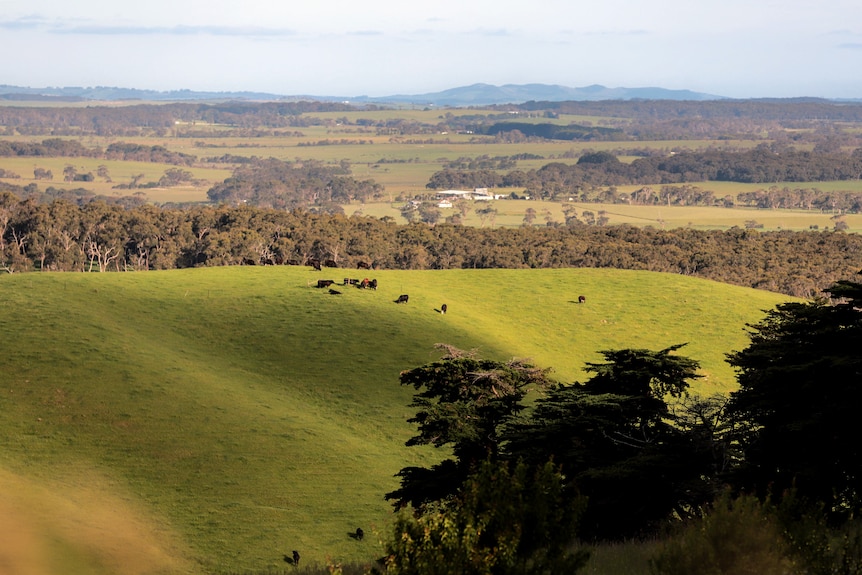 The rolling hills of South Gippsland.(ABC News: Jeremy Story Carter)
Many of his customers are elderly locals who need help getting to medical appointments.
Some just want to come into town to meet up with friends.
“We have an aging community and a lot of people are coming to an age where they can’t drive safely anymore,” MacFadyen says.
“They’re still able to go and do things, but they just can’t get transport to go out, or they’re relying on their family and friends and they feel like they’re being a burden on them.
“A lot of the customers have said that we are the difference between them being dependent and independent.”
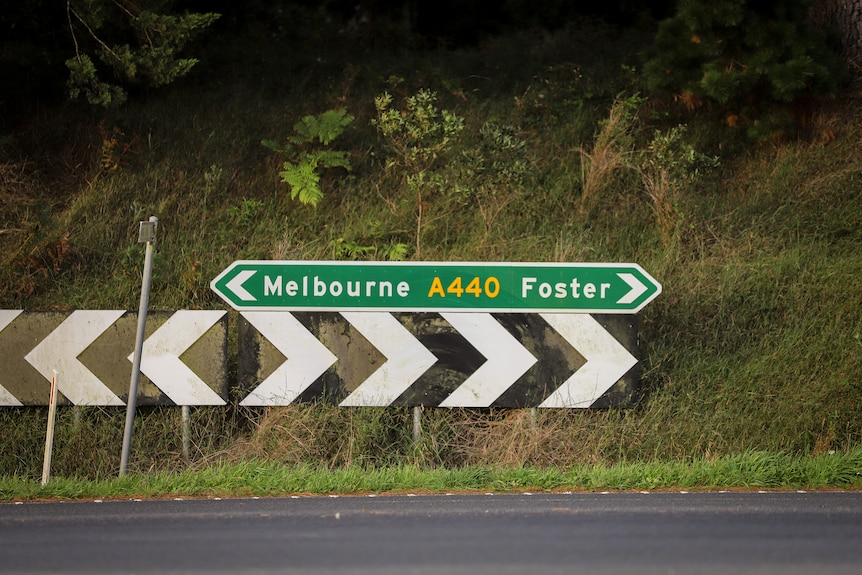 Foster is about a 2.5-hour drive out of Melbourne.(ABC News: Jeremy Story Carter)
 Many of James MacFadyen’s customers are elderly and need help getting to medical appointments.(ABC News: Jeremy Story Carter)
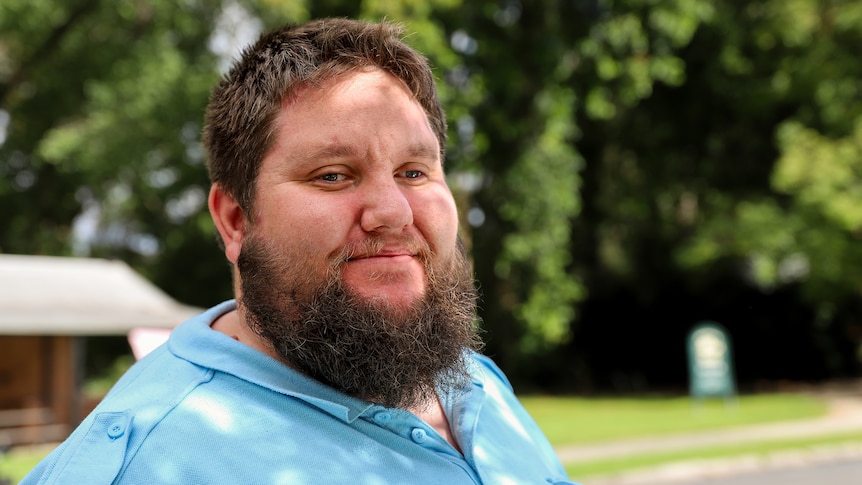 James MacFadyen runs a taxi business around Foster.(ABC News: Jeremy Story Carter)
It is not a lucrative line of work.
Some of MacFadyen’s fares might involve him travelling dozens of “dead kilometres” around country roads to pick up a customer, only to drop them off after a comparatively short fare.
Even with temporary fuel excise relief, the high cost of petrol has increasingly made his work unsustainable.
He is now anxiously awaiting the fuel card invoice for his last month of petrol use, but he knows it is going to be a shocker.
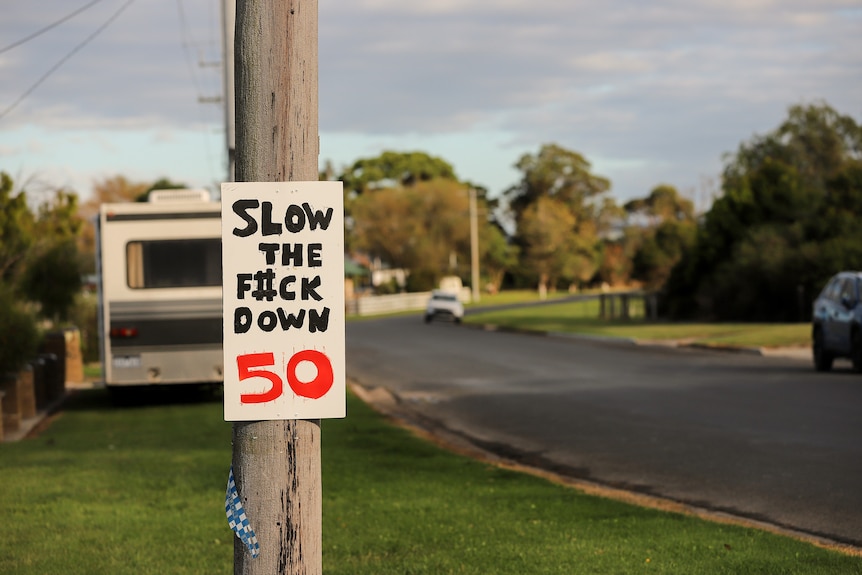 Many residents in the region live outside towns on farming properties.(ABC News: Jeremy Story Carter)
“It’s just one of those things where we can’t work out the happy medium,” he says.
“I just don’t know if the business is going to be able to continue to operate.
“I am quite concerned and unfortunately it might come to a stage where the business has to be put on hold.”
The hidden cost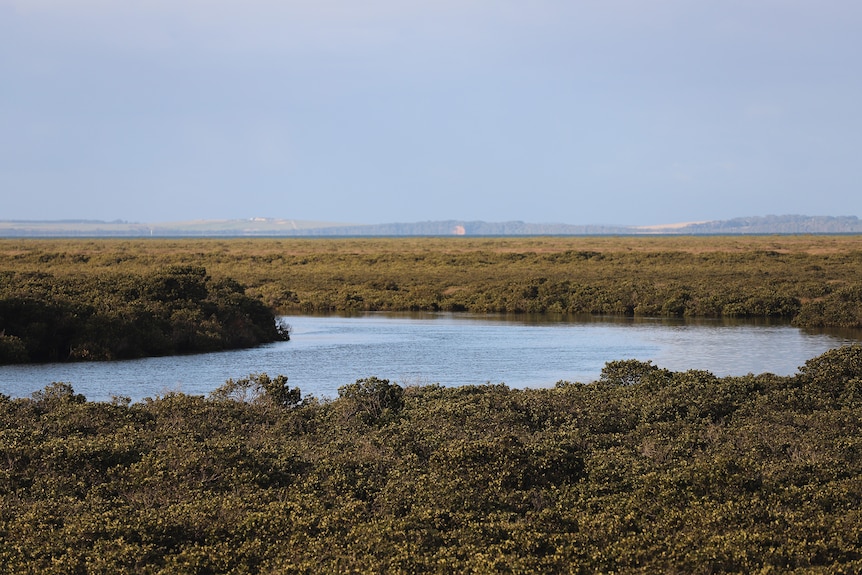 The popular tourist destination of Wilsons Promontory can be seen in the distance, across Corner Inlet, from Port Franklin and Foster.(ABC News: Jeremy Story Carter)
Like other tourist towns, many of the rooms in Foster’s local motels and accommodation providers will sit empty this Easter weekend, as cancellations piled in over the past fortnight.
At the caravan park in town, it’s not family holiday makers who are on the mind of owners Noel Sheard and Christine Donaghey.
“We don’t have a lot of kid facilities here,” Donaghey says.
“We get mainly retirees and workers. They say it’s ‘peaceful’ here.”
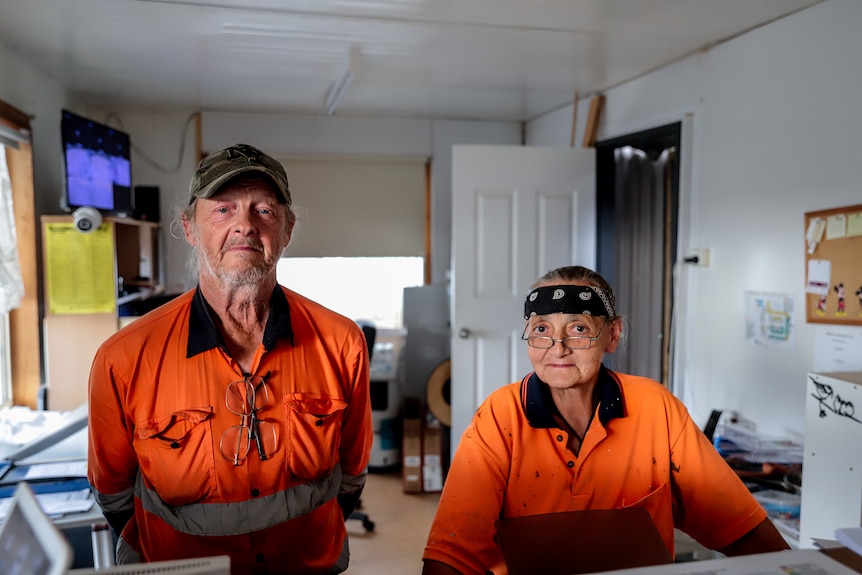 Noel Sheard and Christine Donaghey own and operate the caravan park in Foster.(ABC News: Jeremy Story Carter)
Toward the rear of the park, past the caravans of grey nomads, are a series of residents’ units.
When the two took over the business, there were legacy issues of drug use among some of the occupants.
In the three years since, the owners are proud of how they have turned around the look and feel of the place.
A love heart pendant hanging in their office reads: “Today is going to be the best day ever.”
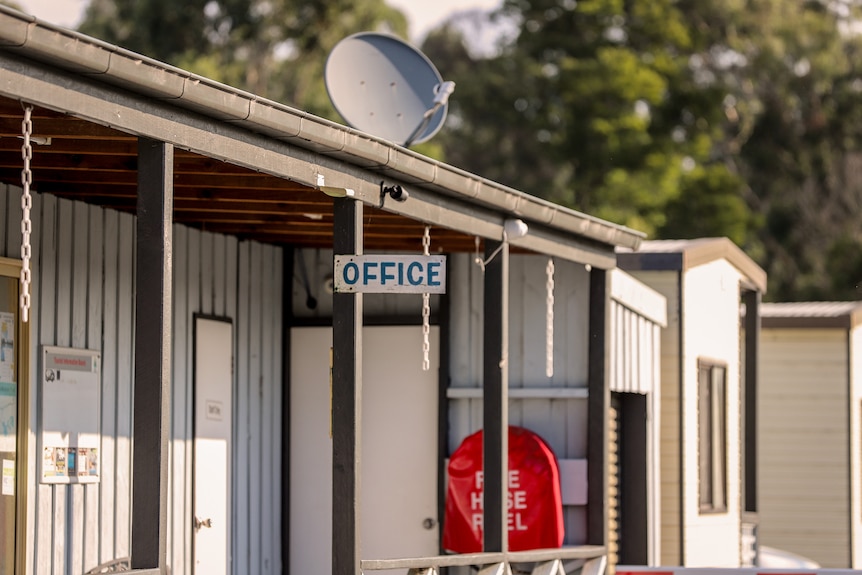 The Prom Central Caravan Park in Foster hosts travellers, as well as permanent residents.(ABC News: Jeremy Story Carter)
 Noel Sheard and Christine Donaghey have added their personal touches to the caravan park, since taking ownership.
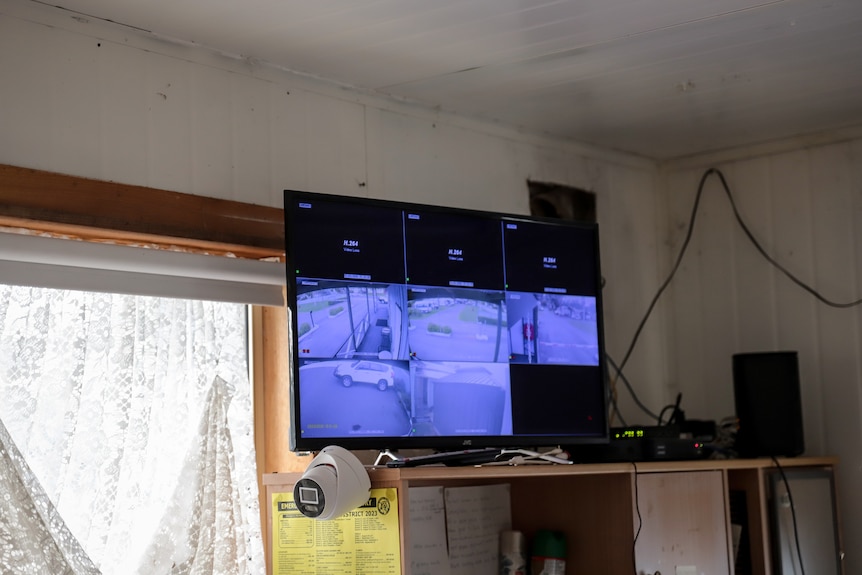 From their office, Christine Donaghey and Noel Sheard can keep an eye on activity on the property.(ABC News: Jeremy Story Carter)
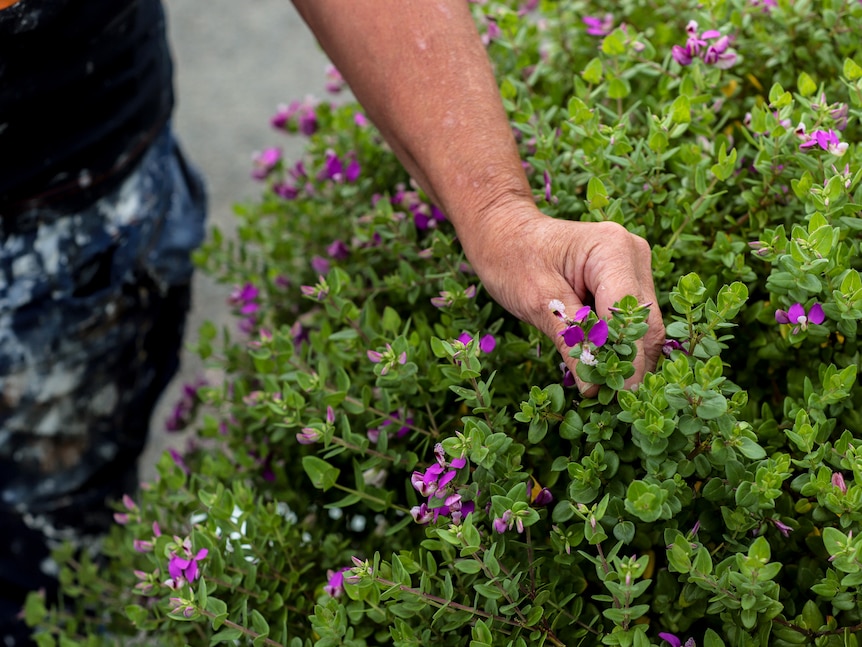 Noel Sheard and Christine Donaghey have tried to clean up the caravan park and make it more welcoming, by adding touches like flowering plants.(ABC News: Jeremy Story Carter)
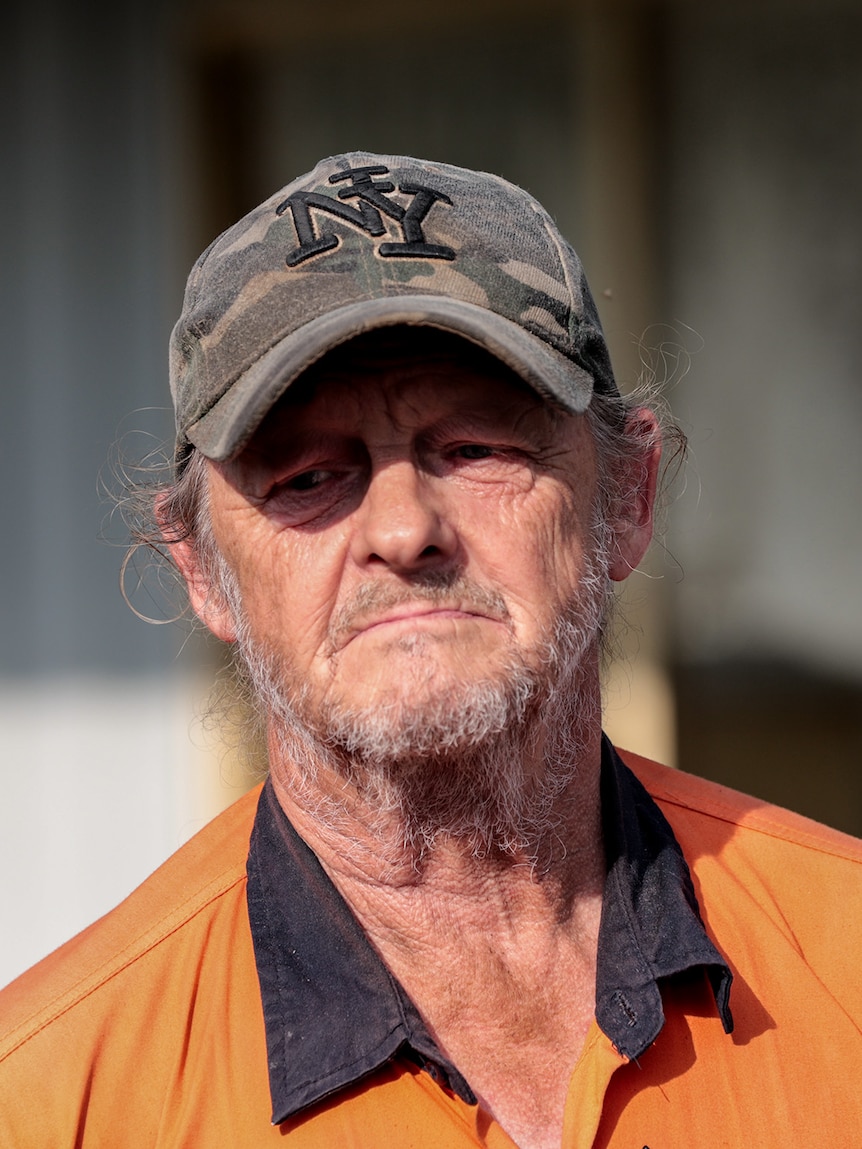 Noel Sheard and Christine Donaghey took over the Prom Central Caravan Park, in Foster, about three years ago.(ABC News: Jeremy Story Carter)
“It’s not great to be saying, ‘I have to move into a caravan park’ because they’re not the most fantastic living arrangement in the world, but we try and make it as pleasant as we can for everyone here,” Donaghey says.
“Sometimes you might get two or three calls in one day for people looking for a place to live who have come to a situation where they are desperate.
“I’m talking just nice, ordinary, everyday people.”
For $250 a week, residents get accommodation, electricity, gas and water.
As the business contends with greater costs but potentially fewer travellers, that figure might have to rise.
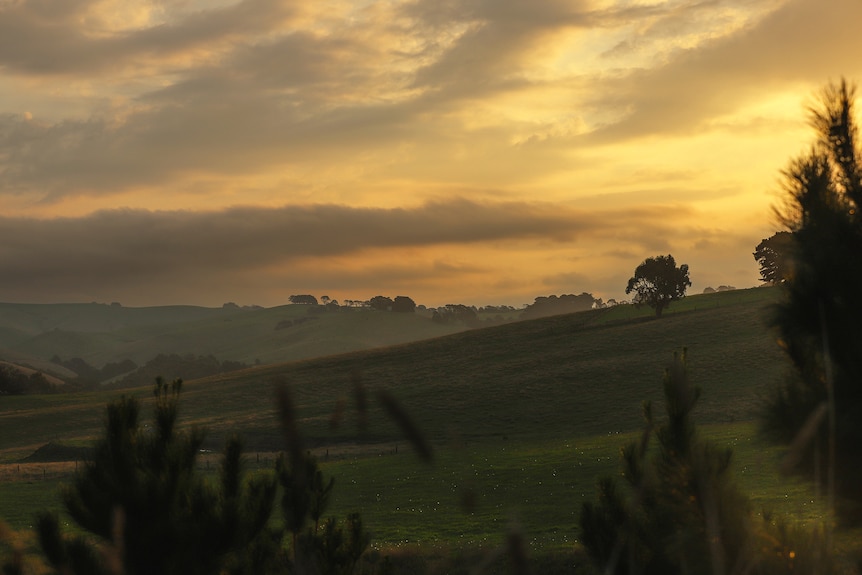 The cost of driving to South Gippsland may have become prohibitive for some travellers.(ABC News: Jeremy Story Carter)
The fuel crisis may be the tipping point, but it is compounding an already fraught economic moment for the park and its residents.
“We haven’t put up our rental prices for three years, but I just said to Noel this morning, ‘I don’t think we can do that much longer,'” she says.
How are rising fuel costs affecting you and your community?
Share your story to help inform our journalism.
“We’ve tried to absorb it as much as we can, but I think it’s come to the stage where we’re probably going to have to try and increase.”
In a rare national address on Wednesday, Prime Minister Anthony Albanese conceded “the months ahead may not be easy“.
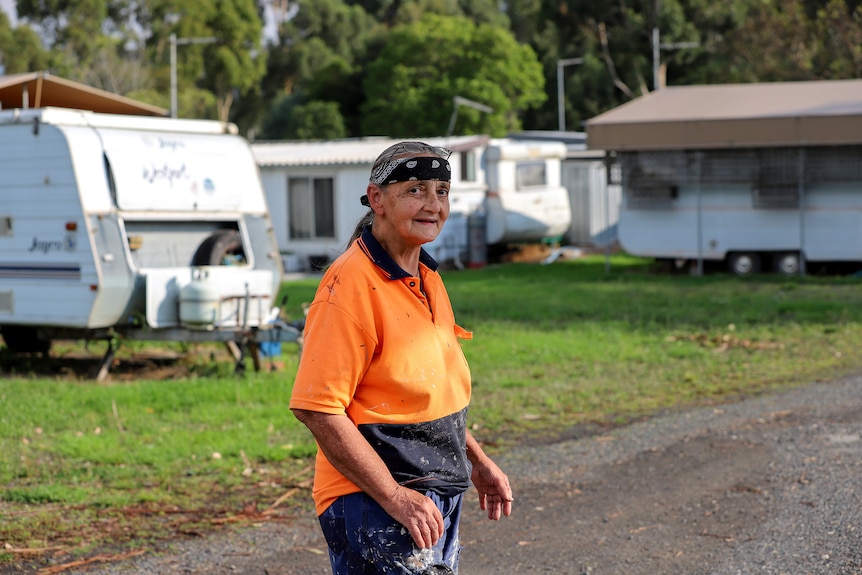 Christine Donaghey from Prom Central Caravan Park in Foster.(ABC News: Jeremy Story Carter)
Wearing a black bandana and paint-flecked work pants, like a kind of working-class action hero, Christine Donaghey shares the prime minister’s outlook.
“People are hard up,” she says.
“We try and help as many as we can, but I can’t see it getting better.”
Credits
Reporting, photography and digital production: Jeremy Story Carter
Producer: Cath McAloon