
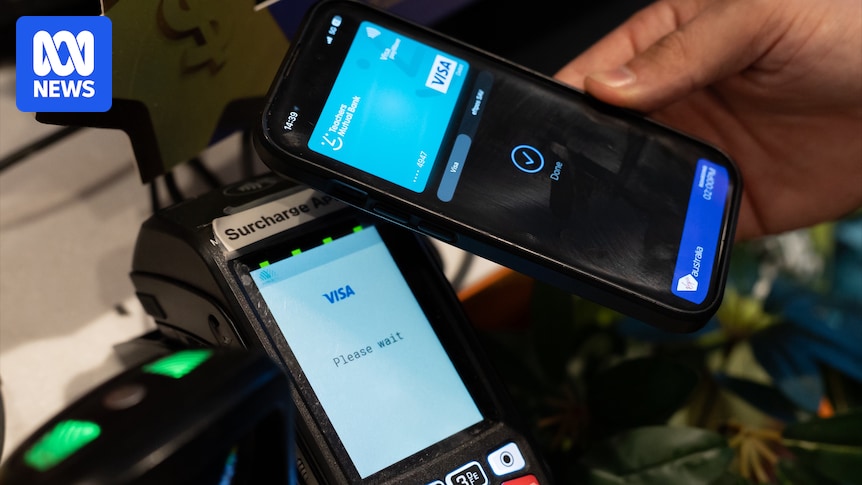
As the fuel crisis evolves, consumers may notice a fuel levy surcharge popping up at some businesses to offset costs associated with surging petrol prices — but how are these new fees decided and are they legal?
With the war in the Middle East impacting oil supply, the price of unleaded petrol had risen to as high as $2.50 per litre in parts of New South Wales this week, while the cost of diesel had exceeded $3.15 per litre.
The price hikes led to surcharges on some everyday goods and services as businesses struggled to absorb the additional costs.
Sydney Fish Market has introduced a temporary levy of 81 cents for every kilogram of seafood bought at auction as trawlers faced a doubling in costs to keep their boats on the water.
The market said the levy would be directly passed on to commercial fishers as they do not sell goods directly to the public, but individual retailers determine their own pricing.
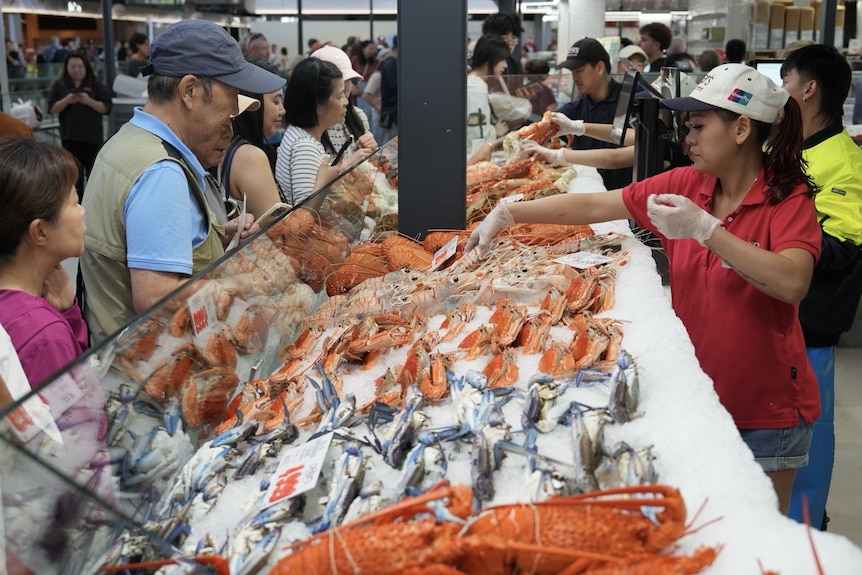
Sydney Fish Market has introduced a temporary levy on seafood bought at auction. (ABC News: Monish Nand)
‘Survival mechanism’
In the hospitality sector, the Australian Restaurant and Cafe Association (ARCA) advised cafes, restaurants and pubs to introduce a fuel levy surcharge of up to 5 per cent “as a transparent survival mechanism” to support small businesses.
Chief executive Wes Lambert told the ABC the surcharge should be implemented on “a case-by-case basis”, well-communicated to customers and subject to guidelines set by the Australian Competition and Consumer Commission (ACCC).
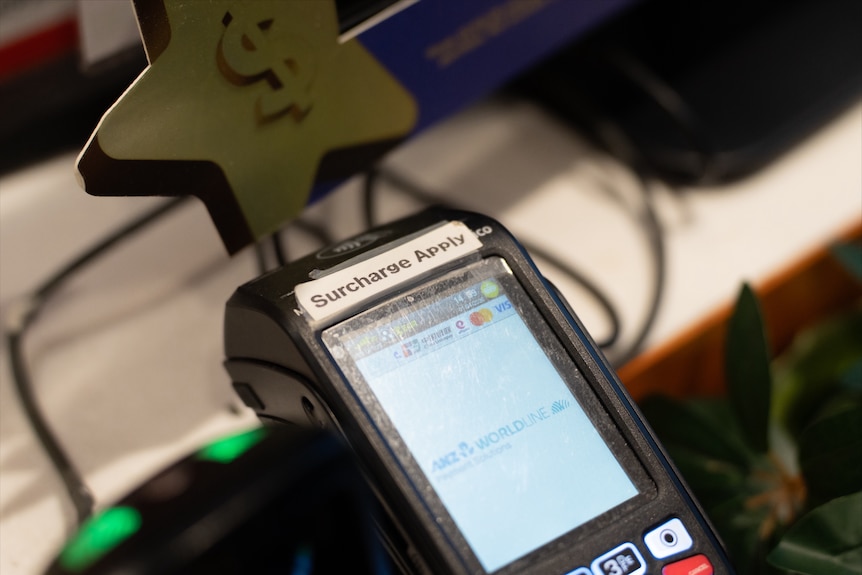
The Australian Restaurant and Cafe Association says the surcharge should be implemented on “a case-by-case basis”. (ABC News: Timothy Ailwood)
UNSW academic economist Timothy Neal said the shock to the price of oil had led to a phenomenon called cost-push inflation, where businesses raised prices due to higher production costs.
Dr Neal said smaller companies competing against larger companies would likely not have the ability to absorb higher prices from suppliers.
“In that case, they’re going to be particularly hurt because they’ll feel pressure not to increase their prices too much,” he said.
Loading
NSW Premier Chris Minns this week said businesses should hold off implementing surcharges but said “in many cases they won’t have a choice”.
“Obviously, consumers will vote with their feet if they have to, but I also believe people are doing it tough across the economy,” he said.
Samantha Cull recently introduced a 5 per cent surcharge on all food and drinks at her Lollipop’s Playland cafe in Western Sydney.
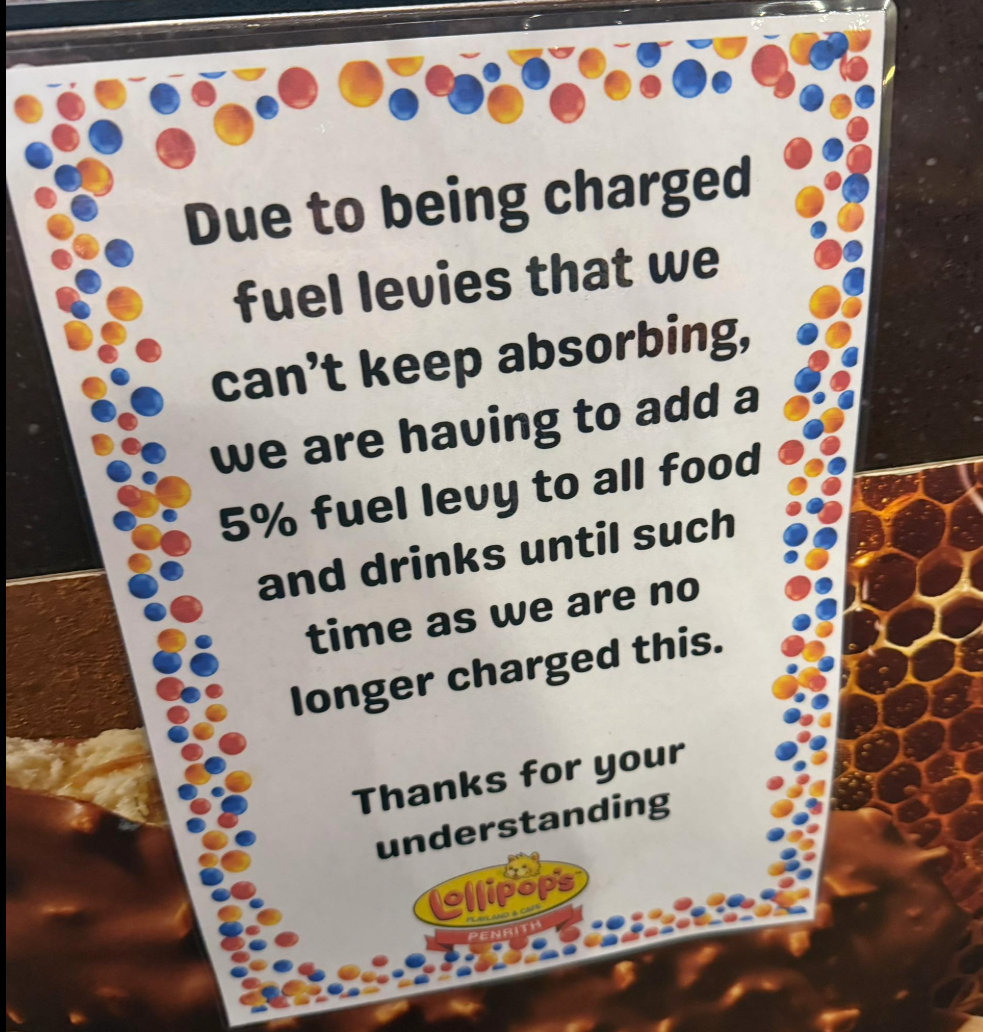
Samantha Cull recently introduced a 5 per cent surcharge on all food and drinks at her Lollipop’s Playland cafe in Western Sydney. (Supplied)
The franchisee owner told the ABC after absorbing increased costs from suppliers for three weeks “it was an honest decision to make”.
“The cost of food going up, the fuel levies, the drop in business — it’s just an ongoing domino effect,” she said.
“It scares me each week to see how many businesses are closing, I just need to get the bills paid, I’m not drawing a wage at the moment.”Communication, transparency key
Nitika Garg says businesses risk angering consumers with surcharges. (Supplied: University of New South Wales)
Nitika Garg, consumer behaviour researcher from UNSW’s Business School, said businesses needed to tread carefully when introducing surcharges to avoid consumer backlash.
“The biggest thing would be to communicate more clearly to the consumer exactly why you’re doing it,” she said.
Professor Garg said regulators also had a role to play in scrutinising price increase practices, particularly during a crisis.
“[It] will put off consumers both emotionally and rationally because families are being squeezed, right now, and with the cost-of-living crisis, this is another cost that they are having to absorb,” she said.
Is it legal?
A NSW Fair Trading spokesperson told the ABC while businesses could set their own prices, including charging a fuel surcharge levy, the watchdog was monitoring the practice.
Under Australian consumer law, the minimum total price must be displayed clearly and prominently if the surcharge is added at the end of a transaction.
“That is, the price of the item and the surcharge must be combined into a single price that the consumer will be required to pay,” the spokesperson said.
“In restaurant settings, menus should display a single price for the item, including any additional fee that is said to constitute a fuel surcharge.
“It should not simply be added to the bill at the end of the meal or noted on the menu that a surcharge will apply.”
Surcharges on debit and credit cards to be removed
A spokesperson for the ACCC said the regulator would “not hesitate to take appropriate action in relation to fuel surcharging”.
They said surcharging could be concerning in a number of circumstances, including if the fee is not removed despite being represented as a temporary charge and “not directly related” to costs incurred by rising fuel prices.
Businesses NSW chief executive Daniel Hunter recommended businesses give customers as much notice as possible if there was a planned price increase.
“Individual business owners know their market and customer base better than almost anyone else,” he said.
“That’s why they are best placed to make decisions on pricing and how they communicate that.”
Consumers drive pricing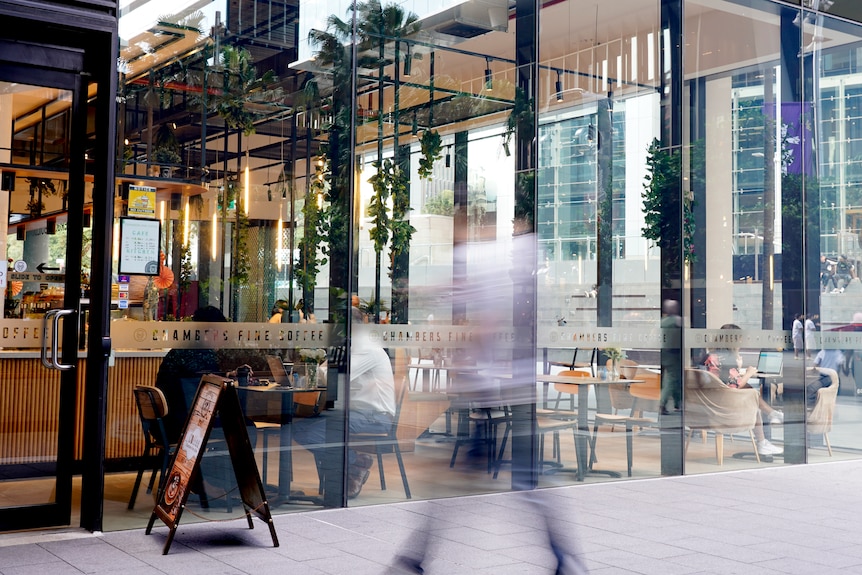
Some customers are willing to pay a fee for weekend service. (ABC News: Esther Linder)
Rick Krever, a senior honorary research fellow specialising in taxation law and policy at the University of Western Australia, said, ultimately, people decided how much they were willing to pay for something.
“A business makes its own decision to kind of get away with charging more in the weekend, so if you order a takeaway pizza on a weekend, or at least on Sundays and holidays, they’ll charge more,” Professor Krever said.
“And they can because they worked out that in that market people who don’t want to cook on Sunday are willing to pay 10 per cent more.”
Professor Krever said due to a number of federal government interventions to bring petrol prices down, he anticipated fuel levy surcharges would be harder to implement over the next three months.
“It’s just another name for price rise, but you’re attributing it to something else, so it looks like there’s an external factor that’s caused you to do this,” he said.