
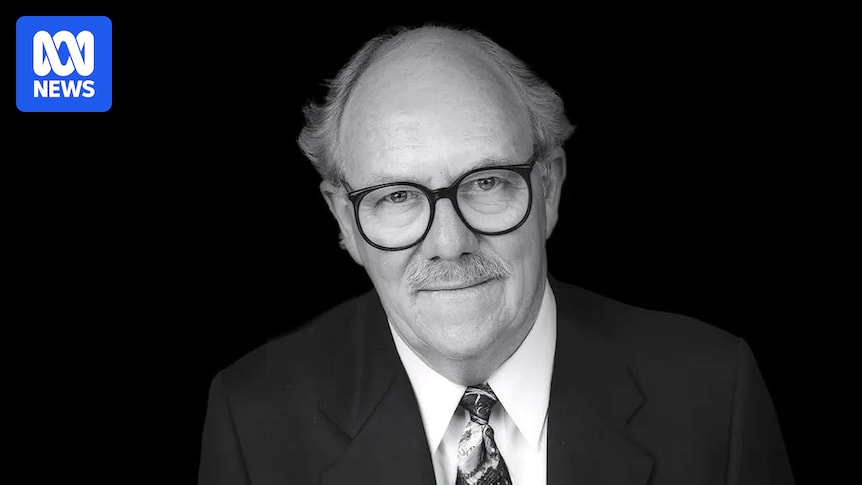
A giant of Australian theatre who helped launch the careers of some of the country’s biggest names of the stage has died aged 93.
John Clark was director of the National Institute of Dramatic Art (NIDA) from 1969 until 2004 and was instrumental in establishing the Sydney Theatre Company in 1979.
“There will be a global doffing of the hat and sadness to the passing of John Clark because his fingerprints start in Hobart and then extend via NIDA across the world,” said Tasmanian theatre director and producer Craig Wellington.
“So I think from the West End to Hollywood, to little theatres in Hobart, there’ll be a few tears shed.”
Loading Instagram content
Clark was born in Hobart on October 30, 1932.
He studied at the University of Tasmania and was a keen Aussie Rules footballer.
An interest in archaeology led him to Oxford University in the UK, and it was there that he fell in with a theatre crowd.
“After doing uni revues in Hobart and Launceston in his misspent youth [he] decided theatre was this really great idea,” Mr Wellington said.
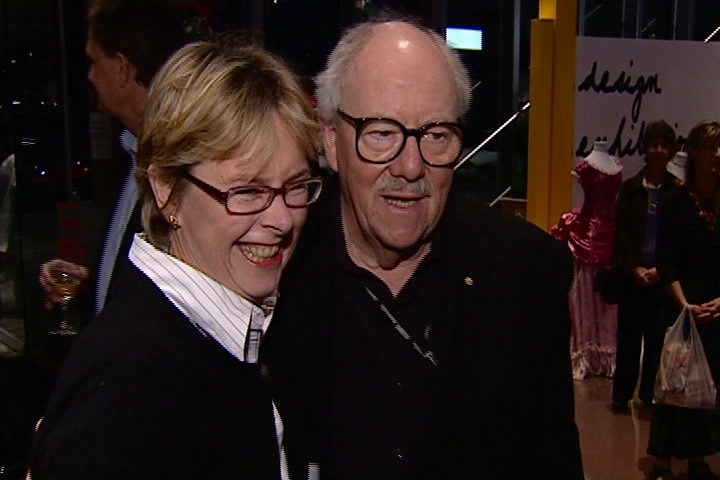
John Clark was passionate about nuturing Australian talent. (Australian Story)
Clark studied theatre at the Bristol Old Vic Theatre School where he designed sets for the first production of Harold Pinter’s first play, The Room, and met his future wife, Henrietta Hartley.
Clark returned to Hobart in 1959 where he directed a production of Arthur Miller’s Death of a Salesman for the Hobart Repertory Theatre Society.
Transforming NIDA into ‘one of the world’s great drama schools’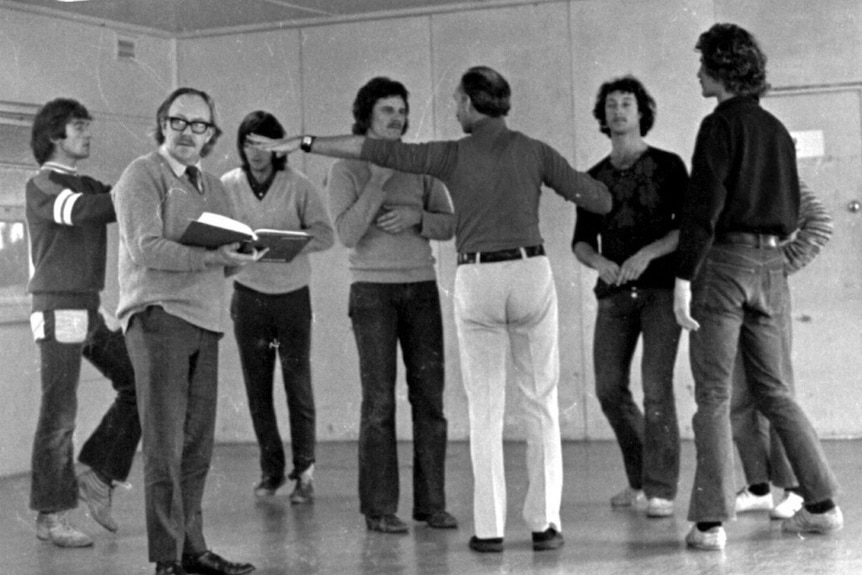
John Clark (second from left) became director of NIDA in 1969 and oversaw huge growth at the institute. (Instagram: NIDA Community)
He was offered a job at NIDA, which he accepted, moving to Sydney with Henrietta at the end of 1959.
He became director of NIDA in 1969.
“When John took up the directorship … the school was housed in three dilapidated buildings,” NIDA said in a statement.
“A white, two-storey wooden house, The White House … was once the jockeys’ changing rooms for the old Kensington Racecourse.
“The buildings were unbearably hot in summer, inexcusably cold in winter, and occasionally subject to bird lice.
“There was a two-year acting course and a two-year production course.
“When John retired from NIDA in 2004 there were four theatres, including the new Parade Theatre, nine rehearsal rooms, a film and television studio, scenery, costume and properties workshops, and a large library.
“NIDA graduates were national and international luminaries.
“John, working hand-in-hand with the indefatigable Elizabeth Butcher, had transformed NIDA into one of the world’s great drama schools.”
Mr Wellington said as an educator and theatre practitioner, Clark nurtured not only great performers but great designers and artists “across the realm of theatre”.
“And there really is no Sarah Snook or Cate Blanchett or Hugo Weaving or Essie Davis or Mel Gibson without NIDA, and therefore without John Clark,” he said.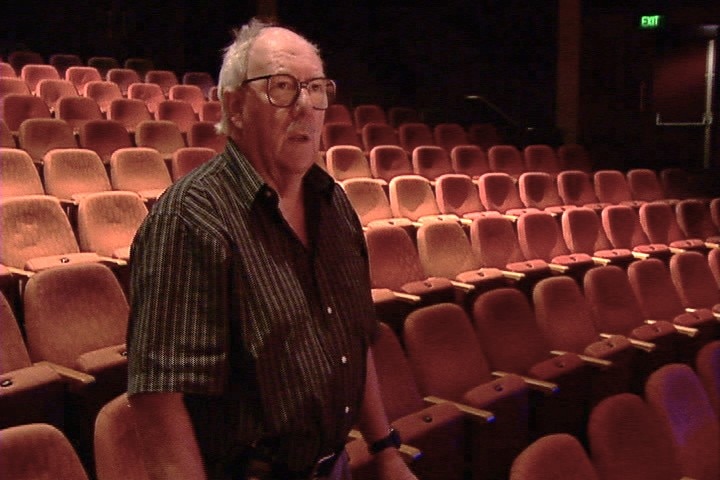
John Clark during a rehearsal in 2004. (ABC News)
Clark was passionate about Australian talent, telling the ABC in 2004: “We’re a country that ought to be much more proud than we are of the talent that we’ve got, and that’s what’s motivated me over all these years.”
Speaking to Australian Story in 2001, Mel Gibson said NIDA gave him “tremendous freedom” and Clark gave him advice that stayed with him.
“I remember that he said … ‘this whole business of acting is … one per cent inspiration and 99 per cent perspiration’.
“And I just remember, I thought, ‘wow … so you just need a spark and the rest of it’s just hard work.'”
Mel Gibson, whose breakout role came in the original Mad Max film, said advice from John Clark stayed with him. (Supplied)
A generous mentor
Clark did not forget his roots, returning to his hometown of Hobart and directing productions for the Old Nick Company, of which he became a life member.
“I’m sure he could have been offered hundreds of thousands of dollars at that stage of his career to direct productions anywhere in the world,” Mr Wellington said.
“But gladly he came back to Hobart for the Old Nick Company and directed some works, including a landmark production of Hamlet.”
He said Clark was a generous mentor.
“I remember us watching a rehearsal of Hamlet and he put his arm on my shoulder and said, ‘Isn’t it great to sit in the dark and be the wings on their shoulders.’
“And that was his mentality. He wanted to watch and nurture and see others walk into that limelight and succeed.”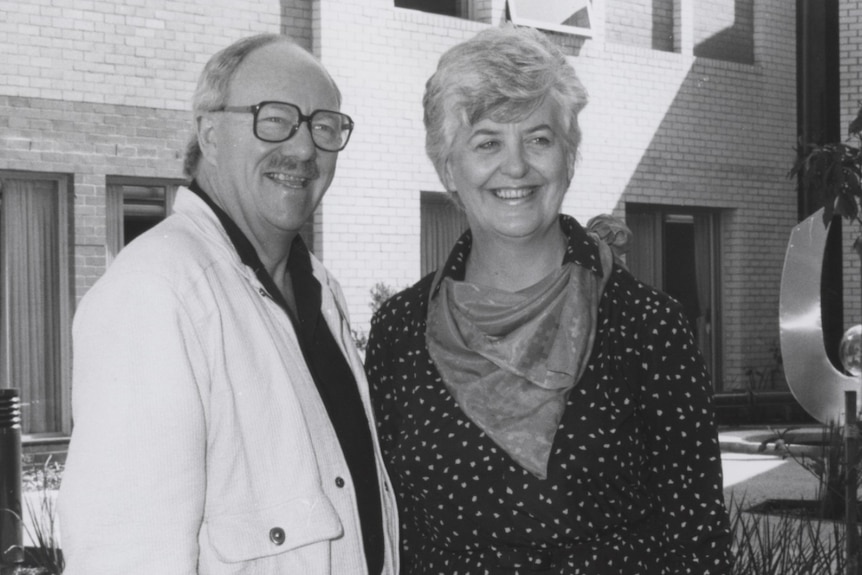
John Clark and Elizabeth Butcher worked together at NIDA for more than 40 years. (Supplied: National Institute of Dramatic Art)
Elizabeth Butcher, who worked with Clark for more than 40 years as an administrator, said his vision extended beyond NIDA and helped shaped the cultural life of Sydney.
“John’s legacy is everywhere. It lives in the thousands of graduates across acting, design, production and directing who trained under his leadership.
“It lives in the international careers of people like Cate Blanchett, Baz Luhrman, and so many others.
“Most of all, it lives in the principle he held without compromise, that students come first, and that excellence in training creates excellence in the art itself.”

Cate Blanchett is a NIDA graduate and was a student during John Clark’s time as director. (Reuters: Daniel Cole)
Clark’s final production for NIDA was an adaptation of John Steinbeck’s The Grapes of Wrath.
After retiring, he pursued his archaeological interests with trips to Egypt, Turkey and Morocco, to Machu Pichu and the Galapagos Islands, and to Vietnam, Cambodia and Myanmar.
He directed plays in India, Singapore and China.
He was made a Member of the Order of Australia in 1981 for service to theatre.
In 2006 John Clark was presented with a Helpmann Lifetime Achievement Award.